Baby Developmental Milestones: What to Expect in the First Year
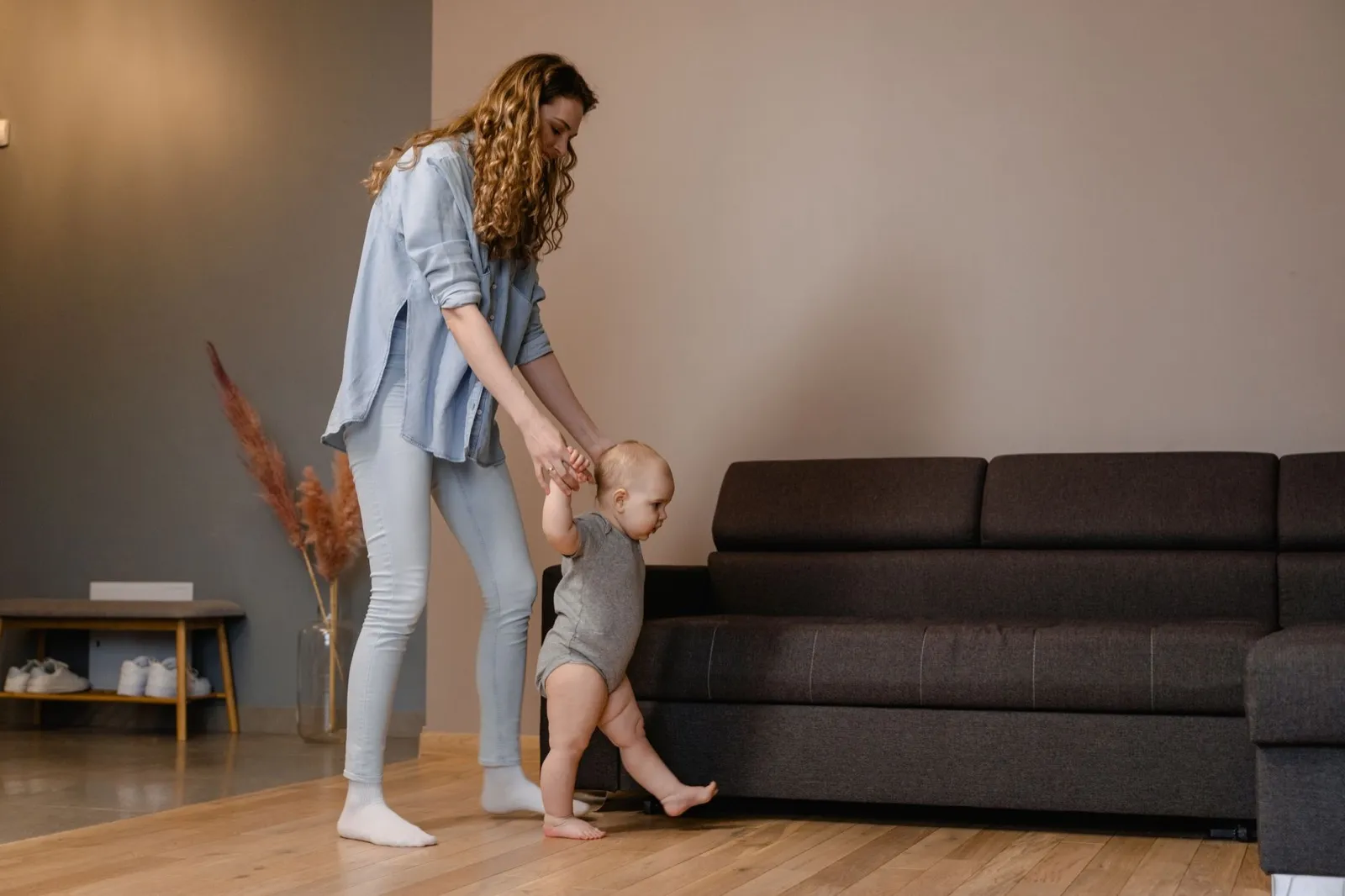
Image Credit: Pexels / MART PRODUCTION
Your baby’s first year brings an extraordinary amount of change. Over those 12 months, you may see everything from the first social smiles and coos to sitting, babbling, crawling, pulling to stand and perhaps even those first independent steps.
Developmental milestones are skills or behaviours that tend to emerge as babies grow. They can help you understand how your baby’s movement, communication, thinking and social skills are developing, but they are not a timetable that every baby follows in exactly the same way.
Some babies reach a milestone earlier than expected and others take longer. Some skip a commonly recognised stage altogether. The most useful approach is to look at your baby’s development as a whole rather than comparing every new skill with another baby’s calendar.
Here is a broad guide to what you may notice throughout the first year.
What are baby developmental milestones?
Developmental milestones describe abilities that emerge as a child grows. They cover several areas of development rather than simply physical achievements such as sitting or walking.
You may hear milestones discussed in terms of:
- Gross motor skills, involving larger movements such as head control, rolling, sitting and eventually moving around.
- Fine motor skills, including reaching, grasping and using the hands and fingers with increasing control.
- Communication and language, from reacting to voices and making early sounds to babbling and beginning to understand familiar words.
- Social and emotional development, such as smiling, responding to familiar people and interacting during play.
- Thinking and learning, including exploring objects, looking for things and gradually understanding more about the world around them.
These areas often develop together. Reaching for a toy, for example, involves vision, coordination, movement and curiosity.
Milestones are useful reference points, but development varies considerably between individual children. They are better viewed as a way to notice progress and raise questions when something concerns you, rather than as deadlines your baby needs to meet.
Birth to 3 months: becoming more alert
The first few months can feel dominated by feeding, sleeping, nappies and settling. Behind those everyday routines, however, your baby is already learning about their body and the people around them.
During the early months, babies gradually become more alert and responsive. The American Academy of Pediatrics notes that between one and four months babies gain greater control over their movements and become increasingly interested in their surroundings.
You may begin to notice your baby:
- looking closely at faces
- responding to your voice or other sounds
- moving their arms and legs
- gradually gaining better head control
- opening their hands more often
- making early cooing or gurgling sounds
- smiling in response to interaction
At this stage, simple interaction is valuable. Holding your baby, talking to them, singing and giving them opportunities for supervised tummy time while they are awake can support early learning and movement.
The NHS recommends tummy time as a way to help babies build strength in their back, neck and shoulders. It can begin from birth on a parent’s chest while the parent is fully awake, with floor-based tummy time introduced as the baby becomes ready.
Around 3 to 6 months: more movement and interaction
As the months pass, your baby may seem increasingly interested in everything happening around them. Hands become particularly fascinating, both their own and whatever they can reach.
You may notice growing control over movements and more deliberate interaction. Babies during this broad stage may begin reaching towards objects, grasping toys, bringing their hands towards their mouth and becoming more confident with head and upper-body control.
Social interaction also becomes more noticeable. Your baby may smile readily, make different sounds or respond enthusiastically when you talk and play together.
Rolling may begin during this period for some babies, although the timing varies. Once your baby becomes more mobile, everyday spaces can suddenly present new hazards, so it is sensible to anticipate movement rather than waiting for the first successful roll before reviewing their surroundings.
Play does not need to involve elaborate toys. The NHS suggests activities such as talking, singing, clapping and encouraging babies to reach for or move toys. Ordinary face-to-face interaction provides plenty of opportunities for learning.
Around 6 to 9 months: exploring the world
The second half of the first year can bring a noticeable increase in independence.
Many babies become increasingly able to sit and use their hands to explore objects. They may transfer things between their hands, reach purposefully for something interesting or investigate objects by touching and mouthing them.
Communication develops too. The NHS describes the period from 6 to 12 months as one in which babies listen more carefully and benefit from chatting, playing and sharing books with the people caring for them.
You may notice your baby:
- making a wider variety of sounds
- responding more clearly to familiar voices
- showing interest in simple games
- reaching for objects they want
- becoming increasingly steady when sitting
- trying different ways of moving
- showing clear preferences for familiar people, toys or activities
Some babies begin crawling during the later part of this stage, while others do so later. The NHS notes that babies may start crawling at around 7 to 10 months, but not every baby crawls. Some move around in other ways instead.
The important thing is not whether your baby copies one particular style of movement. It is how their overall movement and development are progressing.
Around 9 to 12 months: growing independence
Towards the end of the first year, your baby may start looking much less like a tiny newborn and much more like a determined little person.
Movement can become increasingly purposeful. Some babies crawl, pull themselves up or move while holding onto furniture. Others may already experiment with standing or taking steps, while some will reach those milestones later.
Hand skills also become more precise. Instead of simply grabbing an object with the whole hand, babies gradually become better at manipulating smaller objects and exploring how things work.
Communication is developing alongside movement. Your baby may babble with different sounds, react to their name, understand familiar words or gestures and use sounds, expressions or movements to get your attention.
The NHS recommends talking about things you can see together, looking at books and responding to your baby’s attempts to communicate during this period. These everyday exchanges help babies practise listening and communication.
By the first birthday, there can still be a wide range of normal development. Walking independently, in particular, is not something every baby will be doing at 12 months.
What if my baby reaches milestones in a different order?
It is very easy to turn milestones into a checklist, particularly when other parents are talking about what their babies can already do.
Try to resist comparing one individual skill too closely.
Development is not always neat or linear. A baby might concentrate heavily on movement for a while and then seem to make a burst of progress with communication. Another might be very interested in sounds and social interaction while taking longer with a physical milestone.
Crawling is a good example. The NHS specifically notes that not all babies crawl, with some finding other ways to move around.
Rather than concentrating on whether your baby has achieved a particular skill on exactly the same week as somebody else’s baby, notice the broader picture. Are they gradually gaining skills, becoming more interactive and finding new ways to explore?
If something about their development worries you, however, you do not need to wait for a particular deadline before asking for advice.
How can you support your baby’s development?
Supporting development does not require a packed schedule of classes, specialist toys or constant entertainment.
For babies, ordinary interaction is powerful.
Talk to your baby while you are getting them dressed. Sing while you change a nappy. Look at simple books together. Give them safe opportunities to move and explore. Respond when they make sounds and allow them time to respond to you.
The NHS highlights everyday activities including talking, singing, playing, reading and movement as ways to support communication and development.
You can also follow your baby’s cues. A bright-eyed, interested baby may be ready for interaction, while a tired or unsettled baby may need a break. There is no need to turn every waking moment into a developmental activity.
Your attention and ordinary daily interaction already provide many opportunities for learning.
When to get professional advice
Milestone ranges are broad, but parental concerns about development deserve to be taken seriously.
Speak to your health visitor, GP or another qualified healthcare professional if you are worried about how your baby is moving, communicating, hearing, seeing or interacting, or if their development simply does not seem right to you.
The NHS specifically advises speaking to a health visitor if a baby is not showing signs of moving by 12 months. Your health visitor also monitors growth and development during routine contacts and can advise you about concerns.
It is also sensible to seek professional advice if your baby appears to lose a skill they could previously do rather than continuing to develop it.
Babies born prematurely may follow a different developmental timeline. If your baby was premature or has an existing medical or developmental condition, use the guidance given by their healthcare team rather than relying solely on general milestone charts.
You do not need to diagnose a developmental problem yourself. If something is worrying you, asking a professional is an appropriate next step.
Related reading
- Baby Development
- Baby Development by Month: A Month-by-Month Guide
- When Do Babies Start Rolling Over?
Sources
- NHS Best Start in Life: Early learning and development
- NHS Best Start in Life: Baby moves
- NHS: Help your baby learn to talk
- NHS Best Start in Life: Listening and learning, 6 to 12 months
- American Academy of Pediatrics, HealthyChildren.org: Developmental Milestones, 1 to 4 Months Old
- American Academy of Pediatrics, HealthyChildren.org: Developmental Milestones, 12 Months