Can you eat brie cheese while pregnant?
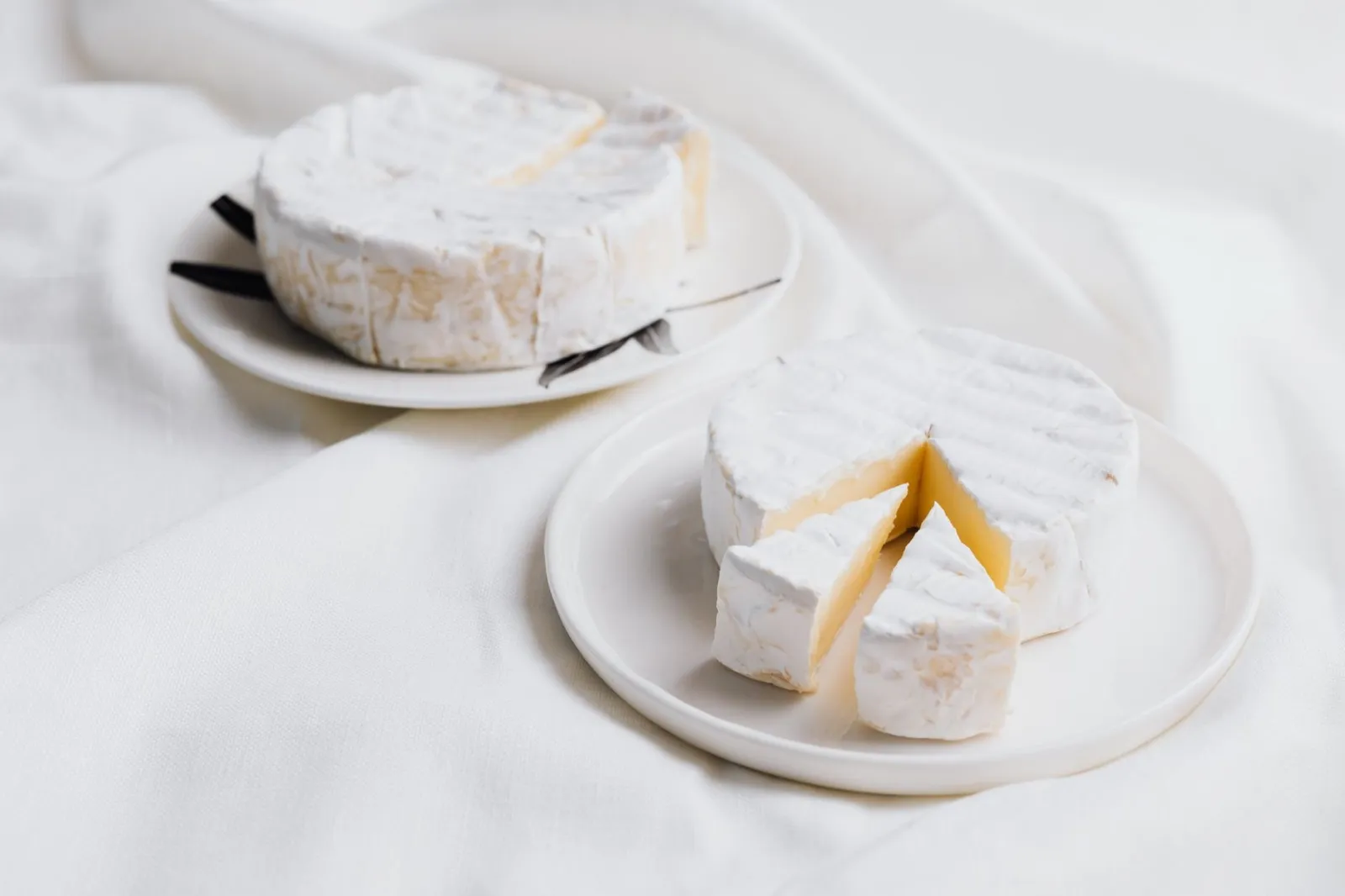
Image Credit: Pexels / https://kaboompics.com/
Yes, you can eat brie while pregnant, but current NHS guidance says it should be thoroughly cooked until steaming hot. Cold or uncooked brie should be avoided during pregnancy, even if it is made from pasteurised milk.
Brie is a mould-ripened soft cheese with a white coating on the outside. These cheeses can contain listeria bacteria, so pregnancy guidance treats them differently from soft cheeses such as pasteurised mozzarella, feta or cream cheese.
The simplest rule is this: if you want brie during pregnancy, eat it thoroughly cooked and steaming hot throughout.
Why is brie treated differently during pregnancy?
The issue is not that all soft cheese is unsafe.
Brie belongs to a particular group of mould-ripened soft cheeses. The NHS specifically names brie, camembert and chèvre with a white coating among cheeses that need to be thoroughly cooked during pregnancy.
These cheeses have a higher risk of carrying listeria bacteria than many other cheeses. Listeria can cause an infection called listeriosis.
Listeriosis is rare, but pregnancy increases the risk of serious complications from the infection. This is why NHS guidance takes a precautionary approach to brie and similar cheeses.
Cooking the cheese until it is steaming hot reduces the risk because sufficient heat kills listeria bacteria.
Does pasteurised brie need to be cooked?
Yes. Pasteurisation does not change the NHS recommendation for mould-ripened soft cheeses such as brie.
Current NHS pregnancy guidance says both pasteurised and unpasteurised mould-ripened soft cheeses with a white coating, including brie, must be thoroughly cooked.
This can be confusing because pasteurised versions of many other soft cheeses are safe to eat cold during pregnancy. Pasteurised feta, mozzarella, ricotta, mascarpone, cottage cheese, cream cheese, halloumi, paneer and burrata are all listed as safe options by the NHS.
Brie is different because of the way this type of cheese is ripened.
So if a packet of brie says “pasteurised”, that does not mean it should be eaten cold during pregnancy.
Can you eat baked brie while pregnant?
Yes, provided it has been thoroughly cooked until steaming hot.
Baked brie can therefore be an option during pregnancy. The important part is making sure the cheese is hot throughout rather than simply warmed around the edges.
Follow the cooking instructions for the recipe or product you are using and serve it while it is properly hot.
The same principle applies if brie is used in another cooked dish. It should be heated thoroughly rather than added after cooking or only lightly warmed.
Can you eat brie on pizza?
Brie can be eaten on pizza during pregnancy if it has been cooked until steaming hot.
If the cheese has been baked thoroughly as part of the pizza, that fits NHS guidance for mould-ripened soft cheese.
Be more cautious if cold brie is added after the pizza has come out of the oven or if the cheese has only been lightly warmed.
Other pizza toppings may have their own pregnancy food safety guidance. For example, the NHS advises cooking cold cured meats such as pepperoni, salami, chorizo and prosciutto until steaming hot before eating them during pregnancy.
If you are ordering a pizza and are unsure how the brie is prepared, you can ask the restaurant.
Can you eat brie in a sandwich?
Cold brie in a sandwich should be avoided during pregnancy.
Cooking requirements do not disappear because the cheese is combined with other ingredients. A sandwich containing uncooked brie still contains mould-ripened soft cheese that has not been heated until steaming hot.
Pre-packaged sandwiches also need appropriate refrigeration and should be eaten before their use-by date, according to NHS pregnancy food guidance.
If you want a cheese sandwich without cooking it, there are plenty of alternatives that can be eaten cold. The NHS lists pasteurised cheeses such as feta, mozzarella, cream cheese, cottage cheese, ricotta, halloumi and paneer as safe options.
Hard cheeses such as cheddar and Parmesan can also be eaten during pregnancy.
What about brie at a restaurant?
You can eat brie at a restaurant if it has been thoroughly cooked until steaming hot.
A dish described as baked brie may be suitable, but the name alone does not tell you how thoroughly the cheese has been heated. If you are unsure, asking how it is prepared is reasonable.
Cold brie on a cheeseboard, in a salad or in an uncooked sandwich should be avoided during pregnancy.
This does not mean you need to feel anxious about eating out. Knowing the distinction between cold brie and thoroughly cooked brie makes choosing a dish much simpler.
Are all soft cheeses unsafe during pregnancy?
No. This is one of the most common sources of confusion around pregnancy and cheese.
Current NHS guidance allows several pasteurised soft and semi-hard cheeses, including mozzarella, feta, ricotta, mascarpone, cottage cheese, cream cheese, halloumi, paneer and burrata.
The cheeses that need cooking include mould-ripened soft cheeses with a white coating, such as brie and camembert, and soft blue-veined cheeses such as Danish blue, gorgonzola and Roquefort.
Unpasteurised milk and dairy products should also be avoided.
Looking at the type of cheese and the preparation method is more useful than applying a blanket rule to everything described as “soft cheese”.
Why is listeria a concern in pregnancy?
Listeria is a type of bacteria that can contaminate certain foods, including mould-ripened soft cheeses.
Infection with listeria is called listeriosis. The NHS describes it as a rare infection, but pregnant people are among those at higher risk of becoming seriously ill.
Listeriosis during pregnancy can also cause serious pregnancy complications, which is why food safety guidance aims to reduce exposure.
The precautions around brie are therefore specific and practical. You do not need to avoid cheese altogether. You simply need to follow the guidance for the type of cheese you are eating.
What if you already ate cold brie while pregnant?
Realising afterwards that you ate a food listed in pregnancy guidance can feel worrying.
If you recently ate brie, the NHS says you do not need to do anything unless you develop symptoms of listeriosis. Foods associated with listeria do not always contain the bacteria.
Possible symptoms include a high temperature, aches and pains, chills, feeling or being sick and diarrhoea. During pregnancy, stomach ache or noticing your baby moving less than usual can also occur.
If you are pregnant and think you may have listeriosis, the NHS advises seeking urgent advice from your GP or NHS 111. You can also contact your midwife.
Do not try to judge from the amount of brie you ate whether an infection has occurred.
When to get professional advice
Contact your midwife, GP or NHS 111 if you are worried after eating uncooked brie and develop symptoms that could suggest listeriosis.
The NHS advises asking for an urgent GP appointment or getting help from NHS 111 if you are pregnant and think you have listeriosis. You can also call your midwife for advice.
If you notice your baby moving less than usual or there is a change in their usual pattern of movements, contact your midwife or maternity unit immediately.
Call 999 or go to A&E if you develop symptoms of a serious emergency, including a severe headache with a stiff neck, a seizure, sudden confusion, being very difficult to wake or a rash that does not fade when a glass is rolled over it.
Related reading
- Can you drink alcohol based syrups while pregnant?
- Can you drink alcohol while pregnant?
- Can you drink chamomile while pregnant?