Gold or Silver Jewellery: Which Suits Your Skin Tone?
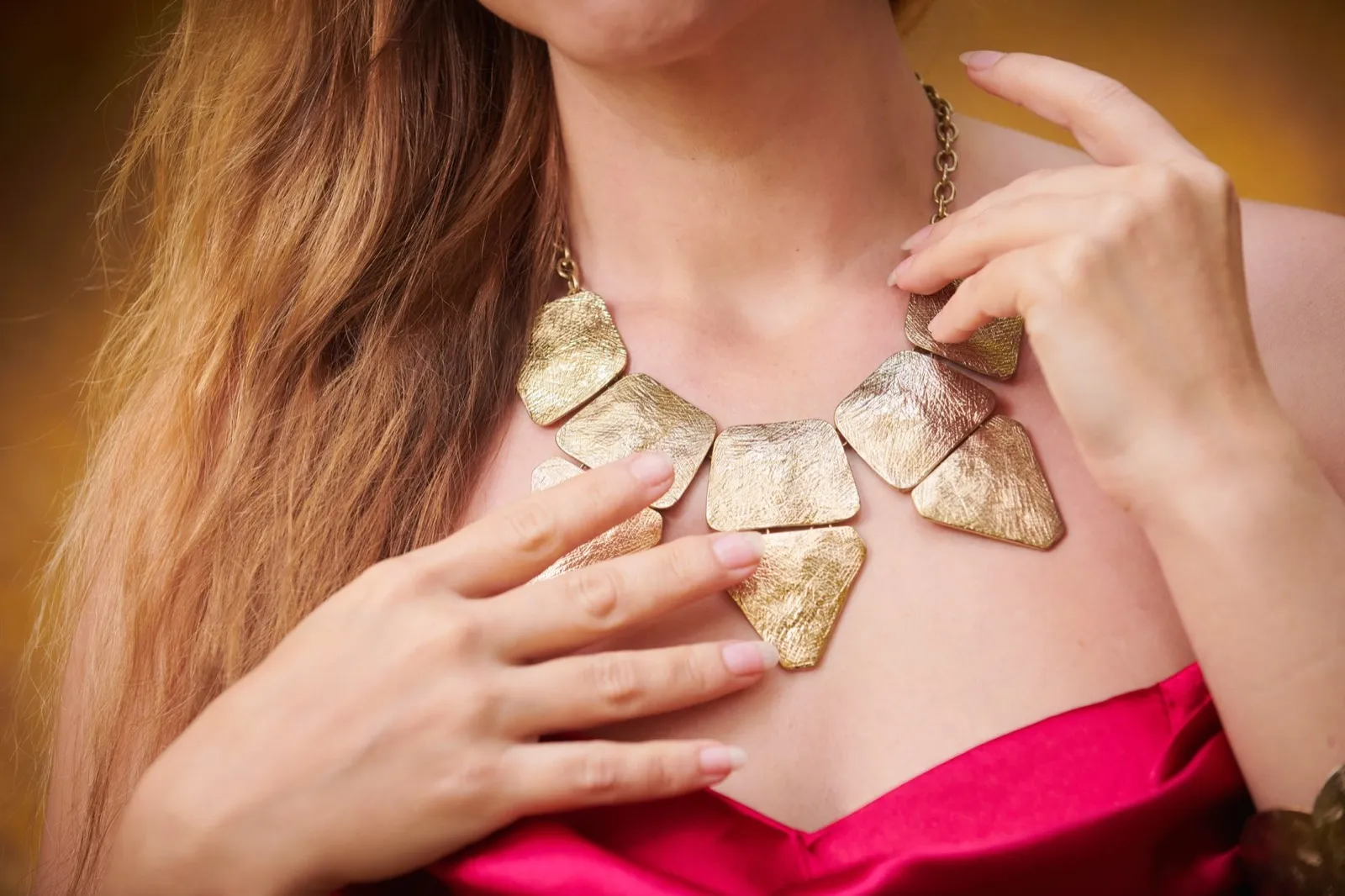
Image Credit: Pexels / Vika Glitter
If you are wondering whether gold or silver jewellery suits your skin tone, your undertone can give you a useful starting point. Traditional colour analysis often pairs warm undertones with yellow gold and cool undertones with silver or other white-toned metals. Neutral undertones are often considered flexible enough to work easily with both.
That does not mean you need to choose one metal and abandon the other. Jewellery sits within a whole outfit, and its colour is only one part of how a piece looks. Your clothes, hair, other accessories and personal taste can matter just as much.
The simplest answer is to compare gold and silver beside your skin in the same lighting, then choose the effect you prefer.
Gold vs silver jewellery and skin undertones
Skin undertone is a colour-analysis term used to describe the subtle warm, cool or neutral quality beneath the visible surface colour of the skin.
It is different from skin depth. People with light, medium and deep skin tones can all have warm, cool or neutral undertones.
In traditional colour analysis:
- Warm undertones are often paired with yellow gold.
- Cool undertones are often paired with silver and other white-toned metals.
- Neutral undertones may work comfortably with either.
- Rose gold can sit somewhere between these familiar categories depending on its exact colour.
These are styling conventions rather than fixed rules.
A cool-toned person can love yellow gold. Someone with warm colouring can prefer silver. Both choices are completely valid.
How to tell whether gold or silver suits you
The easiest test requires only two pieces of jewellery.
Choose one yellow-gold piece and one silver-coloured piece of a similar size. Earrings, necklaces or bracelets can all work.
Compare them in indirect natural daylight if possible.
Rather than asking which metal is objectively “better”, look at the overall relationship between the jewellery and your colouring.
You might notice that:
- One metal appears more connected to your natural colouring.
- One creates stronger contrast.
- One feels softer or more subtle.
- Both work but create different effects.
- You simply prefer seeing yourself in one of them.
That final point matters. Jewellery is personal, and preference is a perfectly good reason to choose a metal.
Does gold suit warm undertones?
Yellow gold is traditionally associated with warm undertones because both have a warm colour quality.
Warm undertones are often described as having golden, yellow or peach-like qualities.
If you identify with warmer colouring, you might enjoy yellow gold alongside clothing colours such as:
- Cream
- Camel
- Warm beige
- Coral
- Peach
- Rust
- Olive
- Warm brown
- Tomato red
Gold can also create an interesting contrast with cooler colours, so there is no need to keep the rest of your outfit warm.
Try gold jewellery with navy, cobalt, grey or a cool pink if those colours are part of your wardrobe.
Does silver suit cool undertones?
Silver is traditionally associated with cool undertones because its white-grey appearance has a cooler colour quality than yellow gold.
Cool undertones are often described as having pink, red or bluish qualities.
If you identify with cooler colouring, silver may work naturally alongside colours such as:
- Crisp white
- Cool grey
- Navy
- Cobalt
- Raspberry
- Fuchsia
- Lavender
- Emerald
- Cool red
Silver can look understated with cool neutrals or create contrast with warmer clothes.
For example, silver jewellery can work beautifully with camel, chocolate brown or rust if you enjoy mixing colour temperatures.
What if you have neutral undertones?
If your undertone appears neutral, you may find that both gold and silver feel equally natural.
This gives you plenty of flexibility.
You might choose the metal according to:
- The colours in your outfit
- The style of the jewellery
- Other accessories you are wearing
- The occasion
- Your mood
- The pieces you already own
You may also find that your preference sits somewhere between classic yellow gold and bright silver.
Rose gold, softer gold tones and mixed-metal pieces can provide other options, although there is no requirement to match a particular metal to neutral skin.
What about olive skin?
Olive skin can be more difficult to place within simple warm, cool and neutral categories.
It may have a greenish or greyish quality, and different colour-analysis approaches can classify olive colouring differently.
If you have olive skin and traditional undertone tests give you conflicting results, comparing the metals directly may be more useful than trying to settle on a label first.
Try gold and silver separately, then mixed metals.
You may find that both work, or that your preference depends on the shade of your clothes rather than the metal alone.
How to do the gold and silver jewellery test
If you want a more structured comparison, try this simple process.
1. Use similar pieces
Compare jewellery of roughly the same scale.
A tiny silver stud and a large gold statement earring create very different effects, so you may end up judging the design rather than the metal.
2. Keep the lighting consistent
Natural daylight can make colour comparisons easier.
Avoid switching between different rooms or lighting conditions while you test the metals.
3. Compare them near your face
Earrings and necklaces can be particularly useful because they sit close to your face.
If you only have bracelets or rings, you can still compare the metals against your skin.
4. Try each metal with the same outfit
A simple neutral top can make the comparison easier.
Then repeat the test with colours you wear frequently. You may find that gold works particularly well with some outfits and silver with others.
5. Take photographs
If looking in the mirror makes it difficult to decide, take a photograph of each option in the same position and lighting.
Seeing the images side by side may make your preference clearer.
Can the vein test tell you which jewellery suits you?
A popular undertone test suggests looking at the veins on your wrist.
The usual rule says that green-looking veins suggest warm undertones, while blue or purple-looking veins suggest cool undertones.
This is only a rough shortcut. Veins can appear different depending on skin depth, lighting and colour perception.
It is better not to choose your entire jewellery collection based on this test.
If your aim is to decide between gold and silver, comparing the actual metals against your skin gives you information that is more directly relevant.
Should you choose jewellery based on your colour season?
If you use seasonal colour analysis, your season may provide another starting point.
Broadly, traditional systems associate:
- Spring with warmer colouring
- Summer with cooler colouring
- Autumn with warmer colouring
- Winter with cooler colouring
This can lead to suggestions such as gold for Spring and Autumn, and silver for Summer and Winter.
Expanded seasonal systems are more nuanced, and individual preferences vary.
You also do not need to know your colour season to choose jewellery.
If gold works with your wardrobe, wear gold. If silver feels more like your style, choose silver.
Does rose gold suit warm or cool skin?
Rose gold contains a pinkish warmth, so it does not fit as neatly into the simple gold-versus-silver comparison.
In styling terms, it can work across different undertones depending on the exact shade and the effect you prefer.
Some rose gold appears warmer and more coppery. Other versions look softer and pinker.
If you like rose gold, compare it directly with yellow gold and silver rather than trying to predict the result from an undertone label.
It may become your favourite of the three.
Can you wear gold and silver together?
Yes.
Mixing gold and silver can make jewellery feel more relaxed and gives you more freedom to wear pieces you already own.
If you want the combination to feel intentional, a few approaches can help.
You might:
- Wear a mixed-metal necklace or watch as a connecting piece.
- Stack gold and silver rings together.
- Combine bracelets in both metals.
- Wear silver earrings with a gold necklace.
- Repeat each metal at least once across the outfit.
You do not need perfect balance.
A mostly gold combination with one silver piece can work just as well as an even mixture.
Do your jewellery metals need to match your accessories?
No.
Your earrings do not have to match the hardware on your handbag, belt buckle, watch and shoes.
Matching can create a coordinated effect if you enjoy it, but mixed metals can feel equally considered.
For example, you could wear silver earrings with a bag that has gold hardware. If you want to connect the two, a mixed-metal ring or watch can act as a bridge.
Or simply leave them as they are.
Small differences in metal colour rarely need to dictate an entire outfit.
How clothing colours can affect your choice
Sometimes the best metal for an outfit has more to do with the clothing than your undertone.
Yellow gold can add warmth to colours such as:
- Cream
- Camel
- Chocolate brown
- Olive
- Rust
- Burgundy
Silver can reinforce the cool quality of colours such as:
- Grey
- Navy
- Black
- Cobalt
- Lavender
- Cool pink
But reversing these combinations can be just as interesting.
Gold with cobalt creates warm and cool contrast. Silver with camel does the same.
Think of metal as another colour in your outfit rather than something that must disappear into your skin tone.
Gold or silver with black
Both work.
Gold with black can create a warmer contrast, while silver with black often feels cooler and more tonal.
The jewellery design will make a significant difference too.
A fine gold chain creates a very different effect from chunky gold earrings. The same applies to silver.
If black is a major part of your wardrobe, try both metals with several of your favourite black outfits before deciding which you prefer.
You may find there is room for both.
Gold or silver with white
The type of white can influence the combination.
Yellow gold can work naturally with warmer whites such as cream and ivory, while silver can echo the cooler quality of crisp white.
That does not mean the combinations need to stay within the same temperature.
Gold against crisp white can create noticeable warmth. Silver against cream can add a cooler detail.
Choose according to the overall effect you want.
Gold or silver with colourful outfits
If you wear plenty of colour, you can use jewellery either to echo its temperature or contrast with it.
For example:
Warmer combinations
- Coral + gold
- Olive + gold
- Rust + gold
- Camel + gold
Cooler combinations
- Cobalt + silver
- Fuchsia + silver
- Lavender + silver
- Cool grey + silver
Contrasting combinations
- Cobalt + gold
- Camel + silver
- Rust + silver
- Cool pink + gold
There is no single correct approach.
What if gold suits your undertone but you prefer silver?
Wear silver.
Colour analysis is useful only when it helps you make choices you enjoy.
You do not need to replace jewellery you love because a colour chart suggests another metal might be more harmonious.
You might even prefer the contrast silver creates against warmer colouring.
Personal style often becomes more interesting when you stop trying to make every element perfectly match.
What if silver suits your undertone but you love gold?
The same answer applies. Wear gold.
You can make yellow gold feel connected to an outfit by repeating warmer colours elsewhere, but you do not need to.
Gold can also stand out intentionally against cool colouring.
If you have sentimental gold jewellery, pieces you wear every day or designs that simply feel more like you, those considerations may matter far more than colour analysis.
Do you need to buy new jewellery after finding your undertone?
No.
Finding that you prefer one metal does not make your existing jewellery unsuitable.
Start by looking at what you already own.
You may discover that:
- Most of your jewellery is already one metal.
- You naturally mix both.
- Certain designs matter more to you than metal colour.
- Your favourite pieces work with almost everything.
- You prefer different metals for different outfits.
Use that information before buying anything new.
A useful jewellery collection does not need to follow a single colour-analysis rule.
A simple way to choose between gold and silver
If you still cannot decide, try this:
- Compare similar gold and silver pieces in natural daylight.
- Look at each metal near your face.
- Repeat the test with two or three outfits you wear often.
- Notice whether one metal consistently appeals to you more.
- Try mixed metals if neither feels like an obvious winner.
- Keep wearing the pieces you already love.
If gold feels warmer and more connected to your colouring, choose gold more often. If silver gives you the effect you prefer, choose silver. If both work, enjoy both.
Your skin tone can guide the experiment, but it does not need to make the final decision for you.
Related reading
- How to Dress for Your Colouring: A Guide to Colour Analysis
- What Colours Suit Me? How to Find Your Best Colours
- How to Find Your Colour Season