How to Build a Hair Growth Routine That Actually Makes Sense
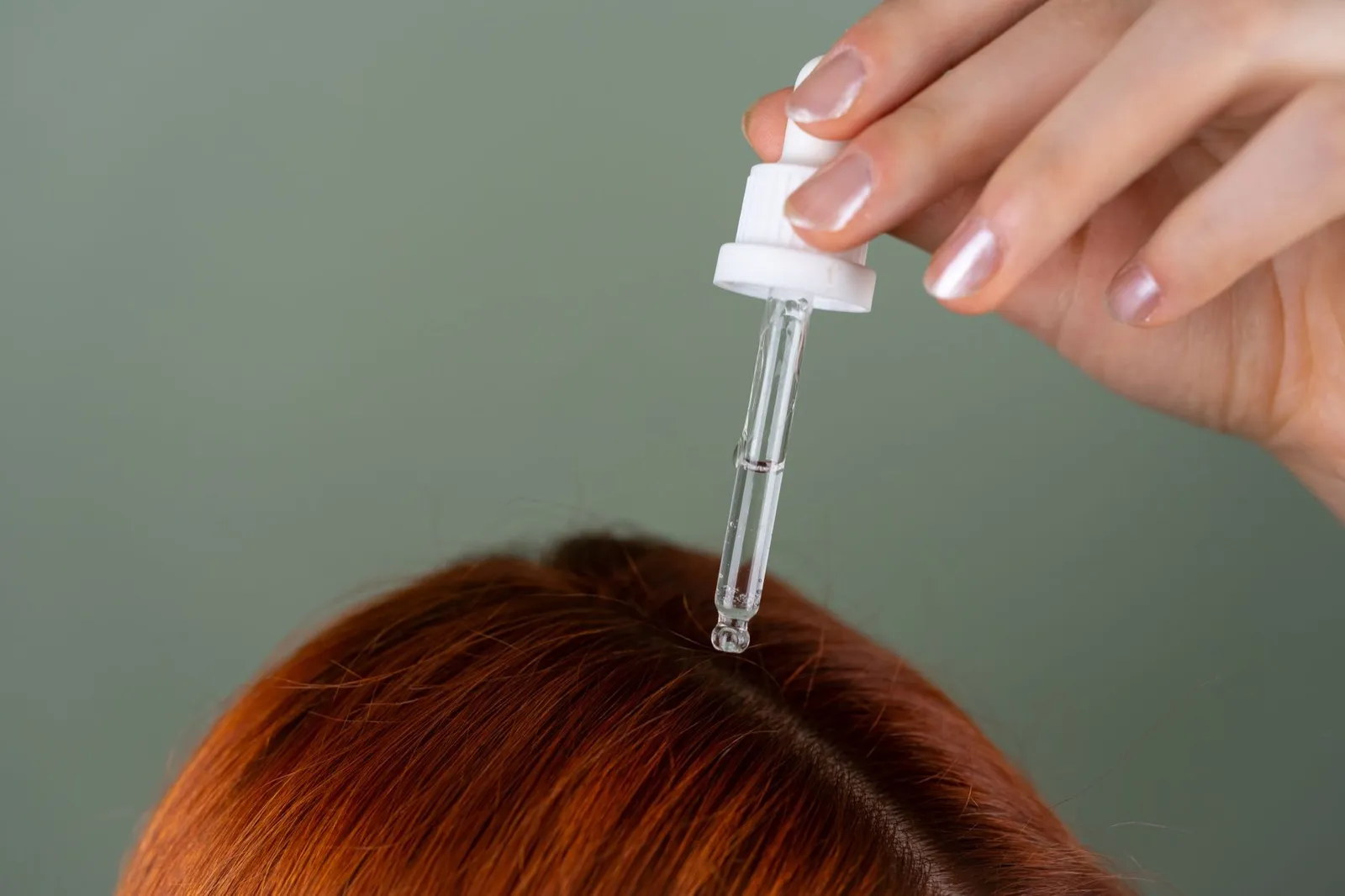
Image Credit: Pexels / Beyzanur K.
A sensible hair growth routine starts with the reason your hair is thinning or shedding, not with collecting as many oils, serums and supplements as possible. If there is an underlying cause such as telogen effluvium, iron deficiency or female pattern hair loss, the most useful approach will be different for each one.
For most people concerned about thinning, a routine can stay quite simple: look after your scalp, handle the hair gently, eat adequately, avoid unnecessary tension and use an evidence-based treatment only when it suits the type of hair loss you have. You do not need a ten-step routine to support healthy hair growth.
The short answer
If you want a hair growth routine for thinning hair, build it in this order:
- Work out what type of hair change you are dealing with.
- Keep your scalp clean and comfortable.
- Reduce unnecessary breakage and pulling.
- Make sure you are eating enough and address genuine nutritional deficiencies.
- Consider an evidence-based treatment if there is one for your type of hair loss.
- Treat oils, scalp massage, light devices and supplements as optional extras rather than the foundation.
- Give any appropriate treatment enough time before judging it.
The NHS recommends seeing a GP if you are worried about hair loss and advises finding out what is causing it before considering a commercial hair clinic.
That is a useful principle for any hair growth routine too.
Step 1: Start with the cause, not the products
“Hair loss” describes many different things.
A person shedding heavily three months after an illness does not necessarily need the same routine as someone whose central parting has slowly widened over several years.
Common patterns include:
- Telogen effluvium: increased shedding from across the scalp, often after illness, stress, childbirth, surgery, significant weight loss or another trigger.
- Female pattern hair loss: gradual thinning over the top of the scalp, often with a wider central parting.
- Traction alopecia: loss caused by repeated pulling or tension on particular follicles.
- Alopecia areata: an autoimmune condition that commonly causes distinct patches of hair loss.
- Hair breakage: strands snapping rather than being shed from the follicle.
- Scalp conditions: inflammation or disease affecting the scalp and sometimes the follicles.
There can also be underlying factors such as iron deficiency or thyroid disease.
You can have more than one issue at the same time.
Before buying treatments, ask yourself what has actually changed. Are you shedding? Thinning? Breaking? Developing patches? Is your scalp uncomfortable?
That answer shapes everything that follows.
Step 2: Keep washing your scalp normally
You do not need to stop washing your hair because you are frightened of seeing more strands come out.
Washing often releases hairs that were already ready to shed.
Choose a shampoo according to your scalp and hair rather than looking for a bottle that promises dramatic regrowth.
For example, you may prefer:
- a simple shampoo if your scalp is comfortable
- a more moisturising formula if your hair tends to feel dry
- a suitable treatment shampoo if a pharmacist or healthcare professional has advised one for a scalp condition
How often you wash can depend on your hair texture, scalp oiliness, styling and personal preference.
The British Association of Dermatologists’ guidance for Afro-textured hair, for example, notes that washing frequency should reflect hair type and product use. It also cautions that both excessive build-up and washing too frequently can create problems for some people.
There is no universal “hair growth wash schedule”.
Step 3: Use conditioner to make the hair easier to handle
Conditioner will not make new follicles appear, but it can still earn a place in a sensible hair routine.
Its job is mainly to improve the feel and manageability of the hair shaft.
Hair that tangles less may be easier to detangle without excessive pulling or snapping.
Apply it according to your hair type and the product instructions. Some people prefer conditioner mainly through the lengths and ends, while very dry or tightly curled hair may benefit from richer conditioning and leave-in products.
This step is about retaining the hair you already have rather than treating a medical cause of hair loss.
That distinction is useful.
Step 4: Reduce breakage without becoming afraid of styling
Hair growth happens at the scalp, but the length you retain affects how full and long your hair eventually looks.
If the strand repeatedly breaks, you can have healthy follicle growth without seeing the length you expect.
You may prefer to reduce:
- repeated very high heat
- aggressive brushing or detangling
- overlapping bleach or harsh chemical processing
- excessive friction
- repeatedly tight hairstyles
- combinations of several damaging practices within a short period
This does not mean heat, colour, braids, extensions or styling are automatically “bad”.
Technique, frequency, hair condition and tension matter.
The British Association of Dermatologists specifically warns that repeated pulling from tight hairstyles can cause traction alopecia. Long-term traction can permanently damage follicles.
A hairstyle that consistently hurts, pulls or leaves your scalp sore deserves adjusting.
Step 5: Make sure your routine includes enough food
A hair growth routine is not only what you put on your scalp.
The NHS lists weight loss and iron deficiency among causes of temporary hair loss. The British Association of Dermatologists also identifies marked weight loss and extreme dieting as possible triggers for telogen effluvium.
If you are eating too little, losing weight rapidly or following a very restrictive diet, adding a hair serum does not address the bigger issue.
Aim for an eating pattern that meets your overall energy and nutritional needs.
That includes adequate protein and a varied range of foods providing vitamins, minerals, carbohydrates and fats.
If you have concerns about your intake, have lost substantial weight or follow a diet that makes it difficult to meet your needs, speak to a GP or registered dietitian.
Step 6: Do not automatically add a hair supplement
Supplements are one of the easiest ways for a simple routine to become unnecessarily complicated.
A supplement can be useful when you have a genuine nutritional need. That is different from taking high doses of vitamins because your hair is thinning.
Iron is a good example.
Iron deficiency can contribute to hair loss, but shedding does not prove that you are iron deficient. If it is suspected, blood tests can help establish whether there is actually a problem.
The same principle applies more broadly.
More nutrients do not necessarily mean more hair growth, and some vitamins and minerals can cause harm when taken in excessive amounts.
If you already eat adequately and do not have a known deficiency, supplements should not automatically be the first step in your routine.
Step 7: Consider minoxidil if female pattern hair loss is the issue
If you have female pattern hair loss and want treatment, topical minoxidil is one of the main evidence-based options.
The NHS states that minoxidil can be used for female pattern baldness, although it does not work for everyone and benefit only continues while it is used.
The British Association of Dermatologists similarly states that topical minoxidil may slow progression and partially restore hair in some women.
This is very different from using minoxidil for every episode of shedding.
For uncomplicated telogen effluvium, the BAD states that medication does not speed up the regrowth process. The follicles generally recover once the trigger has passed.
If you are unsure which type of hair loss you have, ask a GP, pharmacist or dermatologist before building your entire routine around minoxidil.
Where would minoxidil go in a hair growth routine?
Minoxidil is a treatment applied to the scalp, not a cosmetic treatment for the hair lengths.
Follow the instructions supplied with the specific licensed product you use and advice from your pharmacist or healthcare professional.
The British Association of Dermatologists notes that topical minoxidil can cause scalp dryness, redness, scaling or itching. Accidental transfer onto the forehead or face can also encourage unwanted hair growth in those areas.
It may take at least six months before benefit can be assessed in female pattern hair loss.
An initial increase in shedding can occur during the first several weeks.
If you use minoxidil, consistency matters more than surrounding it with multiple additional “growth” products.
The BAD advises avoiding minoxidil if you are planning a pregnancy or breastfeeding. Speak to a healthcare professional if pregnancy is relevant to you.
Do you need rosemary oil as well?
No.
Rosemary oil is optional, not a required step in a hair growth routine.
There is some limited clinical evidence for rosemary oil in androgenetic alopecia, including a small randomised comparative trial that compared rosemary oil with 2% minoxidil. However, the evidence base is much smaller than that for established treatments such as minoxidil.
Using both does not automatically produce better results.
Adding multiple scalp treatments can also make it harder to tell which product is causing irritation.
If you enjoy using a properly formulated rosemary scalp product, you may choose to include it. Avoid applying undiluted essential oil directly to the scalp, follow the product instructions, patch test where advised and stop if irritation develops.
You can also leave it out entirely.
What about scalp massage?
Scalp massage can feel relaxing and may be an enjoyable part of your routine.
There is limited research suggesting that regular scalp massage may influence hair thickness, but the evidence is not strong enough to make it a core treatment for hair loss.
If you like it, keep the pressure comfortable.
You do not need to rub vigorously, scratch the scalp or massage until it becomes sore. More pressure does not mean more growth.
If you are experiencing heavy telogen effluvium, massage may also release hairs that were already ready to shed. That does not necessarily mean you have damaged the follicles.
Treat massage as an optional ritual rather than a medical necessity.
Do scalp oils help hair grow?
Scalp oils are not essential for growth.
An oil can lubricate the hair, reduce friction or make a dry scalp feel more comfortable for some people. Other people find oils heavy, irritating or difficult to wash out.
The word “oil” also covers very different products.
A plain cosmetic oil is not the same as an essential oil, and neither should automatically be treated as a hair-loss medicine.
If an oil suits your scalp and hair, you can use it.
If it causes itching, redness, burning, spots or worsening flaking, stop using it.
Your routine does not become less effective because it contains no scalp oil.
Does caffeine shampoo belong in a hair growth routine?
It can belong in your shower if you like using it, but it should not be the foundation of a hair-loss treatment plan.
Caffeine has biological effects on hair follicles in laboratory research, and caffeine-containing products are widely marketed for thinning hair.
However, the evidence for real-world clinical regrowth from a rinse-off caffeine shampoo is much less established than the evidence for minoxidil in pattern hair loss.
A shampoo also spends relatively little time on the scalp before being rinsed away.
If you enjoy a caffeine shampoo and it cleans your hair well, there is no need to avoid it.
Just keep the job description realistic: shampoo first, optional extra second, proven regrowth treatment only if good evidence supports the specific product and use.
What about LED or low-level light therapy?
Low-level light therapy is another optional treatment rather than a basic requirement.
The British Association of Dermatologists notes that low-level laser light treatment may have a beneficial effect on hair growth in female pattern hair loss, but that more research is required.
Home devices vary in their wavelength, power, design, treatment schedule and supporting evidence.
They can also be expensive.
If you are considering one, look for evidence relating to the specific device rather than assuming every red-light helmet, cap or comb provides the same treatment.
A simple routine does not need an LED device to be legitimate.
Does microneedling belong in a beginner hair growth routine?
Not by default.
Microneedling deliberately creates tiny injuries in the skin. Research has explored it as an adjunct treatment for androgenetic alopecia, often alongside minoxidil.
That does not make home scalp microneedling an essential beginner step.
Technique, device hygiene, needle depth, scalp condition and other treatments being used can all affect safety.
It is particularly sensible to seek professional advice before microneedling if you have scalp inflammation, infection, a skin condition or unexplained hair loss.
You can build a perfectly sensible hair routine without ever using a dermaroller.
What should you do for telogen effluvium?
If your hair loss is telogen effluvium, your routine should be intentionally boring.
The British Association of Dermatologists explains that the condition usually improves without treatment once the trigger has passed.
A sensible routine might be:
- Wash your hair as normally needed.
- Condition and detangle gently.
- Avoid unnecessary pulling and harsh handling.
- Eat a balanced diet with adequate protein and iron.
- Address any identified underlying problem with appropriate medical guidance.
- Give the hair cycle time to recover.
The BAD states that the shedding phase usually lasts around three to six months. New hairs then begin to grow, although it can take many additional months for previous volume to return.
You do not need to chase every shed strand with another product.
What should you do for female pattern hair loss?
If female pattern hair loss has been diagnosed or is strongly suspected, the routine can be more treatment-focused.
A simple version might include:
Morning or evening - Your usual hair and scalp care. - Topical minoxidil according to the instructions for your product and professional advice, if you have chosen to use it.
Wash days - Shampoo according to your scalp’s needs. - Conditioner according to your hair type. - Gentle detangling and styling.
Long term - Avoid repeated painful tension on the hair. - Track progress every few months rather than daily. - Speak to a dermatologist if you want to discuss other treatment options or the diagnosis is uncertain.
Female pattern hair loss generally progresses slowly. Treatment needs patience, and no treatment works for everyone.
What if traction is causing the thinning?
Then the most important part of your routine is reducing the pulling force.
The British Association of Dermatologists states that stopping tight hairstyles is the key step in preventing traction alopecia from worsening and giving hair the best chance to recover.
That may mean:
- loosening braids or cornrows
- changing how extensions are installed
- taking breaks between high-tension styles
- avoiding repeatedly tight ponytails or buns
- protecting the hairline from friction
- changing a style if it feels painful
Early traction alopecia can improve.
Long-standing repeated pulling can permanently damage follicles, so do not rely on oils or supplements while continuing the same tension.
How many products does a hair growth routine actually need?
Potentially very few.
A basic routine could be:
- one shampoo that suits your scalp
- one conditioner that suits your hair
- an optional leave-in or styling product if useful
- one evidence-based hair-loss treatment if appropriate for your diagnosis
That may be enough.
You do not automatically need:
- several scalp serums
- multiple essential oils
- a hair-growth shampoo
- a scalp scrub
- a supplement
- collagen powder
- a massage tool
- an LED helmet
- a microneedling device
Some of those things may have a place for particular people. None of them becomes necessary simply because social media calls it a “hair growth routine”.
Should you introduce several treatments at once?
Usually, starting simply makes more sense.
If you add minoxidil, rosemary oil, a new shampoo, scalp serum, exfoliating treatment and supplement in the same week, two problems appear.
First, you will not know which product caused irritation if your scalp reacts.
Second, you will not know what actually helped if your hair changes months later.
Introduce optional products one at a time where practical.
Follow their instructions and allow appropriate time to assess them.
Hair follicles work slowly. Constantly replacing products every few weeks is unlikely to tell you much.
How long should you give a hair growth routine?
Longer than most beauty marketing suggests.
Hair growth is slow, and the timeline depends on the condition.
With telogen effluvium, shedding can last around three to six months before new growth becomes established.
For female pattern hair loss, the British Association of Dermatologists advises using topical minoxidil for at least six months before benefit may be noticed.
Even when new growth starts, those hairs need time to gain length.
Judge progress over months rather than days.
If you take photographs, keep the lighting, angle and parting similar so you are comparing like with like.
How can you tell if the routine is working?
Define what “working” means for your type of hair loss.
For telogen effluvium, success might mean:
- shedding gradually returning towards your usual amount
- short new hairs appearing
- density slowly recovering
For female pattern hair loss, success might mean:
- the parting remaining stable
- progression slowing
- some improvement in density
- thicker-looking hairs in affected areas
For breakage, it might mean:
- fewer snapped hairs
- better length retention
- less tangling
Do not expect one routine to produce the same result in every condition.
What should you stop doing?
You probably do not need to stop everything you enjoy doing with your hair.
Instead, remove things that are clearly unhelpful.
That may include:
- repeatedly wearing styles that hurt or pull
- aggressively brushing to “stimulate circulation”
- applying undiluted essential oils to the scalp
- taking high-dose supplements without a reason
- changing treatments every few weeks
- assuming every shed hair means your routine has failed
- spending heavily before understanding the cause of your hair loss
A routine should make your hair care easier to manage, not become a second job.
A simple weekly hair growth routine
There is no universal schedule, but this is a practical framework you can adapt.
On wash days
- Shampoo your scalp gently.
- Use conditioner where it helps your hair.
- Detangle in the way that works best for your texture.
- Dry and style without unnecessary pulling or excessive heat.
- Use any evidence-based scalp treatment according to its own instructions.
Between wash days
- Continue any treatment according to its instructions.
- Keep the hair comfortable and avoid sustained tension.
- Use leave-in products or oils only if they genuinely help your hair or scalp.
- Leave your scalp alone if it does not need anything.
Every month or two
- Take progress photographs if you want to track changes.
- Look at the overall trend rather than individual hairs.
- Consider whether shedding, density or scalp symptoms have changed.
That is a hair growth routine. It does not need to be more complicated simply to look convincing.
When to get professional advice
See a GP if you are worried about hair loss. The NHS recommends finding out what is causing the loss before considering a commercial hair clinic.
It is particularly worth seeking professional advice if:
- your hair is suddenly shedding much more than usual
- your central parting is progressively widening
- you have distinct bald patches
- thinning continues to worsen
- your scalp is painful, inflamed, very itchy, scaly or scarred
- you have heavy periods, fatigue or other possible signs of iron deficiency
- you have unexplained weight changes or symptoms that could suggest a thyroid condition
- you have recently experienced major illness, surgery, childbirth, severe stress or substantial weight loss
- your diet has become very restrictive
- you have irregular periods, increased facial or body hair or other possible signs of androgen excess
- hair loss began after a medicine change
- you are pregnant, breastfeeding or trying to conceive and are considering a hair-loss treatment
- hair loss is affecting your wellbeing
A pharmacist can also advise on over-the-counter treatments and their safe use. A dermatologist may be helpful when the diagnosis is uncertain, hair loss is progressive or you want to discuss specialist treatment.
The most useful hair growth routine is rarely the one with the most steps. It is the one that matches the reason your hair is changing, protects the hair and scalp you have, and leaves out treatments you do not actually need.
Related reading
- Related reading will be added during editorial review
Sources
- NHS: Hair loss
- NHS: Women and hair loss, coping tips
- British Association of Dermatologists: Telogen effluvium
- British Association of Dermatologists: Hair loss, female pattern androgenetic alopecia
- British Association of Dermatologists: Traction alopecia
- British Association of Dermatologists: Caring for Afro-textured hair
- Gloucestershire Hospitals NHS Foundation Trust: Minoxidil