How to Burp a Newborn Baby
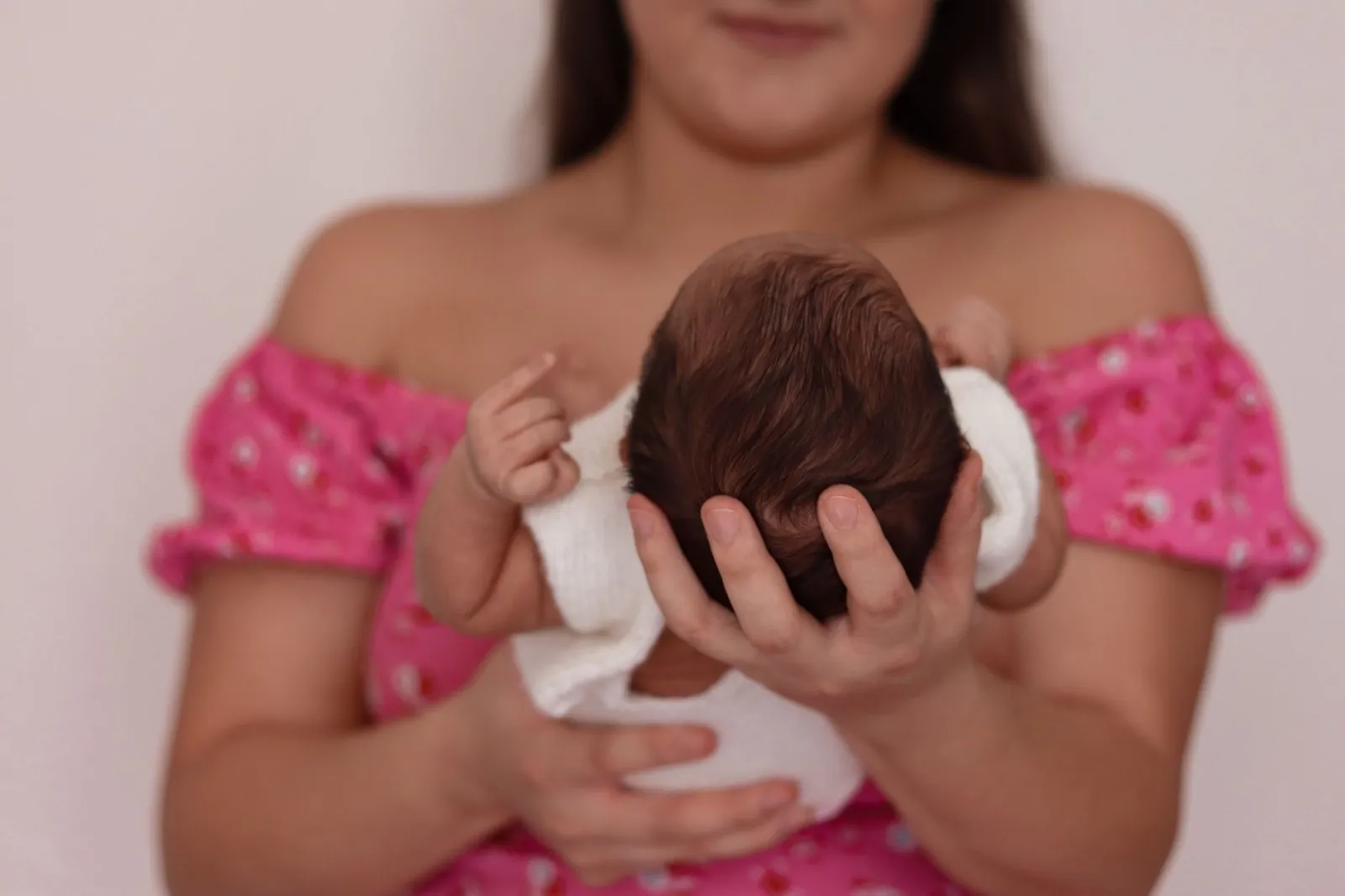
Image Credit: Pexels / Fadime Demirtaş
Burping a newborn can feel surprisingly awkward at first. Their head needs supporting, they seem impossibly small, and sometimes you can spend several minutes waiting for a burp that never arrives.
The basic technique is simple. Support your baby’s head and neck, keep their back and tummy fairly straight rather than curled up, and gently rub or pat their back. The NHS suggests several positions, including holding your baby against your shoulder, sitting them on your lap or laying them face down across your lap.
Some babies burp easily and others do not. There is also no fixed rule that every baby must burp at a particular point in every feed. Watch your baby for signs of discomfort and follow their cues.
Why do newborn babies need burping?
Babies can swallow air while feeding. Small bubbles of air can become trapped in the stomach and may make some babies uncomfortable.
Burping, also called winding, helps that trapped air come back up.
Your baby may need help to burp during a feed, after a feed or sometimes both. Other babies seem comfortable without much winding at all.
This is one of those parts of newborn care where following your baby’s behaviour is more useful than trying to stick to a rigid routine.
When should you burp a newborn?
There is no single correct moment to burp every baby.
NHS guidance says some babies need burping during a feed, while others are comfortable waiting until afterwards.
If your baby seems settled and is feeding comfortably, you do not necessarily need to interrupt them just because you think it is time for a burp.
If they become uncomfortable during a feed, a short winding break may help.
Signs of trapped wind can include:
- crying
- arching their back
- drawing their legs towards their tummy
- clenching their fists
These signs can have other causes too, so they do not prove that trapped wind is the problem.
How to burp a newborn safely
Whichever position you choose, the NHS recommends supporting your baby’s head and neck and keeping their tummy and back straight rather than curled up.
Use gentle rubbing or patting on their back. You do not need to thump or pat forcefully.
Have a muslin cloth nearby too. Babies sometimes bring up a little milk when they burp, which the NHS says is normal.
Here are three positions you can try.
Over your shoulder
Hold your baby upright against your chest with their chin resting on your shoulder.
Support their head and shoulder area securely with one hand.
With your other hand, gently rub or pat their back.
You can remain seated or slowly walk around if you feel steady and comfortable doing so.
This position is often easy to remember, but it is not automatically better than the alternatives. Use whichever position feels secure for you and comfortable for your baby.
Sitting on your lap
Sit your baby on your lap facing away from you.
Place your palm against their chest and support their chin and jaw. Take care not to put pressure on their throat.
Lean your baby slightly forwards while keeping them securely supported.
Use your other hand to gently rub or pat their back.
Because newborns cannot support their own head reliably, keep control of their head and neck throughout.
Lying across your lap
You can also lay your baby face down across your lap.
Support their chin while avoiding pressure on the throat.
With your free hand, gently rub or pat their back.
Keep your baby securely supported throughout and make sure their breathing is unobstructed.
If one position feels awkward, switch to another rather than struggling with it.
How hard should you pat a newborn’s back?
Gentle is enough.
You are not trying to force air out. The aim is to give your baby an opportunity to release trapped wind while keeping them comfortable and supported.
You can alternate between gently patting and rubbing their back.
If you feel nervous about how firmly to hold or pat your newborn, ask your midwife or health visitor to show you. Seeing the technique demonstrated with your own baby can make it feel much more manageable.
How long should you try to burp your baby?
You do not need to spend a long time trying to produce a burp.
The NHS says a couple of minutes should usually be enough.
If your baby seems comfortable and does not burp, you do not need to keep patting indefinitely.
Some babies simply do not burp after every feed.
If your baby repeatedly seems uncomfortable after feeding or you are spending a long time trying to wind them without success, speak to your health visitor. They can look at the wider feeding picture and advise you.
What if your newborn will not burp?
First, try not to worry if no burp appears.
If your baby seems content, there may be nothing else you need to do.
If they appear uncomfortable and you think trapped wind may be the problem, you can try another burping position.
The NHS also suggests laying your baby on their back and gently massaging their tummy if usual winding positions have not worked. You can gently move their legs backwards and forwards in a cycling motion.
If your baby remains uncomfortable despite trying these approaches, speak to your health visitor for advice.
Is it normal for milk to come up when a baby burps?
Yes, bringing up a small amount of milk during or after a burp can be normal.
This is why keeping a muslin square or cloth nearby can save your clothes from becoming part of the feeding routine too.
Bringing up milk is also associated with reflux, which is common in babies.
The NHS says reflux is when a baby brings up milk or is sick during or shortly after feeding. Babies with uncomplicated reflux are often otherwise happy and healthy.
If your baby frequently vomits, seems distressed during or after feeds, refuses feeds or is not gaining weight as expected, speak to your health visitor or GP.
Burping and reflux
If your baby has reflux, the NHS advises burping them regularly during feeds and holding them upright during feeding and for as long as possible afterwards.
Safe sleep advice does not change because a baby has reflux. Babies should sleep flat on their backs, and the NHS advises against raising the head of a cot or Moses basket.
If you suspect reflux or your baby is repeatedly unsettled around feeding, speak to your health visitor or GP rather than changing feeding or sleeping arrangements yourself.
Burping a breastfed newborn
Breastfed babies may still need burping.
There is no rule that every breastfed baby needs to be winded at a particular point in a feed. If your baby becomes uncomfortable, you can pause and try burping them. If they are feeding happily, you can wait until the feed is finished.
If feeding is painful, your baby repeatedly comes off the breast, seems unsettled during feeds or you have concerns about positioning and attachment, ask your midwife, health visitor or a breastfeeding professional for support.
Feeding difficulties are not always caused by trapped wind.
Burping a bottle-fed newborn
Bottle-fed babies may need short breaks during a feed and may need to burp.
The NHS recommends holding your baby close in a semi-upright position during bottle feeding and keeping the bottle roughly horizontal, with a slight tilt, so the milk flows steadily.
Watch your baby’s cues and allow breaks when they need them. Do not force your baby to finish a bottle.
After the feed, you can hold your baby upright and gently rub or pat their back to help bring up any wind.
If you are unsure about bottle-feeding technique, your midwife or health visitor can show you how to position your baby and bottle safely.
When burping does not solve the problem
It is easy to assume that every unsettled moment after a feed must be trapped wind, but babies can be uncomfortable for many reasons.
They may need a nappy change, want closeness, be tired or have another feeding-related issue.
If your baby repeatedly cries during or after feeds, brings up large amounts of milk, refuses feeds or seems persistently distressed, ask for professional advice rather than repeatedly trying to wind them.
A health visitor, midwife or GP can help work out whether feeding technique, reflux or another issue may need attention.
When to get professional advice
Speak to your health visitor, midwife or GP if your newborn regularly seems very uncomfortable during or after feeding, you are struggling to burp them and they remain distressed, they have difficulty feeding, refuse feeds or repeatedly vomit.
Seek urgent medical advice through your GP or NHS 111 if your baby has green or yellow vomit, blood in their vomit or poo, projectile vomiting, a swollen or tender tummy, cannot keep fluids down, refuses to feed, or will not stop crying and is very distressed.
If your baby seems seriously unwell, has difficulty breathing, is unusually unresponsive or you are concerned that something is urgently wrong, seek immediate medical help.
Burping is only one small part of feeding. If something about your baby’s feeding or behaviour does not feel right, you do not need to decide whether trapped wind is the cause before asking for help.