How to Declutter Your Wardrobe Without Regretting It
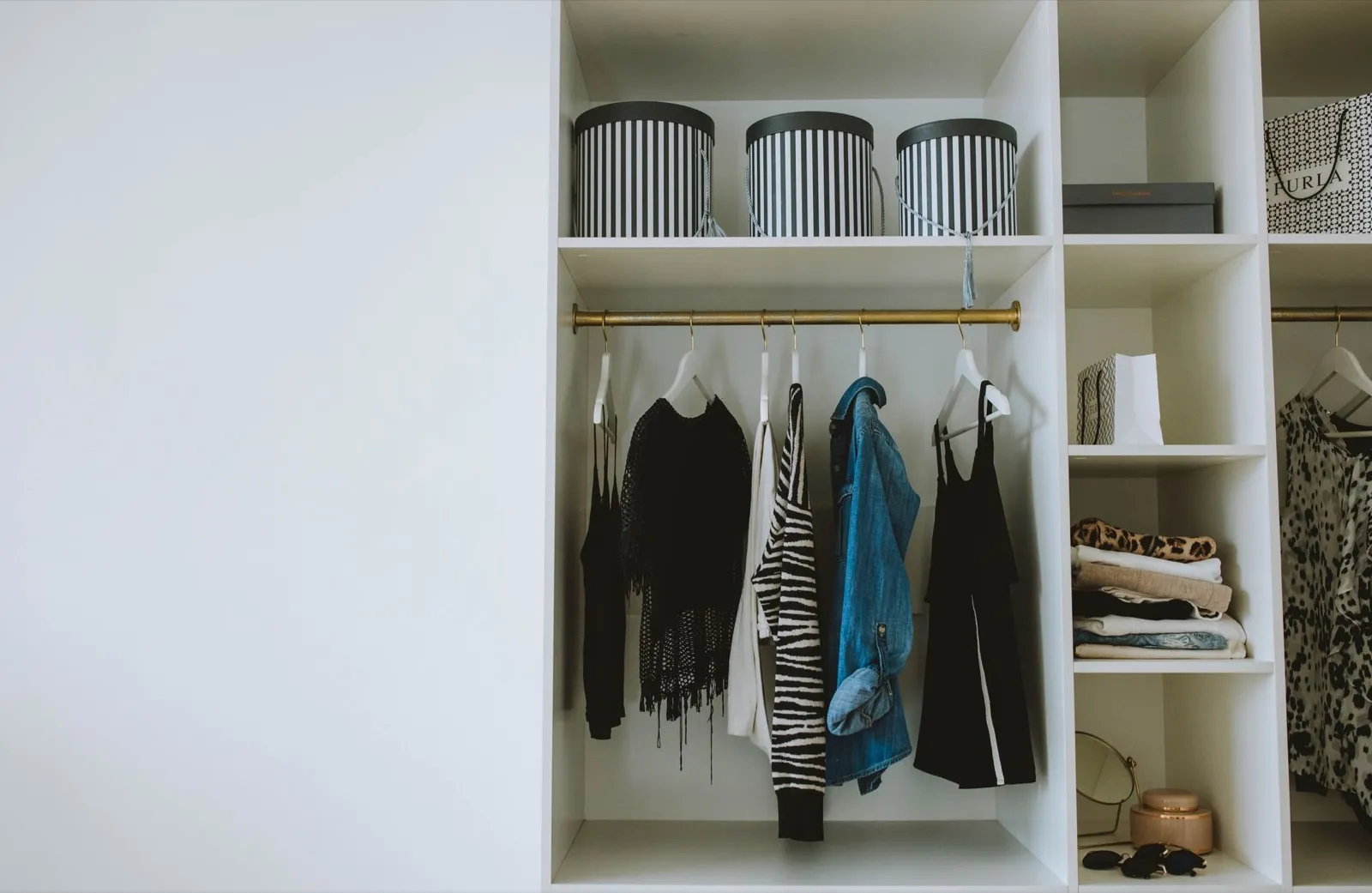
Image Credit: Pexels / Anastasia Shuraeva
The safest way to declutter your wardrobe without regretting it is to avoid making every decision permanent on the same day. Keep the clothes you genuinely wear and value, separate anything you are unsure about, and give yourself time before letting uncertain pieces go.
A wardrobe clear-out does not need to end with bags and bags of clothes leaving your home. The aim is simply to make your wardrobe easier to use while keeping the pieces that still have a place in your life.
Start with the reason you want to declutter
Before removing anything, decide what you actually want to improve.
Perhaps your wardrobe is physically overcrowded. Maybe you own plenty of clothes but struggle to make outfits. You might have changed jobs, moved somewhere with a different climate or simply noticed that your style has shifted.
Your reason matters because it changes what a successful declutter looks like.
If storage is the problem, better organisation may solve more than removing clothes.
If getting dressed is difficult, the issue might be that your most useful pieces are hidden among clothes you rarely wear.
If your style has changed, you may want to identify what feels current to you before deciding what no longer belongs.
You do not need to reduce your wardrobe to a particular number. You only need to make it work better for you.
Do not empty your entire wardrobe unless that helps you
Pulling every garment onto the bed can create pressure to finish quickly, especially if the process takes longer than expected.
A calmer approach is to work category by category.
You could start with:
- everyday tops
- trousers and jeans
- skirts
- dresses
- knitwear
- jackets and coats
- workwear
- occasion wear
- shoes
- accessories
Choose one manageable group, make your decisions, put everything away and then continue if you still have the time and energy.
This makes it easier to think carefully rather than making rushed decisions because you need your bed back.
Create more than two piles
A simple keep-or-remove system can make uncertain decisions unnecessarily difficult.
Try using several categories instead:
Keep
These are clothes you wear, enjoy or have a clear reason to own.
Maybe
These are pieces you are genuinely unsure about.
Repair or alter
These are clothes you would wear if a practical problem were fixed.
Seasonal or occasional
These are useful pieces that do not need to occupy prime everyday wardrobe space.
Let go
These are clothes you feel ready to sell, donate, recycle where appropriate or otherwise pass on.
The “maybe” category is particularly useful. It gives you permission not to know immediately.
Start with what you already know you love
One of the easiest ways to declutter is to identify your reliable clothes first.
Look for pieces that you:
- wear frequently
- reach for without much thought
- enjoy styling in several ways
- feel comfortable wearing
- regularly miss when they are in the wash
- would happily choose again tomorrow
Put these pieces back into your wardrobe.
They give you a useful picture of what your real style looks like now.
You might notice repeated colours, fabrics, silhouettes or outfit formulas. Perhaps you wear straight-leg trousers constantly, prefer relaxed shirts or keep returning to simple dresses with trainers.
Those patterns can make the harder decisions clearer.
Ask practical questions about the uncertain pieces
For each item you are unsure about, avoid asking only, “Do I like this?”
You can like a garment without actually wanting to wear it.
Instead, ask:
Would I choose this for a real occasion in my current life?
If you are keeping a blazer for work, can you imagine wearing it to work next week?
If you are keeping a dress for dinner, would you realistically choose it over the other dresses you own?
Can I make an outfit with it using clothes I already have?
A piece may be beautiful on its own but difficult to use within your wardrobe.
Is there something specific stopping me from wearing it?
Perhaps it needs a repair, different styling or a simple alteration.
Am I keeping it for my present life or an imagined one?
There is nothing wrong with having aspirational clothes, but it helps to recognise them as such.
Would I notice if this disappeared from my wardrobe for a month?
This can be particularly revealing for pieces that have been sitting untouched for a long time.
Try the clothes you are genuinely unsure about
Memory is not always a good guide to how something feels now.
If you cannot decide about a garment, put it on.
Move around in it. Sit down. Try it with the shoes, trousers, skirt or jacket you would realistically wear with it.
You may discover that you still love it.
You may also realise that you keep avoiding it because the fabric feels uncomfortable, the fastening annoys you or it simply does not suit the outfits you now enjoy wearing.
The point is not to judge how your body looks in the garment. It is to decide whether the garment works for you.
Make a temporary maybe box
This is one of the easiest ways to reduce decluttering regret.
Put uncertain clothes in a clean box, suitcase or spare section of your wardrobe. Choose a review date that suits you, perhaps in a few weeks or at the end of the relevant season.
Then carry on with normal life.
If you repeatedly think about a particular item, retrieve it.
If the review date arrives and you have not missed anything, you may feel much clearer about what you are ready to release.
This method is especially useful if you tend to regret quick decisions.
Just remember that the box is a decision-making tool, not permanent storage. Give yourself a point when you will look at it again.
Be careful with seasonal clothes
A winter coat may look unnecessary during a warm August clear-out. A linen dress may feel equally irrelevant in January.
Judge strongly seasonal clothing within the season when you would realistically use it, or store it until then.
The same applies to clothes for specific activities.
Ski wear, hiking clothes, formal outfits, maternity clothes you intentionally want to retain, religious or cultural clothing, and specialist workwear may not be frequently worn but can still have a clear purpose.
Low wear does not automatically mean an item should leave your wardrobe.
Treat sentimental clothes differently
Some clothes matter because of what they represent rather than because you wear them.
That is a perfectly valid reason to keep something.
The problem comes when sentimental pieces are mixed into your everyday wardrobe and then judged by everyday standards.
If you want to keep a dress from an important celebration, a relative’s scarf or a T-shirt connected to a meaningful time in your life, consider storing it with other sentimental belongings.
You do not have to force a memory to function as an everyday outfit.
If you have many sentimental garments, you might choose the pieces that hold the strongest meaning rather than feeling obliged to keep every one.
Do not declutter clothes because they are no longer fashionable
Trends move quickly, while personal preferences often last much longer.
If you still enjoy a garment, it works with your wardrobe and you want to wear it, there is no need to remove it because a different silhouette or colour is currently receiving more attention.
The reverse is also true.
A piece can be fashionable and still be wrong for your wardrobe.
Use your own wearing habits as the main guide.
Separate fit from worth
Bodies change for many reasons, and clothes can fit differently over time.
You do not need to use a wardrobe declutter as a judgement on your body.
If something does not currently fit, decide what would be most useful for you.
You might keep it, store it temporarily, alter it if appropriate or let it go.
There is no universal rule that says clothes in a different size must immediately leave your home.
What matters is whether keeping them feels practical and comfortable for you, and whether you have enough clothing that works for your present needs.
Do not keep an item only because it was expensive
The original price can make letting go difficult.
But the money has already been spent. Keeping the garment does not return it.
A more useful question is whether the piece has value to you now.
Do you wear it?
Would you like to wear it?
Does it have sentimental importance?
Would selling it be worthwhile for you?
If none of those apply, the original price may be the main thing keeping it in your wardrobe.
You do not have to make a decision immediately, but recognising the reason can help.
Do not remove everything you have not worn recently
Rules such as removing anything unworn for six months or a year sound efficient, but they miss context.
You may not have worn a formal outfit because you did not attend a formal event.
A heavy coat may have stayed untouched through an unusually mild winter.
Your lifestyle may temporarily have changed.
Instead of using time alone, combine it with purpose.
Ask why the item has not been worn and whether the situation in which you would use it still exists.
That gives you a much more useful answer.
Look for duplicates you do not actually use
Duplicates are not automatically unnecessary.
If you wear white T-shirts constantly, owning several may be very practical.
If you have six similar black jumpers but consistently choose the same two, however, it may be worth comparing them.
Lay similar pieces together and ask which ones you genuinely prefer.
Look at:
- comfort
- fabric
- cut
- condition
- how easily they combine with other clothes
- how often you reach for each one
Seeing similar garments side by side can make preferences much clearer.
Make outfits before removing difficult pieces
Sometimes an item feels wrong because you have forgotten how to style it.
Before letting go of something you once enjoyed, try making two or three outfits with it using your existing wardrobe.
A midi skirt might feel more current to you with a simple T-shirt and trainers than with the blouse you previously wore.
A blazer you stopped using for work might become an easy layer over jeans.
A dress might work differently with flat shoes and a cardigan.
If the new combinations still do not make you want to wear the item, you have learned something useful.
Deal with repair and alteration clothes properly
A repair pile can easily become another form of clutter.
If you find something that needs a button, zip repair, hem adjustment or another alteration, decide whether you genuinely want to fix it.
Put repair items somewhere separate and give yourself a realistic time to deal with them.
If months pass and you still do not care enough to arrange the repair, you can reconsider whether the garment deserves space.
The important part is distinguishing “I would wear this if it were fixed” from “I feel guilty getting rid of this because it could theoretically be fixed.”
Take photographs of memorable pieces
Sometimes the memory matters more than the physical garment.
If you feel attached to something but do not want to store it indefinitely, a photograph may be enough.
You could photograph the garment itself or find a picture of yourself wearing it.
This will not work for every sentimental item, and it does not need to. It is simply another option if storage is limited.
Wait before donating or selling uncertain clothes
Once you have finished, you do not necessarily need to remove everything from your home that same afternoon.
If there are pieces you feel uncertain about, keep the bag somewhere out of sight for a short period.
Do not repeatedly reopen it just to reconsider every decision. Simply give yourself enough time to notice whether anything comes to mind.
If you suddenly remember the perfect jacket you packed away, retrieve it.
If you forget what is in the bag, that information can be useful too.
For pieces you are completely comfortable releasing, there is no need to create an unnecessary waiting period.
Decide what happens to clothes before you start
A clear plan can prevent unwanted clothes from becoming a different kind of clutter.
Depending on the item and the options available to you, you may choose to:
- sell it
- donate it
- give it to someone who wants it
- repair or alter it
- repurpose it
- use an appropriate textile recycling route
Do not assume every organisation accepts every type of garment. Check the requirements of the specific charity, resale service or recycling scheme you plan to use before sending items.
Organise what remains so you can see it
Decluttering is only useful if the wardrobe becomes easier to live with.
Put your most frequently worn pieces somewhere accessible.
Group similar clothes together if that helps you find them. You might organise by garment type, colour, work and casual wear, or another system that makes sense to you.
Move strongly seasonal or occasional clothes away from prime wardrobe space if possible.
You may find that you needed better visibility more than you needed fewer clothes.
Notice what your declutter teaches you
A wardrobe clear-out can show you patterns that are useful for future shopping.
Perhaps you repeatedly removed:
- fabrics you find uncomfortable
- colours you rarely wear
- very formal pieces
- complicated garments
- shoes that do not suit your routine
- clothes bought for an imagined version of your lifestyle
You do not need to turn these observations into strict rules.
Just remember them.
If you consistently avoid a particular type of garment, you might pause before buying another version of it.
Equally, if your favourite pieces share certain qualities, those are useful clues about what works well for you.
A simple no-regret wardrobe decluttering method
If you want a straightforward process, use this order:
- Choose one clothing category.
- Put obvious favourites back first.
- Remove anything you are completely ready to release.
- Try on genuinely uncertain pieces.
- Create outfits with anything you cannot decide how to wear.
- Separate repairs, seasonal clothes and sentimental pieces.
- Put unresolved items into a temporary maybe box.
- Organise the clothes you are keeping.
- Wait before making uncertain decisions permanent.
- Review the maybe box at the date you chose.
The result does not have to be a tiny wardrobe.
It should simply be a wardrobe where the clothes you use and enjoy are easier to see.
The goal is clarity, not the smallest wardrobe possible
A successful wardrobe declutter is not measured by the number of bags you remove.
You might clear out twenty pieces. You might remove three. You might realise that your wardrobe mainly needed reorganising.
The best decisions are the ones you still feel comfortable with later.
Keep what works for your life, your style and your circumstances. Give uncertain pieces time. Treat sentimental and occasional clothes according to their real purpose.
There is no prize for making your wardrobe as small as possible. A useful wardrobe is one that gives you enough choice, fits your real routine and makes getting dressed feel simpler.
Related reading
- Wardrobe Essentials: How to Build a Wardrobe You Actually Wear
- How Many Clothes Do You Actually Need?
- How to Build a Wardrobe From Scratch