How to Determine Your Body Shape
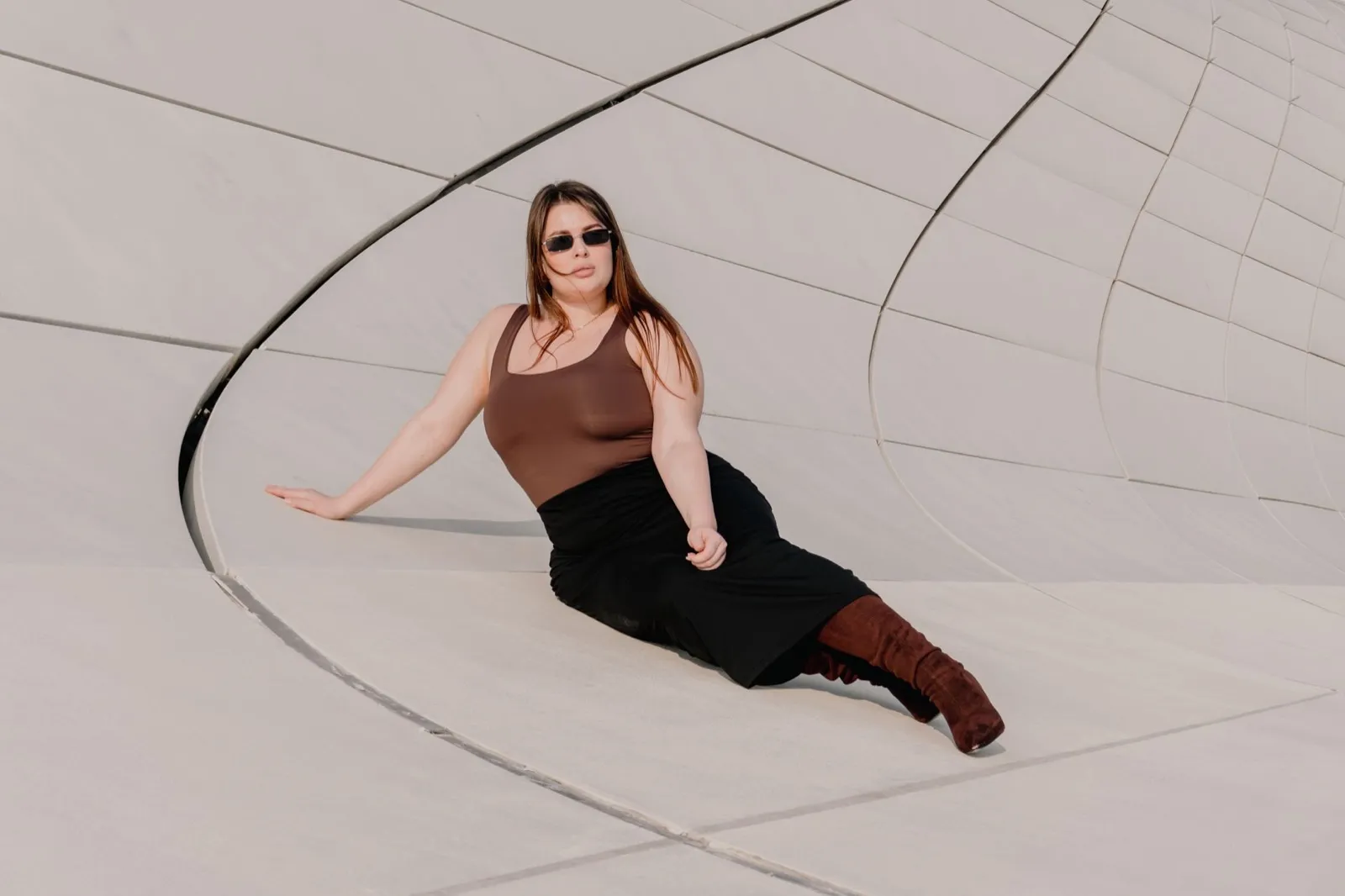
Image Credit: Pexels / Zulfugar Karimov
To determine your body shape, look at the proportions between your shoulders or bust, waist and hips. You can do this visually in a mirror or photograph, or take measurements if you want a more objective comparison.
Body-shape labels such as hourglass, pear, rectangle, inverted triangle and apple are simply descriptive shortcuts. They are not precise scientific categories, and real bodies do not always fit neatly into one of them.
You also do not need to know your body shape to dress well. It can be useful if it helps you understand how different garment shapes sit on your body, but it should never become a list of features you are expected to hide, balance or correct.
What does body shape actually mean?
In fashion, body shape usually refers to the relationship between different areas of the torso, particularly the shoulders or bust, waist and hips.
Two people who wear the same clothing size can have different proportions. One may have shoulders and hips of a similar width with a more defined waist, while another may have relatively broader hips or shoulders.
Body-shape systems give names to these broad patterns.
Common terms include:
- hourglass
- pear or triangle
- inverted triangle
- rectangle
- apple or round
You may also come across other names and more detailed systems.
These categories are approximate. Depending on the system used, the same person could even receive different labels.
Treat them as vocabulary for describing proportions rather than a definitive classification of your body.
How to look at your proportions
A simple starting point is to stand naturally in front of a full-length mirror.
Wear something relatively close to the body if you are comfortable doing so, as loose clothing can make proportions harder to see.
Keep your posture natural rather than pulling your stomach in or deliberately changing how you stand.
Look at three main areas:
Shoulders or bust: How wide does the upper part of your torso appear?
Waist: Is there a noticeable difference between the waist and the areas above and below it?
Hips: How does the width around your hips compare with your upper body?
You are looking for relationships rather than judging individual areas.
For example, your hips may appear noticeably wider than your upper body, or your shoulders and hips may look fairly similar.
If visual assessment feels unclear, measurements can make the comparison easier.
How to measure your body shape
You will need a flexible measuring tape.
Measurements can vary slightly depending on exactly where the tape sits, so there is no need to chase perfect precision.
If possible, measure over underwear or close-fitting clothing.
Shoulders
Shoulder measurements can be awkward to take alone because the tape needs to follow around the widest area of the shoulders.
If this feels difficult, you can use your bust measurement as your main upper-body reference instead.
Bust
Measure around the fullest part of your bust.
Keep the tape level around your body and comfortably close rather than pulling it tightly.
Waist
Measure around the area you naturally identify as your waist, often around the narrower part of the torso.
Try bending gently to one side if you are unsure where your natural waist sits. The point where your torso folds can provide a useful reference.
Hips
Measure around the fullest part of your hips and seat.
Keep your feet in a natural position and make sure the tape stays roughly level.
Write the measurements down so you can compare them rather than relying on memory.
What is an hourglass body shape?
An hourglass shape generally describes proportions where the upper body and hips are relatively similar in width and the waist is noticeably narrower.
You may recognise this pattern if:
- your bust or shoulders and hips appear broadly similar
- your waist creates a clearer inward curve between them
- fitted garments often follow a more visibly curved line through your torso
You do not need perfectly equal measurements to use this description.
Bodies are three-dimensional and individual proportions vary considerably.
If the label helps you describe your shape, use it. If it feels inaccurate, you do not need it.
What is a pear or triangle body shape?
A pear or triangle shape generally describes a body where the hip area is proportionally wider than the upper body.
You may notice:
- your hips appear wider than your shoulders or bust
- trousers or skirts may require a different fit consideration from tops
- your waist may be defined, although this varies
Some fashion advice traditionally tells people with this shape to visually “balance” their hips by adding width to the upper body.
You do not have to do that.
You might enjoy strong shoulders, statement sleeves or brighter tops, but those are styling choices rather than corrections your body requires.
You can equally choose clothes that follow, emphasise or simply accommodate your natural proportions.
What is an inverted triangle body shape?
An inverted triangle generally describes proportions where the shoulders or upper torso appear wider than the hips.
You may notice:
- your shoulders are relatively prominent compared with your hips
- jackets and tops sometimes need more room than bottoms
- your lower body appears straighter or narrower in comparison
You may see advice suggesting that this body shape should add volume around the hips.
Again, that is optional.
Wide trousers and fuller skirts may be silhouettes you enjoy, but straight trousers, slim shapes or anything else can work too.
Your proportions describe your body. They do not prescribe your wardrobe.
What is a rectangle body shape?
A rectangle shape generally describes a body where the shoulders or bust, waist and hips have relatively similar proportions, with less difference at the waist.
You may recognise this description if:
- your upper body and hips appear similar in width
- your waist has a subtler inward curve
- your torso has a relatively straight outline
Traditional styling advice sometimes focuses on creating the appearance of a more defined waist.
That is not something you need to do.
You might enjoy belted dresses or high-waisted trousers, but you may equally prefer straight tailoring, loose dresses, oversized shirts or relaxed layers that follow a completely different silhouette.
What is an apple or round body shape?
Apple or round is a broad fashion term generally used when the middle of the torso is proportionally fuller, often with less visible definition at the waist.
Depending on the individual, the bust, shoulders, hips and legs can vary considerably within this category.
This is one reason body-shape labels have limitations. Two people described with the same label may still have very different proportions and clothing preferences.
Advice for this shape has often focused heavily on making the middle of the body appear smaller.
You do not need to dress with that goal.
Instead, think about practical questions such as where waistbands feel comfortable, how fabrics sit when you move and which silhouettes you personally enjoy.
What if you are between two body shapes?
That is very common.
You might see characteristics of both a rectangle and an hourglass, or feel that your proportions sit somewhere between pear and hourglass.
You do not need to choose one.
Body-shape categories are simplified descriptions of a much wider range of human proportions.
You can use whichever information is helpful.
For example, you might notice that your hips are slightly wider than your shoulders but that your waist is also quite defined. Both observations can help you understand clothing fit without requiring a single label.
Your body shape can change
Body proportions are not necessarily fixed throughout life.
They can change for many ordinary reasons, including ageing, pregnancy, hormonal changes, changes in muscle or body composition, and other shifts over time.
This does not mean you need to repeatedly classify yourself.
If clothes begin fitting differently, it may simply be useful to reassess the cuts, sizes or proportions that feel comfortable now rather than relying on an old label.
Clothing should adapt to your body, not the other way around.
Body shape is different from clothing size
Body shape and clothing size describe different things.
A clothing size relates to a brand’s garment measurements and sizing system. Body shape describes relative proportions.
People across many different sizes can have similar body shapes.
Equally, two people wearing the same nominal size may need quite different cuts because their proportions are different.
This is also why the number on a clothing label cannot tell you how a garment will fit your individual body.
Body shape is not the same as body type
You may see phrases such as “body shape” and “body type” used interchangeably online.
In fashion content, they often refer loosely to visual proportions.
Other body-type systems may use completely different categories or claim to classify people using additional characteristics.
For practical wardrobe purposes, you do not need a complicated system.
Knowing simple things such as “I usually need more room through my hips” or “jackets often feel tight across my shoulders” may be much more useful than identifying a perfect category.
Use body shape to understand fit, not restrict your clothes
The most practical reason to think about body shape is to understand why clothes fit differently.
Suppose trousers fit comfortably through your hips but leave extra room at the waist.
That is useful information.
Or perhaps a jacket fits through the body but feels restrictive across your shoulders.
Again, useful information.
You can use these patterns when choosing cuts, comparing sizes or considering alterations.
You do not need to turn them into rules such as “I cannot wear this skirt shape” or “my body type should never wear that neckline”.
If you like something and feel comfortable wearing it, your body-shape category does not overrule that.
Experiment with silhouettes instead of following rules
Once you understand your proportions, try different silhouettes and notice what you enjoy.
You could compare:
- straight and wide-leg trousers
- fitted and oversized shirts
- cropped and longer jackets
- loose and more structured dresses
- different skirt shapes
- high, mid and lower waist positions
- soft and structured fabrics
Pay attention to comfort as well as appearance.
Can you sit comfortably?
Does the waistband stay where you want it?
Can you move your arms easily?
Do you spend the day adjusting the garment?
These observations are often more useful than a list telling you which clothes are supposedly designed for your shape.
Take outfit photographs if that helps
Mirrors give you one perspective. A photograph can give you another.
If you are exploring proportions, take simple full-length photographs of several outfits.
Compare them and ask:
- Which silhouettes do I enjoy most?
- Do I prefer more structure or softness?
- Which trouser shapes feel most like my style?
- Do I enjoy emphasising my waist, ignoring it or changing approach depending on the outfit?
- Which jacket lengths work with the clothes I already own?
There is no correct answer.
The purpose is to understand your preferences rather than evaluate your body.
Do not confuse “flattering” with compulsory
Body-shape advice often uses the word “flattering” to describe clothes that make the body appear closer to a particular ideal.
That can quietly turn personal styling into a set of instructions about which features should appear larger, smaller, longer or narrower.
You do not need to approach clothes that way.
You may enjoy emphasising your waist one day and wearing a completely loose silhouette the next.
You might choose an outfit because you love its colour, texture, movement or proportions rather than because it changes how your body appears.
Clothes can simply be clothes you enjoy wearing.
A simple body-shape checklist
If you want to determine your body shape, use this as a starting point:
- Look at your shoulders or bust, waist and hips.
- Compare their proportions visually.
- Take bust, waist and hip measurements if you want more clarity.
- Notice whether your upper and lower body are similar or different in width.
- Look at how much definition there is between your waist and the areas above and below it.
- Compare your observations with broad body-shape descriptions.
- Use more than one label if that describes you better.
- Ignore a category if it does not feel useful.
- Pay attention to how real clothes fit your individual proportions.
- Choose silhouettes because you like wearing them, not because a category says you should.
Determining your body shape can give you useful language for understanding proportions, but it does not reveal a secret set of clothes you are allowed to wear.
Use the information that helps. Leave the rules that do not. Your wardrobe can be built around comfort, personal taste and the silhouettes you genuinely enjoy, whatever label happens to describe your proportions.
Related reading
- How to Dress for Your Body Shape
- How to Dress for Your Proportions, Not Just Your Body Shape
- How to Dress a Short Torso vs a Long Torso