LED Light Therapy for Hair Growth and Whether It Actually Works
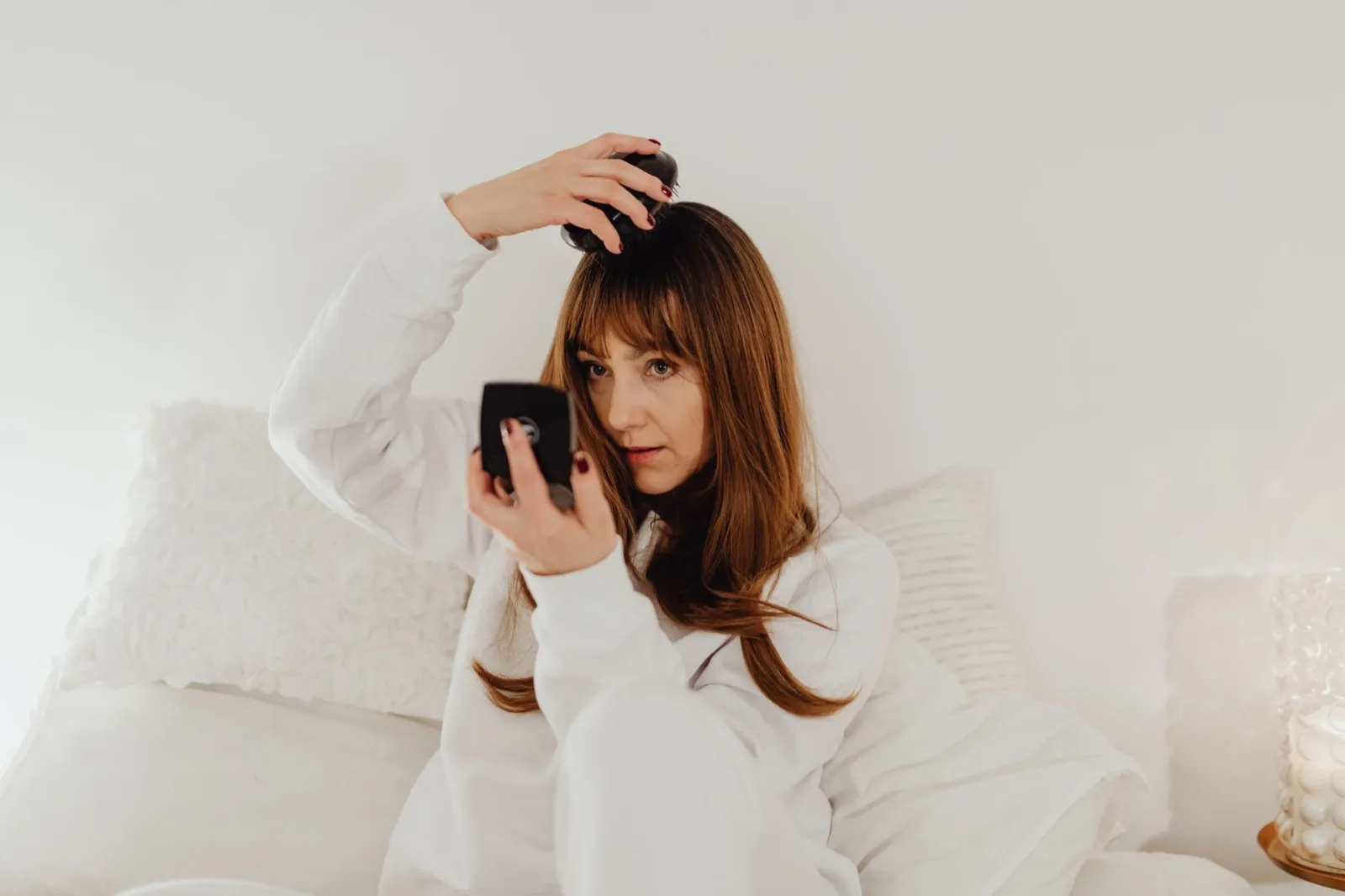
Image Credit: Pexels / https://kaboompics.com/
LED light therapy for hair growth is not simply a beauty trend. There is clinical evidence that low-level light therapy can improve hair density in people with androgenetic alopecia, the medical name for pattern hair loss. A 2025 systematic review and meta-analysis found a significant improvement in hair density compared with placebo in studies of androgenetic alopecia.
That does not mean every red-light device will regrow hair, or that LED therapy works for every type of hair loss. Most of the evidence is for pattern hair loss, while research on telogen effluvium, alopecia areata and other conditions is much more limited. Devices also vary considerably, so buying any lamp that happens to produce red light is not the same as using a device studied for hair loss.
The short answer
Low-level light therapy appears to be a genuine treatment option for pattern hair loss, although it is not guaranteed to work.
Research suggests it can increase hair density compared with sham treatment in androgenetic alopecia. Studies include both men and women, and devices have included combs, helmets, caps and other designs.
The evidence is much weaker for other types of hair loss.
If your hair is shedding because of illness, childbirth, severe stress, rapid weight loss or another trigger, for example, you may have telogen effluvium. In that situation, the British Association of Dermatologists explains that the follicles usually recover without medication once the trigger has passed.
So before investing in an LED device, the useful first question is not “Which red-light cap should I buy?” It is “What type of hair loss do I actually have?”
What is LED light therapy for hair growth?
Hair-growth devices are often described using several overlapping terms:
- LED light therapy
- red light therapy
- low-level light therapy
- low-level laser therapy
- LLLT
- photobiomodulation
These terms are sometimes used interchangeably in marketing, but the technology is not always identical.
Some devices use light-emitting diodes, or LEDs. Others use low-level lasers. Some combine both.
The broader term photobiomodulation describes the use of low-intensity light to influence biological processes in cells and tissues.
Unlike lasers used to cut, resurface or deliberately heat tissue, low-level light therapy is intended to deliver light without causing that type of thermal damage.
How is red light supposed to help hair grow?
The exact biological mechanisms are still being investigated.
Low-level red and near-infrared light is thought to interact with cells within the hair follicle. Proposed effects include changes in cellular energy production, signalling and the hair-growth cycle.
One theory is that treatment may encourage follicles to remain in, or return to, the active growth phase.
This is biologically plausible, but it is worth separating the proposed mechanism from the result that matters to someone using a device.
The practical question is whether treated people actually grow more hair than people using a sham device.
For androgenetic alopecia, several randomised trials and systematic reviews suggest that they can.
Does LED light therapy actually work for hair growth?
For androgenetic alopecia, the evidence is reasonably encouraging.
A 2025 systematic review and meta-analysis published in Dermatologic Surgery included 38 studies and 3,098 patients across several types of alopecia. Most participants had androgenetic alopecia.
The researchers found that low-level laser and LED therapy significantly increased hair density compared with placebo in androgenetic alopecia.
An earlier systematic review and meta-analysis of randomised controlled trials also found a significant improvement in hair density compared with sham devices.
A more recent 2026 systematic review and meta-analysis of lasers and energy-based devices likewise reported improvements in hair density with low-level light therapy.
So it would be inaccurate to say that red light for hair growth has no evidence behind it.
It would be equally inaccurate to promise that it will restore everyone’s hair.
What type of hair loss has the best evidence?
The strongest evidence is for androgenetic alopecia, also called pattern hair loss.
In women, female pattern hair loss commonly causes gradual thinning over the top of the scalp. The central parting may become wider and more scalp may gradually become visible.
This is different from suddenly shedding large amounts of hair after a stressful event or illness.
The 2025 meta-analysis on low-level laser and LED therapy included only small numbers of people with conditions other than androgenetic alopecia. The authors said there was insufficient statistical information to perform a meta-analysis for those other types.
That matters because “hair loss” is not one diagnosis.
Evidence from female or male pattern hair loss cannot automatically be applied to every person whose hair is falling out.
Does LED therapy work for female pattern hair loss?
It may.
Female pattern hair loss is one form of androgenetic alopecia, which is where most low-level light therapy research has been conducted.
The British Association of Dermatologists states that low-level laser light treatment may have a beneficial effect on hair growth in female pattern hair loss, while also noting that more research is required.
Results vary.
Some people may see increased density. Others may see little visible change.
Female pattern hair loss is generally progressive, so treatment goals can also differ. For one person, success might mean some regrowth. For another, slowing further thinning may be meaningful.
A dermatologist can help confirm whether the pattern you are seeing is actually female pattern hair loss before you spend money on a device.
Does red light therapy work for telogen effluvium?
We do not have the same level of evidence.
Telogen effluvium is a temporary form of excessive shedding that can follow triggers such as childbirth, illness, major surgery, psychological stress, marked weight loss, extreme dieting, medicines or hormonal changes.
The British Association of Dermatologists states that the shedding phase usually lasts around three to six months and that hair then begins to grow again.
The 2025 low-level light therapy meta-analysis included only 17 people with telogen effluvium among more than 3,000 participants overall. That is far too little to give the same confidence we have for androgenetic alopecia.
If you have straightforward telogen effluvium, time and addressing any ongoing trigger are generally more important than buying a light device.
What about alopecia areata?
Evidence is also limited.
Alopecia areata is an autoimmune condition and commonly causes distinct patches of hair loss.
It is biologically and clinically different from pattern hair loss.
The 2025 meta-analysis included only a small number of participants with alopecia areata, and there was not enough statistical information to establish effectiveness in the way researchers could for androgenetic alopecia.
If you develop sudden bald patches, seek medical assessment rather than treating them at home with a red-light device.
What about scarring hair loss?
Do not rely on LED therapy for unexplained hair loss with signs of inflammation or scarring.
Scarring alopecias can permanently damage hair follicles.
Possible warning signs can include scalp pain, burning, redness, scaling or areas where the skin appears smooth and follicle openings are no longer visible.
These symptoms need proper assessment.
Once a follicle has been destroyed by a scarring process, a consumer light device cannot simply recreate it.
Early diagnosis can matter because treatment may focus on preventing further permanent loss.
Is LED the same as laser therapy?
Not exactly.
An LED produces light differently from a laser. Laser light has properties such as coherence and directionality that ordinary LED light does not.
However, both types of device can be used for low-level light therapy, and reviews of hair-loss research often group laser and LED photobiomodulation together.
This can make product comparisons confusing.
A company may describe its product as “laser”, “LED”, “red light” or “LLLT”, but the label alone does not tell you how well it has been studied.
The useful questions are what wavelengths the device produces, how much energy reaches the scalp, how treatment is delivered and whether the specific device or a genuinely comparable system has been evaluated in good clinical trials.
Does the wavelength matter?
Yes.
Photobiomodulation depends on delivering light within particular wavelength ranges to the target tissue.
Hair-growth devices commonly use red light, often with wavelengths somewhere in the 600 to 700 nanometre region, although device specifications vary and some systems use additional wavelengths.
This does not mean that one exact wavelength has been proven universally superior.
Studies use different devices, treatment schedules, energy doses and wavelengths, which is one reason it is difficult to identify a perfect formula.
A device having “red LEDs” is not enough information by itself.
Is any red-light lamp good enough?
No.
A general red-light lamp designed for mood lighting, decoration or another purpose should not be assumed to provide the same treatment as a hair-growth device.
The amount of light reaching the scalp matters.
So do:
- wavelength
- irradiance
- treatment area
- distance from the scalp
- treatment duration
- frequency of sessions
- consistency of light delivery
- device design
Hair can physically block light too, particularly if a device does not position its light sources close to the scalp.
If you want to try light therapy, use a device intended for that purpose and follow its instructions rather than improvising with an unrelated lamp.
Are helmets better than caps or combs?
Not necessarily.
Different designs have advantages and disadvantages.
Helmets and rigid caps
These can cover a large area of the scalp at once and keep the light sources at a relatively consistent distance.
They can also be bulky and expensive.
Flexible caps
These may feel easier to store or wear, but specifications vary substantially between products.
Laser or LED combs
These can help separate hair while light is delivered to the scalp, but they require you to move the device systematically across different areas.
The best design is not simply the one with the most LEDs.
An earlier meta-analysis found improvements with both comb-type and helmet-type low-level light devices. That does not prove all combs and helmets are equally effective.
Does having more LEDs mean a device works better?
Not necessarily.
A larger number of light sources sounds impressive on a product page, but it does not tell you the total useful dose reaching your scalp.
A device with 300 weak LEDs is not automatically better than one with fewer well-positioned light sources.
You would need to consider factors such as wavelength, irradiance, energy delivered over each session and coverage.
Unfortunately, consumer product pages do not always present those details consistently.
This is one reason it is sensible to look for clinical evidence on the actual device rather than choosing by LED count alone.
How often do you need to use LED light therapy?
There is no universal schedule for every device.
Clinical trials have used different treatment frequencies and session lengths.
That means you should follow the instructions for the particular device rather than borrowing the routine from another cap or comb.
Some devices are used several times a week, while schedules can differ depending on the technology and dose delivered per session.
Using it more often than instructed does not necessarily produce faster results.
Photobiomodulation has a dose response, and “more light” should not be treated as automatically better.
How long does LED therapy take to work?
Expect months rather than days.
Hair grows slowly, and clinical studies of low-level light therapy generally assess changes over periods of several months.
The 2025 systematic review found improvements in androgenetic alopecia across studies lasting from several weeks to more than 20 weeks, but that does not mean everyone will see an obvious cosmetic difference within the shortest study period.
A realistic way to track progress is to take photographs every month or two in the same lighting, from the same angle and with the same parting.
Daily checking is unlikely to tell you much.
If a device manufacturer gives a recommended assessment period, follow that rather than switching treatments after a few weeks.
How much regrowth should you expect?
There is no reliable percentage that applies to everyone.
Meta-analyses can show that groups receiving low-level light therapy gain more hair density on average than placebo groups. That does not predict exactly what you will see in the mirror.
Response can depend on:
- the type of hair loss
- how advanced it is
- individual follicle response
- the device used
- treatment adherence
- treatment duration
- whether another effective treatment is being used
- whether another cause of thinning is present
Some people may notice increased density. Some may mainly see stabilisation. Others may not see a worthwhile change.
No home LED device can guarantee regrowth.
Does LED therapy work better than minoxidil?
There is not enough evidence to declare LED therapy universally better than minoxidil.
Minoxidil has a long-established role in pattern hair loss. The NHS describes it as a treatment for female pattern baldness, although it does not work for everyone and benefits are maintained only while treatment continues.
A 2025 randomised controlled trial in men found that both low-level light therapy and topical minoxidil increased hair density over six months, without a significant difference between the groups.
That is useful evidence, but it involved men and one particular treatment protocol. It should not be turned into a blanket claim that LED therapy is “the same as minoxidil” for everyone.
The two approaches also differ practically. One is a topical medicine and the other is a device-based treatment.
Can you use LED therapy and minoxidil together?
They are sometimes used together.
Recent meta-analyses have examined whether adding low-level light therapy to topical minoxidil improves outcomes in androgenetic alopecia.
The results are not completely consistent.
One 2025 meta-analysis of four eligible studies found no statistically significant improvement in hair count or diameter from adding low-level light therapy to minoxidil.
Another 2025 meta-analysis that included seven randomised trials found greater improvements in hair density and mean hair diameter with the combination than with minoxidil alone.
This disagreement is a good reminder that the evidence is still developing.
If you already use minoxidil and are considering adding a device, speak to a pharmacist, GP or dermatologist rather than assuming two treatments must always work better than one.
Can LED therapy replace minoxidil?
Possibly for some people who choose not to use minoxidil, but it should not be presented as a guaranteed substitute.
Low-level light therapy has evidence for androgenetic alopecia and is a non-drug option.
Minoxidil also has established evidence and is specifically recognised by the NHS for female pattern baldness.
Which option makes sense can depend on the diagnosis, your preferences, cost, tolerance of topical treatment and how willing you are to use a device consistently.
Some people may prefer one. Some may use both after professional advice. Others may choose no treatment.
There is no requirement to treat pattern hair loss at all.
Is LED light therapy safe?
Low-level light therapy is generally described as non-invasive and has been well tolerated in many clinical studies.
A 2025 evidence-based expert consensus on photobiomodulation concluded that it is a safe treatment modality for adults and supported its effectiveness for androgenetic alopecia.
That does not mean every device is automatically appropriate for every person.
Safety depends on the equipment, wavelength, dose and individual circumstances.
Follow the manufacturer’s safety instructions, including any advice about eye protection.
If you have a medical condition that makes you unusually sensitive to light, take a medicine that can cause photosensitivity, have an active scalp condition or are under specialist care, ask an appropriate healthcare professional before using a device.
Can LED therapy damage your scalp?
Low-level light therapy is designed to avoid the tissue heating and injury associated with high-powered lasers.
Clinical studies generally report relatively few serious adverse effects.
Still, stop using a device and seek advice if you develop unexpected pain, burning, significant redness, blistering, eye symptoms or another concerning reaction.
Do not use a consumer device on broken, infected or severely inflamed skin unless its instructions and your healthcare professional say it is appropriate.
A painful treatment is not evidence that it is “working harder”.
Is red light safe for your eyes?
Bright LEDs and lasers can be uncomfortable or potentially inappropriate to stare into directly.
Eye-safety requirements vary according to the device and type of light source.
Follow the manufacturer’s instructions exactly.
If the device comes with protective eyewear or tells you to keep your eyes closed during treatment, do that.
Do not assume that because a device is sold for home use, looking directly into its light is harmless.
If you have an eye condition or have been advised to avoid particular light exposure, check with an appropriate healthcare professional before use.
Can you use LED hair therapy during pregnancy?
Evidence on consumer hair-growth light devices during pregnancy is limited, and individual device manufacturers may give different advice.
Pregnancy can also cause changes to the hair cycle, while postpartum shedding is common after childbirth.
If you are pregnant, trying to conceive or breastfeeding, check the instructions for the device and discuss its use with your GP, midwife, pharmacist or dermatologist where appropriate.
This is especially important if you are combining light therapy with topical or oral hair-loss treatments, as some medicines are not suitable during pregnancy.
Can red light help if your hair loss is caused by low iron?
It does not address the iron deficiency.
If iron deficiency is contributing to your shedding, the relevant treatment is identifying and appropriately correcting that deficiency and investigating why it occurred.
The NHS lists iron deficiency among possible causes of temporary hair loss.
Shining red light on the scalp cannot replace iron your body needs.
The same principle applies to other underlying causes such as thyroid disease or inadequate nutrition.
A device can only be useful for a condition it is actually capable of treating.
What should you look for in an LED hair-growth device?
If you decide to buy one, focus less on dramatic before-and-after marketing and more on evidence and practical details.
Look for:
- A clear intended use. It should actually be designed for hair loss or hair growth.
- Transparent specifications. The manufacturer should state the type of light and wavelength rather than simply saying “advanced red light”.
- Evidence on the device. Ideally, look for properly controlled clinical research on the actual model or a genuinely equivalent device.
- A realistic treatment schedule. Consider whether you can follow it consistently for months.
- Clear safety instructions. This should include eye-safety information and contraindications.
- A sensible returns or warranty policy. Hair devices can be expensive.
- No guaranteed regrowth claims. Hair-loss treatments do not work for everyone.
Regulatory clearance can tell you something about how a device is classified or marketed, but it should not be confused with a guarantee that you personally will get meaningful regrowth.
Are expensive LED hair devices worth it?
That depends on what you are buying and what matters to you.
A high price does not prove better clinical results.
You may be paying for:
- more light sources
- a larger treatment area
- a rigid helmet rather than a flexible cap
- app connectivity
- rechargeable batteries
- shorter treatment sessions
- a longer warranty
- brand marketing
Some of those features may make a device easier to use consistently. Others may not affect hair growth at all.
Before spending a large amount, confirm that your type of hair loss is one for which low-level light therapy has reasonable evidence.
That single step may save more money than comparing hundreds of device specifications.
What about salon LED treatments?
The same evidence questions apply.
A professional-looking machine is not automatically more effective than a home device.
Ask what technology is being used, what condition it is intended to treat, what evidence supports the protocol and how many sessions are expected.
Be cautious if a salon promises guaranteed regrowth, claims it can treat every cause of hair loss or discourages you from seeking medical assessment.
Hair loss can have medical causes. A cosmetic service should not replace appropriate diagnosis.
Do you have to keep using LED therapy?
This is not as clearly established as it is for some treatments such as minoxidil.
Pattern hair loss itself is progressive, which means a temporary course of any treatment may not permanently change the underlying tendency of susceptible follicles to miniaturise.
Many device protocols include an initial treatment period followed by ongoing or maintenance use.
However, maintenance schedules vary and long-term research is less extensive than short-term studies.
If a company tells you that a particular maintenance schedule is essential, check whether that recommendation comes from clinical evidence on the device or simply from its marketing materials.
How should LED therapy fit into a hair growth routine?
Keep the rest of the routine simple.
If you have pattern hair loss and choose to try a suitable light device, a routine could look like this:
- Wash your hair according to your scalp’s needs.
- Use conditioner if it helps with manageability.
- Avoid repeatedly painful or high-tension hairstyles.
- Use your light device according to its instructions.
- Continue any other evidence-based treatment you have agreed with your healthcare professional.
- Eat adequately rather than relying on hair supplements to compensate for a restrictive diet.
- Track progress every month or two, not every day.
You do not need to add rosemary oil, caffeine shampoo, scalp massage, microneedling and several supplements simply because you have started LED therapy.
More treatments do not automatically mean more regrowth.
Who is LED light therapy most likely to make sense for?
Based on current evidence, it makes the most sense to consider it if:
- you have androgenetic alopecia or female pattern hair loss
- the diagnosis is reasonably clear
- you want a non-invasive treatment option
- you understand that results vary
- you can use the device consistently for months
- the cost is comfortable for you
- the device has credible evidence and clear specifications
It makes less sense to spend heavily on a device before investigating sudden, unexplained or patchy hair loss.
In those situations, finding the cause comes first.
When to get professional advice
See a GP if you are worried about hair loss. The NHS recommends finding out what is causing it before considering commercial hair-loss treatment.
Seek professional advice particularly if:
- your hair loss is sudden or severe
- you have distinct bald patches
- your central parting is progressively widening
- your scalp is painful, inflamed, very itchy, scaly or scarred
- you have heavy periods, fatigue or other possible signs of iron deficiency
- you have unexplained weight changes or symptoms that could suggest a thyroid condition
- you have recently experienced major illness, surgery, childbirth, severe stress or substantial weight loss
- you are losing eyebrows, eyelashes or body hair too
- you are pregnant, breastfeeding or trying to conceive and are considering hair-loss treatments
- you take medicines that can make you sensitive to light
- you have a condition affecting light sensitivity
- you are unsure whether LED therapy is suitable for your type of hair loss
LED and low-level light therapy have moved beyond the stage where they can fairly be dismissed as having no evidence. For pattern hair loss, the research is promising and includes controlled trials and meta-analyses.
The sensible caveat is just as important: the evidence is strongest for one particular family of hair-loss conditions, devices are not interchangeable, and no light treatment can compensate for getting the diagnosis wrong.
Related reading
- Related reading will be added during editorial review
Sources
- NHS: Hair loss
- NHS: Women and hair loss, coping tips
- British Association of Dermatologists: Hair loss, female pattern androgenetic alopecia
- British Association of Dermatologists: Telogen effluvium
- PubMed: Low-Level Laser and LED Therapy in Alopecia, a Systematic Review and Meta-Analysis
- PubMed: Comparative effectiveness of low-level laser therapy for adult androgenic alopecia, a systematic review and meta-analysis of randomised controlled trials
- PubMed: Evidence-based consensus on the clinical application of photobiomodulation
- PubMed: Comparative efficacy and safety of low-level laser therapy and topical minoxidil combination versus topical minoxidil monotherapy
- PubMed: Comparative efficacy of minoxidil alone versus minoxidil combined with low-level laser therapy
- PubMed: Low-level light therapy versus topical 5% minoxidil in androgenetic alopecia, a randomised controlled trial