Rosemary Oil for Hair Growth. Does It Actually Work?
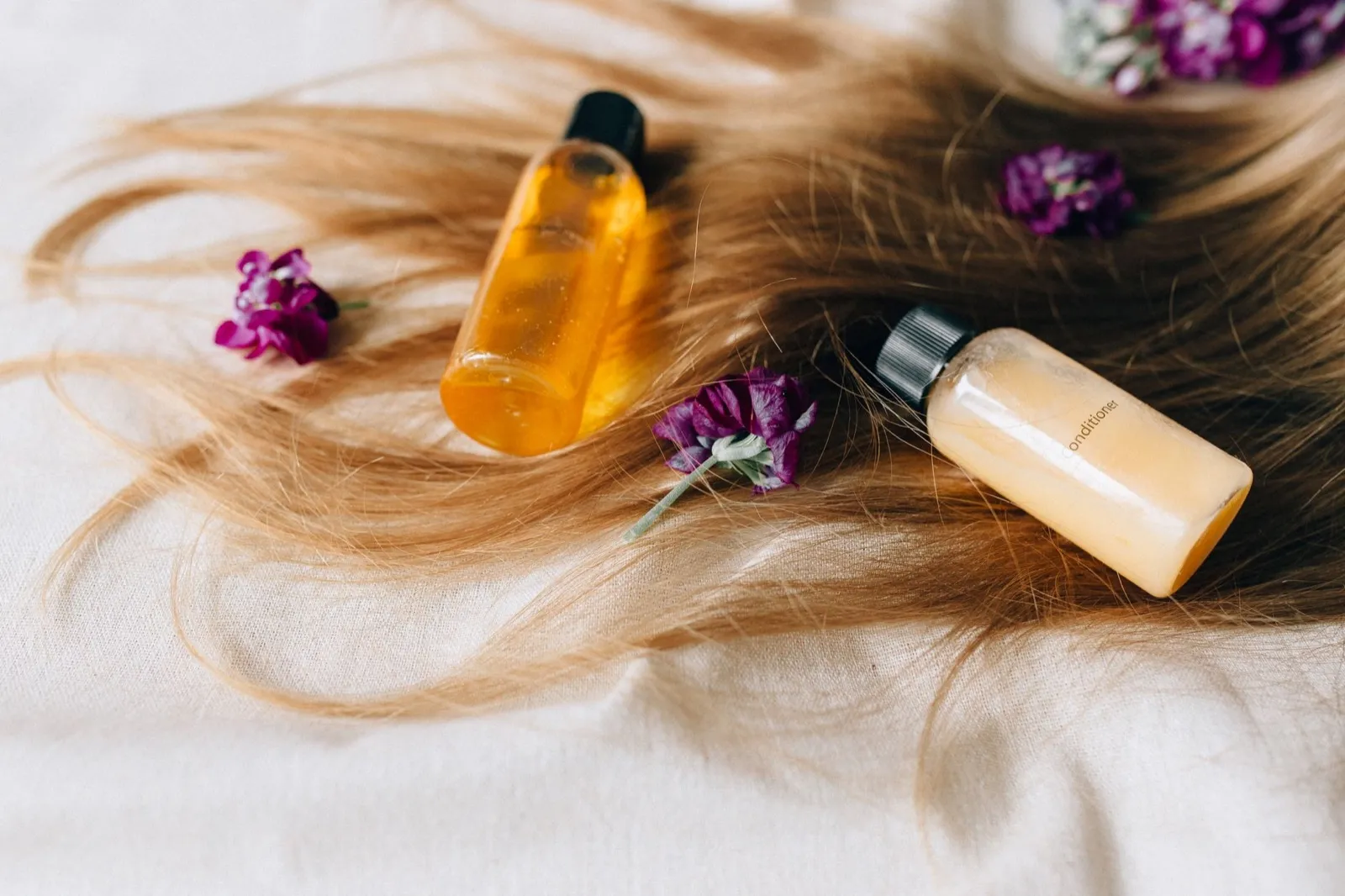
Image Credit: Pexels / Nataliya Vaitkevich
Rosemary oil may help with hair growth, but the evidence is much more limited than its popularity online might suggest. One small clinical trial found encouraging results in people with androgenetic alopecia, also known as pattern hair loss, but that is not enough to show that rosemary oil will work for everyone or for every type of hair loss.
So, if you are curious about rosemary oil for hair growth, it is reasonable to see it as an optional scalp treatment rather than a proven cure. How you use it matters too. Rosemary essential oil is concentrated and can irritate the skin, so it should not simply be poured neat onto your scalp.
The short answer
There is some human research suggesting that rosemary oil could support hair growth in androgenetic alopecia, but the evidence is currently limited.
The study most often cited was a 2015 randomised trial involving 100 people with androgenetic alopecia. Participants used either rosemary oil or 2% minoxidil for six months. Neither group had a significant increase in hair count after three months. At six months, hair counts had increased significantly from baseline in both groups, with no significant difference in hair count between the two groups.
That sounds promising, but it needs context. It was one relatively small study, and it does not establish rosemary oil as equivalent to minoxidil across different people, formulations or types of hair loss.
Minoxidil has a much more established role in treating pattern hair loss. The NHS and British Association of Dermatologists both recognise topical minoxidil as a treatment for female pattern hair loss. Rosemary oil does not currently have the same level of clinical evidence behind it.
What is rosemary oil?
Rosemary essential oil is a concentrated aromatic oil obtained from the rosemary plant, Salvia rosmarinus, formerly known as Rosmarinus officinalis.
It is different from the rosemary-infused oils you might make or buy for cosmetic use. An essential oil is highly concentrated, which is one reason it needs to be treated differently from an ordinary hair oil.
You will find rosemary in several kinds of hair products, including scalp oils, serums, shampoos and conditioners. The concentration and formulation can vary considerably, so two products labelled “rosemary” are not necessarily comparable.
What does the research on rosemary oil for hair growth actually show?
The strongest commonly cited human evidence comes from the 2015 trial comparing rosemary oil with 2% minoxidil.
Researchers randomly assigned 100 people with androgenetic alopecia to one of the two treatments. Hair counts were assessed at the beginning of the study, after three months and after six months.
At three months, neither treatment group had experienced a significant change in mean hair count. At six months, both groups had a significant increase compared with baseline and the three-month assessment. There was no significant difference in hair count between the rosemary and minoxidil groups at either assessment point.
Scalp itching increased in both groups and was reported more frequently in the minoxidil group.
This study gives rosemary oil a more interesting evidence base than a remedy supported only by anecdotes. It still leaves plenty of unanswered questions.
A single study of 100 participants cannot tell us how well rosemary oil works across a much larger and more varied population. It also studied androgenetic alopecia specifically, so the results should not automatically be applied to hair shedding caused by stress, illness, iron deficiency, weight loss or other conditions.
More high-quality clinical research would be needed before we could be confident about how effective rosemary oil is, who is most likely to benefit and which formulation or routine works best.
Is rosemary oil as effective as minoxidil?
This is where online claims can become misleading.
The 2015 study found no significant difference in hair count between its rosemary oil and 2% minoxidil groups after six months. It is tempting to turn that into “rosemary oil works as well as minoxidil”, but that conclusion is stronger than the evidence allows.
The trial tested particular interventions in a relatively small group over a six-month period. Finding no statistically significant difference in that study does not prove that the two treatments are generally equivalent.
There is also a much broader clinical basis for minoxidil. The British Association of Dermatologists says topical minoxidil may slow the progression of female pattern hair loss and partially restore hair in some women. The NHS also lists minoxidil as a treatment that can be used for female pattern baldness, while making clear that it does not work for everyone.
Rosemary oil may be something you choose to try, but it should not be presented as a proven natural replacement for minoxidil.
What type of hair loss might rosemary oil help?
The human trial involved androgenetic alopecia, which is pattern hair loss.
Female pattern hair loss usually develops gradually. The British Association of Dermatologists describes it as a condition in which affected follicles progressively produce hairs that are smaller in diameter, shorter and lighter.
That does not mean rosemary oil has been shown to treat every reason someone might lose hair.
The NHS lists several possible causes of temporary hair loss, including illness, stress, weight loss and iron deficiency. Hair loss can also occur for other reasons.
If you do not know why your hair is thinning or shedding, identifying the likely cause is more useful than immediately choosing a hair-growth ingredient.
How do you use rosemary oil for hair growth?
There is no medically established home recipe that has been proven to produce hair growth, so be wary of precise social-media formulas presented as fact.
If you want to try rosemary, a simple option is to choose a ready-formulated scalp or hair product containing rosemary and follow the manufacturer’s instructions. This avoids having to guess how much concentrated essential oil to add yourself.
If you are using rosemary essential oil rather than a formulated cosmetic product, do not apply it neat to your scalp. DermNet advises against applying neat, undiluted essential oils directly to the skin because of the risk of sensitisation.
Use a suitable carrier product and follow the essential-oil manufacturer’s dilution and safety instructions. More rosemary oil is not necessarily more effective.
Before using a new scalp product, patch test it according to its instructions where appropriate. Stop using it if you develop irritation.
How often should you use rosemary oil?
There is no universally proven frequency for an at-home rosemary oil routine.
The best starting point is the directions for the particular product you are using. A pre-formulated scalp treatment may have completely different instructions from a shampoo or a diluted essential-oil mixture.
This is also an area where copying someone else’s routine online can be unhelpful. Their product concentration, scalp condition and reason for using it may be different from yours.
If frequent use leaves your scalp itchy, sore, red or flaky, stop using the product rather than pushing through the irritation in the hope of faster results.
How long does rosemary oil take to work?
The limited clinical evidence suggests that this is not something to judge after a few weeks.
In the 2015 trial, researchers found no significant change in mean hair count after three months. The increase was seen at the six-month assessment.
That does not mean everyone who uses rosemary oil for six months will see growth. It simply tells us what happened in that particular study.
Hair changes can also be surprisingly difficult to assess yourself. Lighting, the position of your parting, whether your hair is wet or dry and even how recently you washed it can change how dense it appears.
If you are trying a treatment over time, occasional photographs taken with the same parting, lighting and angle may give you a more useful comparison than checking your scalp every day.
Can you put rosemary essential oil directly on your scalp?
It is better not to use neat rosemary essential oil directly on the skin.
Essential oils are concentrated, and “natural” does not automatically mean non-irritating. DermNet notes that essential oils can cause allergic contact dermatitis and advises against applying undiluted essential oils directly to the skin because this can lead to sensitisation.
Signs of a reaction can include itching, redness and scaling.
A ready-formulated hair or scalp product may be simpler if you do not want to work with concentrated essential oils. If you do mix an essential oil into a carrier product, follow reputable product-specific dilution instructions rather than improvising the concentration.
What should you mix rosemary oil with?
If you are working with rosemary essential oil, it needs an appropriate carrier rather than being used neat.
Carrier oils are oils used to dilute concentrated essential oils before skin application. Cosmetic products may also contain rosemary oil already diluted within a finished formula.
There is no evidence that you need a complicated mixture of several different oils to get a better result. In fact, keeping the routine simple has an advantage. If your scalp reacts, it is easier to identify what may have caused it.
Choose products that suit your scalp and hair preferences rather than assuming a heavier oil mixture is necessary for hair growth.
Can rosemary oil irritate your scalp?
Yes.
Essential oils can cause both irritation and allergic contact dermatitis. DermNet describes allergic contact dermatitis from essential oils as a delayed skin reaction that can cause symptoms including itching, redness and scaling.
A product that initially feels fine can still cause a problem later if you become sensitised to an ingredient.
Stop using rosemary oil if your scalp becomes irritated. If symptoms are significant, persistent or spreading beyond the area where you applied the product, seek professional advice.
If you already have eczema, dermatitis, a very reactive scalp or another scalp condition, you may prefer to speak to a pharmacist, GP or dermatologist before experimenting with essential oils.
Does rosemary water work in the same way?
Rosemary water, rosemary rinses, rosemary-infused oil and rosemary essential oil are not interchangeable.
They contain different preparations and potentially very different concentrations of plant compounds. Evidence from a trial involving rosemary oil cannot simply be transferred to homemade rosemary water.
That does not mean you cannot use rosemary water if you enjoy it as part of your hair routine. It means claims that it will reproduce the hair-growth results of rosemary essential oil research are not currently well supported.
What about rosemary shampoo?
A rosemary shampoo can be perfectly reasonable as a shampoo if you like how it cleans your hair and your scalp tolerates it.
It should not automatically be expected to produce the same result as the rosemary preparation used in a clinical trial. Shampoo is designed to be rinsed away, and formulations vary considerably.
If your main reason for buying a rosemary shampoo is hair growth, check whether the brand provides evidence for the finished product rather than relying solely on research involving a different rosemary preparation.
Can you use rosemary oil and minoxidil together?
Do not assume that combining two treatments will give twice the benefit.
Minoxidil is a medicine, and adding oils or other scalp treatments may affect how practical your routine is or increase irritation. Individual minoxidil products also come with their own application instructions and warnings.
If you use minoxidil and want to add rosemary oil, ask a pharmacist or dermatologist how to use the products safely rather than layering them together at random.
You may also prefer to introduce one new scalp product at a time. That makes it much easier to identify the cause if irritation develops.
Is rosemary oil worth trying?
Possibly, if you understand its limitations and your scalp tolerates it.
Rosemary oil has some promising human evidence for pattern hair loss, which makes it more interesting than many hair-growth trends. But the evidence is still limited, and there is no guarantee that it will noticeably change your hair.
You also do not need to use it simply because it is popular. If you are happy with your hair as it is, there is nothing you need to treat. If you are experiencing hair loss and want to do something about it, finding out the likely cause is a sensible first step.
For someone who chooses to try rosemary oil, a simple approach is enough: use a properly formulated or appropriately diluted product, follow its instructions, avoid applying neat essential oil to the scalp, stop if irritation develops and keep expectations realistic.
When to get professional advice
Speak to a GP if you are worried about hair loss, particularly if it is sudden, unexplained or noticeably different from your usual shedding. The NHS recommends seeing a GP to get an idea of what is causing hair loss before considering a commercial hair clinic.
Professional advice is particularly useful if:
- your hair is coming out suddenly or in patches
- your scalp is painful, inflamed, very itchy, scaly or scarred
- you have other symptoms alongside the hair loss
- you think a medicine, illness, nutritional deficiency or hormonal change could be involved
- a rosemary product causes persistent redness, itching, swelling or irritation
- you already have a scalp or skin condition
- you are using a medical hair-loss treatment and want to add rosemary oil
- you are unsure whether a product is suitable during pregnancy or breastfeeding
- hair loss is affecting your wellbeing
A GP or dermatologist can help assess the type of hair loss and discuss appropriate options. Cosmetic hair care can sit alongside that advice, but it is not a substitute for finding out what may be causing new or unexplained hair loss.
Related reading
- Related reading will be added during editorial review