Scalp Massage for Hair Growth. Can It Actually Make Your Hair Grow?
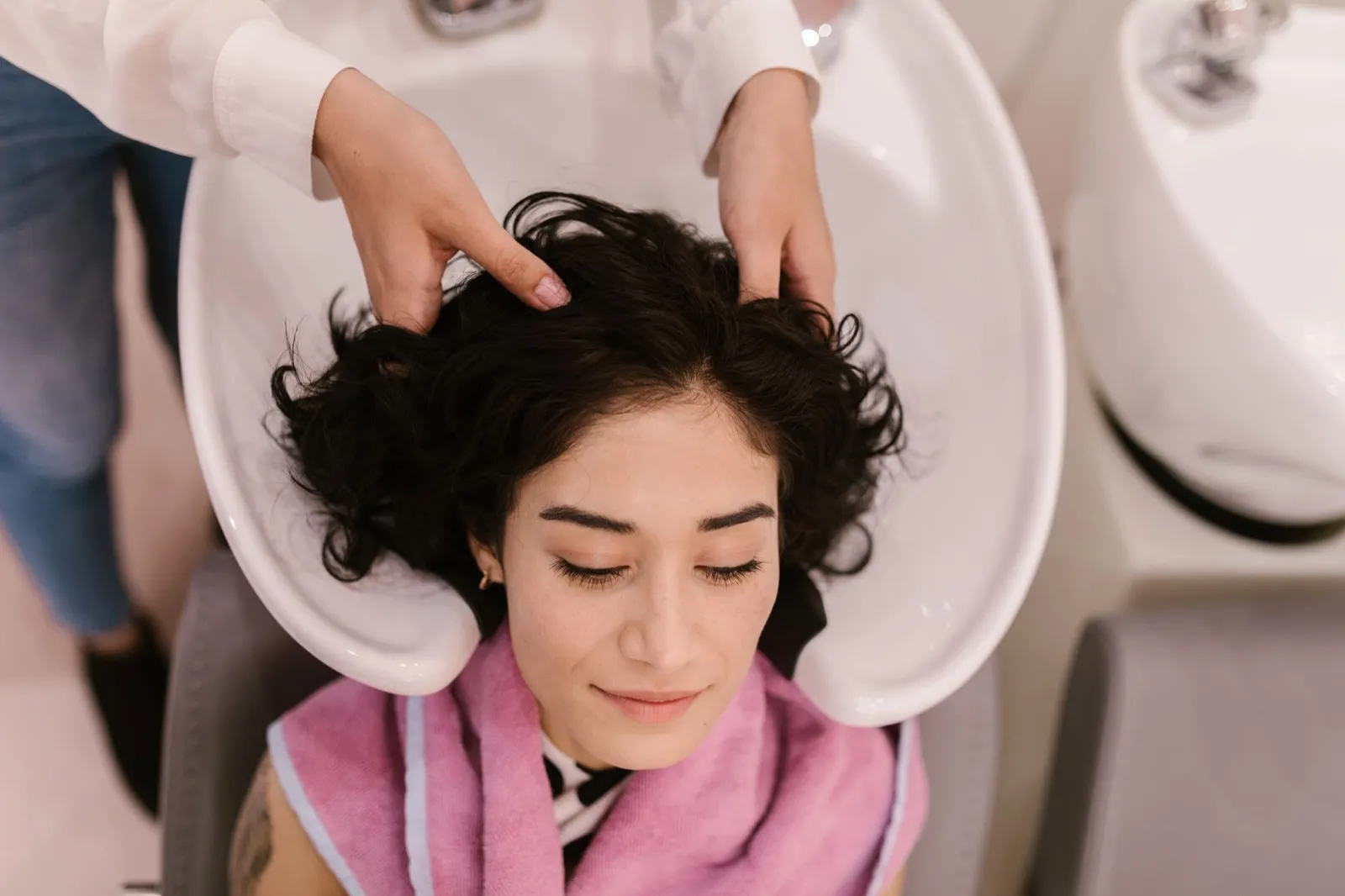
Image Credit: Pexels / RDNE Stock project
Scalp massage for hair growth is a lovely idea because it is simple, inexpensive and does not require a complicated routine. There is also a little research behind it. One small study found an increase in hair thickness after 24 weeks of daily standardised scalp massage. What it did not show was a significant increase in hair density or growth rate.
So, can scalp massage actually make your hair grow? We do not currently have strong enough evidence to say that it reliably regrows thinning hair or treats hair-loss conditions. If you enjoy massage, you can keep it as an optional part of your routine. Just do not let it replace investigating unexplained hair loss or using a treatment with better evidence when one is appropriate.
The short answer
Scalp massage has limited but interesting evidence.
A 2016 study involving nine healthy Japanese men tested four minutes of standardised scalp massage every day for 24 weeks. Hair thickness increased during the study, but hair density and hair growth rate did not significantly improve.
Another study published in 2019 surveyed people with androgenetic alopecia who had tried a standardised massage technique. The results suggested that some participants perceived improvement, but this was based on self-reported outcomes rather than a randomised controlled trial.
That leaves us with a fairly modest conclusion.
Scalp massage may affect the scalp and hair follicles, and it might have some effect on hair thickness. We do not yet have good evidence that it can reliably produce meaningful hair regrowth.
Why do people think scalp massage helps hair grow?
The most common explanation is that massage “increases blood flow to the follicles”.
That sounds plausible, but it is often presented with much more certainty than the research allows.
Hair follicles do need an adequate blood supply. However, temporarily increasing circulation at the surface of the scalp does not automatically mean a follicle will produce more or thicker hair.
The 2016 scalp massage study explored a different idea.
Researchers proposed that the mechanical stretching forces created by massage could affect dermal papilla cells. These are specialised cells within the hair follicle that are involved in regulating hair growth.
Laboratory experiments in the study found changes in gene expression when dermal papilla cells were exposed to stretching forces.
That is scientifically interesting.
It is not the same as proving that rubbing your scalp every evening reverses hair loss.
What did the main scalp massage study actually find?
This study is quoted frequently online, so it is worth looking at what happened rather than simply saying “science proves scalp massage works”.
Nine healthy men received a standardised scalp massage for four minutes a day over 24 weeks.
Researchers measured:
- hair number
- hair thickness
- hair growth rate
Hair thickness increased during the study.
However, the researchers did not find a significant improvement in hair density between the massaged and control areas. Hair growth rate also did not significantly change.
There is another obvious limitation: nine people is a very small study.
The participants were healthy men rather than a large, diverse group of people with clinically diagnosed hair loss.
The study therefore gives us a reason to investigate scalp massage further, not a reason to promise regrowth.
Does scalp massage make hair thicker?
Possibly, but the evidence is too limited to know how meaningful the effect is.
The 2016 study reported an increase in measured hair thickness after standardised daily massage.
That does not necessarily mean someone will see a visibly fuller head of hair.
Hair thickness, hair density and total hair volume are related but different measurements.
You could theoretically have slightly thicker individual hairs without increasing the number of hairs growing from the scalp.
More and larger studies would be needed to establish whether the change is consistent, how long it lasts and whether it creates a noticeable cosmetic difference.
Does scalp massage increase hair density?
The small 2016 trial did not demonstrate a significant increase in hair density.
That point often gets lost when the study is summarised online.
Hair density refers broadly to how many hairs are present within a particular area.
For someone experiencing thinning, increasing density is often the outcome they are hoping for.
At present, the evidence is not strong enough to say that scalp massage reliably increases it.
Does scalp massage make hair grow faster?
There is no convincing evidence that it does.
In the 2016 study, hair growth rate did not significantly change.
Hair naturally grows slowly, and the rate varies between people.
Massaging for longer or pressing harder has not been shown to make the hair shaft shoot out of the follicle more quickly.
If your aim is longer hair, reducing breakage can sometimes make a bigger visible difference because more of the length you grow is retained.
What about the study of people with hair loss?
A 2019 study looked at standardised scalp massage among people who identified themselves as having androgenic alopecia.
It included survey responses from people who had been given instructions for a fairly intensive massage routine.
The results suggested an association between greater massage effort and self-reported improvement.
However, this type of evidence has substantial limitations.
Participants were not randomly assigned to massage or placebo groups. The outcome was self-assessed. People who chose to continue an intensive routine may differ from those who stopped. Expectations can also influence how someone judges their own hair.
The study is useful as an early signal.
It is not strong proof that massage treats androgenetic alopecia.
Can scalp massage treat female pattern hair loss?
There is not enough evidence to recommend scalp massage as a treatment for female pattern hair loss.
Female pattern hair loss involves gradual miniaturisation of susceptible hair follicles. The central parting may widen and density over the top of the scalp can gradually decrease.
The NHS lists minoxidil as a treatment that can be used for female pattern baldness, while also noting that it does not work for everyone.
Scalp massage does not have the same evidence base.
You can still massage your scalp if you enjoy it, but it should be thought of as an optional hair-care practice rather than an established replacement for treatment.
Can scalp massage help telogen effluvium?
There is no good evidence that massage makes telogen effluvium resolve faster.
Telogen effluvium is excessive shedding caused by a disruption to the normal hair cycle.
The British Association of Dermatologists lists triggers including childbirth, severe illness, major stress, surgery, marked weight loss, extreme dieting, medicines and hormonal changes.
The shedding often starts around three months after a trigger and usually lasts around three to six months.
The BAD states that telogen effluvium normally gets better without treatment and that medication does not speed up the regrowth process.
Massage is unlikely to change hairs that have already moved into the shedding phase.
If it feels relaxing, you may still enjoy it. That is a different benefit from treating the cause of the shedding.
Will massage make more hair fall out?
You may see hairs come away while massaging, particularly if you are already shedding.
That does not necessarily mean the massage caused those hairs to enter the shedding phase.
Loose hairs that have already completed their growth cycle can become caught among neighbouring strands. Washing, brushing or moving the scalp may simply release them.
However, vigorous rubbing can create unnecessary friction and may contribute to hair breakage.
There are also published reports of hair damage associated with excessive scalp massage. A 2025 case report described acquired trichorrhexis nodosa, a type of hair-shaft damage, after scalp massage following topical minoxidil.
A case report cannot tell us how common that problem is, but it is a useful reminder that more force is not automatically more effective.
Massage should feel comfortable.
Can scalp massage damage hair follicles?
Gentle massage is unlikely to damage healthy follicles.
Aggressive manipulation is a different matter.
Repeated hard rubbing, scratching or pulling can irritate the scalp and damage hair shafts. Sustained pressure or trauma can also harm skin and hair in particular circumstances.
You do not need to make your scalp red, sore or tender to get a useful massage.
If a technique hurts, causes persistent irritation or leaves you with broken hairs, stop.
Pain is not evidence that you have stimulated the follicles more effectively.
How should you massage your scalp?
There is no clinically proven “perfect” technique for hair growth.
If you want to massage because it feels pleasant and may offer a small hair-related benefit, keep it simple.
You can:
- Place the pads of your fingertips against the scalp.
- Apply comfortable, light to moderate pressure.
- Move the scalp gently in small circular or back-and-forth motions.
- Work across different areas rather than repeatedly rubbing one spot.
- Keep your nails away from the skin if they are likely to scratch.
- Stop if the scalp becomes painful or irritated.
Try to move the skin rather than aggressively rubbing the hair lengths together.
You do not need a special sequence.
How long should you massage your scalp for hair growth?
There is no established ideal duration.
The small 2016 study used four minutes of standardised massage each day.
That does not prove four minutes is the optimum amount.
The 2019 survey study involved a much more intensive routine, but its design cannot establish an ideal treatment schedule either.
If you enjoy scalp massage, a few comfortable minutes is a reasonable personal routine.
There is no evidence that spending 20, 30 or 60 minutes rubbing your scalp produces proportionally more growth.
Do you need to massage your scalp every day?
No evidence tells us that everyone needs daily scalp massage.
Daily massage was used in the small 2016 study, but that was a research protocol rather than a universal recommendation.
If you like doing it every day and your scalp remains comfortable, you may choose to.
If you prefer it only on wash days or occasionally while relaxing, that is fine too.
A hair-care habit should not become an obligation because someone online claims missing one day will interrupt your growth.
Is a scalp massager better than using your fingers?
We do not have good evidence that a handheld scalp massager produces more hair growth than fingers.
Tools can be convenient.
A silicone shampoo brush, for example, may help some people distribute shampoo across the scalp. Other people find tools tangle their hair or feel too rough.
If you use one:
- choose a design that feels comfortable
- avoid sharp or very rigid points
- do not press hard
- move carefully if your hair tangles easily
- keep the tool clean
You do not need an electric scalp massager for a hair-growth routine.
The fact that a tool vibrates does not prove that it stimulates follicles more effectively.
What about electric scalp massagers?
Electric massagers can provide consistent movement with less work from your hands.
That may be pleasant, particularly if massage is something you use for relaxation.
But there is not strong evidence showing that an electric device produces better hair-growth outcomes than manual massage.
If you are shopping for one, choose based on comfort, ease of cleaning and whether it works with your hair rather than claims about “activating dormant follicles”.
You can also skip the device entirely.
Should you massage your scalp dry or with oil?
Either can be comfortable, depending on your scalp and hair.
Oil is not required for the mechanical act of scalp massage.
Some people enjoy using a small amount because it reduces friction. Others find scalp oils make their hair greasy, worsen build-up or irritate their skin.
If you massage without oil, use enough care that you are moving the scalp rather than roughly rubbing dry hair against itself.
If you use oil, choose something your scalp tolerates and wash it out as needed.
There is no single right way.
Does massaging with rosemary oil work better?
We do not have good evidence showing that scalp massage plus rosemary oil is superior to either approach alone.
Rosemary oil has some limited clinical evidence for androgenetic alopecia, including a 2015 randomised comparative study. That research does not prove that massage is necessary for rosemary oil to work.
Essential oils can also irritate skin.
If you use a rosemary product, choose one formulated for scalp use rather than applying undiluted essential oil directly to the skin. Follow the product instructions and stop if you develop redness, burning, itching or another reaction.
You can massage without rosemary oil, and you can use a suitable rosemary product without turning the application into a vigorous massage.
Can you massage minoxidil into your scalp?
Follow the instructions for the specific minoxidil product you use rather than assuming vigorous massage improves absorption.
Topical minoxidil is intended for the scalp, and application instructions can differ between formulations.
Rubbing hard is not necessary.
A 2025 case report described hair-shaft damage following scalp massage after topical minoxidil. One case does not establish a common risk, but it does reinforce the value of gentle handling.
If you are unsure how to apply minoxidil, ask a pharmacist.
Do not increase the amount, frequency or rubbing intensity in an attempt to make it work faster.
Does scalp massage “detox” the scalp?
No good evidence supports the idea that you need to massage toxins out of your scalp.
Your scalp does not require manual detoxification.
Normal washing removes sweat, sebum, dead skin and product residue from the hair and scalp.
Massage may help loosen some surface build-up while shampooing, but that is ordinary cleansing rather than detoxification.
Be cautious with routines that combine aggressive massage, gritty scrubs, strong acids and several essential oils in the name of “detoxing”. More irritation is not better scalp care.
Does scalp massage unclog hair follicles?
This phrase is often used in marketing, but it can be misleading.
Hair follicles are structures within the skin, not simple pipes that need to be manually unclogged to restart growth.
If your scalp has product build-up, washing can remove it.
If you have significant scaling, inflammation or another scalp condition, the appropriate treatment depends on what is causing it.
Massage cannot mechanically clear female pattern hair loss, alopecia areata or telogen effluvium from a follicle.
Can scalp massage lower DHT?
There is no convincing clinical evidence that ordinary scalp massage meaningfully lowers dihydrotestosterone, or DHT, in a way that treats androgenetic alopecia.
DHT is involved in follicle miniaturisation in genetically susceptible pattern hair loss.
Claims that massage can “remove DHT from the scalp” or mechanically push it away are not supported by good evidence.
This is another example of a biological-sounding explanation becoming much more confident online than the research justifies.
Can scalp massage wake up dormant follicles?
“Dormant follicle” is a popular phrase, but it oversimplifies several different biological situations.
A follicle in the resting phase of its normal cycle is not the same as a follicle gradually miniaturising in pattern hair loss.
Neither is the same as a follicle permanently destroyed by scarring alopecia.
A massage cannot recreate a follicle that has been permanently destroyed.
If your hair loss is progressive, patchy or associated with scalp inflammation, identifying the cause matters more than trying to “wake up” follicles manually.
Can scalp massage reduce stress?
Massage can feel relaxing, and relaxation is a perfectly good reason to do it.
Stress is also a recognised trigger for telogen effluvium in some people.
However, it would be a stretch to say that scalp massage prevents stress-related hair loss simply because it helps you unwind.
Significant hair shedding is influenced by the body’s hair cycle and may appear months after a stressful event.
Use massage for relaxation if you enjoy it.
Do not make yourself responsible for preventing every shed hair by staying perfectly calm.
Is scalp massage worth adding to a hair growth routine?
It can be, as long as its role stays realistic.
Scalp massage has several advantages:
- it costs nothing if you use your hands
- it can feel pleasant
- it requires no medication
- the small amount of research available gives a reason for further study
Its main disadvantage is the weakness of the evidence for actual regrowth.
A sensible routine could include massage as an optional extra while keeping the important parts in place:
- understand the likely cause of your hair loss
- wash and care for your scalp normally
- handle fragile hair gently
- avoid repeated painful tension
- eat adequately
- address confirmed deficiencies or health conditions
- use evidence-based hair-loss treatment if appropriate and wanted
Massage can sit around those steps.
It should not replace them.
What matters more than scalp massage for hair loss?
The cause.
If you have telogen effluvium after illness, the follicles usually recover as the hair cycle settles.
If iron deficiency is contributing to shedding, identifying and treating the deficiency matters.
If you have female pattern hair loss, an established treatment such as minoxidil may be appropriate for some people.
If repeated tight hairstyles are causing traction alopecia, reducing that tension is much more relevant than massaging the same area.
If a scarring condition is damaging follicles, prompt medical treatment may be important to prevent further permanent loss.
No massage technique can cover all of those situations.
When to get professional advice
The NHS advises seeing a GP if you are worried about hair loss and recommends getting an idea of the cause before considering a commercial hair clinic.
Seek professional advice particularly if:
- your hair is suddenly shedding much more than usual
- your central parting is becoming progressively wider
- you have distinct bald patches
- your hairline is changing noticeably
- your scalp is painful, burning, inflamed, very itchy, scaly or scarred
- massage causes persistent pain, irritation or hair breakage
- you have fatigue, heavy periods or other possible signs of iron deficiency
- you have unexplained weight changes or other new symptoms
- hair loss followed major illness, surgery, childbirth, severe stress or substantial weight loss
- you are unsure whether you have shedding, breakage or progressive thinning
- hair loss is affecting your wellbeing
A GP may be able to identify the likely cause from your history and the pattern of hair loss. Blood tests can sometimes be useful, and a dermatologist can assess hair loss that is unclear, progressive or potentially scarring.
Scalp massage is one of the easier hair-growth habits to try because it does not need to cost anything and can simply feel nice. The evidence for regrowth, though, is still thin. Enjoy it if you like it, keep the pressure gentle, and treat any hair benefit as a possibility rather than a promise.
Related reading
- Related reading will be added during editorial review
Sources
- NHS: Hair loss
- British Association of Dermatologists: Telogen effluvium
- PubMed: Standardized Scalp Massage Results in Increased Hair Thickness by Inducing Stretching Forces to Dermal Papilla Cells in the Subcutaneous Tissue
- PubMed: Self-Assessments of Standardized Scalp Massages for Androgenic Alopecia, Survey Results
- PubMed: Acquired Trichorrhexis Nodosa Caused by Massage of the Scalp After Topical Minoxidil, a Case Report and Review of the Literature
- PubMed: Adjunctive approaches for androgenetic alopecia, a clinical review of nutritional, light-based, topical, and lifestyle interventions