Stress and Hair Loss. Why It Happens and When Your Hair Will Grow Back
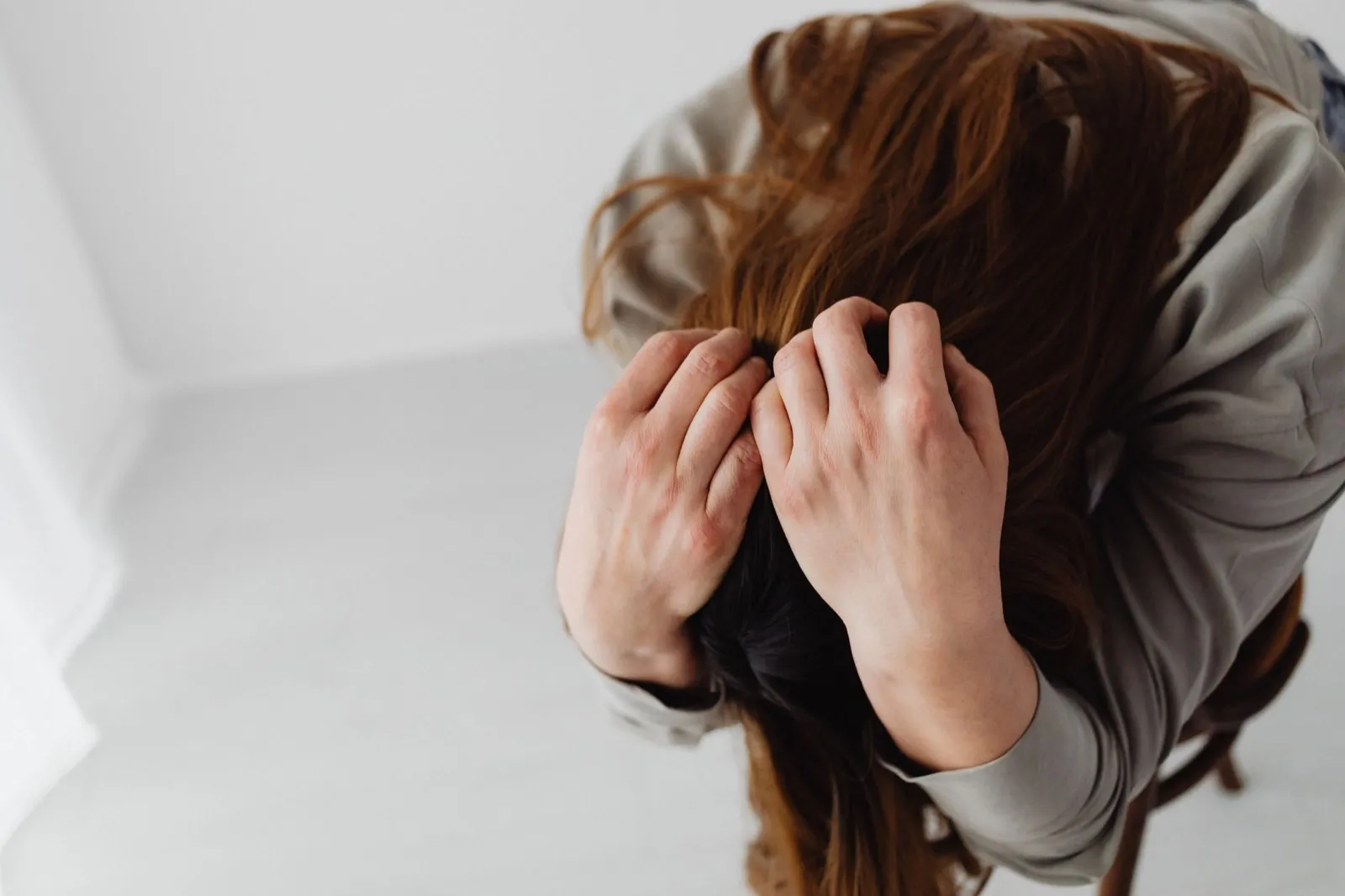
Image Credit: Pexels / https://kaboompics.com/
Yes, significant stress can cause hair loss. The most common form of stress-related hair loss is telogen effluvium, a temporary increase in shedding that can happen after emotional or physical stress disrupts the normal hair-growth cycle.
The confusing part is the timing. Hair loss from stress often does not begin while the stressful event is happening. The British Association of Dermatologists explains that telogen effluvium commonly becomes noticeable around three months after a trigger. The shedding itself usually lasts around three to six months, then new hair begins to grow. Getting back to your previous volume can take longer because new hairs need time to gain length.
The short answer
Stress can push more hairs than usual from their active growth phase towards the resting and shedding phase.
This does not happen instantly.
A difficult event may occur in January, for example, while the increased shedding does not become obvious until March or April. By then, you may no longer connect the two.
The NHS lists stress as one possible cause of temporary hair loss. The British Association of Dermatologists also identifies psychological stress as a trigger for telogen effluvium.
If stress really is the cause and the trigger has passed, the follicles are usually still capable of producing hair. Telogen effluvium generally resolves without a specific hair-growth treatment.
But stress is only one possible explanation for hair loss. Iron deficiency, illness, thyroid conditions, childbirth, significant weight loss, medicines and other types of alopecia can produce hair changes too.
What is stress-related hair loss?
The type of hair shedding most often associated with significant stress is telogen effluvium.
To understand it, it helps to know that every hair follicle operates on its own cycle.
Hair spends a long period actively growing. It then passes through transitional and resting phases before the old hair is eventually shed.
Normally, different follicles are at different stages, so you lose some hairs every day without your overall density changing dramatically.
With telogen effluvium, a trigger causes a larger proportion of follicles to enter the resting phase around the same time.
Several months later, those hairs shed.
That is why the change can feel so sudden even though the process started much earlier.
What kind of stress can cause hair loss?
Hair follicles can respond to both emotional and physical stress.
The British Association of Dermatologists lists severe illness, major surgery, childbirth, marked weight loss, extreme dieting and psychological stress among triggers for telogen effluvium.
So “stress” in this context is broader than feeling busy.
Possible triggers can include:
- bereavement
- a traumatic or highly distressing event
- prolonged severe emotional stress
- serious illness or infection
- major surgery
- childbirth
- substantial weight loss
- extreme dieting
- major physical strain on the body
Not every stressful period will make your hair shed. People respond differently, and it is not possible to predict precisely who will develop telogen effluvium after a difficult event.
Can everyday stress make your hair fall out?
Possibly, but this is harder to define.
Research supports a relationship between psychological stress and hair biology, and significant psychological stress is a recognised trigger for telogen effluvium. But there is no simple stress meter that tells you when ordinary pressure becomes enough to trigger shedding.
You also do not need to prove that your experience was “stressful enough”.
If you have been under sustained strain and then develop diffuse shedding, stress may be one factor. It should not automatically be assumed to be the only one.
Hair loss is sometimes too quickly labelled as stress when another cause has not been investigated.
If the shedding is substantial, persistent or unexplained, a GP can consider other possibilities as well.
Why does hair fall out after the stressful period is over?
This delay is one of the defining features of telogen effluvium.
When a trigger affects the hair cycle, the affected hairs do not immediately drop out. They move into a resting phase first.
The British Association of Dermatologists explains that increased shedding is commonly noticed around three months after the triggering event.
That means you may be feeling calmer when your hair suddenly begins falling out.
It can feel as though something new must be wrong. Sometimes the explanation is actually something that happened several months earlier.
When trying to identify a possible trigger, look back rather than only thinking about what happened this week.
What does hair loss from stress look like?
Stress-related telogen effluvium usually causes diffuse shedding.
That means hairs are lost from across the scalp rather than from one sharply defined area.
You might notice:
- much more hair in the shower
- extra hair in your brush or comb
- hairs coming away when you run your fingers through your hair
- loose hairs on clothing, bedding or floors
- a ponytail feeling less full
- more scalp showing because overall density has reduced
The British Association of Dermatologists notes that telogen effluvium does not usually produce complete baldness.
Distinct smooth bald patches, a receding hairline, progressive thinning mainly over the top of the scalp, or hair loss with significant scalp inflammation may suggest a different condition.
How much hair shedding is normal?
Everyone sheds hair.
The British Association of Dermatologists states that losing around 30 to 150 scalp hairs a day is normal.
That range is wide, and counting hairs precisely is not particularly practical.
How often you wash or brush your hair can also affect how many loose hairs you see at once. If you wash every few days, several days of naturally shed hairs may appear together in the shower.
The more useful question is whether there has been a clear change from your normal pattern.
If you previously saw a small amount of hair after washing and are suddenly seeing considerably more for weeks at a time, that is worth paying attention to.
How long does stress-related hair loss last?
For typical acute telogen effluvium, the heavy shedding usually lasts around three to six months, according to the British Association of Dermatologists.
After that, new hair begins to grow.
That does not mean your hair will immediately look as full as it did before.
New hairs start short. They need time to become long enough to contribute noticeably to your overall volume.
The BAD notes that it can take many months for hair volume and thickness to return.
If shedding continues for longer than six months, it may be described as chronic telogen effluvium and deserves further assessment.
When will your hair grow back after stress?
Regrowth can begin once the shedding phase settles, but visible recovery is gradual.
You may first notice short new hairs, particularly around your parting or hairline.
Those hairs are not necessarily breakage. If they have tapered ends and appear to be emerging from the scalp at different lengths, they may be new growth.
It can take many months before these shorter hairs contribute enough length to make your overall hair feel fuller.
There is no exact date by which everyone will have their previous density back.
Recovery depends on factors including how long the shedding lasted, whether the trigger has resolved and whether another type of hair loss is also present.
Can stress-related hair loss become permanent?
Acute telogen effluvium is generally temporary.
The British Association of Dermatologists explains that the hair follicles are not permanently damaged and that hair grows back after the shedding phase.
However, there are a few reasons someone may not feel that their hair has returned completely to its previous state.
The trigger may still be present. There may be an untreated underlying issue such as iron deficiency. Or the episode of telogen effluvium may have revealed another form of hair loss, such as female pattern hair loss.
The BAD notes that telogen effluvium and androgenetic alopecia can occur together.
If the heavy shedding stops but your central parting continues to widen or your density keeps decreasing, speak to your GP or a dermatologist.
Can worrying about hair loss make the shedding worse?
Hair loss itself can be stressful, which can create an uncomfortable loop.
It is understandable to become more aware of every hair you see once shedding starts. You may begin checking the shower drain, photographing your parting every day or repeatedly running your fingers through your hair to see how many strands come out.
Those habits do not tell you precisely what is happening to your follicles and can make the situation occupy much more of your day.
If you want to track your hair, you may prefer to take photographs once a month in similar lighting and then leave it alone between checks.
If anxiety about your hair is becoming difficult to manage, mention that when you speak to your GP. The emotional impact of hair loss matters too.
Is it definitely stress, or could something else be causing it?
Stress is only one possible cause of sudden shedding.
The NHS lists several causes of temporary hair loss, including illness, stress, cancer treatment, weight loss and iron deficiency.
The British Association of Dermatologists also lists thyroid conditions, childbirth, major surgery, severe scalp problems, medicines and hormonal changes among potential triggers for telogen effluvium.
Useful questions to consider include:
- Have you been seriously ill in the past few months?
- Did you have a high fever or infection?
- Have you had surgery?
- Have you recently given birth?
- Have you lost a significant amount of weight?
- Have you been eating much less than usual?
- Are your periods very heavy?
- Have you started or stopped a medicine?
- Have you changed hormonal contraception?
- Do you have new symptoms such as fatigue or unexplained weight changes?
- Is your scalp painful, itchy, inflamed or scaly?
There may also be no obvious trigger. The British Association of Dermatologists notes that no cause is found in around one third of people diagnosed with telogen effluvium.
How can you tell stress shedding from female pattern hair loss?
The pattern and timeline are useful clues.
Stress-related telogen effluvium usually causes a noticeable increase in shedding across the scalp and often begins a few months after a trigger.
Female pattern hair loss usually causes gradual thinning, particularly over the top of the scalp, with a central parting that may become wider over time.
You can have both.
A period of telogen effluvium can make previously subtle female pattern hair loss more obvious because overall density temporarily falls.
If you are unsure, a GP or dermatologist can examine your scalp and hair. Blood tests may sometimes be useful to rule out other causes.
Should you get blood tests?
Not everyone with a clear episode of telogen effluvium needs the same tests.
The British Association of Dermatologists notes that blood tests may be carried out to exclude other causes of hair loss, including iron deficiency and thyroid conditions.
Your GP will decide what is appropriate based on your symptoms and history.
For example, iron testing may be particularly relevant if you have heavy periods, fatigue or a restrictive diet. Thyroid testing may be considered if you have symptoms suggesting a thyroid condition.
A large list of private blood tests is not automatically more useful than a targeted assessment.
Do you need hair-growth supplements after stress-related hair loss?
Usually not unless you have a nutritional deficiency or another specific reason to take them.
The British Association of Dermatologists recommends a nutritious, balanced diet with adequate protein and iron when managing telogen effluvium.
That is different from taking high-dose vitamins “just in case”.
If your diet is adequate and blood tests do not suggest a deficiency, adding more biotin, iron or other nutrients does not necessarily make follicles recover faster.
Some supplements can also cause problems when taken in excessive amounts.
If you suspect a deficiency, speak to your GP or pharmacist rather than trying several hair supplements at once.
Will minoxidil make stress-related hair loss grow back faster?
For uncomplicated telogen effluvium, medication is not usually needed.
The British Association of Dermatologists states that medication does not speed up the regrowth process in telogen effluvium.
Minoxidil is better established as a treatment for pattern hair loss, which is a different condition.
If a dermatologist believes you have female pattern hair loss as well as telogen effluvium, they may discuss minoxidil in that context.
This is another reason getting the type of hair loss right matters before starting treatment.
What about rosemary oil, scalp massage or hair-growth shampoos?
There is no good evidence that a special shampoo, oil or scalp massage can switch off stress-related telogen effluvium.
Once hairs have moved through the cycle towards shedding, a topical beauty product cannot simply glue them back into the growth phase.
You can still use scalp products if you enjoy them and they suit your skin. Just keep the expectation realistic.
If you use essential oils, do not apply concentrated essential oil directly to your scalp. Follow the finished product’s instructions, patch test where advised and stop if irritation develops.
A gentle shampoo and conditioner are perfectly adequate while your hair cycle recovers.
Should you wash your hair less while it is shedding?
You do not need to avoid washing because you are frightened of losing more hair.
Washing tends to release hairs that were already ready to shed. If you delay washing, you may simply see several days’ worth of shed hair come out at once.
Choose a washing schedule that keeps your scalp comfortable and suits your hair type.
The visual amount in the shower can be upsetting, but washing itself does not cause telogen effluvium.
How should you care for your hair while it grows back?
You cannot force follicles through their cycle faster with hair care, but you can reduce avoidable damage to the hair you have.
The British Association of Dermatologists recommends gentle handling during telogen effluvium.
You may prefer to:
- avoid very vigorous brushing
- detangle gently
- reduce frequent high-heat styling
- avoid harsh chemical treatments while your hair feels fragile
- avoid hairstyles that pull tightly at the roots
- use conditioner to reduce tangling and friction
- choose volumising products if you like how they make your hair feel
- use fibres, a topper or another cosmetic option if you want more coverage
These choices are optional.
You do not need to hide thinning, and you do not need an elaborate recovery routine.
Does reducing stress make hair grow back?
If ongoing stress is contributing to your shedding, addressing it may help remove one continuing trigger.
But telling someone with hair loss to “just relax” is neither realistic nor particularly useful.
Stress can come from circumstances you cannot quickly change. It can also involve mental health difficulties that deserve proper support rather than another task to add to your list.
Focus on manageable basics where possible, such as regular meals, enough sleep, movement you enjoy and speaking to someone if stress is becoming difficult to cope with.
The NHS offers guidance and support for stress, anxiety and low mood, and your GP can help if you are struggling.
Stress management is about your overall wellbeing. It should not become another beauty treatment you feel pressured to perform perfectly for your hair.
A simple timeline for stress-related hair loss
The exact timing varies, but a typical episode can look something like this:
- A significant trigger occurs. This might be illness, surgery, severe stress or another physical or emotional strain.
- Hair follicles respond. More hairs than usual move towards the resting phase.
- Around a few months later, shedding becomes noticeable.
- Shedding continues for several months. For acute telogen effluvium, the BAD gives a typical duration of around three to six months.
- New hairs begin growing.
- Density gradually improves. This can take many additional months because new hair needs time to gain length.
Real life does not always follow the timeline perfectly.
If the trigger continues, several triggers overlap or another hair-loss condition is present, recovery may look different.
When to get professional advice
The NHS advises seeing a GP if you are worried about hair loss.
Arrange an assessment particularly if:
- your hair loss is sudden, severe or unexplained
- shedding continues for more than several months
- you have distinct bald patches
- your central parting is progressively widening
- your scalp is painful, inflamed, very itchy, scaly or scarred
- you have fatigue, breathlessness or heavy periods that could suggest iron deficiency
- you have unexplained weight changes or other symptoms that could suggest a thyroid condition
- you have experienced substantial or unintentional weight loss
- you are concerned about your diet or nutritional intake
- hair loss started after beginning or changing a medicine
- you are losing eyebrows, eyelashes or body hair too
- stress is significantly affecting your daily life
- hair loss itself is causing considerable distress
A GP can assess the pattern, discuss what happened in the months before the shedding began and decide whether blood tests or a dermatology referral are appropriate.
If the cause is stress-related telogen effluvium, the waiting can be frustrating, but the follicles are usually capable of growing hair again. The process simply operates on a much slower timetable than most of us would choose.
Related reading
- Related reading will be added during editorial review