Taking Your Newborn Out for the First Time
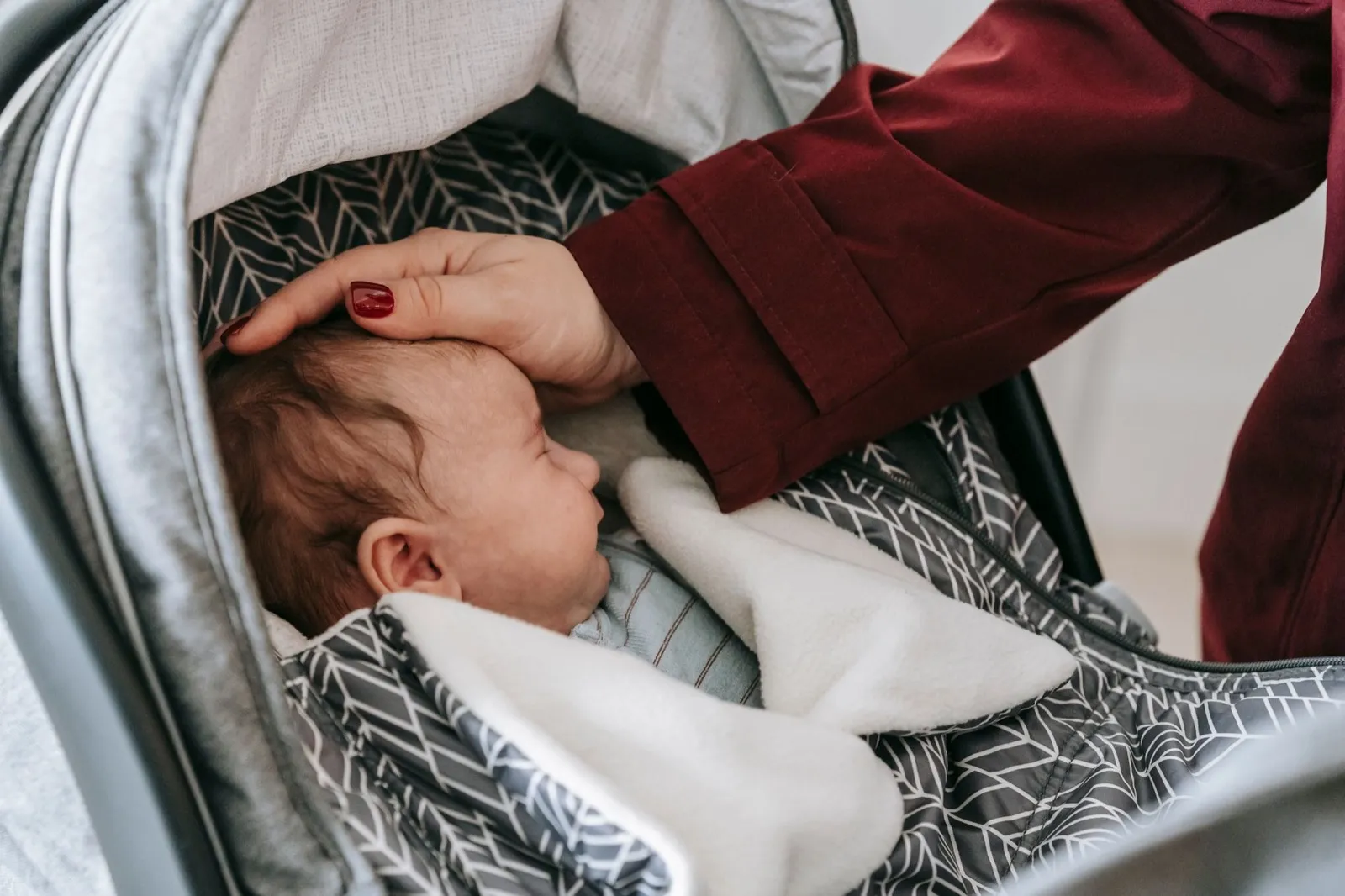
Image Credit: Pexels / Sarah Chai
Taking your newborn out for the first time can feel surprisingly significant. A short walk that once required nothing more than your keys suddenly involves nappies, spare clothes, feeding supplies and the question of whether your baby will start crying the moment you leave home.
For most healthy newborns, going outside does not need to be treated as a major event. A gentle walk or short local outing can be a simple first step when you feel physically and emotionally ready. If your baby was premature, has a health condition, has recently been unwell or you have been given specific medical advice, check with your midwife, health visitor, GP or neonatal team before planning outings.
There is also no prize for getting out quickly. If home feels like the right place for a little longer, that is fine too.
When can you take a newborn outside?
There is not one universal day when every newborn should have their first outing.
Your baby’s health, your own recovery after birth, the weather and where you plan to go all matter. A quiet walk outdoors is very different from spending several hours in a crowded indoor space.
In the first weeks, your baby will also be offered newborn screening and health checks, and NHS routine vaccinations begin at 8 weeks. Keeping appointments and following any individual advice from your maternity or healthcare team is more important than following an arbitrary timeline for that first trip outside.
If you are unsure because your baby was born prematurely or has additional medical needs, ask the professionals caring for them what is appropriate.
Keep the first outing simple
Your first trip does not need to involve lunch, shopping and visiting three different relatives.
A short walk close to home can be enough.
You might walk around your neighbourhood, visit a quiet park or pop somewhere nearby where you know there are suitable changing facilities.
Staying fairly local can remove some of the pressure. If your baby becomes unsettled, needs another feed or has the sort of nappy situation that defeats the spare outfit, you can simply go home.
There is no need to prove that you can manage a full day out with a newborn.
What to pack for your newborn’s first outing
One of the easiest ways to feel more confident is to pack a small changing bag before you need it.
For a short outing, you may want:
- nappies
- wipes or your usual changing supplies
- a portable changing mat
- a spare outfit
- a muslin cloth
- feeding supplies appropriate for how you feed your baby
- a bag for wet or dirty clothing
- weather-appropriate clothing
- anything you personally need after birth, such as water or maternity supplies
Exactly what you need will depend on how long you are going out and where you are going.
You do not have to pack for every imaginable disaster. For a twenty-minute walk near home, your bag can look very different from the one you would take for several hours away.
Dress your baby for the weather
New parents often worry about whether their baby is too hot or too cold.
The NHS advises using light layers and keeping babies comfortable rather than heavily wrapping them. In warm weather, lightweight clothing is appropriate, while additional light layers can be used when it is colder.
Check your baby’s chest or tummy if you are worried about their temperature. The NHS notes that cool hands and feet can be normal and are not necessarily a sign that a baby is too cold.
Be particularly careful about overheating during warm weather.
If you use a pram, do not cover it with a blanket or muslin to block the sun. NHS guidance warns that doing this can cause the temperature inside the pram to rise and may lead to overheating. Use a suitable parasol or sunshade instead and check your baby regularly.
Protect your newborn from direct sunlight
Babies under 6 months should be kept out of direct sunlight, according to NHS guidance.
Choose shade where possible and use a pram sunshade or parasol designed for that purpose. A wide-brimmed sun hat and suitable lightweight clothing can also help protect your baby when you are outside.
Avoid assuming that a cloudy British day means there is no need to think about sun protection. UV exposure can still occur when it does not feel particularly hot.
For babies under 6 months, NHS guidance focuses on keeping them out of direct sunlight rather than relying on sunscreen.
Think about where you are going
Your first outing may feel easier somewhere quiet and familiar.
A park or short walk may be less stressful than a busy shopping centre, crowded restaurant or large family gathering.
You are also allowed to change your mind. If you arrive somewhere and it feels too busy, too warm or simply too much, you can leave.
During the newborn stage, it is reasonable to be cautious about contact with people who are unwell. If someone has symptoms of an infectious illness, postponing close contact with your baby is a sensible precaution.
You can also ask visitors to wash their hands before holding your baby and set whatever boundaries make you comfortable around kissing or passing your newborn between people.
Plan around feeds without expecting a perfect schedule
Newborns are not known for respecting carefully organised plans.
You may leave immediately after a feed and discover that your baby wants feeding again sooner than you expected. Or they may sleep peacefully through the whole outing.
Pack what you need to feed your baby in the way that works for your family and choose somewhere you will feel comfortable stopping if necessary.
If you are breastfeeding and feel nervous about feeding away from home, your first outing can be somewhere you know well or somewhere with a quiet place to sit.
If you use formula, follow NHS guidance on preparing and storing feeds safely while away from home.
You do not need to organise your entire outing around making your baby behave predictably. Build in a little flexibility instead.
Give yourself extra time
Leaving the house with a newborn nearly always involves more steps than leaving alone.
The baby may need changing just as you put your shoes on. You may remember the muslin after fastening the pram. Then your baby may want feeding again.
If you need to be somewhere at a particular time, give yourself more time than you think you need.
For optional outings, removing the deadline altogether can make things easier. Instead of deciding you must leave at exactly 10am, aim for a general window.
Some days you will make it out. Some days you may decide that getting dressed was enough.
Remember that you are recovering too
The first outing is not only about what your newborn can manage.
You have recently given birth, and your body may still be recovering. Depending on your birth and individual circumstances, walking, sitting for long periods or carrying equipment may be uncomfortable.
Start with something manageable for you.
If you have been advised to limit activity or you are experiencing pain, heavy bleeding, dizziness, wound concerns or other symptoms after birth, follow the advice of your maternity team rather than pushing yourself to get outside.
Having another adult with you can make the first outing easier, particularly if you are still physically sore or tired.
If your baby cries while you’re out
This is one of the biggest worries many new parents have.
Babies cry. Sometimes they will cry in public.
You can check the usual possibilities: hunger, a wet or dirty nappy, temperature, tiredness or a need for comfort. Sometimes your baby may remain unsettled even after you have tried several things.
You do not need to apologise to everyone around you.
Find somewhere comfortable to pause, hold or feed your baby if needed, and give yourself time. If going home feels easiest, go home. The outing has not failed.
Each time you go out, you will learn a little more about what is useful to pack and what makes outings easier for your particular baby.
Travelling safely by car
If your first outing involves driving, your baby needs an appropriate child car seat.
NHS guidance recommends choosing a baby car seat that meets current safety requirements and is suitable for your baby’s size. Make sure you understand how to fit and use the seat correctly before your first journey.
Avoid adding bulky clothing or accessories that interfere with the harness or were not designed for use with your particular seat.
If you are uncertain about fitting the seat, check the manufacturer’s instructions and seek appropriate fitting advice before travelling.
Keep expectations small
Your first outing may be lovely. It may also involve a nappy leak, a crying baby and a coffee that goes cold before you drink it.
Neither version says anything about how capable you are as a parent.
Going out with a newborn is a skill you learn through repetition. You gradually discover what you actually use from the changing bag, where you like to feed, how long your baby is comfortable in the pram and which outings feel worth the effort.
Start small. Give yourself plenty of time. Come home whenever you need to.
The next outing will probably feel a little more familiar.
When to get professional advice
Speak to your midwife, health visitor, GP or the healthcare team caring for your baby if you are unsure whether it is appropriate to take your newborn out because they were premature, have a medical condition, have recently been unwell or have additional healthcare needs.
Seek medical advice if your baby seems unwell rather than assuming that unusual sleepiness, feeding changes, breathing difficulties or changes in behaviour are simply because they have been outside.
You should also seek advice for yourself if recovery after birth is making normal activity difficult or you have symptoms that concern you.
If you are unsure about any aspect of newborn care, your midwife, health visitor or GP can give advice based on your baby’s individual circumstances.