Wardrobe Essentials Every Woman Should Own
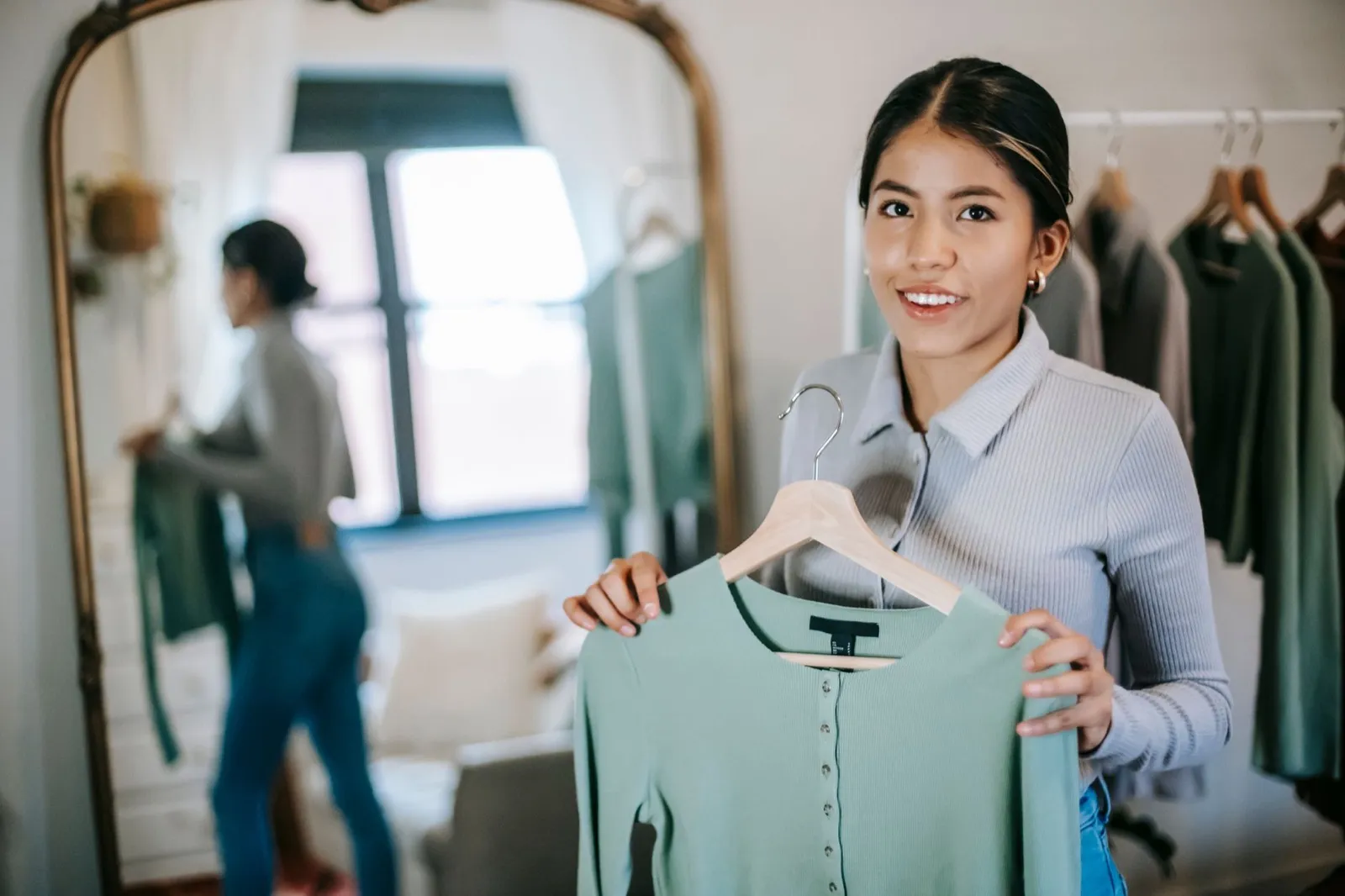
Image Credit: Pexels / Liza Summer
The most useful wardrobe essentials are not a fixed list of clothes that every woman must own. They are the pieces that support your lifestyle, work with several things you already have and make everyday dressing easier.
For one woman, that might mean jeans, trainers and relaxed knitwear. For another, it could be tailored trousers, dresses and loafers. Climate, work, culture, personal taste, comfort and budget all change what deserves a place in your wardrobe.
So rather than treating the word “essential” as a rule, use this list as a flexible starting point. Keep what fits your life, adapt what almost fits and ignore what you know you would never wear.
1. Everyday tops you genuinely like
A few reliable tops can make the rest of your wardrobe much easier to use.
Traditional wardrobe lists often prescribe a white T-shirt or white button-down shirt, but neither is essential if you do not enjoy wearing them.
Your everyday options might include:
- plain T-shirts
- long-sleeved tops
- relaxed shirts
- fitted tops
- lightweight knitwear
- blouses
- polo tops
- sleeveless tops
Think about what works with your favourite trousers, jeans and skirts.
Colour matters too. White, black, navy, cream and grey can be easy to combine, but so can colours such as burgundy, olive, brown, pink or blue if they already appear throughout your wardrobe.
The best basic is the one you keep reaching for.
2. A pair of jeans that works for your routine
Jeans are useful for many wardrobes because they can move between casual and slightly smarter outfits, but there is no single cut everyone needs.
You might prefer:
- straight-leg jeans
- wide-leg jeans
- slim jeans
- relaxed jeans
- cropped jeans
- flared jeans
Choose according to comfort and the silhouettes you enjoy rather than trying to find the supposedly most universally suitable shape.
Then consider your existing clothes. Jeans become more useful when they work with several tops, jackets and pairs of shoes you already own.
If you rarely wear denim, there is no reason jeans need to be one of your essentials at all. A favourite pair of trousers may serve the same role.
3. Comfortable everyday trousers
Having an alternative to jeans can give you more outfit options without requiring complicated styling.
Depending on your wardrobe, this might be:
- wide-leg trousers
- straight trousers
- tailored trousers
- pull-on trousers
- linen trousers in warmer weather
- soft jersey trousers
A simple pair of trousers can work with a T-shirt and trainers one day, then a shirt, knit or jacket another day.
Pay attention to how the fabric and waistband feel as you move and sit. Something can look exactly right on a hanger but still be impractical for your everyday routine.
4. A versatile skirt, if you wear skirts
A skirt only counts as an essential if skirts genuinely belong in your wardrobe.
If they do, choose a length and silhouette you naturally enjoy. Midi skirts are popular because they can work across different seasons, but mini, knee-length and maxi styles can be equally useful.
Options include:
- straight skirts
- A-line skirts
- pleated skirts
- slip-style skirts
- denim skirts
- full skirts
Try your chosen skirt with several tops and at least two pairs of shoes. If it only works with one very specific outfit, it may be more of a statement piece than an everyday essential, which is perfectly fine too.
5. Knitwear that layers easily
In cooler climates, knitwear can become one of the hardest-working parts of a wardrobe.
A useful selection might include a fine knit, a cardigan and a warmer jumper, although you may need more or less depending on the weather where you live.
Consider how your knitwear interacts with the rest of your clothes.
Can your coat fit comfortably over it? Does the length work with your usual trousers and skirts? Can a shirt or top fit underneath if you like layering?
Neutral knitwear can be versatile, but colourful pieces can be just as easy to repeat if they coordinate with the rest of your palette.
6. A simple dress you can style more than one way
For anyone who enjoys dresses, one that can move between different settings can be particularly useful.
That does not automatically mean a little black dress.
You might prefer:
- a shirt dress
- a knitted dress
- a wrap-style dress
- a loose midi dress
- a simple maxi dress
- a fitted dress
- a printed dress
Think about how it changes with different layers and shoes.
A midi dress might work with trainers and a cardigan for daytime, boots and a coat in cooler weather, or smarter shoes and jewellery for an occasion.
The most versatile dress is one that feels natural enough for you to actually wear it.
7. A practical everyday jacket
A good everyday jacket gives simple outfits structure, warmth or another layer of interest.
Depending on your style, that could be:
- a denim jacket
- a blazer
- a utility jacket
- a leather or leather-look jacket
- an overshirt
- a lightweight quilted jacket
- a cropped jacket
Think about the clothes underneath it.
If you mainly wear oversized knitwear, a very fitted jacket may not be the most useful option. If your wardrobe contains lots of high-waisted trousers and dresses, you might enjoy a shorter jacket.
The jacket should work with your clothes rather than forcing the rest of your wardrobe to work around it.
8. Outerwear suited to your climate
Outerwear is less exciting on many essentials lists, but it matters enormously in everyday life.
Your needs could include:
- a warm winter coat
- a lightweight transitional coat
- a raincoat
- a trench-style coat
- a practical weather-resistant jacket
Someone living in a mild, dry climate will have very different requirements from someone dealing with frequent rain or cold winters.
Think about length, warmth and layering room as well as appearance. Your most useful coat should accommodate the outfits you wear underneath it.
9. Comfortable everyday shoes
Shoes can determine whether an outfit actually works for your day.
For many women, useful everyday choices could include:
- trainers
- loafers
- flat shoes
- ankle boots
- sandals
- practical walking shoes
You do not need all of them.
Think about where you walk, how you commute, your local weather and the clothes you wear most frequently.
A beautiful shoe that does not suit your routine is unlikely to become an essential.
10. A smarter shoe option
If your life regularly includes work events, dinners, celebrations or other smarter occasions, having one dependable pair of shoes for them can save last-minute searching.
This does not have to mean heels.
You might choose:
- loafers
- ballet flats
- pointed flats
- heeled boots
- block heels
- slingbacks
- smart sandals
Choose something that works with more than one occasion outfit and that you are comfortable wearing for the amount of time you need.
11. A bag that suits an ordinary day
An everyday bag should fit your actual belongings and routine.
That could mean:
- a tote
- a shoulder bag
- a crossbody bag
- a backpack
- a structured handbag
Consider what you regularly carry. A laptop, water bottle, children’s items or gym kit will create very different requirements from a phone, wallet and keys.
A neutral colour can be easy to coordinate, but it is not mandatory. A red, green, blue or patterned bag can function as an everyday piece if it works with your clothes.
12. An outfit for occasions you actually attend
It can be useful to have at least one outfit ready for the type of occasion that appears regularly in your life.
That could mean weddings, work events, dinners, religious celebrations, family gatherings or something completely different.
It does not have to be a dress.
A coordinated suit, jumpsuit, skirt and top, or smart trousers with a blouse can all fill the same wardrobe role.
The aim is simply to have something available that feels appropriate to you, rather than needing to buy an entirely new outfit every time an invitation arrives.
13. A reliable layering piece
Some of the most useful wardrobe essentials are the pieces that connect other clothes.
A layering piece could be:
- a cardigan
- a blazer
- an overshirt
- a waistcoat
- a lightweight jacket
- a fine knit
For example, a cardigan might make a summer dress wearable on cooler days. A blazer might make jeans suitable for a smarter setting. An overshirt can add warmth to a simple T-shirt and trousers.
Look for the layer your existing wardrobe is missing rather than buying one because it appears on a checklist.
14. A few accessories you actually use
Accessories can change familiar outfits without requiring a completely different wardrobe.
Your useful accessories might include:
- a belt
- a scarf
- jewellery
- sunglasses
- a hat
- hair accessories
- a watch
You do not need a large collection.
If you wear the same earrings or necklace most days, that can simply be part of your signature style.
Accessories are most useful when they feel natural rather than like something you need to remember to add.
How to choose your own wardrobe essentials
Instead of buying everything on this list, start by looking at what you already own.
Pull out your most frequently worn pieces and ask what they have in common.
You may notice that you repeatedly choose:
- similar necklines
- certain trouser rises
- particular skirt lengths
- soft or structured fabrics
- a small group of colours
- fitted or oversized silhouettes
- the same types of shoes
Those patterns are clues.
Next, identify the gaps that repeatedly make getting dressed difficult.
Perhaps you have plenty of tops but only one pair of trousers you like with them. Maybe you have several dresses but no comfortable shoes that work with them. Perhaps your wardrobe is well suited to weekends but difficult for work.
Those are useful gaps to address.
Build outfits, not isolated pieces
Before adding a new wardrobe essential, imagine it as part of complete outfits.
If you are considering a pair of trousers, ask what tops, shoes and outer layers you already own that would work with them.
For example:
Outfit one: straight jeans + knitted top + loafers + blazer
Outfit two: wide-leg trousers + T-shirt + trainers + overshirt
Outfit three: midi skirt + fine knit + ankle boots + coat
Outfit four: simple dress + cardigan + flat shoes
If a new item fits naturally into several combinations, it is more likely to become useful.
If it requires new shoes, a new jacket and several new tops before you can wear it, it may not be filling the wardrobe gap you thought it was.
Do wardrobe essentials have to be neutral?
No.
Neutral colours can make mixing clothes straightforward, but a practical wardrobe does not need to be beige, black, white or navy.
If you regularly wear colour, your essentials can be colourful too.
You might build a wardrobe around navy, cream, burgundy and green. Another person might prefer black, grey, cobalt and pink.
Patterns can also become repeat pieces.
The useful question is not whether an item is neutral. It is whether it works with enough of your wardrobe to earn the role you want it to have.
How many wardrobe essentials do you need?
There is no correct number.
Your wardrobe size depends on your lifestyle, climate, storage, laundry routine, work requirements and how much variety you enjoy.
Someone who wears a uniform five days a week may need fewer everyday outfits. Someone who moves regularly between office wear, practical clothing and formal settings may need more.
Rather than aiming for a specific number, ask whether your wardrobe covers your recurring needs without making everyday dressing unnecessarily difficult.
You can have a small wardrobe or a large one. Neither is automatically better.
What not to buy just because it is called an essential
Be cautious with any garment that appears repeatedly on wardrobe lists but repeatedly goes unworn in your own wardrobe.
That might include:
- a white button-down shirt
- a black blazer
- blue jeans
- a little black dress
- a trench coat
- high heels
- a pencil skirt
- a plain white T-shirt
All of these can be excellent wardrobe pieces. None is compulsory.
If you dislike ironing shirts, rarely wear formal jackets or simply prefer colourful dresses to black ones, your wardrobe should reflect that.
An essential should solve a real dressing need.
A simple wardrobe essentials checklist
If you want a starting point, consider whether you have:
- everyday tops
- reliable bottoms
- knitwear or seasonal layers
- an everyday jacket
- suitable outerwear
- comfortable everyday shoes
- an option for smarter occasions
- a practical everyday bag
- clothing suited to your work or regular activities
- a few pieces that express your personal style
Then personalise each category.
You may need several pairs of trousers and no skirts. You might live in dresses and barely wear jeans. You may need three types of coat because of your climate, or almost no outerwear at all.
That flexibility is what makes the list useful.
Wardrobe essentials are not clothes every woman should own in exactly the same form. They are the dependable pieces that support the way you personally get dressed.
Start with your lifestyle. Pay attention to what you already wear. Fill genuine gaps gradually, and choose versions of each essential that feel like you.
That is far more useful than owning a perfect checklist of clothes that stay on their hangers.