What to Wear to a Job Interview
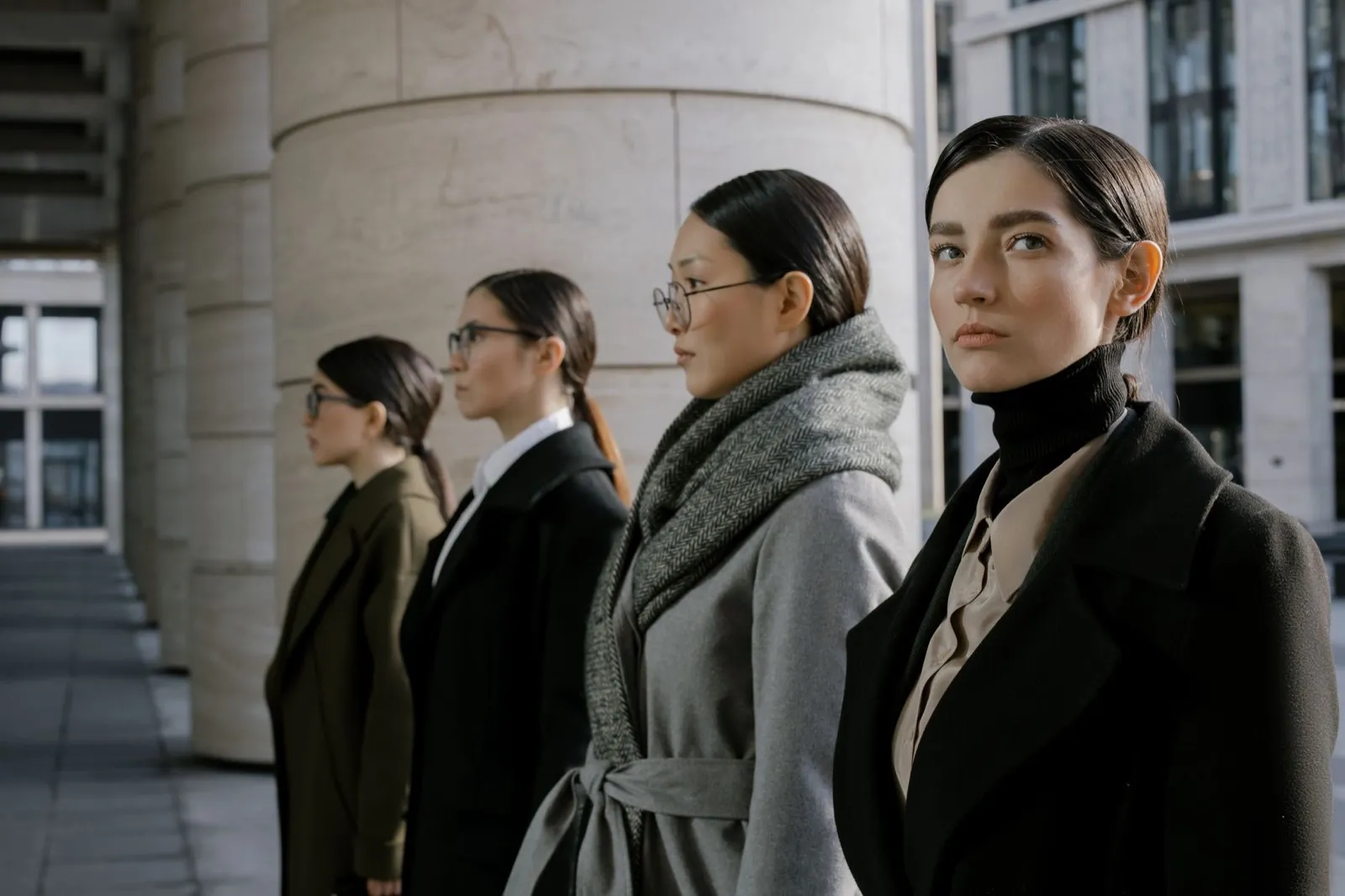
Image Credit: Pexels / cottonbro studio
If you are wondering what to wear to a job interview, aim for an outfit that suits the workplace, feels considered and lets you focus on the conversation rather than your clothes.
For many interviews, that might mean tailored trousers with a shirt, blouse or fine knit, a simple dress with a jacket, a skirt with a polished top, or a suit. In a more casual workplace, smart trousers with a knit or shirt may feel more natural.
There is no single interview outfit that works for every profession. A useful starting point is to research how people typically dress in that organisation, then choose something slightly more polished if you are unsure.
Most importantly, wear clothes that fit comfortably and feel familiar enough that you are not adjusting them throughout the interview.
Start with the workplace dress code
The right interview outfit depends partly on where you are interviewing.
A law firm, architecture practice, school, hospital, creative agency, construction company, technology business and retail store may all have different workplace cultures. Even companies within the same industry can vary.
Before deciding what to wear, look at the organisation’s website, recruitment materials and professional social media pages. Photographs of employees at work can sometimes give you a useful sense of how formal the environment is.
You can also consider the role itself.
A client-facing corporate position may call for more traditional business clothing. A role in a creative or casual workplace may allow more relaxed pieces. An interview involving a site visit, practical assessment or tour may require comfortable shoes and clothing suited to the activity.
If a recruiter or hiring manager has given you specific guidance, follow that first.
What to wear to a formal job interview
For workplaces with a formal or corporate dress code, tailoring is a straightforward option.
You might choose:
- A trouser suit with a blouse, shirt or simple top
- Tailored trousers with a blazer
- A knee-length or midi dress with a jacket
- A skirt with a blouse or fine knit
- Coordinating tailored separates with smart shoes
A suit does not need to be black. Navy, charcoal, grey, brown and other neutral shades can work just as well, while colour is also an option if it suits your wardrobe and the workplace.
The aim is not to make yourself look as conservative as possible. It is simply to choose clothes that feel appropriate for a more formal professional setting.
What to wear to a business casual interview
Business casual is broad, so there is usually more flexibility.
Possible interview outfits include:
- Tailored trousers with a shirt and loafers
- Wide-leg trousers with a fine knit and blazer
- A midi skirt with a blouse
- A simple dress with flats or ankle boots
- Smart trousers with a cardigan and polished shoes
You may not need a full suit, although wearing one is still an option if you enjoy tailoring.
A blazer can also make a fairly simple outfit feel more considered. If blazers are not your style, a structured cardigan, neat knit or smart jacket can serve a similar purpose depending on the workplace.
What to wear to an interview at a casual workplace
A casual office does not necessarily mean you need to dress as casually as employees might on an ordinary working day.
Instead, you could take familiar casual pieces and make the overall outfit slightly more polished.
For example:
- Dark jeans with a shirt and blazer
- Smart trousers with a plain T-shirt and jacket
- A midi skirt with a knit and flats
- Chinos or tailored trousers with a shirt
- A simple dress with a cardigan or relaxed jacket
If you are considering jeans, look at the organisation carefully first. They may feel completely natural in one workplace and noticeably informal in another.
You do not need to imitate the personal style of existing employees. The goal is to understand the general level of formality.
What to wear to a creative job interview
Creative industries can offer more room for individual style, but there is still no requirement to create an attention-grabbing outfit.
You might choose an interesting silhouette, colour combination, print, accessory or piece of jewellery if that feels natural to you.
For example:
- Wide-leg trousers with a fitted knit and statement earrings
- A colourful suit with a simple top
- A midi dress with unusual shoes or jewellery
- Tailored trousers with a printed blouse
- A skirt with a shirt and distinctive jacket
Personal style can be present without becoming the entire focus of your appearance.
If you normally dress quite simply, you do not need to suddenly become more experimental because the company works in a creative field.
What to wear to a video interview
A video interview still benefits from a little outfit planning, even though the interviewer may only see your upper half.
Choose a top that looks clear on camera and feels comfortable while you are sitting. A shirt, blouse, knit, simple top or jacket can all work.
Before the interview, check how your outfit looks using the same camera and lighting you will use for the call. Very small or high-contrast patterns can sometimes look distracting on screen, so a solid colour or larger, quieter pattern may be easier visually.
You do not need to dress formally from head to toe if that feels unnecessary, but wearing a complete outfit can prevent awkwardness if you need to stand up unexpectedly.
The background, lighting and camera position are likely to matter more than tiny styling details.
What colours should you wear to a job interview?
There is no universal list of correct interview colours.
Navy, black, grey, brown, cream and other neutrals are popular because they are easy to combine, but you do not need to limit yourself to them.
Blue, green, burgundy, pink, red or another colour you enjoy can also be part of an interview outfit. You might wear colour through a blouse, knit, dress, jacket or accessory.
If you are uncertain about the workplace, a simple approach is to keep the overall outfit fairly understated and introduce colour in one or two pieces.
There is no need to use colour psychology as a formula for getting dressed. The suitability and comfort of the complete outfit are more useful considerations.
Can you wear a dress to a job interview?
Yes, if you like wearing dresses.
A simple midi or knee-length dress can be an easy interview outfit because it requires relatively little coordination. Depending on the workplace, you could add a blazer, cardigan or smart coat.
There is no single correct neckline, sleeve length or silhouette. Choose something you can sit and move comfortably in and that feels appropriate for the setting.
If you rarely wear dresses, however, an interview is not a reason to start. Trousers, skirts, suits and separates are equally valid options.
Can you wear jeans to a job interview?
Sometimes.
Jeans may be suitable for an interview at a genuinely casual workplace, particularly if denim is a normal part of the company’s everyday dress.
If you choose jeans, a simple pair in a darker or even wash can be easy to combine with a shirt, blouse, knit or blazer.
If you are uncertain about the organisation’s expectations, smart trousers are usually a more adaptable choice.
The important point is context. Jeans are not automatically inappropriate, just as a formal suit is not automatically the best choice for every interview.
What shoes should you wear to an interview?
Interview shoes should suit the outfit, workplace and practical demands of the day.
You might choose:
- Loafers
- Ballet flats
- Court shoes
- Block heels
- Smart ankle boots
- Brogues
- Clean, simple trainers in a suitably casual workplace
Heels are not necessary.
If your interview includes a long walk, public transport, stairs or a tour of the workplace, comfortable shoes become particularly important.
For site-based roles, laboratories, manufacturing environments or other specialist workplaces, you may be given specific footwear or safety requirements. Follow any instructions provided by the employer.
What accessories should you wear?
Accessories can be simple.
A watch, earrings, necklace, scarf or other jewellery can be included if you normally wear them. There is no need to remove your personality from your outfit in an attempt to look professional.
For a bag, choose something practical enough to carry what you need. That might include copies of your CV, a portfolio, notebook, identification, water or other essentials.
A tote, structured handbag, backpack or laptop bag may all be appropriate depending on the role and setting.
Function matters more than following a particular idea of what a professional bag should look like.
What to wear to an interview in hot weather
Hot weather can make traditional interview clothing uncomfortable, particularly if you are travelling by public transport or walking to the venue.
Lightweight trousers, a midi skirt, a simple dress or a breathable shirt can be useful options. You might carry a blazer or jacket and put it on shortly before arriving if the workplace is formal.
Layers can also help because air-conditioned offices may feel much cooler than outside.
Choose shoes that remain comfortable in the heat, especially if your feet tend to swell during warm weather.
What to wear to an interview in cold or rainy weather
Your coat and shoes are part of the practical outfit, even if you remove them when you arrive.
A smart wool coat, trench, raincoat or other weather-appropriate outer layer can work depending on your wardrobe and the conditions.
If it is raining heavily, wearing practical shoes for the journey and changing before the interview can be easier than trying to protect delicate footwear.
An umbrella, warm layer and sensible bag may be more useful than trying to maintain a perfectly styled outfit through bad weather.
Give yourself enough time to arrive, remove wet outerwear and settle before the interview starts.
Interview outfit ideas using simple wardrobe pieces
You may already own everything you need.
Here are a few adaptable formulas.
Classic and polished
Tailored trousers + shirt or blouse + blazer + loafers
Simple and comfortable
Midi dress + cardigan or jacket + flats
Business casual
Wide-leg trousers + fine knit + loafers or ankle boots
Relaxed workplace
Dark jeans + shirt + blazer + flats or smart trainers
Creative workplace
Tailored trousers + colourful or printed top + distinctive jacket + simple shoes
Formal corporate setting
Matching suit + simple top + smart flats or heels
Cold-weather interview
Tailored trousers + fine knit + blazer + smart coat + ankle boots
These combinations are starting points. Change the silhouettes, colours and individual pieces to suit your style and the workplace.
Do you need to buy a new interview outfit?
Usually, no.
Before shopping, look at what you already own. A pair of work trousers, a shirt, a dress, a blazer or a smart knit may already give you a suitable combination.
Clothes you have worn before can have an advantage because you already know how they feel when you sit, walk and move.
If something needs a small repair, pressing or cleaning, taking care of that may be all that is required.
If you do decide that you need something new, focus on the specific gap rather than assuming you need an entirely new outfit. Perhaps you only need a shirt that works with trousers you already own, or practical shoes for a workplace tour.
What not to wear to a job interview
Rather than creating a long list of forbidden clothes, focus on avoiding anything that could make the interview unnecessarily difficult.
You might reconsider an item if:
- It is uncomfortable when you sit down
- You have to keep adjusting it
- The shoes are painful to walk in
- It is unsuitable for the weather
- It conflicts with safety requirements
- It is much more casual or formal than the workplace
- It has wording or imagery that could distract from a professional conversation
This is about practicality and context, not judging particular styles or bodies.
Prepare your outfit the day before
Choosing your interview clothes in advance can make the morning easier.
Try on the complete outfit, including shoes and outerwear. Sit down in it. Walk around. Check that everything you need is ready.
If you are travelling to the interview, think about the journey too. You may need an umbrella, comfortable walking shoes, an extra layer or a bag large enough for a portfolio.
Then put the outfit aside and move on to the more important preparation: learning about the organisation, reviewing the role and thinking about the questions you want to ask.
A final job interview outfit checklist
Before you leave, ask yourself:
- Does my outfit suit the workplace?
- Have I followed any instructions from the employer?
- Can I sit and move comfortably?
- Are my shoes practical for the day?
- Am I prepared for the weather?
- Do I have everything I need in my bag?
- Can I stop thinking about my clothes once the interview begins?
If so, your outfit is doing its job.
What you wear can help you arrive feeling prepared, but it does not need to carry the weight of the interview. Choose something appropriate, comfortable and familiar, then let your experience, preparation and conversation take centre stage.