Baby Fever: What Parents Need to Know
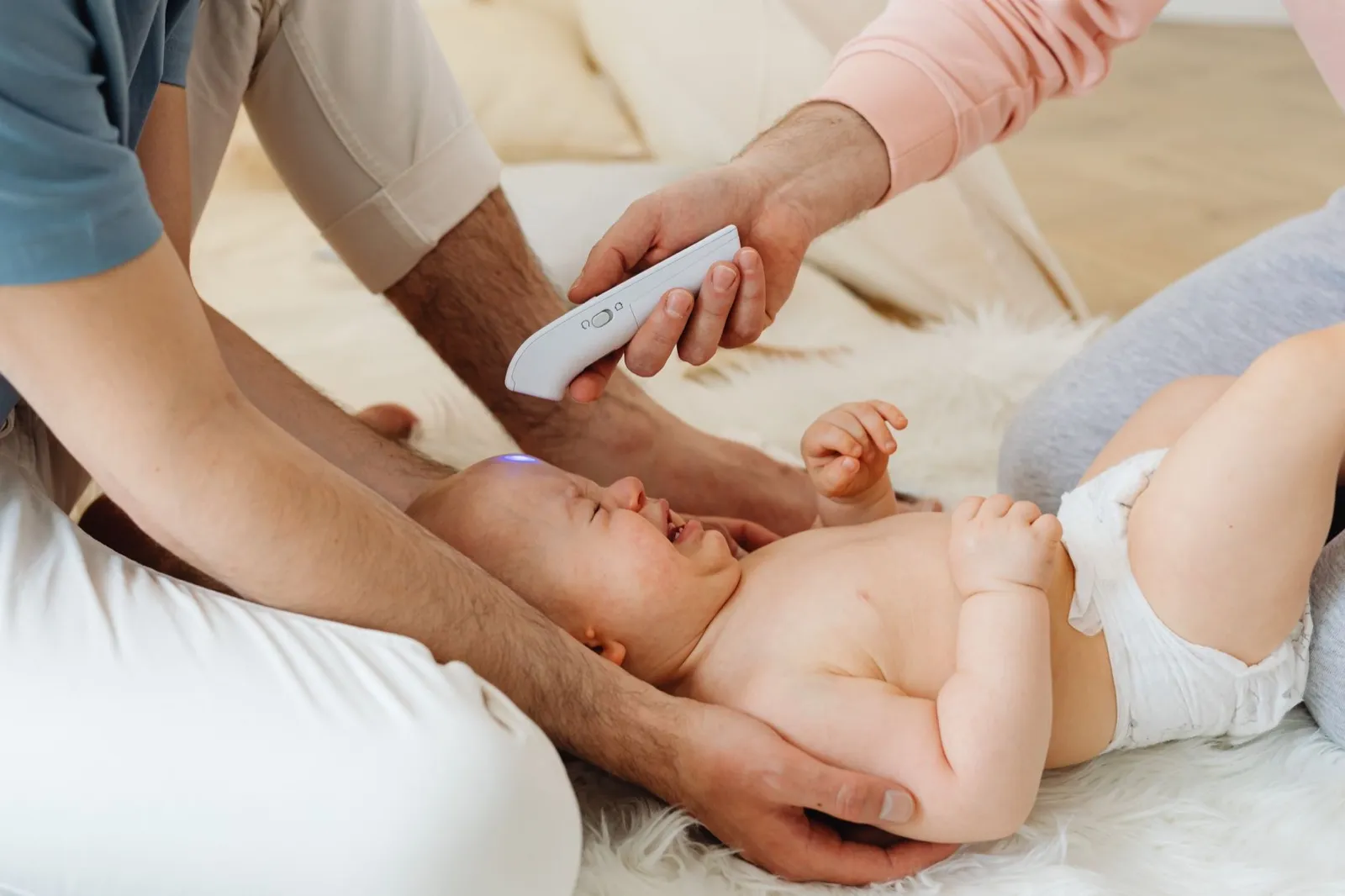
Image Credit: Pexels / https://kaboompics.com/
Finding that your baby has a fever can be worrying, particularly when they are very young. A fever means a temperature of 38°C or above, according to the NHS. It is commonly the body’s response to an infection, but your baby’s age and how they are behaving are just as important as the number on the thermometer.
For babies under 3 months, a temperature of 38°C or higher needs urgent medical advice. For babies aged 3 to 6 months, the NHS advises urgent medical help for a temperature of 39°C or higher.
For older babies who have no warning signs, a fever can often be cared for at home while you monitor them closely. If your baby seems seriously unwell, however, seek help even if their temperature is not especially high.
What counts as a fever in a baby?
A high temperature, or fever, is 38°C or above.
Normal temperature varies slightly between babies. The NHS describes around 36.4°C as normal for babies and children, but a small variation either side does not necessarily mean anything is wrong.
You may suspect a fever if your baby:
- feels hotter than usual on their back or chest
- feels sweaty or clammy
- has flushed cheeks
- seems unwell
Touch can alert you that something has changed, but use a digital thermometer to check their actual temperature.
Why do babies get fevers?
A fever is a natural response to illness and is commonly associated with infections.
Coughs, colds and other childhood infections can cause a high temperature. Some babies also develop a fever after routine vaccinations.
The temperature alone cannot tell you what is causing the illness or whether it is serious.
A baby with a relatively low fever can still need medical attention if they are struggling to breathe, unusually sleepy or showing other concerning symptoms. Equally, many fevers are associated with illnesses that get better without specific treatment.
This is why it helps to look at your baby’s overall condition rather than focusing entirely on bringing down the number.
How to take your baby’s temperature
The NHS recommends using a digital thermometer in the armpit for children under 5.
Place the thermometer at the top of your baby’s armpit, then gently hold their arm against their body. Keep it there for the length of time specified in the thermometer instructions. Many digital thermometers beep when the reading is ready.
Ear thermometers can give misleading readings if they are not positioned correctly, which can be particularly difficult with a baby’s small ear canal.
Forehead strip thermometers measure skin temperature rather than body temperature and are not considered accurate enough for this purpose.
If your baby has just had a bath, been in a very warm room, been wrapped tightly in blankets or worn several layers, wait a few minutes before checking again. These situations can temporarily affect the reading.
Why your baby’s age matters
Fever is treated more cautiously in young babies.
Under 3 months
Contact your GP urgently or call NHS 111 if your baby is under 3 months and has a temperature of 38°C or higher, or you think they have a high temperature.
Do not wait to see whether the fever improves on its own.
3 to 6 months
Contact your GP urgently or call NHS 111 if your baby is aged 3 to 6 months and has a temperature of 39°C or higher, or you think they have a high temperature.
Seek advice at a lower temperature if your baby appears unwell or you are concerned.
Over 6 months
For older babies, their symptoms and general behaviour are especially useful alongside the temperature reading.
Contact a healthcare professional if you are worried, if your baby is not their usual self, or if the fever lasts for 5 days or more.
What to do when your baby has a fever
If your baby does not meet the criteria for urgent assessment and has no emergency warning signs, you can often care for them at home.
Offer plenty of fluids. If you breastfeed, continue offering breastfeeds.
Check your baby regularly, including during the night.
Watch for changes in:
- feeding
- wet nappies
- breathing
- alertness
- skin colour
- responsiveness
- new symptoms such as a rash
Keep your baby comfortably dressed rather than wrapping them in lots of extra clothing or blankets.
You do not need to make your baby cold to treat a fever.
Do you need to bring the temperature down?
A fever is part of the body’s natural response to infection, so the aim is not simply to achieve a particular thermometer reading.
Focus on how your baby feels.
NHS guidance says paracetamol or ibuprofen may be given if a child is distressed or uncomfortable, but these medicines have age and other restrictions.
Do not give paracetamol to a baby under 2 months. Do not give ibuprofen to a baby under 3 months or under 5kg unless it has been prescribed by a doctor. Ibuprofen also has other restrictions, including for dehydration and chickenpox.
Do not alternate paracetamol and ibuprofen unless a healthcare professional tells you to.
If you are unsure what medicine is suitable for your baby, ask a pharmacist, GP or NHS 111.
Never give aspirin to a child under 16 unless a doctor has prescribed it.
Should you sponge a baby down?
No. NHS guidance advises against sponging a child down to cool a fever.
You also do not need to undress your baby completely.
Instead, avoid covering them in too many clothes or bedclothes and keep them comfortable.
Cold baths or attempts to cool the body aggressively can make a baby uncomfortable and are not recommended as a way to manage fever.
Keep an eye on hydration
Babies can become dehydrated more easily than adults, particularly when illness affects feeding or causes vomiting or diarrhoea.
Watch for signs such as:
- fewer wet nappies than usual
- few or no tears when crying
- sunken eyes
- a sunken soft spot on the head
- unusual drowsiness
- irritability
Continue offering appropriate fluids frequently.
If your baby shows signs of dehydration, contact NHS 111 or a healthcare professional for advice. Severe dehydration accompanied by symptoms such as difficulty breathing, marked sleepiness or abnormal skin colour can require emergency treatment.
Feeding a baby with a fever
It is common for appetite to change during an illness.
For babies who are still primarily milk-fed, continue offering their normal breast or formula feeds.
Your baby may prefer smaller or more frequent feeds while they feel unwell.
Pay attention if they are feeding much less than normal or refusing feeds repeatedly. Poor feeding can be an important warning sign, especially alongside drowsiness, breathing difficulties or fewer wet nappies.
Do not force a baby to finish a feed. If you are concerned about how little they are taking, seek medical advice.
Fever after vaccinations
Some babies develop a high temperature after vaccinations.
This can be an expected response to certain vaccines and often settles fairly quickly.
Follow the advice given by the healthcare professional at your baby’s vaccination appointment, particularly because recommendations can differ depending on the vaccine and your baby’s age.
If you are concerned about your baby after vaccination, their symptoms are worsening, or they have other signs of serious illness, contact your health visitor, GP or NHS 111.
Do not assume every fever after vaccination is caused by the vaccine if your baby appears significantly unwell.
When a rash appears with a fever
A rash alongside a high temperature deserves attention.
One particularly important warning sign is a rash that does not fade when you press a clear glass firmly against it.
If your baby has a fever and a non-fading rash, call 999 or go to A&E.
Do not wait for a rash to appear if your baby has other signs of serious illness. Serious infections do not always cause one.
If your baby has a rash you are worried about but no emergency symptoms, contact your GP or NHS 111.
Fever and febrile seizures
A high temperature can sometimes be associated with a febrile seizure in young children.
During a seizure, a child may become stiff, shake or lose consciousness.
If your baby or child has a fit for the first time, NHS guidance says to call 999.
Do not put anything in their mouth.
Once the immediate emergency has been dealt with, healthcare professionals can assess the cause and explain what happened.
Warning signs that matter more than the number
A thermometer reading is useful, but your baby’s overall condition is crucial.
Call 999 if a baby with a fever:
- is struggling to breathe, breathing very fast or making grunting noises
- is drowsy and difficult to wake
- is not responding as they normally do
- has blue, grey, unusually pale or blotchy skin, lips or tongue
- has a stiff neck
- has a rash that does not fade under pressure
- has a first seizure
- appears seriously unwell
On brown or black skin, colour changes can sometimes be easier to see on the lips, tongue, palms of the hands or soles of the feet.
If your baby seems seriously ill, do not wait for their temperature to rise further.
What if the fever lasts several days?
Many childhood fevers improve within a few days.
The NHS advises contacting your GP or NHS 111 if a high temperature lasts for 5 days or more.
Seek help sooner if your baby’s condition is worsening or they develop concerning symptoms.
A prolonged fever needs professional assessment rather than repeated home treatment without knowing the cause.
Keep a note of temperature readings and any changes in symptoms if this helps you explain what has been happening when you speak to a healthcare professional.
Trust changes in your baby’s usual behaviour
Parents often notice that something is different before they can name a particular symptom.
Perhaps your normally alert baby is unusually quiet. They may be feeding poorly, difficult to settle or much sleepier than normal.
The NHS advises parents to trust their instincts if they think their baby or toddler is seriously ill.
You do not need to prove that something is wrong before contacting a healthcare professional.
This is particularly relevant with young babies, who can be difficult to assess remotely.
When to get professional advice
Ask for an urgent GP appointment or call NHS 111 if:
- your baby is under 3 months with a temperature of 38°C or higher, or you think they have a high temperature
- your baby is 3 to 6 months with a temperature of 39°C or higher, or you think they have a high temperature
- the fever has lasted for 5 days or more
- your baby is not feeding normally and you are worried
- nappies are much drier than usual or your baby shows other signs of dehydration
- your baby has a rash alongside the fever
- your baby is not their usual self and you are concerned
Call 999 if your baby has serious warning signs such as difficulty breathing, a first seizure, a non-fading rash, abnormal blue or grey colouring, extreme drowsiness, difficulty waking or reduced responsiveness.
Babies can become unwell quickly. If your baby seems seriously ill, seek medical help based on how they look and behave rather than waiting for the thermometer to reach a particular number.
Related reading
- Signs Your Baby Is Unwell: When to Seek Medical Help
- Baby Temperature Guide: What Is Normal and When to Worry
- Baby Health & Safety Checklist: Essential Rules Every Parent Should Know