Baby heartbeat
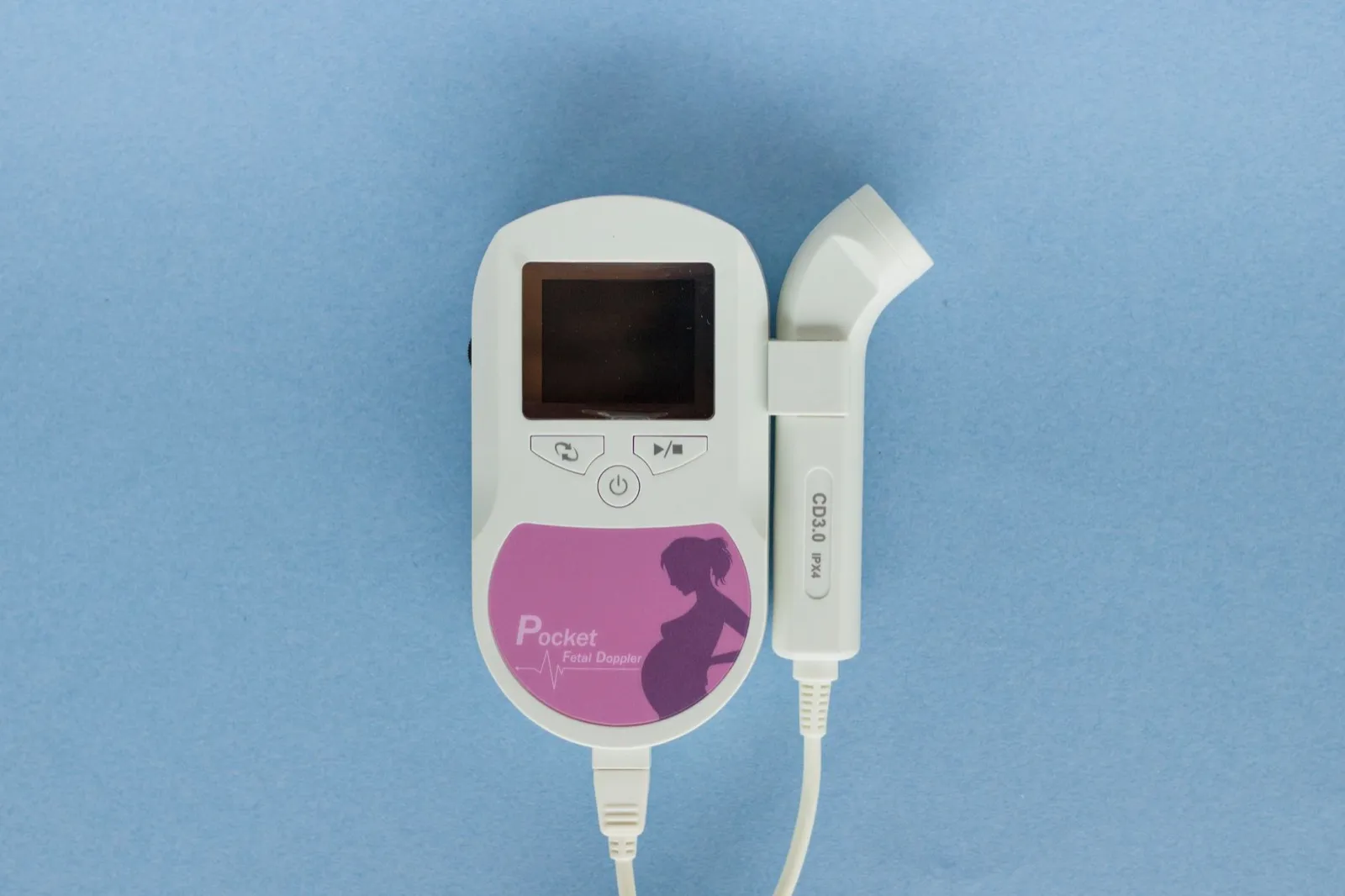
Image Credit: Pexels / Yasser Hernandez
Hearing or seeing your baby’s heartbeat can feel like a significant moment in pregnancy, and it can also bring questions if it happens differently from what you expected. A baby’s heart begins developing early in pregnancy, but exactly when cardiac activity can be seen on an ultrasound or heard during maternity care depends on the stage of pregnancy, the type of assessment and individual circumstances.
Healthcare professionals use ultrasound, handheld Doppler devices and, later in some pregnancies, electronic fetal monitoring to assess a baby’s heartbeat. These checks have different purposes, so a single heartbeat measurement should always be interpreted by the healthcare professional looking after you.
When does a baby’s heart start developing?
The heart starts developing very early in pregnancy as part of the embryo’s early development.
This does not mean that everyone will be able to see or hear cardiac activity at the same stage. Pregnancy dates can differ from estimates, and what can be seen on an ultrasound depends on factors including how far the pregnancy has developed and the type of scan being performed.
If an early scan does not give a clear answer, the healthcare professional carrying out the assessment can explain what has been seen and whether another scan or further assessment is recommended. Avoid trying to interpret an early scan result from pregnancy dates alone.
When can you see a baby heartbeat on an ultrasound?
Ultrasound uses sound waves to create images of a baby in the womb. In England, the NHS routinely offers a dating scan at around 10 to 14 weeks and a second screening scan between 18 and 21 weeks.
Depending on why an earlier ultrasound is being performed and how far the pregnancy has developed, cardiac activity may sometimes be seen before the routine dating scan. Early pregnancy assessments can vary, however, and there is not one exact day when everyone should expect the same finding.
If a scan is being carried out because of pain, bleeding, uncertainty about pregnancy dates or another concern, the results need to be considered alongside your symptoms and other clinical information.
Can you hear the heartbeat at a midwife appointment?
During antenatal care, a midwife may use a handheld Doppler to listen to the baby’s heartbeat at certain appointments. When this is offered can vary according to the stage of pregnancy and local maternity practice.
A Doppler uses ultrasound to detect movement from blood flow and converts it into a sound that can be heard.
Sometimes finding the heartbeat can take a little time because of factors such as the baby’s position. If your midwife has difficulty finding it, they will decide what assessment is appropriate rather than expecting you to interpret the situation yourself.
What is a normal fetal heart rate?
A baby’s heart rate changes during pregnancy and can vary over short periods. For that reason, a number seen on a scan report, Doppler or monitor should not be interpreted in isolation.
During labour, NICE guidance describes the usual baseline fetal heart rate on cardiotocography as between 110 and 160 beats per minute. This range relates specifically to fetal monitoring during labour and should not be used by someone at home to decide whether their baby is well.
Healthcare professionals assess more than a single number. Depending on the circumstances, they may consider the baby’s gestation, movements, the pattern of the heart rate and other aspects of the pregnancy.
If you have been told that your baby’s heart rate needs further assessment, ask your maternity team what the finding means in your particular situation.
How is a baby’s heartbeat monitored later in pregnancy?
The way a baby’s heartbeat is checked depends on why monitoring is needed.
A midwife may listen with a handheld Doppler during an antenatal assessment. If you report reduced or changed movements later in pregnancy, maternity services may monitor the baby’s heart rate for a longer period.
One method is cardiotocography, usually called CTG. Sensors placed on the abdomen record the baby’s heart rate and uterine activity over time. Cambridge University Hospitals explains that CTG may be used when assessing reduced fetal movements after 28 weeks.
During labour, fetal heart rate monitoring may be intermittent or continuous depending on the circumstances. Your maternity team can explain why a particular type of monitoring is being recommended.
Does hearing a heartbeat mean the baby is well?
Hearing a heartbeat can be encouraging, but a heartbeat by itself cannot confirm that a baby is well.
This is particularly important if your baby’s movements have reduced or changed. The NHS specifically advises against using a home Doppler to check your baby’s wellbeing. Even if you hear a heartbeat, this does not mean the baby is necessarily well.
A healthcare professional assessing a concern may need to consider movements, heart rate patterns, your health and other clinical information.
If you are worried about your baby’s movements or another pregnancy symptom, contact your maternity team rather than trying to reassure yourself by finding a heartbeat at home.
Should you use a home Doppler?
The NHS advises not to use a home Doppler, sometimes sold as a fetal heartbeat listening kit, to check your baby’s health.
It can be difficult for an untrained person to identify what they are hearing. A sound that seems to be the baby’s heartbeat may be your own pulse or blood flow through the placenta. More importantly, even correctly detecting a fetal heartbeat does not show that the baby is well.
Home Dopplers should never be used as a reason to delay contacting your maternity unit about reduced movements or other concerns.
If hearing the heartbeat is something you are particularly anxious about, speak to your midwife about what checks are appropriate during your antenatal care.
What if a heartbeat is not seen on an early scan?
An early ultrasound that does not show the result you expected can be very upsetting, but there are several pieces of information that healthcare professionals need to consider before reaching a diagnosis.
NICE guidance on early pregnancy complications sets specific ultrasound criteria for assessing pregnancy viability and advises repeat scanning in some situations before a diagnosis is made. The type of scan, measurements and what can be seen all matter.
This is why dates from a last menstrual period or pregnancy app cannot, by themselves, determine what should be visible on an early ultrasound.
If your scan is inconclusive, the healthcare team should explain what they have found, what it might mean and whether you need another scan or assessment. Waiting for a repeat scan can be emotionally difficult, and it is reasonable to ask questions about what will happen next.
Baby heartbeat and baby movements are not the same check
As pregnancy progresses, becoming familiar with your baby’s usual movement pattern is an important part of noticing changes.
The NHS advises contacting your midwife or maternity unit immediately if your baby is moving less than usual, you cannot feel your baby moving anymore or their usual pattern has changed.
Do not wait until the next day, even if you have recently heard your baby’s heartbeat.
Likewise, do not use a home Doppler after noticing reduced movements. Your maternity team may need to assess both movements and the baby’s heart rate using appropriate clinical equipment.
When to get professional advice
Contact your midwife, GP, early pregnancy service or maternity unit if you are worried about an ultrasound finding, have been told that your baby’s heartbeat needs further assessment or do not understand the result of a scan. The appropriate next step depends on the stage of pregnancy and the clinical findings.
Seek medical advice if you have pregnancy symptoms such as bleeding or pain, particularly if they are new, severe or worrying. Your maternity or early pregnancy service can tell you where you should be assessed.
Contact your maternity unit immediately if your baby is moving less than usual, movements have stopped or your baby’s normal movement pattern has changed. NHS guidance says not to wait until the next day.
Do not use a home Doppler or phone app to decide whether it is safe to delay seeking help. Even hearing a heartbeat does not confirm that your baby is well.
If you cannot reach your usual maternity service and need urgent medical advice, contact NHS 111. Call 999 for a life-threatening emergency.
Related reading
Sources
- NHS: Ultrasound scans in pregnancy
- NHS: 12-week scan
- NHS: Your baby’s movements
- RCOG: Your baby’s movements in pregnancy
- Cambridge University Hospitals NHS Foundation Trust: Reduced baby movements
- NICE: Fetal monitoring in labour
- NICE: Ectopic pregnancy and miscarriage: diagnosis and initial management