Baby-Led Weaning vs Purées: Which Approach Is Right for Your Baby?
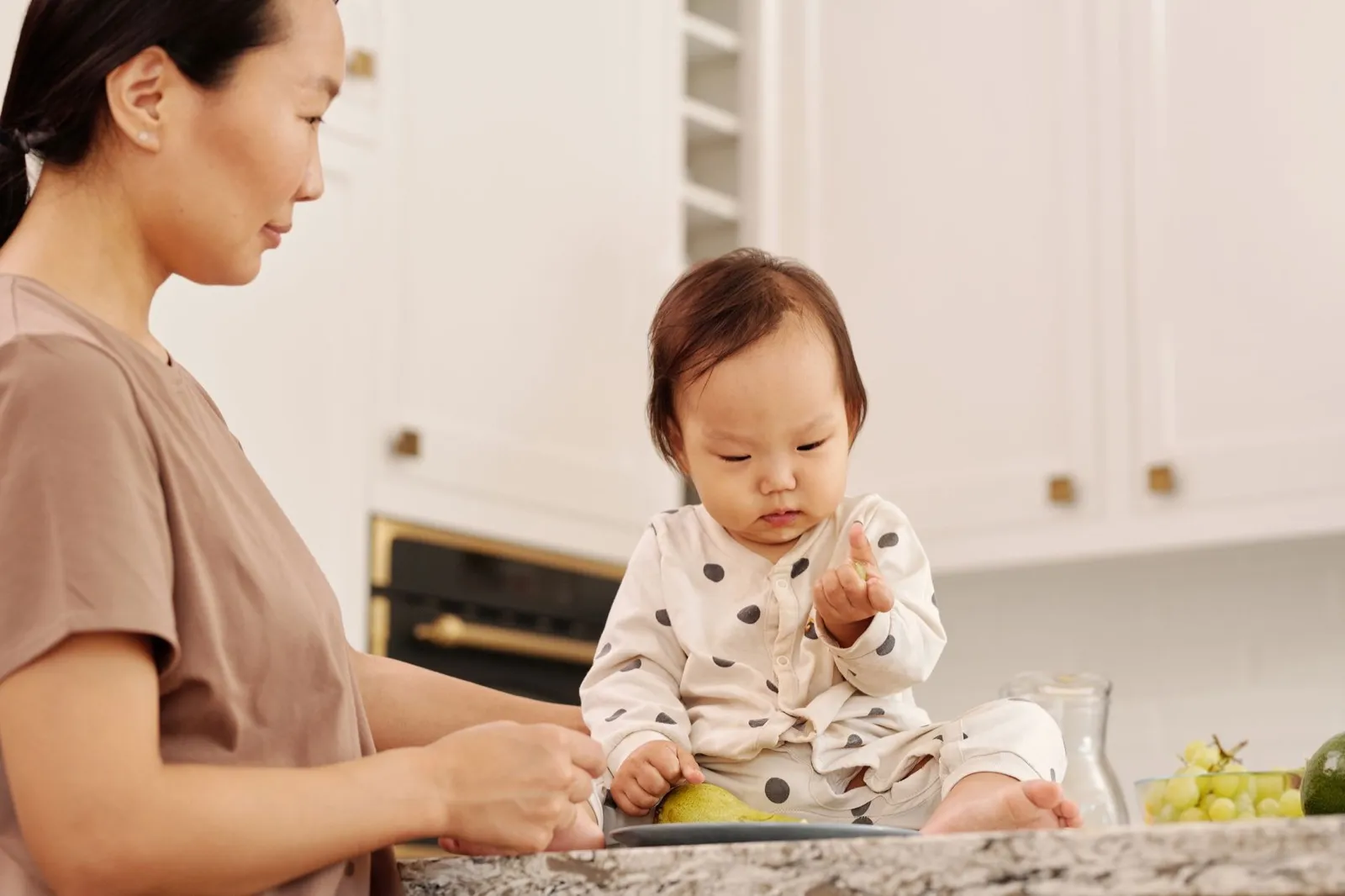
Image Credit: Pexels / Vanessa Loring
You do not have to choose one strict method when your baby starts solids. Baby-led weaning usually means offering suitable finger foods and letting your baby feed themselves, while traditional spoon feeding often begins with puréed or mashed foods. The NHS says there is no right or wrong choice between the two, and many families use a mixture.
What matters most is that your baby is ready for solids, receives a varied diet alongside their usual milk, experiences appropriate textures and is offered food safely.
If you are trying to decide between baby-led weaning and purées, it can help to look past the labels and think about what each approach actually involves.
What is baby-led weaning?
Baby-led weaning means offering your baby finger foods and allowing them to feed themselves from the beginning rather than feeding puréed or mashed food to them with a spoon.
The NHS suggests starting with finger foods that break up easily in the mouth and are long enough for a baby to grip. Soft-cooked vegetables, soft fruit, suitable starchy foods, beans, lentils, eggs, boneless fish and meat, and pasteurised cheese are among the foods that can be prepared as finger foods.
Your baby picks the food up, brings it to their mouth and decides how much they want to eat.
This gives them opportunities to practise self-feeding and experience the shape and texture of foods for themselves.
Baby-led weaning does not mean leaving a baby to manage mealtimes without supervision. Babies should sit safely upright and an adult should always stay with them while they eat.
What does starting with purées involve?
Purée feeding usually involves offering smooth or blended food on a spoon before gradually moving towards thicker, mashed and lumpier textures.
For some babies and parents, this feels like a comfortable way to begin. Other babies may be ready for mashed, lumpy or finger foods without needing smooth purées first.
The NHS notes that waiting until around 6 months gives babies time to develop the skills needed to manage solid food. Some babies may therefore not need smooth or blended foods at all.
If your baby does start with purées, the NHS recommends moving from puréed or blended food towards mashed, lumpy and finger foods as soon as they can manage them.
Spoon feeding can still be responsive. Wait for your baby to open their mouth before offering food and stop when they show signs that they have had enough, such as turning their head away or firmly closing their mouth.
Baby-led weaning vs purées: the main differences
The biggest difference is usually who controls how the food reaches your baby’s mouth.
With baby-led weaning, your baby picks up suitable pieces of food and feeds themselves.
With spoon feeding, a parent or caregiver usually holds the spoon, particularly at the beginning, although babies can also be encouraged to hold a spoon and practise feeding themselves.
Texture is another obvious difference. Baby-led weaning starts with finger foods, while traditional spoon feeding may start with smoother foods before progressing to thicker textures.
In practice, however, the two approaches can overlap considerably. A baby might eat porridge from a spoon at breakfast, pick up soft broccoli at lunch and have mashed lentils with a preloaded spoon at dinner.
There is no requirement to make every meal fit neatly into one category.
Is baby-led weaning better than purées?
NHS guidance does not recommend one of these methods as the universally better approach.
It states that there is no right or wrong way to choose between baby-led weaning and spoon feeding. The important point is that your baby receives a wide variety of foods and the nutrients they need.
This makes the decision much more personal and practical.
You may prefer baby-led weaning because you like the idea of your baby handling food and feeding themselves. Purées or mashed foods may feel easier for certain meals. A combination may fit your family naturally.
Your baby’s preferences matter too. Some babies are enthusiastic about grabbing food immediately. Others need longer to become comfortable with unfamiliar textures.
You can respond to the baby in front of you rather than trying to follow a feeding method perfectly.
Can you combine baby-led weaning and spoon feeding?
Yes. The NHS specifically acknowledges that some parents combine the two.
A mixed approach can be very straightforward.
You might offer:
- soft finger foods alongside mashed vegetables
- porridge on a spoon with pieces of soft fruit
- mashed beans with soft-cooked vegetable sticks
- plain full-fat yoghurt on a spoon alongside suitable finger foods
Using a spoon does not mean your baby cannot participate. They may want to hold another spoon or try feeding themselves.
Similarly, offering finger foods does not mean every food needs to be served in a form your baby can pick up. Some foods naturally work well on a spoon.
The aim is not to meet the rules of a particular feeding style. It is to help your baby gradually learn to eat a varied range of suitable foods.
What about texture development?
Texture is worth thinking about whichever approach you choose.
Once solids have been introduced from around 6 months, the NHS recommends moving babies from puréed or blended foods towards mashed, lumpy or finger foods as soon as they can manage them.
This helps babies learn to chew, move solid food around their mouth and swallow.
Some babies are happy with mashed, lumpy or finger foods from the beginning. Others need a little longer with smoother textures.
If your baby prefers purées initially, that does not mean you have chosen the wrong approach. Continue offering opportunities to experience different suitable textures as their skills develop.
Finger foods can also be included alongside spoon-fed meals, giving your baby opportunities to practise picking food up and feeding themselves.
Does baby-led weaning have a higher choking risk?
Choking is understandably one of the biggest concerns for parents starting solids.
The NHS states that there is no greater risk of choking when a baby feeds themselves than when they are fed with a spoon.
Safe preparation and supervision matter with either approach.
The NHS advises that babies should sit safely upright while eating and should always be supervised. Hard foods such as whole nuts and raw carrot or apple should be avoided. Small, round foods such as grapes and cherry tomatoes need to be cut appropriately.
Gagging and choking are also different.
Gagging can happen as babies learn how to manage solid food. Choking occurs when the airway is partly or completely blocked and requires immediate action.
It is sensible for every parent or caregiver to familiarise themselves with current NHS guidance on choking and baby first aid before starting solids, regardless of the feeding method they choose.
How do you know if your baby is ready for either approach?
Both approaches should begin when your baby is developmentally ready for solid foods.
The NHS recommends starting solids from around 6 months and looking for three signs that appear together. Your baby should be able to:
- stay in a sitting position and hold their head steady
- coordinate their eyes, hands and mouth so they can look at food, pick it up and bring it to their mouth
- swallow food rather than automatically pushing it back out
These abilities are particularly easy to recognise in baby-led weaning because self-feeding depends on your baby being able to reach for and handle food.
They matter for spoon feeding too. Starting with a purée is not a reason to introduce solids before your baby is developmentally ready.
If your baby was born prematurely, ask your health visitor or GP for individual advice about when to start solids.
What happens to milk feeds?
Neither baby-led weaning nor purée feeding should mean suddenly replacing your baby’s milk.
The NHS advises that breast milk or first infant formula remains the main drink during the first year. When solids are first introduced, babies still get most of their energy and nutrients from milk.
The amount and variety of solid food can increase gradually as your baby becomes more confident with eating.
This is useful to remember if very little food actually seems to make it into your baby’s mouth during early baby-led meals. At first, learning and exploring are a large part of eating.
The same applies if your baby only accepts a few spoonfuls of purée or mashed food.
Follow your baby’s cues rather than pressuring them to finish a particular amount.
Which approach is more practical for your family?
There is no single answer because families eat differently and babies respond differently.
Baby-led weaning may appeal if you want to adapt suitable parts of family meals into finger foods. Spoon feeding may feel more practical for foods that naturally suit a spoon or when your baby prefers smoother textures initially.
A combination can remove some of the pressure from choosing.
Think about questions such as:
- Does my baby enjoy picking food up?
- Are they comfortable with the textures being offered?
- Which foods can I safely adapt from our usual meals?
- Am I offering a varied range of foods rather than relying on one type?
- Can I allow enough time for my baby to eat at their own pace?
Convenience matters too. Feeding a baby happens several times a day for a long time, so an approach that works realistically in your household is more useful than one that feels difficult to maintain.
Responsive feeding matters with both approaches
Whichever method you use, pay attention to your baby’s signals.
WHO guidance recommends responsive feeding, which includes responding to signs of hunger and fullness, feeding patiently and encouraging children without forcing them to eat.
With spoon feeding, that means waiting for your baby to accept the spoon rather than repeatedly trying to put food into a closed mouth.
With baby-led weaning, it means allowing your baby to decide what and how much they pick up from the suitable foods you provide.
The NHS similarly advises stopping when a baby shows that they have had enough.
Some days your baby may eat enthusiastically. On others, they may be much less interested. Early feeding is a skill that develops over time rather than something a baby needs to master immediately.
So, which approach should you choose?
If your baby is developmentally ready for solids, you can use baby-led weaning, spoon feeding or a combination of both.
You do not need to choose based on what friends, relatives or social media say is the “best” method.
Instead, focus on a few basics: offer varied and nutritious foods, progress through suitable textures, prepare food safely, allow your baby to respond to hunger and fullness, and continue breast milk or first infant formula alongside solids.
You can also change your approach. Starting with purées does not prevent you from introducing finger foods, and beginning with baby-led weaning does not mean you can never use a spoon.
A flexible approach often reflects how families actually eat.
When to get professional advice
Speak to your health visitor, GP or another qualified healthcare professional if you are unsure whether your baby is ready for solids or which feeding approach is suitable for their individual needs.
Ask for advice if your baby was born prematurely or if you have concerns about their growth, development, chewing, swallowing or ability to manage different textures.
If your baby regularly coughs, chokes or appears to have difficulty swallowing during meals, seek professional advice rather than simply changing between purées and finger foods yourself.
You should also ask for individual guidance if your baby has health or developmental needs that may affect feeding.
If your baby is choking and cannot breathe normally, treat it as an emergency and follow current NHS first aid guidance. Call 999 when emergency medical help is needed.
Related reading
- Baby Food Texture by Age: From Purées to Finger Foods
- Finger Foods for Babies: When and How to Introduce Them
- How to Start Solids at 6 Months: A Simple Step-by-Step Guide