Baby Food Texture by Age: From Purées to Finger Foods
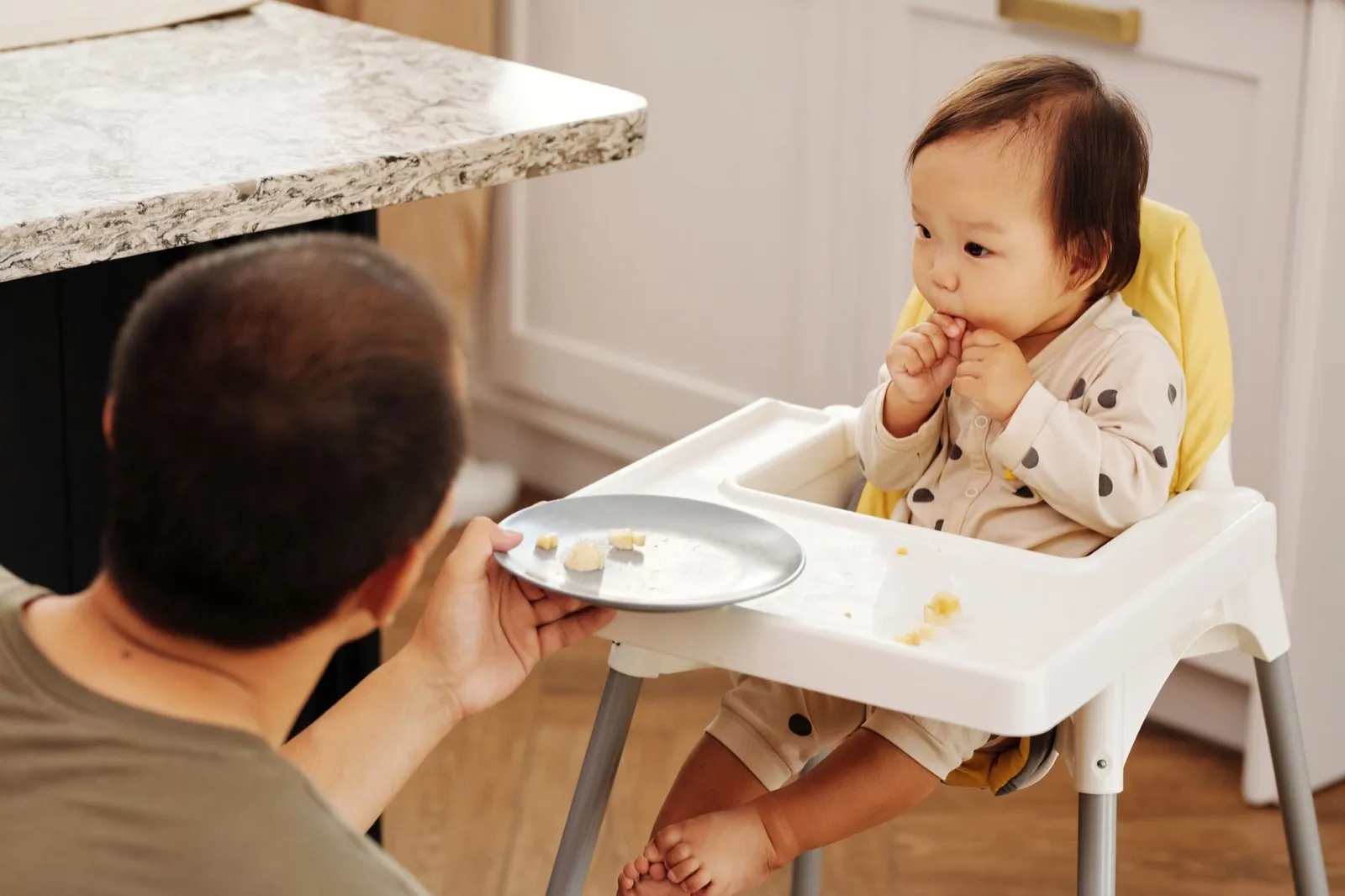
Image Credit: Pexels / Vanessa Loring
Baby food textures usually progress from smooth or mashed foods towards lumpier textures, chopped family foods and finger foods, but there is no requirement for every baby to begin with purées. From around 6 months, many babies can start exploring mashed, lumpy and soft finger foods as soon as they can manage them.
The NHS recommends introducing solid foods from around 6 months, once a baby shows the developmental signs of readiness. It also advises moving on from puréed or blended foods to mashed, lumpy and finger foods as soon as your baby can cope with them.
That means texture progression is less about following a rigid calendar and more about offering suitable opportunities as your baby’s eating skills develop.
Why baby food texture matters
Starting solids involves much more than discovering new flavours.
Your baby is learning how to move food around their mouth, chew and swallow. Different textures give them opportunities to practise these skills.
The NHS advises offering a variety of tastes and textures as babies learn to eat. It also notes that babies may need time to become accustomed to new foods and textures.
You do not need to make every meal more challenging than the last. Some familiar textures can sit alongside newer ones while your baby gains confidence.
The aim is gradual variety, not a race through stages.
From around 6 months: first textures
The NHS recommends starting solid foods from around 6 months, when your baby is showing three key signs of readiness together.
They should be able to:
- stay in a sitting position and hold their head steady
- coordinate their eyes, hands and mouth so they can look at food, pick it up and bring it to their mouth
- swallow food rather than automatically pushing it back out
At this point, babies can be offered a range of suitable textures.
These may include:
- smooth or blended foods
- mashed foods
- soft lumpy foods
- suitable finger foods
Some parents begin with purées and gradually thicken the consistency. Others start with mashed foods or use baby-led weaning and offer soft finger foods. Many families use a combination.
The NHS states that there is no right or wrong choice between baby-led weaning and spoon feeding.
Do babies need to start with smooth purées?
No. Smooth purées are one option, not a compulsory first stage.
The NHS explains that waiting until around 6 months means babies have had time to develop enough to manage solid foods. Some babies may therefore be able to eat mashed, lumpy or finger foods from the beginning.
If smooth purées feel comfortable for you and your baby, you can use them. The important point is not to assume your baby needs to remain on completely smooth food for a long period.
Once your baby can manage it, the NHS recommends moving towards mashed, lumpy and finger foods.
You can also offer more than one texture within the same period. A baby might have smooth plain yoghurt at one meal and soft vegetables or mashed beans at another.
Moving from purées to mashed food
If your baby begins with blended food, mashed food is a simple next texture.
Instead of blending vegetables or fruit until completely smooth, you can mash suitable soft foods with a fork. The result will have more texture and small soft lumps.
Foods that can work well mashed include appropriately prepared:
- potato
- sweet potato
- avocado
- banana
- soft-cooked vegetables
- beans and lentils
The exact texture will vary depending on the food, which is useful. Babies do not need every meal to have an identical consistency.
You can gradually mash food less thoroughly as your baby becomes more comfortable managing texture.
If your baby initially seems surprised by lumps, stay calm and give them time. A new texture can feel very different from milk or a smooth purée.
Introducing lumpy textures
Lumps are often the stage that makes parents nervous, especially if a baby gags.
The NHS recommends introducing mashed and lumpy foods as soon as your baby can manage them rather than keeping food completely smooth unnecessarily.
You might make familiar foods slightly less smooth or offer soft foods that naturally have some texture.
Your baby does not need teeth to begin learning to manage many soft foods. Food offered at this stage should be prepared so it is appropriate for your baby’s developmental skills.
You may see your baby moving food around their mouth or taking longer to work out what to do with it.
Gagging can also occur as babies learn to manage solid food. It is different from choking.
Understanding that difference before starting solids can make texture progression feel less frightening.
Introducing finger foods
Finger foods can be offered from the beginning of weaning if your baby is ready and the food is prepared appropriately.
The NHS recommends starting with foods that break up easily in the mouth and are long enough for a baby to grip.
Examples can include suitably prepared:
- soft-cooked broccoli
- soft-cooked cauliflower
- soft-cooked carrot
- ripe banana
- avocado
- soft pear
- potato
- toast
- pasteurised cheese
- well-cooked egg
For early finger foods, the NHS suggests pieces roughly the size of your own finger as a useful guide because babies need to be able to hold the food in their fist with some sticking out.
Finger foods allow babies to practise picking food up, bringing it to their mouth and feeding themselves.
They can be offered alongside spoon-fed food, so you do not have to choose between finger foods and mashed or puréed meals.
Around 7 to 9 months: building more texture and variety
According to the NHS, babies aged around 7 to 9 months will gradually move towards eating three meals a day alongside their usual milk feeds.
At this stage, continue offering a variety of mashed foods, foods with soft lumps and finger foods.
The NHS encourages offering finger foods as part of each meal so babies can practise feeding themselves.
As your baby becomes more confident, meals can include foods from different groups, such as:
- vegetables and fruit
- potatoes, bread, rice, pasta and other starchy foods
- beans and lentils
- eggs
- fish without bones
- meat without bones
- pasteurised full-fat dairy foods
Food should still be prepared in a form your baby can safely manage.
Breast milk or first infant formula remains important alongside solid foods.
Around 10 to 12 months: towards chopped family foods
By around 10 to 12 months, NHS guidance says babies should be managing mashed, lumpy, chopped and finger foods.
They will usually be eating three meals a day alongside milk feeds.
This stage can begin to look more like family eating, with meals adapted for your baby.
Suitable family foods can often be chopped or prepared into manageable pieces rather than blended separately. Avoid adding salt or sugar to your baby’s portion.
Your baby can continue practising self-feeding with finger foods and may also become more interested in using a spoon.
The change does not have to happen overnight. If your baby manages some textures confidently but finds others difficult, continue offering suitable variety without forcing them.
From 12 months: joining family meals
From 12 months, NHS guidance says children should be eating three meals a day and may also need two healthy snacks.
By this stage, many children can eat the same types of food as the rest of the family, with attention to safe preparation, appropriate portion sizes and foods that should still be avoided because of choking or other risks.
Texture development continues beyond the first birthday. Children keep learning to bite, chew, use cutlery and manage increasingly varied foods.
Family meals can be adapted by taking out your child’s portion before adding extra salt or ingredients that are not suitable for them.
What if your baby prefers smooth food?
Some babies accept changing textures readily. Others are much more cautious.
If your baby enjoys a smooth food, you do not necessarily need to remove it from their diet. Smooth foods such as yoghurt remain normal foods for older babies and adults too.
The aim is to offer other textures alongside them rather than making every meal completely smooth.
You might gradually:
- mash a familiar food instead of blending it
- leave soft, manageable lumps in a meal
- offer a suitable finger food alongside a spoon-fed food
- let your baby touch and handle food
- continue offering textures they have previously been unsure about
The NHS advises continuing to offer foods that babies initially refuse because it can take time for them to become familiar with new tastes and textures.
Keep the experience low pressure. Forcing food into your baby’s mouth can make mealtimes stressful and does not respect their fullness or refusal cues.
Gagging versus choking with new textures
Gagging is common while babies learn to manage solid foods. Choking is different and can be dangerous.
According to the NHS, gagging is usually noisy. A gagging baby may cough, make gagging noises, bring food forwards in their mouth or vomit.
Choking can be quiet because the airway is blocked.
Whatever texture you offer, your baby should sit safely upright and be supervised throughout the meal.
Reduce choking risk by preparing food appropriately. The NHS advises avoiding foods such as whole nuts and hard raw pieces of carrot or apple. Small round foods, including grapes and cherry tomatoes, should be cut appropriately.
Before starting solids, familiarise yourself with current NHS guidance on choking and baby first aid so you know how to respond in an emergency.
How to progress textures without making meals stressful
You do not need to change every meal at once.
A practical approach is to keep offering familiar foods while introducing slightly different textures alongside them.
If your baby has been eating smooth sweet potato, for example, you might try it mashed rather than blended. At another meal, you could offer a suitable soft piece as a finger food.
Give your baby time to look at, touch and handle food.
Expect mess. Picking food up, squashing it and dropping it are all part of learning how food behaves.
Most importantly, follow your baby’s cues. The World Health Organization recommends responsive feeding, which includes responding to hunger and fullness and encouraging children patiently without forcing them to eat.
Texture progression should give your baby opportunities to learn, not turn every meal into a test they need to pass.
When to get professional advice
Speak to your health visitor, GP or another qualified healthcare professional if you are worried about your baby’s ability to manage age-appropriate food textures.
Seek advice if your baby appears to have persistent difficulty chewing or swallowing, regularly coughs or chokes during meals, or is unable to progress beyond very smooth foods.
You should also ask for individual guidance if your baby was born prematurely or has a medical, developmental or feeding condition that could affect how they manage solids.
If your baby is choking and cannot breathe normally, treat it as an emergency. Follow current NHS first aid guidance and call 999 when emergency medical help is needed.
Related reading
- Baby-Led Weaning vs Purées: Which Approach Is Right for Your Baby?
- Finger Foods for Babies: When and How to Introduce Them
- How to Prepare Baby’s First Foods Safely