Baby size by week
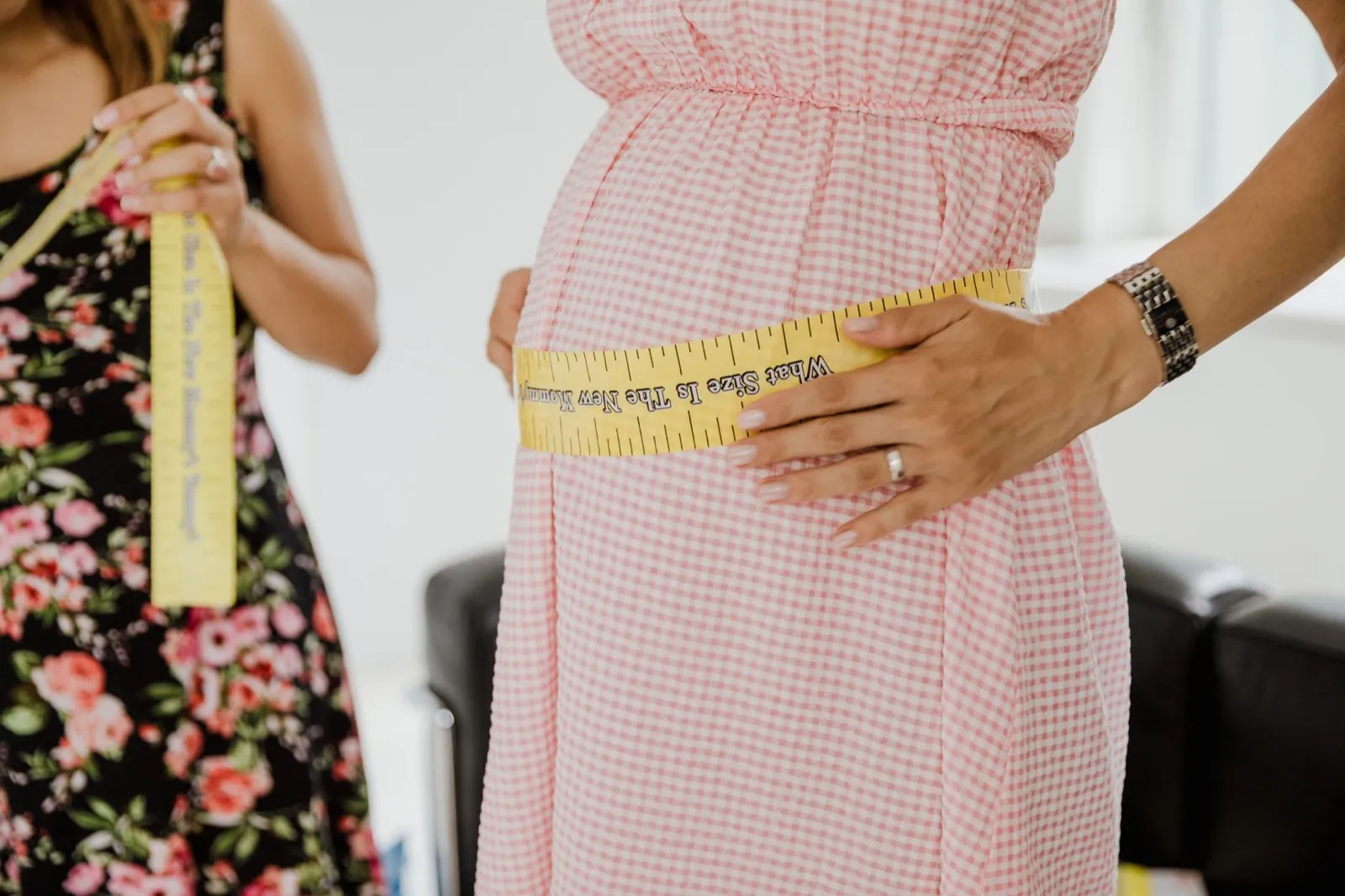
Image Credit: Pexels / RDNE Stock project
Watching your baby’s size change from one week to the next can make pregnancy feel a little more tangible. In the early weeks, an embryo measures only a few millimetres. By the later months, your baby is measured in tens of centimetres and is steadily gaining weight.
Week-by-week sizes are only approximate. They are useful for picturing growth, but they are not a way to judge whether an individual baby is growing as expected. Your maternity team uses clinical measurements, ultrasound where appropriate and the wider picture of your pregnancy to assess growth.
How is baby size measured during pregnancy?
One slightly confusing part of comparing baby sizes is that the way length is described changes during pregnancy.
In early pregnancy, babies are commonly measured from the top of the head to the bottom. This is known as crown-rump length. Later estimates may describe length from head to heel.
That means two measurements from different stages of pregnancy are not always directly comparable.
Ultrasound also does much more than measure a baby’s overall length. Healthcare professionals can use specific measurements to assess growth and estimate fetal weight. RCOG guidance explains that fetal growth assessment needs accurate pregnancy dating and may involve measurements such as abdominal circumference and estimated fetal weight.
The NHS 20-week screening scan, usually offered between 18 and 21 weeks, also includes a check of your baby’s growth.
Baby size by week
The NHS week-by-week pregnancy guide uses approximate measurements and familiar fruit or vegetable comparisons to help illustrate how much a baby is growing.
Here are some useful milestones from NHS guidance:
Pregnancy stage Approximate size NHS comparison
4 weeks About 2 mm long Poppy seed
8 weeks About 16 mm long Raspberry
12 weeks About 5.4 cm from head Plum to bottom
14 weeks About 8.5 cm from head Kiwi fruit to bottom
20 weeks About 25.5 cm from head Around halfway through to toe pregnancy
24 weeks About 30 cm from head Corn on the cob to heel
25 weeks About 34.6 cm from head Courgette to heel
26 weeks About 35.6 cm from head Cucumber to heel
29 to 30 weeks About 40 cm from head Growing and gaining to toe weight
31 to 32 weeks About 42 cm from head Continuing to gain to toe weight
35 weeks About 46 cm from head Honeydew melon
to heel in Tommy’s
guide
These figures are best read as snapshots rather than targets. They help show the scale of development, but your baby’s own measurements need to be interpreted by your maternity team.
Baby growth in the first trimester
The first trimester brings a remarkable change in scale.
At around four weeks, the NHS describes the embryo as about 2 mm long, roughly the size of a poppy seed. By eight weeks, it is around 16 mm and compared with a raspberry.
By 12 weeks, the fetus is approximately 5.4 cm from head to bottom. The NHS compares this with a plum. Internal organs and muscles have developed further, while the skeleton is beginning to harden into bone.
These comparisons can be enjoyable to follow, but development involves far more than increasing length. The brain, nervous system, organs, limbs and other structures are developing at the same time.
Baby growth in the second trimester
Growth becomes much easier to picture during the second trimester.
At 14 weeks, NHS guidance puts the fetus at around 8.5 cm from head to bottom. By 20 weeks, NHS maternity information describes a baby as around 25.5 cm from head to toe.
The difference partly reflects the change in how length is described later in pregnancy, so it should not be interpreted as a simple jump between two directly comparable measurements.
At around 20 weeks, you are usually offered the NHS screening scan. This looks for signs of 11 specified conditions and checks your baby’s growth. The placenta and blood flow in the uterus are also assessed.
By 24 weeks, the NHS gives an approximate head-to-heel length of 30 cm. At 25 weeks this is around 34.6 cm, and at 26 weeks around 35.6 cm.
Baby growth in the third trimester
During the third trimester, your baby continues developing while also gaining weight.
NHS maternity information describes a baby at around 29 to 30 weeks as approximately 40 cm from head to toe. At around 31 to 32 weeks, the figure is about 42 cm.
Tommy’s describes a baby at 35 weeks as approximately 46 cm from head to heel and around the size of a honeydew melon.
Weight becomes an increasingly noticeable part of later pregnancy growth too. Exact size at any particular week varies, which is why a single internet chart cannot tell you whether your baby is growing appropriately.
Why online baby size charts can differ
If you compare several pregnancy websites, you may notice that their figures do not match perfectly.
There are good reasons for this. Some resources use head-to-bottom measurements in early pregnancy and head-to-heel measurements later. Some round figures differently, while fruit and vegetable comparisons are naturally imprecise because real produce varies in size.
Clinical growth assessment is different from a novelty size comparison.
RCOG guidance on babies who may be small for gestational age discusses measurements such as estimated fetal weight and abdominal circumference, interpreted against appropriate growth standards. In July 2026, RCOG also updated its guidance following NHS England’s decision to stop maternity units in England using INTERGROWTH 21 estimated fetal weight charts.
So if an app says your baby is the size of one fruit and another says something different, that difference is not itself evidence of a growth problem.
How does your maternity team monitor growth?
Your maternity care does not rely on fruit comparisons or a generic baby size chart.
The 20-week screening scan includes an assessment of growth. Later in pregnancy, your maternity team may assess growth during antenatal care and arrange ultrasound scans when clinically appropriate.
If a measurement suggests that a baby may be smaller than expected, further assessment can help healthcare professionals distinguish between a baby who is simply small and one whose growth may be restricted.
RCOG explains that being small for gestational age and having fetal growth restriction are not exactly the same thing. Some small babies are not growth restricted, while identifying fetal growth restriction requires clinical assessment of the wider picture.
This is why one measurement should not be interpreted on its own at home.
Does baby size tell you exactly how healthy your baby is?
No. Approximate size alone cannot tell you how well a baby is.
Growth is one part of antenatal assessment. Healthcare professionals may consider several pieces of information, depending on your pregnancy and why an assessment is being carried out.
Your baby’s movements are also important later in pregnancy. RCOG advises becoming familiar with your baby’s individual pattern rather than expecting a universal number of movements.
If movements become reduced or change from their usual pattern, seek professional advice immediately. Do not use a size chart, pregnancy app or home heartbeat device as a substitute for assessment.
When to get professional advice
Speak to your midwife or maternity team if you are worried about your baby’s growth, have questions about measurements from a scan or have been told that your baby is measuring smaller or larger than expected. They can explain what the measurements mean in the context of your pregnancy and whether any further monitoring is recommended.
Contact your midwife or maternity unit immediately if your baby’s movements are reduced or have changed from their usual pattern. RCOG advises not waiting until the next day and not relying on a home device to listen for a heartbeat.
If you have not felt your baby move at all by 24 weeks, RCOG advises contacting your midwife or local maternity unit.
For other urgent pregnancy concerns, contact your maternity unit or follow the urgent-care advice given by your maternity team. NHS 111 can provide urgent medical advice where appropriate, and 999 should be used for a life-threatening emergency.
Related reading
Sources
- NHS: Week-by-week guide to pregnancy
- NHS: 4 weeks pregnant
- NHS: 8 weeks pregnant
- NHS: 12 weeks pregnant
- NHS: 14 weeks pregnant
- NHS: 20-week screening scan
- NHS: 24 weeks pregnant
- NHS: 25 weeks pregnant
- NHS: 26 weeks pregnant
- RCOG: Small for Gestational Age Fetus and a Growth Restricted Fetus
- RCOG: Your baby’s movements in pregnancy
- Tommy’s: 35 weeks pregnant