Caesarean section
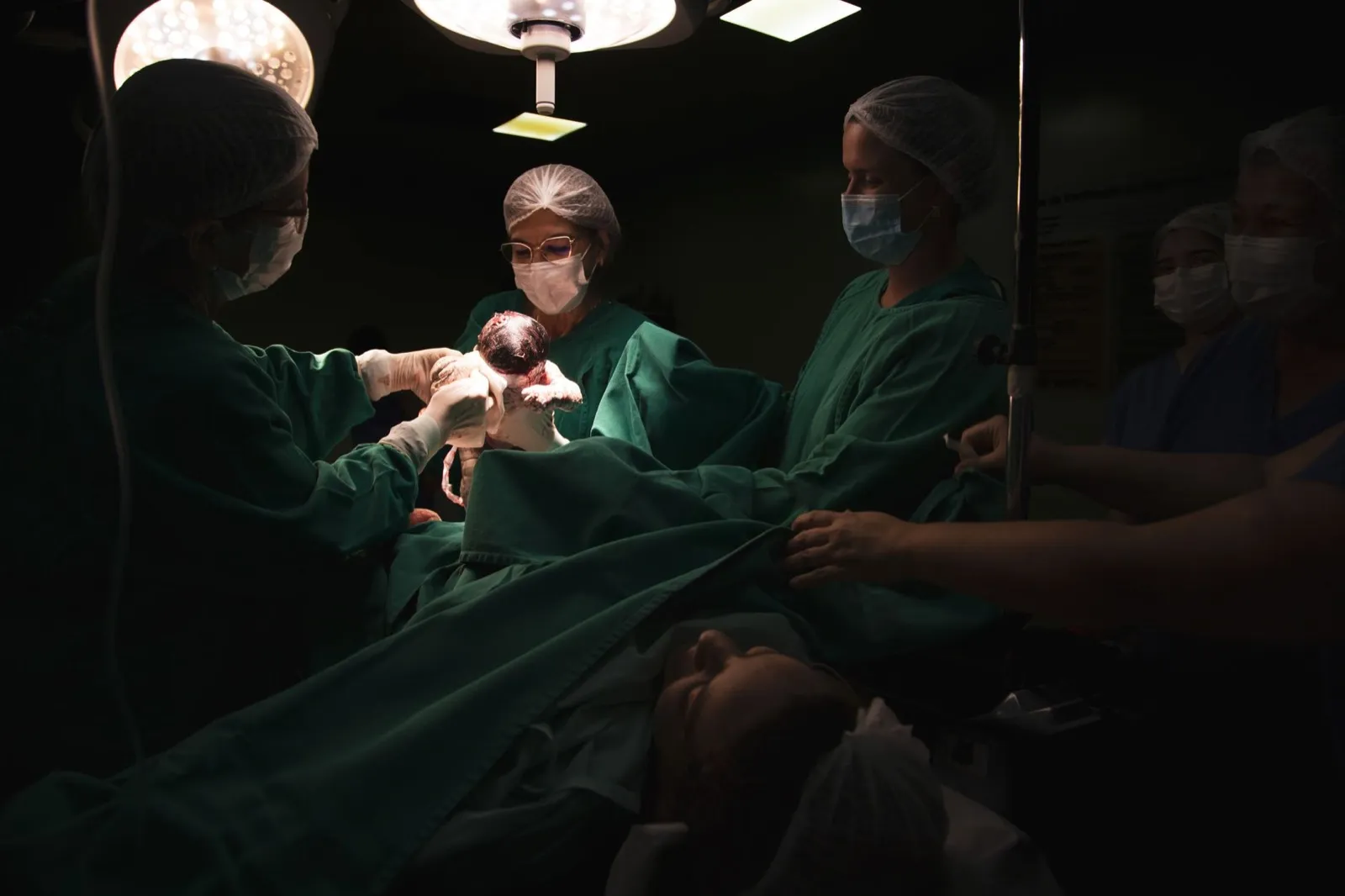
Image Credit: Pexels / Hannah Barata
A caesarean section, often called a C-section or caesarean birth, is an operation used to deliver a baby through cuts made in the abdomen and womb. It may be planned before labour or become necessary during labour.
If a caesarean has been suggested to you, or you simply want to understand the possibility before giving birth, it can help to know what the procedure actually involves. Some people feel comfortable with the idea, while others feel disappointed, anxious, relieved or unsure. There is no single right way to feel about it.
What is a caesarean section?
A caesarean is a surgical birth performed in hospital. A cut is made through the abdomen and womb so the baby can be delivered.
According to the NHS, the abdominal incision is usually horizontal and positioned below the bikini line, although a vertical incision may occasionally be needed.
A caesarean is major surgery. It is generally considered a safe procedure, but it carries risks, as all operations do. The benefits and risks depend partly on your health, your pregnancy and whether the caesarean is planned or performed as an emergency.
Why might a caesarean be recommended?
There are many reasons why a healthcare team may recommend caesarean birth.
The NHS lists circumstances that can include the baby being in a breech position, a low-lying placenta, pregnancy-related high blood pressure, certain infections, concerns that the baby is not receiving enough oxygen or nutrients, or labour not progressing as expected.
The circumstances are different for every pregnancy. Being advised to consider a caesarean does not necessarily mean that something has gone badly wrong. Your obstetrician or midwife should explain why they are recommending it, the benefits and risks, and any reasonable alternatives.
Planned and emergency caesareans
A planned caesarean is arranged before labour begins. You should normally have time to discuss the procedure and ask questions beforehand.
An emergency caesarean is performed because circumstances during pregnancy or labour mean the baby needs to be delivered sooner than originally planned. The word “emergency” covers a range of situations, and not every emergency caesarean involves an immediate life-threatening situation.
If there is time, the maternity team should explain why the operation is recommended and what will happen. In a very urgent situation, decisions and preparations may need to happen quickly.
Can you choose to have a caesarean?
Some people consider a planned caesarean even when there is no specific medical reason for one.
NICE guidance says that if someone requests a caesarean birth, their reasons should be explored and they should be given balanced information about the benefits and risks of caesarean and vaginal birth.
If severe anxiety about childbirth is part of the reason for the request, NICE recommends offering referral to a healthcare professional with expertise in providing perinatal mental health support.
RCOG advises that individual needs and preferences should play an important part in planning birth. If you are considering a planned caesarean, discussing your priorities and concerns early gives your maternity team more opportunity to talk through your options with you.
What happens before a planned caesarean?
Your maternity team will give you instructions for preparing for the operation. These can vary according to your hospital and individual circumstances.
You may have blood tests and meet members of the maternity and anaesthetic teams. You will also be given instructions about eating and drinking before surgery and any medicines that need to be considered.
The healthcare team should explain the procedure, benefits and possible risks before asking for your consent.
If anything about the operation worries you, this is a good time to ask questions. You can also discuss preferences that matter to you, such as what may be possible immediately after your baby is born.
What type of anaesthetic is used?
Most caesareans are carried out using regional anaesthesia, such as a spinal or epidural anaesthetic. This numbs the lower part of the body while allowing you to remain awake.
A screen is usually placed across your body so you do not see the operation.
General anaesthesia, which means being asleep during the operation, may be needed in some circumstances. Your anaesthetist can explain which approach is recommended and why.
You should not feel pain during the operation, although you may notice pressure, pulling or tugging sensations.
What happens during a caesarean?
Once the anaesthetic is working, the surgical team makes an incision through the abdomen and then the womb.
The NHS says the baby is usually delivered within about 5 to 10 minutes after the operation begins. Once the baby is born, you should normally be able to see them soon afterwards if you and the baby are well.
Medicine is given to encourage the womb to contract and reduce blood loss. The womb is then closed with dissolvable stitches. The abdominal incision is closed using stitches or staples, depending on the circumstances.
The entire procedure usually takes around 40 to 50 minutes, although this can vary.
What happens immediately after birth?
After surgery, you will usually move to a recovery area where staff can monitor you as the anaesthetic begins to wear off.
If you and your baby are well, close contact and feeding can usually begin soon after birth. If you want to breastfeed, staff can help you find a position that feels manageable around the wound.
You will have a urinary catheter for a period after surgery. You will also be offered pain relief and measures to reduce the risk of blood clots.
Your individual care may differ depending on how the birth went and whether you or your baby need additional monitoring.
What are the risks of a caesarean?
Caesarean birth is generally safe, but it is still an abdominal operation.
The NHS lists possible complications for the person giving birth including wound or womb infection, excessive bleeding, blood clots and, rarely, injury to nearby organs such as the bladder.
Possible problems for the baby include accidental skin injury during the operation and temporary breathing difficulties, particularly with babies born earlier in pregnancy.
The level of risk is not the same for everyone. It can depend on factors including your general health and whether the caesarean is planned or performed as an emergency.
Your obstetrician can explain which risks are most relevant to your circumstances rather than relying on general figures alone.
What is recovery like after a caesarean?
Recovery after a caesarean usually takes longer than recovery after an uncomplicated vaginal birth.
According to the NHS, many people can leave hospital around 1 to 2 days after a caesarean if there are no complications. You may have abdominal discomfort for the first few days, and some people continue to experience pain for several weeks.
You will be encouraged to begin moving once it is safe to do so because mobility helps reduce the risk of blood clots. Your maternity team will also advise you about caring for your wound.
There is no need to treat recovery like a race. How you feel can depend on your birth, your health, the support available to you and many other factors.
What will the scar look like?
Most caesarean scars are horizontal and sit low on the abdomen.
The NHS describes the usual scar as approximately 10 to 20 centimetres long and positioned below the bikini line. A vertical scar is sometimes necessary but is less common.
The scar may initially look red or more noticeable. Its appearance generally changes as healing progresses. Skin tone, healing and scar formation vary between individuals.
If you are concerned about how your wound is healing, ask your midwife or GP to look at it.
What about future pregnancies?
Having one caesarean does not automatically mean that future babies must be born by caesarean.
The NHS says many people who have previously had a caesarean can safely have a vaginal birth in a later pregnancy. This is commonly called vaginal birth after caesarean, or VBAC.
There are also some increased risks in future pregnancies after a caesarean, including problems involving the uterine scar or placenta, although these complications are uncommon.
If you become pregnant again, your maternity team can discuss your previous caesarean and the birth options that are appropriate for you.
Questions to ask your maternity team
If you are considering or have been offered a caesarean, you may want to ask:
- Why is a caesarean being recommended in my circumstances?
- What are the benefits and risks for me and my baby?
- Are there reasonable alternatives?
- What anaesthetic is likely to be used?
- What might I feel during the operation?
- What happens immediately after my baby is born?
- What support is available with feeding and skin-to-skin contact?
- How long might I stay in hospital?
- What should I expect during recovery?
- What symptoms should I seek medical advice about after going home?
There may be other things that matter specifically to you. Your questions do not need to fit a standard birth plan.
When to get professional advice
Talk to your midwife or obstetrician if you have been advised to have a caesarean and do not understand why, feel uncertain about the recommendation, want to discuss another birth option, or have significant anxiety about the procedure. They can explain how the general benefits and risks apply to your pregnancy.
After a caesarean, the NHS advises contacting your midwife or GP promptly if you develop severe pain, heavy vaginal bleeding, pain when passing urine, leaking urine, increasing redness, pain or swelling around the wound, pus or foul-smelling discharge from the wound, a cough or shortness of breath, or swelling or pain in a lower leg.
Seek urgent medical help if you feel seriously unwell. NHS 111 can advise when you need urgent medical care, and 999 should be used for a life-threatening emergency.