Early Teething: Can Babies Start Teething at 2 or 3 Months?
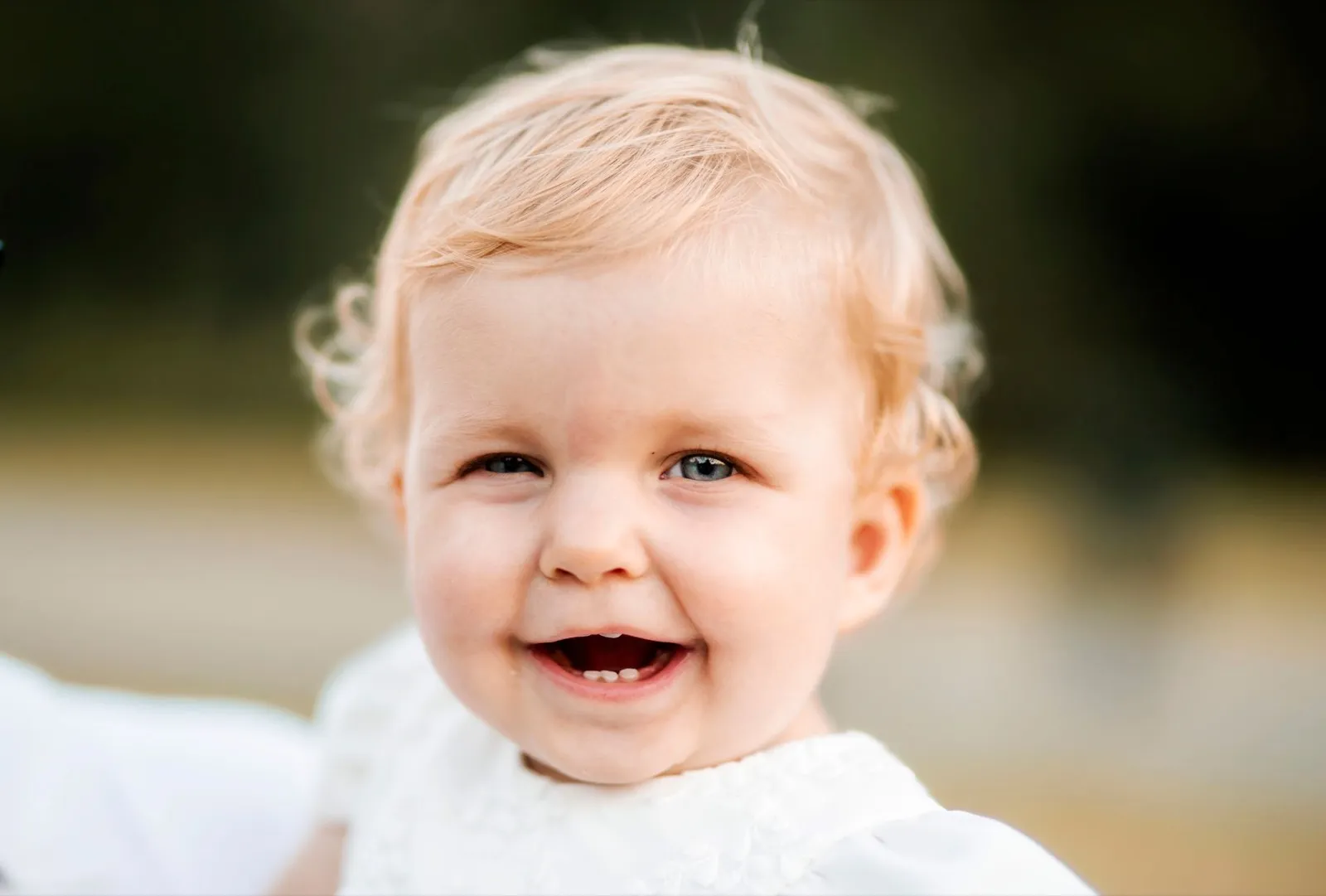
Image Credit: Pexels / Majkel Berger
If your 2 or 3-month-old baby is suddenly dribbling, chewing their hands or seeming more unsettled, it is understandable to wonder whether teething has already started.
It can happen early. The NHS says most babies start teething at around 6 months, but some start before they are 4 months old. A small number of babies are even born with teeth. So teething at 3 months is certainly possible, and a tooth appearing unusually early can happen too.
At the same time, dribbling and putting hands in the mouth are not proof that a tooth is about to appear. Young babies naturally begin exploring their mouths, and several behaviours commonly associated with teething can occur for other reasons.
The most useful approach is to look for a combination of signs, pay attention to your baby’s gums and avoid assuming that every unsettled day is caused by teeth.
When do babies usually start teething?
Most babies start teething at around 6 months, according to the NHS.
There is a wide normal range, however. Some babies start before 4 months, while others do not start until after 12 months.
This means there is no single correct month for the first tooth.
The first teeth to appear are usually the lower central incisors, which are the bottom front teeth. The NHS gives around 6 months as a rough guide for these first teeth, followed by the upper and lower teeth around them over the following months.
These timings are guides rather than deadlines.
Your baby’s first tooth appearing earlier or later than another baby’s does not automatically mean anything is wrong.
Can a baby start teething at 3 months?
Yes.
The NHS specifically notes that some babies start teething before they are 4 months old.
NHS oral health services also describe early signs of teething being noticeable from around 3 months in some babies, even though teeth themselves usually appear later.
If your 3-month-old has sore-looking gums, increased chewing, dribbling and other typical signs, early teething is one possible explanation.
You may not see a tooth immediately.
Symptoms and behaviour can vary considerably between babies, and teeth can emerge with very little obvious discomfort in some children.
Can a baby start teething at 2 months?
A first tooth at 2 months would be earlier than usual, but very early tooth eruption is possible.
The NHS says some babies start teething before 4 months and that some babies are even born with their first teeth.
That said, behaviours such as hand chewing and dribbling at 2 months should not automatically be labelled as teething.
At this age, babies are developing quickly and becoming increasingly interested in their hands and mouths.
If you think you can see or feel a tooth coming through, or your baby’s gums appear sore and red in one particular area, teething becomes a more plausible explanation.
If you are uncertain, your health visitor, GP or dentist can advise.
What are the signs of early teething?
Early teething generally produces the same possible signs as teething later in infancy.
According to the NHS, you may notice:
- A sore, red gum where a tooth is coming through
- One flushed cheek
- More dribbling than usual
- Increased gnawing and chewing
- Ear rubbing
- Greater fretfulness
- Poorer sleep
- A facial rash
- A slightly raised temperature below 38°C
Some babies have several of these signs.
Others have almost none.
Baby teeth can sometimes emerge without obvious pain or discomfort.
Dribbling does not always mean teething
Dribbling is one of the best-known teething signs, but it is not specific to teething.
A baby can dribble without having a tooth on the way.
This is particularly relevant when parents notice heavy dribbling at 2 or 3 months and assume the first tooth must be imminent.
Look at the bigger picture.
If your baby is dribbling but their gums do not appear sore and they are otherwise comfortable, you may simply be seeing a normal developmental behaviour.
If dribbling is accompanied by a sore, red area of gum and persistent chewing, teething becomes more likely.
Chewing hands can be normal too
A baby who constantly has their fists in their mouth can certainly look as though they are teething.
But hand chewing is not reliable evidence on its own.
The NHS notes that chewing fists is one of the behaviours parents can mistakenly interpret as a sign that a baby is ready for solid food. It is a normal baby behaviour and can occur before weaning age.
Babies use their mouths to explore.
They may suck and chew their hands because they have discovered them, because sucking is comforting or because they are hungry.
Teething is another possibility, but it is not the only one.
What do early teething gums look like?
You may notice that one area of the gum looks red or sore where a tooth is emerging.
Sometimes the gum can appear slightly swollen.
You do not need to repeatedly press or probe the gum to check for a tooth.
If your baby is comfortable, simply looking during normal care is enough.
If you notice an unusual lump, bleeding, significant swelling or something about your baby’s mouth that concerns you, ask a health visitor, dentist or GP for advice rather than assuming it is teething.
Can teething cause a fever?
The NHS says teething may be associated with a slightly raised temperature, but it should be below 38°C.
A temperature of 38°C or above is a fever.
This distinction is particularly important with very young babies.
NHS guidance says babies under 3 months with a temperature of 38°C or higher need urgent medical advice.
Do not assume a fever in a 2 or 3-month-old is caused by teething, even if your baby is also dribbling or chewing their hands.
Does teething cause diarrhoea?
No evidence supports teething as a cause of diarrhoea, according to the NHS.
If your young baby has diarrhoea, vomiting or appears unwell, do not dismiss those symptoms as early teething.
Babies can become unwell for many reasons at the same time that teeth are developing.
Seek medical advice if you are concerned.
Can teething make a baby unsettled?
Some babies become more fretful and may not sleep as well while teething.
Others appear barely bothered.
If your 2 or 3-month-old is suddenly much more unsettled than usual, teething is only one possible explanation.
Young babies can cry because they are hungry, tired, uncomfortable, overstimulated, too hot or cold, or unwell.
If the crying feels unusual, your baby cannot be consoled or you are worried about their behaviour, get medical advice rather than assuming teeth are responsible.
How to soothe a young baby who may be teething
For a baby who seems to have mild teething discomfort, simple comfort measures are a sensible starting point.
The NHS recommends gently rubbing the gums with a clean finger.
A suitable teething ring can also give babies something safe to chew.
Check the manufacturer’s age guidance and instructions before offering any teething product to a very young baby.
Some teething rings can be chilled in the fridge according to their instructions.
Do not put a teething ring in the freezer. The NHS warns that a frozen ring could damage a baby’s gums.
Never tie a teething ring around your baby’s neck because it can be a choking hazard.
Be careful with teething remedies at 2 or 3 months
Age matters when considering medicines and teething products.
Do not assume that something labelled for teething is automatically suitable for a 2-month-old or 3-month-old.
The NHS says paracetamol can be given for teething symptoms from 2 months, while ibuprofen can be given from 3 months. However, individual medicines have specific instructions, and ibuprofen is not suitable for every baby.
Always check the exact product, age guidance and dosing instructions.
If you are considering medicine for a very young baby and are unsure what is appropriate, ask a pharmacist, GP or health visitor.
Never estimate a dose.
What about teething gels?
The NHS says there is a lack of evidence that teething gels are effective and recommends trying teething rings or appropriate simple pain relief first.
If you are considering a gel, it must be specifically designed for young children and suitable for your baby’s age.
General oral pain-relief gels are not suitable for children.
With a baby who is only 2 or 3 months old, checking with a pharmacist before using a teething product is a sensible precaution.
Avoid homeopathic teething products
The NHS does not recommend homeopathic products for teething.
It says there is no evidence that homeopathic teething products are effective and notes that some unlicensed products advertised online have been linked with serious side effects.
Do not assume that a product is safe for a very young baby because it is described as natural or homeopathic.
If you are unsure about a remedy, ask a pharmacist before using it.
Do not start solid foods because your baby is chewing
A 3-month-old chewing their hands or toys may look eager to put everything in their mouth.
That is not a reason to start solid foods.
NHS guidance recommends introducing solid foods from around 6 months and specifically notes that chewing fists can be mistaken for a sign that a baby is ready for weaning.
If your baby appears to be teething early, use age-appropriate teethers and comfort measures rather than giving foods to chew.
If your baby was born prematurely, ask your health visitor or GP for advice about introducing solid foods.
What if a tooth actually appears very early?
If you can see a tooth breaking through at 2 or 3 months, you can begin caring for it straight away.
The NHS recommends brushing as soon as the first milk tooth appears.
For babies and toddlers up to 3 years old, NHS guidance recommends using a smear of fluoride toothpaste containing at least 1,000 parts per million fluoride.
You can also register your baby with a dentist when their teeth start coming through.
An early tooth simply means dental care begins a little earlier too.
What if your baby was born with a tooth?
Some babies are born with teeth, known as natal teeth.
The NHS confirms that this can happen, although it is uncommon.
If your baby has a tooth from birth or a very early tooth that seems loose, interferes with feeding or is causing concern, ask a healthcare professional or dentist to assess it.
Do not try to remove or alter it yourself.
Early teething or normal development?
At 2 or 3 months, the answer may not always be obvious.
A baby who dribbles and chews their hands but has comfortable gums may simply be showing normal developmental behaviours.
A baby with a noticeably sore, red area of gum, increased chewing and other typical signs may genuinely be starting to teethe early.
You do not need to identify the cause of every dribble or unsettled evening perfectly.
Focus on whether your baby seems otherwise well and whether their symptoms are mild.
If something does not feel right, ask for advice.
When to get professional advice
Speak to your health visitor, GP, dentist or pharmacist if you think your baby is teething unusually early and you are unsure whether their symptoms are normal, particularly before using medicines or teething products.
Get urgent medical advice if a baby under 3 months has a temperature of 38°C or above. Do not attribute this to teething.
Seek medical advice if your baby seems unwell, is difficult to wake, is feeding much less than usual, has fewer wet nappies, has persistent vomiting or diarrhoea, has breathing difficulties, develops an unusual rash or has crying that is very different from normal.
If your baby is otherwise well and simply seems to be dribbling, chewing and developing a sore area of gum, early teething is possible. Babies do not all follow the same timetable, and NHS guidance confirms that some begin before 4 months.
Related reading
- Teething in Babies: Signs, Symptoms and What to Expect
- Baby Teething Chart: When Do Babies Get Their Teeth?