Teething in Babies: Signs, Symptoms and What to Expect
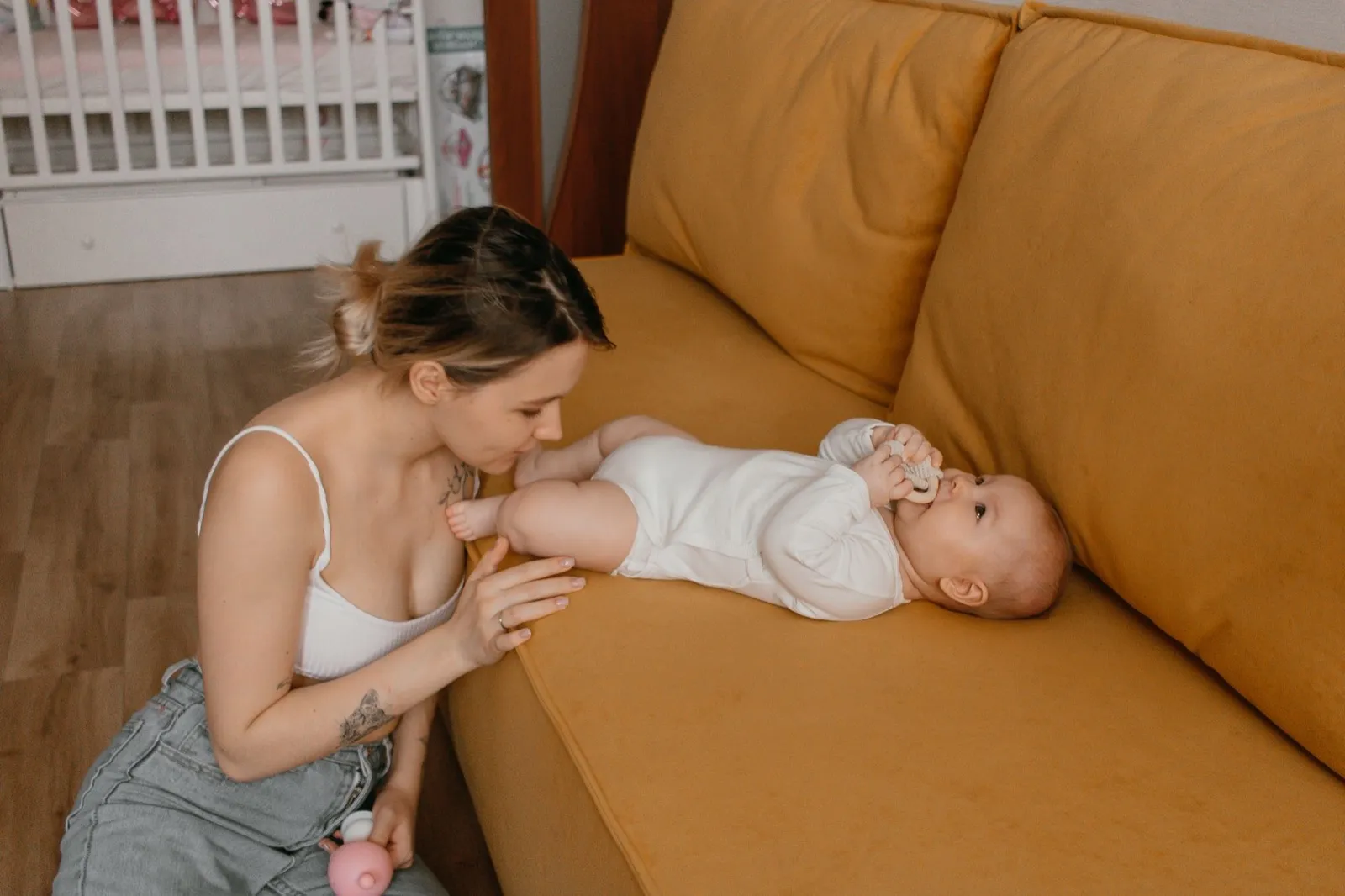
Image Credit: Pexels / Olya Afanasyeva
Teething can be surprisingly difficult to read. One baby may become dribbly and determined to chew everything within reach, while another seems to produce a first tooth with very little fuss.
Common signs of teething in babies include sore or red gums, increased dribbling, chewing or gnawing, one flushed cheek, rubbing an ear, being more unsettled than usual and sleeping less well. The NHS says most babies start teething at around six months, although some begin before four months and others after 12 months.
The important thing is not to blame every new symptom on teething. A baby who seems genuinely unwell may have something else going on and should be assessed appropriately.
When do babies start teething?
There is a wide range of normal.
According to the NHS, most babies begin teething at around six months. Some start before four months, some after their first birthday, and a small number are born with a tooth already present.
So if other babies at your baby group have teeth and yours does not, that alone is not a reason to panic.
Teeth also do not necessarily arrive according to an exact timetable. Development varies between children.
The first teeth to appear are usually the central incisors at the front, often beginning with the lower teeth. The NHS gives the following rough sequence:
- Central incisors at around six months
- Lateral incisors at around eight months
- First molars at around 12 months
- Canines at around 18 months
- Second molars at around 24 months
Most children have all of their milk teeth by the time they are two to three years old.
These ages are a guide, not a deadline for an individual baby.
What are the common signs of teething?
Teething symptoms can be mild, and some teeth may appear with little or no noticeable discomfort.
The NHS lists several signs that may happen around the time a tooth comes through:
- A sore, red gum where the tooth is emerging
- One flushed cheek
- More dribbling than usual
- Chewing or gnawing on objects
- Rubbing an ear
- Being more fretful
- Sleeping less well
- A facial rash
- A slightly raised temperature below 38°C
You may notice several of these together or only one.
None of them gives you absolute proof that a tooth is about to appear, particularly because babies can dribble, chew and become unsettled for plenty of other reasons too.
What do teething gums look like?
You may notice that a particular area of your baby’s gum looks red or feels tender before a tooth appears.
Sometimes the outline of a tooth becomes visible beneath the gum. At other times there is very little to see until the tooth starts breaking through.
Try not to repeatedly press or poke the area to check.
If your baby seems comfortable with it, the NHS suggests gently rubbing sore gums with a clean finger as one simple way to ease discomfort.
If you see swelling, bleeding, an unusual lesion or anything about your baby’s mouth that worries you, ask a dentist or healthcare professional rather than assuming it is teething.
Why do teething babies chew everything?
Chewing is one of the classic behaviours parents associate with teething.
The NHS lists gnawing and chewing on things more than usual as a possible teething symptom. Pressure on the gums may feel soothing when they are tender.
A teething ring can give your baby something intended for this purpose.
Follow the manufacturer’s instructions and choose a product suitable for your baby.
The NHS suggests cooling some teething rings in the fridge, as the cool surface may help soothe the gums. It advises against putting a teething ring in the freezer because a frozen ring could damage a baby’s gums.
Never tie a teething ring around your baby’s neck because of the strangulation risk.
Does teething cause lots of dribbling?
It can.
The NHS lists increased dribbling as one of the common signs associated with teething.
Extra saliva around the mouth and chin can sometimes irritate the skin. Gently wiping your baby’s face can help keep the area dry.
You do not need to constantly scrub or wash their skin.
A soft cloth and gentle care are usually more comfortable than repeatedly rubbing already irritated skin.
If your baby’s rash looks severe, spreads, becomes weepy or does not seem connected to dribbling, seek advice from a pharmacist, health visitor or GP.
Can teething make a baby’s cheek red?
The NHS lists one flushed cheek as a possible sign of teething.
You may notice that one side of your baby’s face looks warmer or redder than usual.
However, facial redness can have other causes too.
If your baby has a widespread rash, seems unwell or has other symptoms that concern you, do not assume the redness is simply part of teething.
Can teething make babies pull or rub their ears?
Ear rubbing is another symptom listed by the NHS.
That can make things confusing because babies may also touch their ears for reasons unrelated to teething, and ear symptoms can sometimes occur when a child is unwell.
Look at your baby’s overall condition rather than one behaviour in isolation.
If they seem poorly, are in significant pain or you are worried that something else may be happening, seek medical advice.
Does teething cause a temperature?
The NHS says teething may be associated with a slightly raised temperature below 38°C.
A temperature of 38°C or above is considered a fever in babies and children and should not simply be dismissed as teething.
If your baby has a high temperature or seems unwell, follow NHS guidance for fever in children and seek medical advice when appropriate.
This distinction matters because teething often happens during a period when babies can also develop ordinary childhood illnesses. The appearance of a new tooth does not rule out another cause.
Does teething cause diarrhoea?
There is no evidence that teething causes diarrhoea, according to the NHS.
This is one of the more persistent teething myths.
If your baby develops diarrhoea, vomiting or other signs of illness, consider those symptoms separately rather than assuming they are caused by an emerging tooth.
Babies can become dehydrated more easily than adults, so follow NHS advice if your baby has diarrhoea or vomiting and seek help if you are concerned.
Can teething affect sleep?
Some babies do seem to sleep less well while teething.
The NHS includes poor sleep among possible teething symptoms.
Sore gums can make settling harder, and an uncomfortable baby may wake more frequently than usual.
That does not mean every period of disrupted sleep is caused by teeth. Baby sleep changes for many reasons, including hunger, illness, development and changes in routine.
Keep following safer sleep guidance even during an unsettled teething period.
Avoid introducing unapproved sleep products or placing extra soft items in the cot in an attempt to make your baby more comfortable.
Can teething affect feeding?
A baby with tender gums may seem less comfortable than usual around feeds, but significant or persistent feeding difficulties should not automatically be attributed to teething.
Continue offering your baby’s usual milk feeds.
If your baby is refusing feeds, taking much less than usual, having fewer wet nappies or otherwise seems unwell, seek professional advice.
If your baby has started solid foods, the NHS suggests that chilled foods such as melon can sometimes be soothing for babies over six months. Any food should be appropriate for your baby’s stage and prepared in a way that reduces choking risk.
Always supervise your baby while they are eating.
How long do teething symptoms last?
There is no exact timetable for how long an individual baby will feel uncomfortable.
The NHS notes that symptoms may be mild and last only a few days as a tooth emerges. Some babies appear to have almost no discomfort at all.
Teething also happens repeatedly as different teeth come through, so you may have periods when your baby seems settled followed by another patch of chewing and sore gums.
If symptoms are severe, prolonged or do not fit the usual mild picture of teething, it is sensible to consider another cause and seek advice.
What can help a teething baby?
Simple measures are the best place to start.
The NHS suggests:
- Giving your baby a suitable teething ring
- Cooling an appropriate teething ring in the fridge
- Gently rubbing the gums with a clean finger
- Comforting or playing with your baby
- Gently wiping away excess dribble to reduce skin irritation
Sometimes being held, distracted or offered a favourite toy is enough to get through a particularly grumpy patch.
You do not need to treat every sign of teething with medicine.
If your baby seems to be in pain and simple measures are not enough, ask a pharmacist, health visitor, GP or other appropriate healthcare professional about suitable pain relief.
What should you know about teething gels?
Teething gels are not necessarily the first thing to reach for.
The NHS advises trying simple measures such as teething rings first. If you decide to use a gel, it should be one specifically designed for young children.
General oral pain-relief gels are not suitable for children.
Teething gels containing a local anaesthetic are available from pharmacies, where a pharmacist can advise you about whether a product is appropriate and how to use it.
The Medicines and Healthcare products Regulatory Agency advises that lidocaine-containing teething products should be considered after non-medicinal approaches have not provided enough relief and should be used with professional guidance.
Never use an adult mouth-ulcer or oral pain gel for a baby’s teething symptoms unless a qualified healthcare professional has specifically advised it.
What about homeopathic teething products?
The NHS does not recommend homeopathic products for teething.
It also warns that some unlicensed homeopathic products advertised online have been associated with serious side effects.
If you are considering any teething remedy, check that it is suitable for children and ask a pharmacist if you are unsure.
“Natural” does not automatically mean suitable or risk-free for a baby.
Can babies have pain relief for teething?
The NHS states that paracetamol or ibuprofen can be used to relieve teething symptoms in babies and young children when appropriate.
However, the correct medicine and dose depend on factors including your child’s age and the specific product.
Rather than guessing, read the medicine instructions carefully and speak to a pharmacist, health visitor, GP or other qualified healthcare professional if you are unsure what is appropriate for your baby.
Never exceed the recommended dose, and do not give medicines intended for older children or adults.
If your baby needs repeated pain relief or appears to be in significant pain, seek advice.
What should you avoid for teething?
A few seemingly convenient approaches are best avoided.
Do not:
- Freeze teething rings
- Tie a teething ring around your baby’s neck
- Use general adult oral pain-relief gels
- Assume homeopathic remedies are automatically safe
- Give a baby something unsuitable to chew
- Ignore symptoms of illness because a tooth is appearing
- Use medication without checking that it is appropriate for your baby
If you see teething jewellery, necklaces or other products marketed as wearable teething aids, consider the potential choking and strangulation hazards before using them.
A simple, age-appropriate teething ring is usually much easier to assess and supervise.
What happens when the first tooth appears?
Once you can see that first little tooth, dental care starts straight away.
The NHS recommends brushing a baby’s teeth as soon as they begin to come through.
For babies and toddlers up to three years old, NHS guidance recommends using a tiny smear of fluoride toothpaste containing at least 1,000 ppm fluoride and brushing last thing at night and on one other occasion.
Use a small, age-appropriate toothbrush with soft bristles.
It may be difficult to brush much at first. The aim is to begin building the routine while keeping those first teeth clean.
When should your baby see a dentist?
The NHS recommends taking your child to the dentist when their first milk teeth appear, or before they are 12 months old.
Taking a baby along to your own dental appointments can also help them become familiar with the setting.
A dentist can check the developing teeth and give you individual advice about brushing, fluoride and preventing tooth decay.
Do not wait for a dental problem before introducing your child to dental care.
Teething or illness: how can you tell?
There is no perfect home test that tells you a baby is definitely teething.
Mild symptoms such as red gums, dribbling, chewing and a little extra fussiness can fit with teething.
Symptoms that make your baby seem genuinely ill deserve more attention.
Do not automatically put the following down to teething:
- A temperature of 38°C or above
- Diarrhoea
- Vomiting
- Significant feeding difficulties
- Unusual sleepiness
- Breathing difficulties
- A baby who is difficult to wake
- A rash that concerns you
- Signs of dehydration
- Severe or persistent pain
You know your baby’s usual behaviour. If something feels different enough to worry you, asking for medical advice is appropriate even if a tooth happens to be coming through at the same time.
What to expect as teething continues
Teething is not one single event.
Your baby’s teeth emerge gradually over the first few years, and each tooth may be a little different.
You might have one week when your baby chews everything and sleeps poorly, followed by a tooth that appears almost unnoticed.
Try to respond to the baby in front of you rather than expecting every tooth to follow the same pattern.
Keep simple soothing options available, maintain normal feeding and safer sleep routines, and start looking after each tooth as soon as it appears.
Most importantly, keep illness separate in your mind from teething. Teething is normal. A baby who seems unwell still deserves the same attention they would receive at any other time.
When to get professional advice
Contact your GP, NHS 111 or another appropriate healthcare professional if your baby has symptoms that concern you or seems unwell rather than simply mildly uncomfortable.
A temperature of 38°C or above should not be assumed to be caused by teething. The NHS states that teething may cause a slightly raised temperature below 38°C, while there is no evidence that it causes diarrhoea.
Seek advice if your baby is feeding much less than usual, has signs of dehydration, is unusually sleepy, appears to be in significant or persistent pain, or has symptoms that you cannot confidently explain.
If you are considering teething medicine or gel and are unsure what is suitable for your baby’s age, ask a pharmacist or healthcare professional before using it.
Call 999 for a medical emergency, including if your baby has severe difficulty breathing, is unresponsive or appears seriously unwell.
Related reading
- Baby Teething Chart: When Do Babies Get Their Teeth?
- Early Teething: Can Babies Start Teething at 2 or 3 Months?