False negative pregnancy test
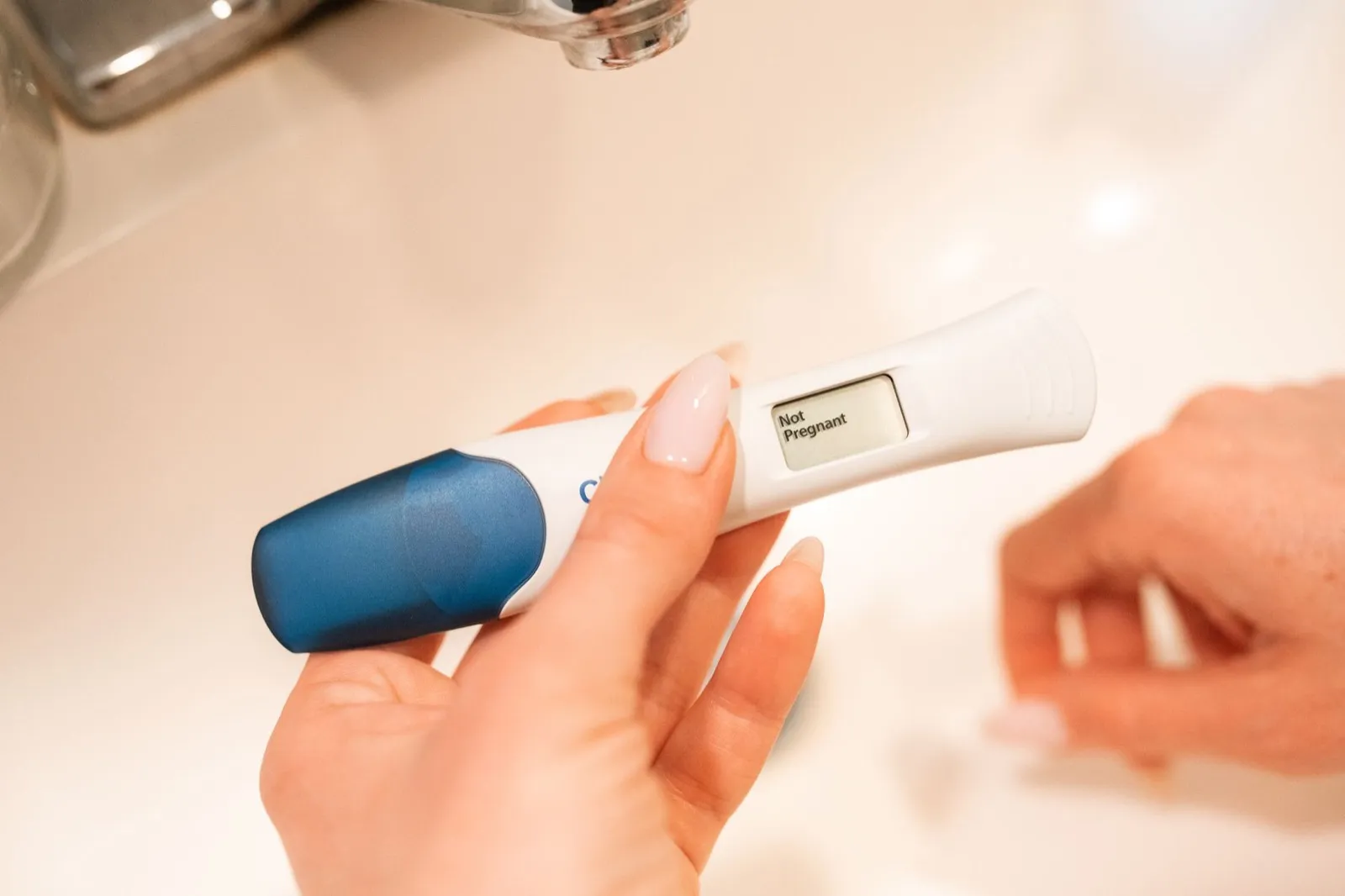
Image Credit: Pexels / RDNE Stock project
Getting a negative pregnancy test when you still think you might be pregnant can leave you with more questions than answers. A negative result often means you are not pregnant, but it is not always conclusive.
The NHS says negative pregnancy test results are less reliable than positive ones. A false negative can happen if you test too early or do not follow the test instructions correctly. If your result is negative but you still think pregnancy is possible, NHS guidance is to wait a few days and test again.
What is a false negative pregnancy test?
A false negative pregnancy test is a negative result even though you are pregnant.
Home pregnancy tests detect human chorionic gonadotrophin, usually shortened to hCG, in urine. The body starts producing hCG during pregnancy, but in the earliest stages there may not yet be enough for a home test to detect.
Pregnancy tests also vary in sensitivity, so the instructions supplied with your particular test matter.
A negative result therefore needs to be considered alongside when you tested and whether the test was used correctly. Symptoms alone cannot confirm or rule out pregnancy.
Testing too early
Testing too early is one of the main reasons for a false negative pregnancy test.
The NHS says most pregnancy tests can be used from the first day of a missed period. If you do not know when your next period is due, the recommendation is to test at least 21 days after you last had unprotected sex.
Some tests are marketed for use before a missed period. However, an early negative result may be less reliable because hCG levels may still be too low for the test to detect.
Chelsea and Westminster Hospital NHS Foundation Trust similarly explains that testing too early can produce a false negative because hCG has not yet reached the level needed for the test to turn positive.
If you test early and the result is negative, it may simply be too soon to know.
What if your period is late but the test is negative?
A late period with a negative pregnancy test can be confusing, particularly if your cycle is normally predictable.
If you tested around the time your period was expected and still think you could be pregnant, the NHS advises waiting a few days and taking another test.
If a second pregnancy test is negative and your period still has not arrived, speak to your GP.
There are many reasons menstrual cycles can change, and a home pregnancy test cannot explain why a period is late. Your GP can consider your individual circumstances rather than assuming pregnancy is the cause.
If your periods are irregular and you are unsure when your period was due, use the NHS guidance of testing at least 21 days after the last time you had unprotected sex.
Can diluted urine affect a pregnancy test?
Urine concentration can sometimes affect testing, particularly when hCG levels are low.
Gloucestershire Hospitals NHS Foundation Trust notes in its laboratory guidance that a dilute urine sample may contain a lower concentration of hCG and can potentially produce a false negative result.
At the same time, general NHS guidance says home pregnancy tests can be performed using urine collected at any time of day and do not routinely have to be taken first thing in the morning.
If you have an unexpected negative result, follow the instructions supplied with your particular test. If you remain unsure, repeat the test as advised or speak to a healthcare professional.
Can using the test incorrectly cause a false negative?
Yes. Pregnancy tests need to be used according to their instructions.
The NHS specifically lists not following the instructions properly as one reason a pregnancy test result may be unreliable.
Different tests have different methods and reading times. Depending on the product, you may need to hold the test in your urine stream or collect urine in a container. You will also need to check the result within the timeframe specified by the manufacturer.
An expired or incorrectly stored test may also be unsuitable for use. Tommy’s advises checking the test instructions carefully and notes that an expired test may give an inaccurate result.
If a test does not display the expected control indicator or otherwise appears invalid, follow the manufacturer’s directions about repeating it.
Can medicines affect pregnancy test results?
The NHS says some medicines can affect pregnancy test results.
That does not mean most everyday medicines will cause a false negative. If you take medication and are concerned that it may have affected your result, ask a pharmacist, GP or the healthcare professional who prescribed it.
Hormonal contraception does not prevent a pregnancy test from working. The NHS specifically states that hormones in contraceptive methods such as the pill do not stop a pregnancy test detecting pregnancy.
Do not stop prescribed medication because you think you might be pregnant without speaking to an appropriate healthcare professional.
When should you repeat a negative pregnancy test?
If your test is negative but you still think you may be pregnant, NHS guidance is to wait a few days and test again.
Tommy’s similarly advises repeating the test if you continue to have symptoms or your period still does not arrive.
If you do not know when your period is due, make sure at least 21 days have passed since the last time you had unprotected sex before relying on a negative result.
Follow the instructions for the test you use each time. If you receive a second negative result but your period has still not arrived, contact your GP.
Repeated testing cannot explain why your period is absent, so professional advice is more useful if the uncertainty continues.
Can you have pregnancy symptoms with a negative test?
You can experience symptoms that resemble early pregnancy and still have a negative test.
Symptoms such as a missed period, tiredness, nausea, breast tenderness or needing to urinate more often can occur in pregnancy, but symptoms alone do not establish that you are pregnant.
If the test was taken too early, pregnancy may not yet be detectable. Alternatively, your symptoms may have another explanation.
If symptoms continue despite repeated negative tests, speak to your GP rather than relying on symptoms or home testing alone.
Can an ectopic pregnancy give a negative pregnancy test?
A home pregnancy test should not be used to decide whether concerning symptoms are safe to ignore.
The NHS advises seeking medical advice if you have symptoms that could suggest an ectopic pregnancy and think you might be pregnant, even if you have not had a positive pregnancy test.
Possible symptoms listed by the NHS include pain low down on one side of the abdomen, vaginal bleeding or brown watery discharge, shoulder-tip pain and discomfort when going to the toilet.
These symptoms can have other causes, but they need appropriate assessment if ectopic pregnancy is a possibility.
When to get professional advice
Speak to your GP if you have taken a second pregnancy test that is negative but your period has still not arrived. You should also ask for advice if you are unsure when to test, your results are difficult to interpret, or symptoms continue despite negative tests.
Contact your GP or NHS 111 if you think you may be pregnant and develop symptoms associated with ectopic pregnancy, including one-sided lower abdominal pain, vaginal bleeding or brown watery discharge, shoulder-tip pain, or pain or discomfort when going to the toilet. NHS guidance says to seek advice even if you have not had a positive pregnancy test.
Call 999 or go to A&E if you develop a sharp, sudden and intense abdominal pain with severe dizziness, fainting, nausea or looking very pale. The NHS advises emergency assessment because these symptoms can occur if an ectopic pregnancy ruptures.
If you are worried about symptoms, do not wait for a home pregnancy test to become positive before asking for medical help.