Foods to Avoid When Starting Solids
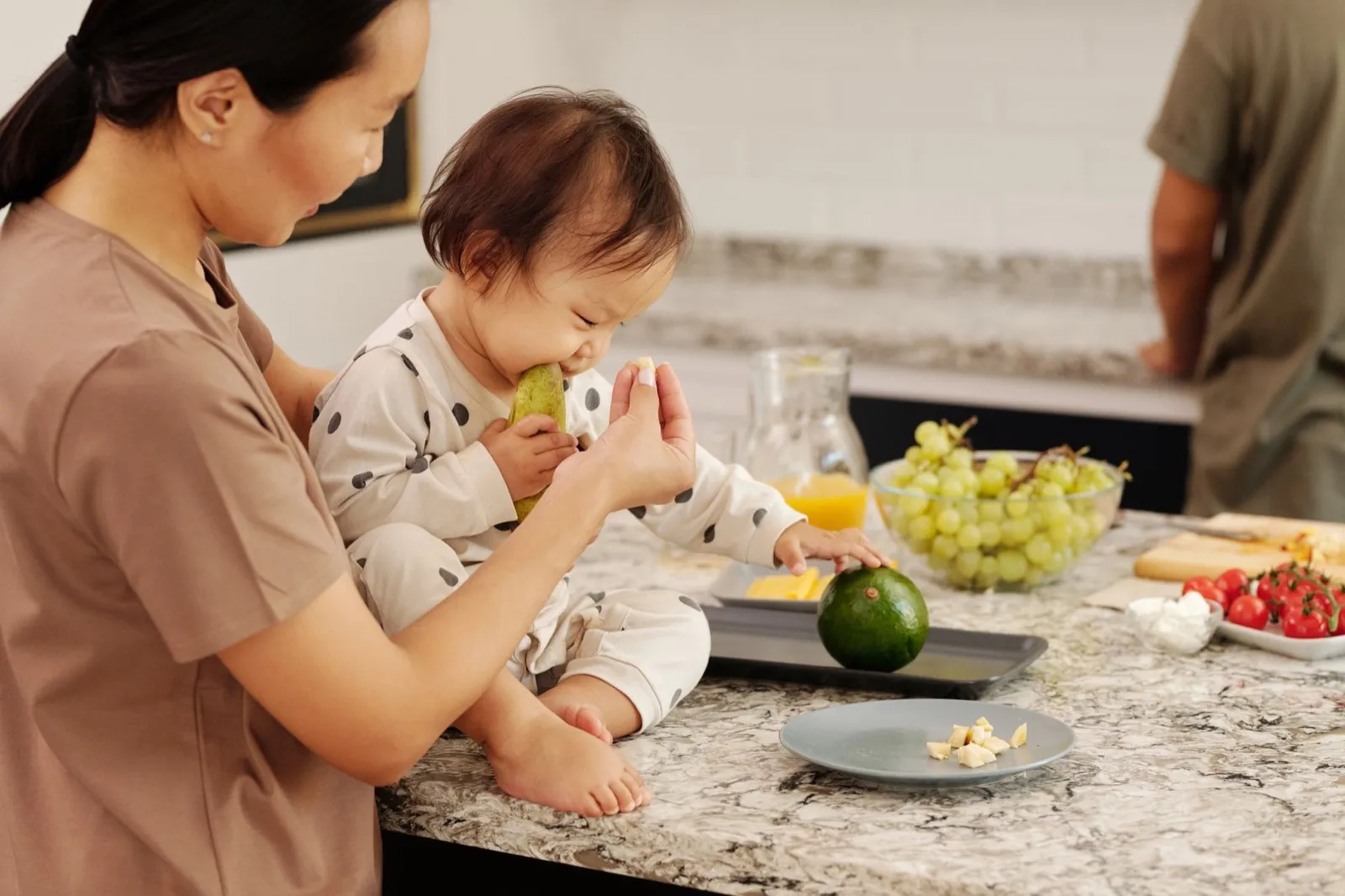
Image Credit: Pexels / Vanessa Loring
When your baby starts solids at around 6 months, most everyday foods can gradually become part of a varied diet, but there are some important exceptions. Babies should not have honey before 12 months, whole nuts because of choking risk, unpasteurised dairy products, certain high-mercury fish, or foods with lots of added salt. Some drinks and poorly prepared foods should also be avoided.
The list can sound daunting at first, particularly when you are already thinking about allergens, textures and whether any of the food will actually stay on the high-chair tray. You do not need to memorise every rule at once.
A few clear principles make early feeding much easier: choose suitable foods, prepare them safely, avoid ingredients that are specifically unsuitable for babies, and check current NHS guidance whenever you are uncertain.
Honey should be avoided before 12 months
Babies should not have honey until they are 12 months old.
According to the NHS, honey can occasionally contain bacteria that can produce toxins in a baby’s intestines and cause infant botulism, a serious illness.
This applies even though honey is a natural food.
Do not add honey to yoghurt, porridge, fruit or other foods to sweeten them during your baby’s first year.
Babies do not need added sugar, so there is no need to replace honey with another sweetener. Fruit and other naturally sweet foods can provide plenty of flavour without added sugars.
Avoid adding salt to baby food
Babies should not eat much salt because their kidneys are not fully developed to process it.
The NHS advises not adding salt to your baby’s food or cooking water.
That includes ingredients you might use automatically when cooking for adults, such as:
- stock cubes
- gravy
- some ready-made sauces
- salty processed foods
If you are adapting a family meal for your baby, it can be helpful to remove their portion before adding salt or salty ingredients to the rest.
Check food labels too. Some everyday packaged foods can contain more salt than you might expect.
You do not need to make every meal completely separate. Often, a small change to how you prepare the family meal is enough.
Avoid foods with lots of added sugar
Babies do not need added sugar.
The NHS recommends avoiding sugary foods and drinks because sugar contributes to tooth decay.
There is no need to add sugar to fruit, yoghurt, porridge or other foods to encourage your baby to eat them.
Foods marketed specifically at babies are not automatically low in sugar either, so checking labels can be useful.
Your baby is learning what food tastes like for the first time. Allowing them to experience foods without added sweetness gives them the chance to become familiar with a range of flavours.
Whole nuts are a choking hazard
Whole nuts should not be given to children under 5 because they can cause choking.
This does not mean all nuts need to be excluded from your baby’s diet.
The NHS says nuts and peanuts can be introduced from around 6 months in an appropriate form, such as crushed or ground nuts or smooth nut butter.
Nut butters should be offered in a way your baby can manage safely rather than as a large thick spoonful.
Peanuts and tree nuts are also common allergens. The NHS recommends introducing foods that can trigger allergic reactions one at a time and in small amounts so that you can identify a reaction more easily.
If your baby has eczema, an existing food allergy or a family history of allergies, speak to your GP or health visitor before introducing foods that may cause an allergic reaction.
Avoid hard foods that can cause choking
Some foods are nutritious but unsafe for a young baby in their usual form.
The NHS advises avoiding hard foods such as raw carrot and raw apple because babies can choke on them.
That does not mean carrots and apples are off the menu. They can be cooked until soft and prepared in a suitable shape or texture.
Other hard foods also need to be adapted.
Always consider whether the food can be managed safely by your baby at their current stage of eating.
Stay with your baby throughout every meal and make sure they are sitting safely upright.
Do not serve grapes and other small round foods whole
Small, round foods can block a child’s airway if they are swallowed whole.
The NHS advises cutting small round foods such as grapes and cherry tomatoes into quarters.
Remove stones and hard pips from fruit before serving it.
Sausages also need careful preparation. The NHS recommends removing the skin and cutting sausages lengthways into thin strips rather than slicing them into round pieces.
These preparation habits are worth learning early because choking risk is influenced not only by the food itself but also by its shape, size and texture.
Avoid unpasteurised dairy products
Babies and young children should not have unpasteurised milk, cheese, cream or yoghurt.
The NHS explains that these foods can contain harmful bacteria that can cause food poisoning.
Pasteurised full-fat dairy foods can be introduced as part of a baby’s diet from around 6 months. Suitable options include plain full-fat yoghurt and pasteurised cheese.
Check the label if you are unsure whether a dairy product has been pasteurised.
Soft cheeses made from pasteurised milk can be suitable, but some cheeses are high in salt, so lower-salt choices are preferable.
Cow’s milk should not replace breast milk or formula before 12 months
Cow’s milk can be used in cooking or mixed into food from around 6 months, but it should not be given as your baby’s main drink until they are 12 months old.
The NHS advises continuing breast milk or first infant formula as your baby’s main drink throughout the first year.
This distinction can be easy to miss.
A little cow’s milk in porridge or a sauce is different from replacing a breastfeed or bottle of first infant formula with a cup of cow’s milk.
From 12 months, whole cow’s milk can be given as a main drink.
Avoid rice drinks for young children
Children under 5 should not be given rice drinks as a substitute for breast milk, infant formula or cow’s milk.
The NHS advises against rice drinks for this age group because they may contain too much arsenic.
Rice itself can still form part of a varied diet. The advice relates specifically to rice drinks used as milk alternatives.
If your baby cannot have cow’s milk or you are considering a plant-based alternative for medical, dietary or other reasons, speak to a health professional about an appropriate option.
Avoid sugary drinks and juice
Your baby does not need juice, squash, fizzy drinks or other sugary drinks.
From around 6 months, the NHS recommends offering sips of water with meals from an open cup or free-flow cup.
Breast milk or first infant formula should remain your baby’s main drink during the first year.
Sugary drinks can contribute to tooth decay and can encourage a preference for sweet drinks.
Keeping drinks simple makes this part of weaning much easier: milk remains important, while water can accompany meals.
Some fish should be avoided
Fish can provide useful nutrients and can be introduced as part of a varied diet, but some types are not suitable for babies and young children.
The NHS advises that babies should not eat shark, swordfish or marlin because these fish contain higher levels of mercury than other fish. Mercury can affect a child’s developing nervous system.
Fish also needs to be carefully checked for bones before being offered.
There is separate NHS guidance on how much oily fish children should eat, so check current recommendations as your baby’s diet becomes more varied.
Avoid raw shellfish
Raw shellfish should not be given to babies and children.
The NHS warns that raw or lightly cooked shellfish can increase the risk of food poisoning.
Shellfish is also one of the foods that can trigger an allergic reaction. If introducing cooked shellfish from around 6 months, follow NHS allergen guidance and prepare it appropriately for your baby’s stage of eating.
If your baby has an existing allergy, eczema or a family history of allergies, ask your GP or health visitor for individual advice.
Take care with eggs
Eggs can be introduced from around 6 months and are one of the foods that may cause an allergic reaction.
The NHS advises that hen’s eggs produced under the British Lion Code of Practice, identifiable by the red lion stamp, can be eaten raw or lightly cooked by babies and children.
Eggs that are not British Lion stamped, or not produced under an equivalent food safety scheme, should be cooked thoroughly.
If you are outside the UK or are unsure about an egg’s production standard, follow local food safety guidance and cook it thoroughly.
Avoid foods made with raw or unpasteurised ingredients
Food poisoning can be more serious for young children, so basic food hygiene matters.
Avoid foods containing unpasteurised dairy products and take care with raw or undercooked animal products.
Wash your hands before preparing your baby’s food. Keep preparation surfaces clean and separate raw meat, fish and eggs from foods that are ready to eat.
The NHS advises cooking food thoroughly and cooling it to a safe temperature before giving it to your baby.
Wash fruit and vegetables, remove stones and hard pips, and check meat and fish carefully for bones.
What about allergens?
Common allergenic foods should not automatically be avoided simply because they can cause allergies.
The NHS advises that foods that can trigger allergic reactions can be introduced from around 6 months, one at a time and in small amounts.
These include:
- cow’s milk
- eggs
- foods containing gluten
- nuts and peanuts in an appropriate form
- seeds
- soya
- shellfish
- fish
Introducing them individually makes it easier to identify which food caused a reaction if one occurs.
Once an allergenic food has been introduced and tolerated, NHS guidance advises continuing to include it as part of your baby’s usual diet.
If your baby already has an allergy or eczema, or there is a family history of allergies, speak to your GP or health visitor before introducing allergenic foods.
What about foods marketed specifically for babies?
A “baby” label does not necessarily mean a food needs to become a regular part of your baby’s diet.
Check the ingredients and nutrition information, particularly for salt and sugar.
The NHS encourages offering a wide variety of ordinary foods prepared appropriately for babies. Vegetables, fruits, starchy foods, pulses, eggs, fish, meat and suitable dairy foods can all become part of the diet as weaning progresses.
Simple family foods can often be adapted by leaving out added salt and preparing the texture safely.
This can also make feeding less complicated and reduce the need to prepare completely separate meals.
A simple safety check before offering a new food
Before putting a new food on your baby’s tray, ask yourself a few quick questions:
- Is this food suitable for my baby’s age?
- Is it soft enough for them to manage?
- Is the shape a choking risk?
- Does it contain a lot of salt or added sugar?
- Does it contain honey?
- Is it pasteurised where necessary?
- Have bones, stones and hard pips been removed?
- If it is a common allergen, am I introducing it in line with current NHS advice?
You do not need to become anxious about every ingredient.
The aim is to recognise the foods and preparation methods that carry particular risks, while still giving your baby plenty of opportunities to experience a varied diet.
When to get professional advice
Speak to your health visitor, GP or another qualified healthcare professional if you are unsure whether a particular food is suitable for your baby.
Ask for individual advice before introducing common allergenic foods if your baby has eczema, an existing food allergy or a family history of allergies.
If your baby develops symptoms after eating and you think they may be having an allergic reaction, seek medical advice. A severe allergic reaction can be a medical emergency.
If your baby is choking and cannot breathe normally, follow current NHS first aid guidance and call 999 when emergency medical help is needed.
If your baby has a medical, developmental or feeding condition that affects what or how they can eat, follow the advice of the healthcare professionals involved in their care rather than relying on general weaning guidance.
Related reading
- Introducing Allergens to Babies: Eggs, Peanuts and Other Common Allergens
- How to Prepare Baby’s First Foods Safely
- Starting Solids