How to Prepare Baby’s First Foods Safely
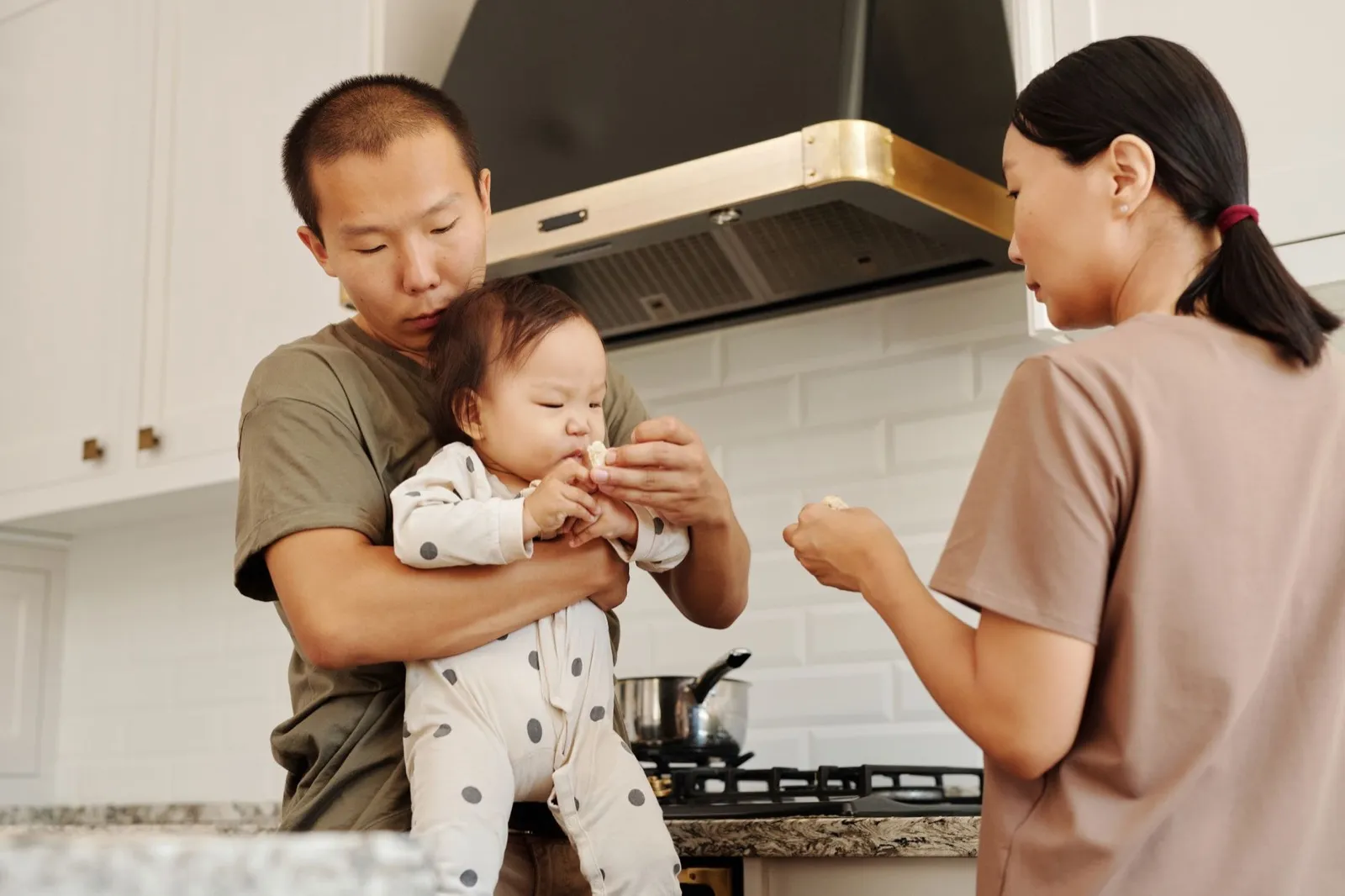
Image Credit: Pexels / Vanessa Loring
Preparing your baby’s first foods safely does not require a separate kitchen or complicated equipment. Good hand hygiene, clean preparation surfaces, thorough cooking, safe storage and age-appropriate textures cover many of the essentials. You also need to remove choking hazards and avoid ingredients that are unsuitable for babies.
It is completely understandable if food safety suddenly feels more complicated once you are cooking for a baby. Foods you barely think twice about for yourself can raise new questions about texture, reheating, storage and choking.
A few consistent habits can make the whole process much easier.
Start with clean hands and surfaces
Before preparing your baby’s food, wash your hands thoroughly with soap and water.
The NHS also recommends keeping work surfaces clean and making sure bowls, spoons and other feeding equipment are clean before use.
Wash your hands again after handling raw food such as meat, fish and eggs.
Keeping raw foods away from ready-to-eat foods helps reduce the risk of cross-contamination. Use separate chopping boards for raw meat and other foods where possible, and clean knives, boards and surfaces thoroughly after preparing raw ingredients.
You do not need to sterilise your entire kitchen. Normal, careful food hygiene is the goal.
Wash fruit and vegetables
Wash fruit and vegetables thoroughly before preparing them for your baby.
Remove dirt as well as any parts your baby should not eat, such as stones, hard pips and tough skins where appropriate.
Some fruit and vegetables can be served soft and ripe, while harder foods need cooking before they are suitable for a baby.
The NHS advises avoiding hard foods such as raw carrot and raw apple for young babies because they can be choking hazards. Cooking them until soft can make them easier to manage.
Always think about both cleanliness and texture before serving fresh produce.
Cook food thoroughly
Foods that require cooking should be cooked thoroughly before being given to your baby.
This is particularly important for meat, fish and eggs where applicable.
The NHS advises cooking food until it is steaming hot all the way through, then allowing it to cool before serving it to your baby.
Check meat and fish carefully for bones.
For eggs, NHS guidance says British Lion eggs can be eaten raw or lightly cooked by babies and children. Eggs that do not have the British Lion mark, or are not produced under an equivalent food safety scheme, should be cooked thoroughly.
Raw shellfish should not be given to babies and children because it can increase the risk of food poisoning.
Cool hot food before serving
A baby cannot tell you that a spoonful is too hot until it has already reached their mouth.
After cooking or reheating food, let it cool to a safe temperature before offering it.
The NHS recommends stirring food well and testing its temperature before giving it to your baby.
Pay particular attention to food heated in a microwave. Microwaves can create hot spots, meaning one part of the food may be much hotter than another.
Stir thoroughly after heating and check the temperature before serving.
Do not assume food is safe because the outside of the bowl feels cool.
Prepare a texture your baby can manage
Safe food preparation is not only about bacteria. Texture and shape matter too.
The NHS recommends introducing solids from around 6 months, once a baby is developmentally ready.
Some babies start with puréed or mashed foods. Others begin with suitable finger foods, and many families combine both approaches.
If you are preparing finger foods, choose foods that break up easily in the mouth and make them large enough for a baby to grip.
Cook firm vegetables until soft.
Remove bones, stones and hard pips. Avoid hard pieces of raw carrot or apple.
As your baby develops their eating skills, the textures you offer can gradually become more varied.
Cut foods to reduce choking risk
Some foods need more preparation than simply cutting them into smaller pieces.
Small, round foods can block a child’s airway. The NHS advises cutting foods such as grapes and cherry tomatoes into quarters.
Sausages should be cut lengthways into thin strips rather than into round slices. Remove the skin where appropriate.
Whole nuts should not be given to children under 5 because of choking risk.
If you offer nuts or peanuts to a baby from around 6 months, they need to be prepared in a suitable form, such as finely ground or as smooth nut butter.
The safest shape changes as your baby develops, so continue checking current NHS choking guidance rather than assuming that smaller always means safer.
Keep raw and cooked foods separate
Cross-contamination can transfer harmful bacteria from raw food to food that is ready to eat.
Keep raw meat, poultry, fish and eggs separate from cooked foods, fruit, vegetables and other ready-to-eat ingredients.
Use separate utensils and chopping boards where possible.
After preparing raw food, wash your hands and clean surfaces and equipment before moving on to something else.
Store raw meat and fish carefully in the fridge so they cannot drip onto other foods.
These are useful habits for the whole household, not just for baby meals.
Do not add salt
Babies should not have much salt because their kidneys are not fully developed to process it.
The NHS advises not adding salt to your baby’s food or cooking water.
Be careful with ingredients that may already contain significant amounts of salt, including some:
- stock cubes
- gravy
- sauces
- processed meats
- cheeses
- packaged foods
If you are cooking one meal for the family, you can often take your baby’s portion out before adding salt or salty ingredients.
Check food labels when using packaged ingredients.
Do not add sugar or honey
Babies do not need added sugar.
There is no need to sweeten fruit, yoghurt, porridge or other first foods to persuade your baby to eat them.
Honey needs particular care. The NHS advises that babies should not have honey until they are 12 months old because it can occasionally contain bacteria that can cause infant botulism.
That means avoiding honey as an ingredient as well as offering it directly.
Your baby is discovering natural flavours for the first time, so simple food is perfectly suitable.
Choose pasteurised dairy products
From around 6 months, babies can have pasteurised full-fat dairy foods such as plain yoghurt and cheese as part of their diet.
Avoid unpasteurised milk, cheese, cream and yoghurt.
The NHS warns that unpasteurised dairy products can contain harmful bacteria that can cause food poisoning.
Check the label if you are unsure.
Cow’s milk can be used in cooking or mixed into food from around 6 months, but it should not replace breast milk or first infant formula as your baby’s main drink before 12 months.
How to store homemade baby food
If you prepare food in advance, cool it quickly and store it safely.
The NHS advises cooling cooked food as quickly as possible, ideally within 1 to 2 hours, before putting it in the fridge or freezer.
Food stored in the fridge should be used within the recommended safe period for that type of food. Follow NHS and Food Standards Agency guidance for leftovers and chilled foods.
Small containers can be useful if you are freezing baby-sized portions because you can defrost only what you need.
Label containers with the contents and date so you are not left trying to identify an anonymous frozen cube several weeks later.
Keep your fridge at 5°C or below, in line with Food Standards Agency guidance.
How to defrost baby food safely
Frozen food needs to be thoroughly defrosted before reheating unless the manufacturer’s instructions specifically say it can be cooked from frozen.
The NHS recommends defrosting frozen food thoroughly before cooking, unless instructions state otherwise.
Food can be defrosted in the fridge. If you use a microwave to defrost or heat food, stir it carefully and check that it has heated evenly.
Do not leave food sitting at room temperature for long periods to defrost.
Once food has been defrosted, follow current food safety guidance on storage and reheating.
How to reheat baby food
Reheat cooked food until it is steaming hot all the way through.
Then allow it to cool before offering it to your baby.
Stir thoroughly, particularly after microwave heating, and check the temperature.
The NHS advises only reheating cooked food once.
This is one reason small portions can be practical. You can heat only what you expect to offer rather than repeatedly warming a larger batch.
If you are unsure whether food has been stored or reheated safely, it is better not to give it to your baby.
Do not save food your baby has already eaten from
Once a spoon has been in your baby’s mouth and returned to the bowl, bacteria from their mouth can be transferred to the remaining food.
Avoid saving half-eaten food from your baby’s bowl for another meal.
Instead, put a small amount into the serving bowl and keep the rest separate.
You can add more from the untouched portion if your baby is still hungry.
This simple habit can reduce waste while keeping stored food separate from food that has already been in contact with your baby’s saliva.
Take care with shop-bought baby food too
Ready-made baby food can be convenient, and there is nothing wrong with using it.
Check storage and preparation instructions on the packaging and follow them carefully.
Do not use food if the packaging is damaged, the seal is broken or the product is past its use-by date.
Once opened, follow the manufacturer’s instructions about refrigeration and how quickly the food needs to be used.
If feeding directly from a jar or pouch with a spoon that has been in your baby’s mouth, do not assume the leftovers can automatically be stored for later.
Putting the amount you need into a separate clean bowl can make storage easier.
Keep allergen introductions simple
Foods that commonly cause allergic reactions can be introduced from around 6 months alongside other foods.
The NHS recommends introducing allergenic foods one at a time and in very small amounts so that it is easier to identify a reaction.
Common allergens include:
- eggs
- peanuts and tree nuts
- cow’s milk
- foods containing gluten
- soya
- fish
- shellfish
- seeds
Prepare these foods in a form your baby can manage safely.
Whole nuts are a choking hazard and should not be given to children under 5.
If your baby has eczema, an existing food allergy or a family history of allergic conditions, speak to your GP or health visitor before introducing allergenic foods.
Stay with your baby while they eat
Safe preparation only takes you so far. Supervision matters too.
The NHS advises always staying with your baby while they are eating.
Your baby should be sitting safely upright. If they are in a high chair, use a securely fitted safety harness.
Gagging can happen as babies learn to manage solid food and is different from choking.
Before you begin solids, familiarise yourself with NHS guidance on choking and first aid so you know how to respond if food blocks your baby’s airway.
It is useful knowledge regardless of whether you choose spoon feeding, finger foods or a combination.
A quick food preparation routine
You do not need to turn every meal into a lengthy safety checklist. Once the habits become familiar, most happen automatically.
Before serving your baby food:
- Wash your hands and clean the preparation area.
- Wash fruit and vegetables.
- Keep raw and ready-to-eat foods separate.
- Cook foods thoroughly where required.
- Remove bones, stones, hard pips and choking hazards.
- Prepare the food in a suitable texture and shape.
- Avoid added salt, sugar and honey.
- Cool hot food and check its temperature.
- Sit your baby safely upright.
- Stay with your baby throughout the meal.
If storing leftovers, cool and refrigerate or freeze them safely, and keep untouched food separate from anything your baby has already eaten from.
These basic routines allow you to focus less on worrying about every spoonful and more on giving your baby time to explore food.
When to get professional advice
Speak to your health visitor, GP or another qualified healthcare professional if you are unsure whether a particular food or texture is appropriate for your baby.
Ask for individual advice if your baby was born prematurely or has a medical, developmental, feeding or swallowing condition that may affect how food should be prepared.
If your baby repeatedly coughs or chokes while eating, or appears to have difficulty swallowing, seek professional advice.
Speak to your GP or health visitor before introducing common allergenic foods if your baby has eczema, an existing food allergy or a relevant family history of allergic conditions.
If your baby is choking and cannot breathe normally, treat it as an emergency. Follow current NHS first aid guidance and call 999 when emergency medical help is needed.
Related reading
- Foods to Avoid When Starting Solids
- Finger Foods for Babies: When and How to Introduce Them
- Best First Foods for Babies: What to Offer When Starting Solids