Haircare Guide: How to Build a Healthy Hair and Scalp Routine
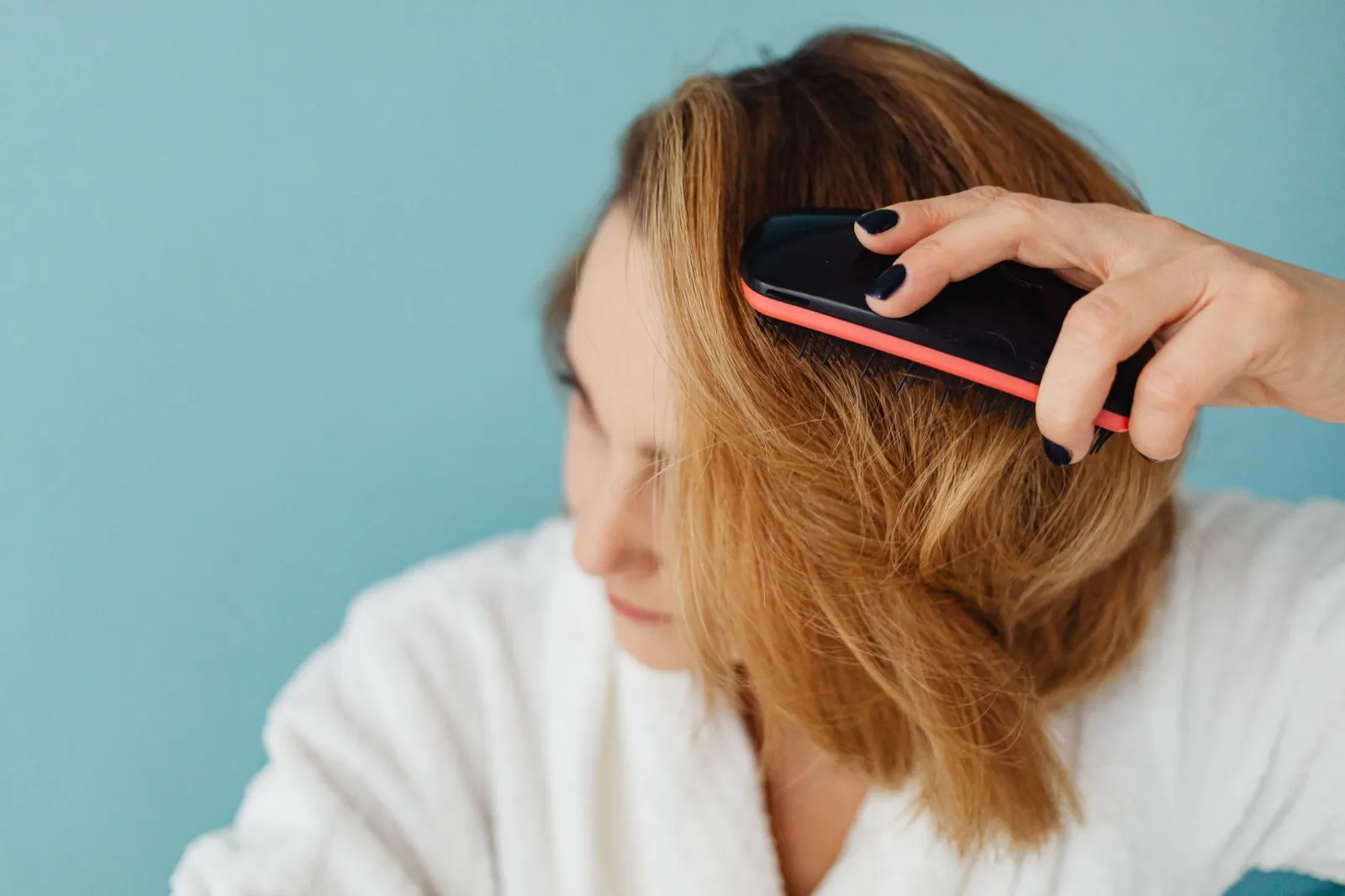
Image Credit: Pexels / https://kaboompics.com/
A good haircare routine should keep your scalp clean, reduce unnecessary damage and give hair enough conditioning for its texture and condition. For most people, that means shampooing the scalp when needed, conditioning the lengths, detangling gently and limiting excessive heat, tension and chemical processing.
You do not need a large collection of oils, masks and treatments. Your routine depends on your scalp, curl pattern, strand thickness, density, porosity and colouring or damage.
Wash when your scalp becomes oily, itchy or covered in build-up. Fine straight hair may need frequent washing, while thick curly or coily hair may be washed less often.
What does a healthy haircare routine include?
A practical routine may include:
- Shampoo
- Conditioner
- Gentle detangling
- Careful drying
- Leave-in conditioner or styling product
- Heat protection before hot tools
- Occasional clarifying or deep conditioning
- Regular scalp checks
Not every step is necessary at every wash. The best routine is one that does not leave your scalp uncomfortable or hair coated, dry or difficult to manage.
Start with your scalp
Shampoo is primarily used to clean the scalp, which produces oil, sheds skin cells and collects sweat, styling products, dry shampoo, environmental residue, dead skin, sebum and flakes.
The scalp may need effective cleansing while older ends need extra conditioning. Care for these areas separately.
How often should you wash your hair?
Wash according to scalp oiliness, sweat, styling products, texture, hairstyle, exercise and comfort.
Wash more often if your scalp becomes oily quickly, you exercise, use heavy products, wear hats, become itchy, have dry-shampoo build-up, develop odour or have been swimming.
Wash less often if your scalp remains comfortable, hair is very dry, tightly curled or coiled, washing makes lengths brittle or you wear a protective style.
Fine straight hair with oily scalp may need daily or alternate-day washing. Curly, coily or very dry hair may be washed weekly or less often, depending on scalp and style.
Daily washing is not automatically harmful. It can suit fine hair, oily scalp, frequent sweating or a scalp condition managed with regular shampoo. Use a gentle shampoo and focus it on the scalp.
How to shampoo properly
- Wet hair and scalp thoroughly with warm water.
- Apply shampoo mainly to the scalp.
- Massage gently with fingertips around the hairline, crown, behind ears and back of head.
- Avoid scratching with fingernails.
- Let lather move through lengths as you rinse.
- Repeat only if the first wash does not remove heavy oil or build-up.
- Rinse thoroughly.
Double shampooing can help after heavy product use, swimming, oil treatments, very oily roots or several days of dry shampoo, but is not necessary at every wash.
How to choose shampoo
Choose according to scalp and current hair condition:
- Oily scalp: balancing or regular cleansing shampoo
- Dry or sensitive scalp: gentle, fragrance-free or moisturising shampoo
- Build-up: occasional clarifying shampoo
- Dandruff: medicated anti-dandruff shampoo
- Coloured hair: colour-safe formula
- Damaged or bleached hair: gentle or strengthening formula
- Curly or coily hair: moisturising shampoo focused on the scalp
- Fine hair: lightweight shampoo
Sulphates are not automatically harmful. Some people find strong cleansers drying, while others need them to remove oil, silicone or styling residue. Choose according to the complete formula and your hair.
Clarifying, chelating and co-washing
Clarifying shampoo removes stubborn residue from dry shampoo, silicone, oils, hairspray, gel, mousse, wax, conditioners and hard-water minerals. Use occasionally and follow with conditioner.
Chelating shampoo targets mineral deposits associated with hard water or swimming. It is usually stronger than ordinary shampoo and should be used according to instructions.
Co-washing uses conditioner or cleansing conditioner instead of traditional shampoo. It may suit some dry, curly or coily hair between washes, but conditioner may not remove heavy oil, silicone, sweat, scale or styling products.
Use shampoo regularly enough to prevent build-up. Stop co-washing if the scalp becomes itchy, oily, sore or coated.
Why conditioner matters
Conditioner coats and smooths the hair surface, reducing friction. It may improve softness, detangling, manageability, shine, static and some frizz.
It cannot permanently repair a damaged strand but can improve behaviour and reduce mechanical wear.
How to use conditioner
After shampooing, squeeze out excess water and apply conditioner mainly to mid-lengths and ends. Fine or oily hair may need only a small amount at the tips, while dry, curly or coily hair may need most of the length conditioned.
Distribute with fingers, a wide-tooth comb or a wet-hair detangling brush. Leave it for the stated time and rinse.
Conditioner may feel greasy if too much is used, the formula is too rich, it is placed on an oily scalp, not rinsed properly or layered with several other products. Use less and focus on ends.
Hair masks, deep conditioning and protein
A hair mask is a richer conditioner that may contain oils, butters, silicones, proteins, humectants and conditioning agents. Use weekly or less often according to hair needs; fine hair may become flat if masks are overused.
Deep conditioning means leaving a rich conditioner or mask longer than usual. Follow instructions rather than leaving it overnight unless designed for that use.
Protein products containing hydrolysed keratin, wheat, rice, silk, amino acids or collagen-derived ingredients may temporarily support damaged or high-porosity hair. Too much may leave hair stiff, rough or tangled, so alternate with moisturising products.
What is leave-in conditioner?
Leave-in conditioner is applied after washing and not rinsed. It may reduce tangles, improve softness, control static and frizz, support curl definition and protect dry ends.
Apply a small amount to damp lengths and ends. Fine hair may prefer a spray; thick, curly or coily hair may need cream.
How to detangle without breakage
- Divide dense hair into sections.
- Apply conditioner or detangling product.
- Begin at the ends.
- Remove small tangles first.
- Work gradually towards roots.
- Hold above a knot to reduce pulling.
- Add water or conditioner if needed.
Straight or fine hair may be easier to comb after drying slightly. Curly and coily hair is often easier while damp and coated with conditioner.
Wet hair stretches more easily, but some textures are safest to detangle damp. The main risk is force and friction rather than one universal rule.
How to dry hair gently
Squeeze out water, blot gently, wrap loosely with microfibre or cotton, avoid tight twisting, detangle carefully, allow partial air-drying where practical and use heat protectant before blow-drying.
Air-drying avoids direct heat but is not automatically harmless if hair stays wet for a long time or experiences friction. A low or medium heat blow-dry may be suitable.
Using heat tools safely
For hairdryers, use the lowest effective temperature, keep the dryer moving and stop if scalp or hair feels painfully hot. Use a diffuser for curls.
For straighteners, dry hair fully, apply heat protectant, use the lowest effective setting, work in sections, avoid repeated passes and clean residue from plates.
For curling tools, use them on dry hair unless designed otherwise, apply heat protectant, choose a suitable temperature and avoid holding hair longer than recommended.
Heat protectant may reduce moisture loss, friction and surface damage but does not make hair immune to heat.
Split ends, frizz and trimming
Split ends result when the protective outer layer wears away. Heat, bleach, chemicals, rough brushing, towel friction, sun, tight styles and repeated handling can contribute.
A split strand cannot be permanently fused. Conditioners and serums smooth it temporarily; trimming removes it.
There is no required trimming schedule. Trim when ends split repeatedly, feel thin or rough, tangle, break or the shape grows out. Regular trimming does not make hair grow faster but may help retain a neater length.
Frizz may result from curl pattern, humidity, dryness, damage, new growth, breakage, static, brushing, build-up or uneven porosity. It is not automatically unhealthy.
Try conditioner, leave-in, gel or styling cream, gentle drying, less touching, anti-humidity serum, a smooth pillowcase and less heat. Perfectly frizz-free hair is not necessary.
Routines for different hair types
Fine hair
Use lightweight shampoo, conditioner on ends, volumising mousse, light leave-in spray, minimal oil, gentle detangling, lower heat and regular build-up removal. Use rich masks sparingly.
Thick or coarse hair
Use moisturising shampoo, rich conditioner, leave-in cream, oil on ends, sectioned detangling, lower manipulation, longer conditioning and heat protection.
Straight hair
Shampoo when the scalp is oily, condition mid-lengths and ends, use lightweight leave-in if needed, protect from heat and clarify occasionally. Avoid thick oils near roots.
Wavy hair
Use gentle shampoo, lightweight conditioner, leave-in spray, mousse or foam, light gel, scrunching and diffusing. Reduce heavy creams, butters and oils if waves look flat.
Curly hair
Use moisturising shampoo, rinse-out conditioner, damp detangling, leave-in, curl cream if needed and gel or mousse for hold. Air-dry or diffuse and avoid rough towels.
Coily and Afro-textured hair
Work in sections, cleanse the scalp, condition, detangle from ends upward, dry gently, use leave-in and add cream, oil or gel if needed.
Avoid excessive tension and protect hair at night. Oil can reduce water loss and add shine but does not replace cleansing, hydration or conditioner.
Protecting hair while sleeping
Try a loose braid, loose twist, high loose ponytail, satin or silk bonnet, smooth pillowcase, loose scarf or soft hair tie.
Avoid tight styles and make sure hair and scalp are reasonably dry before covering.
A smooth pillowcase may reduce friction, tangling and frizz but cannot treat medical hair loss or repair damage.
Do hair oils moisturise hair?
Hair oils smooth the surface, reduce friction and slow water loss; they do not add water to dry hair.
Apply a small amount over leave-in conditioner, to damp lengths, dry ends or as a pre-shampoo treatment. Fine hair may need only one or two drops.
Heavy scalp oiling may cause build-up, greasy roots, dandruff, scalp spots or irritation. Do not massage an inflamed or infected scalp.
Rosemary oil is widely promoted for growth, but evidence is limited. Essential oils may irritate or cause allergy and should not be applied undiluted.
Coconut oil may reduce protein loss from some hair, but may feel heavy on fine or low-porosity hair. Use a small amount through lengths rather than on the scalp.
Dandruff and dry scalp
Dandruff causes visible flakes and may include itching. Anti-dandruff shampoos may contain ketoconazole, selenium sulphide, coal tar or salicylic acid.
Follow instructions and allow contact time. Use anti-dandruff shampoo for about a month to assess whether it helps. Speak to a GP if the scalp is very itchy, red, swollen or not improving.
A dry scalp may feel tight and produce small flakes. Dandruff can involve larger or oilier flakes and may relate to seborrhoeic dermatitis. Heavy scalp oils may worsen it.
Product build-up and dry shampoo
Build-up can come from dry shampoo, silicone, oils, butter, gel, wax, hairspray, conditioner, minerals or inadequate rinsing. Hair may feel coated, heavy, dull, sticky, limp, greasy or less defined.
Use clarifying shampoo occasionally and reduce product amount if build-up returns quickly.
Dry shampoo absorbs oil temporarily but does not remove sweat, skin cells or residue like shampoo and water. Use it between washes rather than replacing washing indefinitely.
Coloured, bleached and chemically treated hair
Colour-treated hair may benefit from colour-safe shampoo, conditioner after every wash, lower water temperature, reduced heat, heat protection, leave-in, masks and longer gaps between chemical services.
Bleaching can make hair porous, rough, tangled, brittle and prone to breakage. Use gentle shampoo, rich conditioner, leave-in, protein if tolerated, bond-supporting treatment if desired, low heat, careful detangling and regular trims.
Do not repeatedly overlap bleach onto already fragile lengths. Severely damaged hair cannot be fully restored by cosmetics; it must grow out or be trimmed.
Bond-building products may improve strength, smoothness and manageability temporarily. Follow instructions and reduce use if hair becomes stiff or coated.
Reducing breakage and understanding shedding
Reduce breakage with gentle detangling, conditioner, less heat, heat protectant, looser hairstyles, soft ties, reduced bleaching, careful drying, protected sleep, trims and less handling.
A shed hair usually comes from the root and may have a small pale bulb. Broken hair snaps along the shaft and may appear shorter. Both can happen together.
Can tight hairstyles damage hair?
Repeated pulling can contribute to traction alopecia, especially around the hairline.
Potentially damaging styles include very tight braids, ponytails, heavy extensions, buns, weaves and cornrows. A hairstyle should not cause pain, headaches, bumps or pulling.
Before braids or extensions, ensure the scalp is healthy, ask for less tension and choose manageable length and weight. Remove a style if it becomes excessively tight.
Nutrition and supplements
Hair growth depends on adequate nutrition and health. A balanced diet should provide protein, iron, zinc, essential fatty acids, vitamins and energy through foods such as eggs, fish, beans, tofu, dairy, nuts, seeds, whole grains, fruit and vegetables.
No food guarantees thicker or faster-growing hair. Supplements may help a confirmed deficiency but are not necessary for everyone. High doses can cause side effects or interfere with medicines and blood tests.
Ask a pharmacist or GP before supplements if pregnant, breastfeeding, taking medicines, experiencing unexplained hair loss or planning blood tests.
Haircare during pregnancy
Pregnancy can change growth, oiliness and texture. A simple routine may include gentle shampoo, conditioner, careful detangling, reduced heat, ventilation during colouring and avoiding irritating products.
Postpartum shedding can begin several months after birth. Speak to a GP if loss is severe, patchy, associated with scalp symptoms, tiredness or other concerns.
Common haircare mistakes
Avoid shampooing only ends, putting conditioner only on the scalp when it is not intended there, using too much product, rough towel drying, brushing from roots down, maximum heat, skipping protectant, painful hairstyles, using oil instead of washing, copying another wash schedule or expecting cosmetics to repair split ends permanently.
A simple weekly haircare routine
Wash day
- Detangle gently if needed.
- Wet hair thoroughly.
- Shampoo scalp.
- Repeat only if needed.
- Apply conditioner.
- Detangle lengths.
- Rinse.
- Blot excess water.
- Apply leave-in or styling product.
- Dry gently.
Between washes
Protect hair at night, use a small amount of oil or serum on dry ends, refresh curls with water or leave-in spray, use dry shampoo sparingly, avoid repeated brushing and keep styles comfortable.
Occasionally use clarifying shampoo, deep conditioner or protein treatment according to your hair’s needs.
When to get professional help
Speak to a pharmacist, GP or dermatologist about sudden or significant hair loss, bald patches, rapidly widening parting, receding hairline, edge loss, scalp pain or tenderness, thick persistent scale, pus-filled bumps, spreading rash, broken hairs with inflammation, scarring, persistent itching, loss with tiredness or weight changes, shedding for several months or reactions to dye or products.
The NHS recommends speaking to a GP about hair loss before approaching a commercial clinic.
Seek prompt advice if the scalp becomes increasingly painful, warm, swollen or produces pus. Seek urgent medical help if a hair product causes difficulty breathing, faintness or swelling of your lips, mouth, tongue or throat.
Related reading
- Hair Types Guide: How to Identify and Care for Your Hair
- Sensitive Skin Skincare Guide: Triggers, Ingredients and a Gentle Routine