How Much Solid Food Should a Baby Eat When Starting Solids?
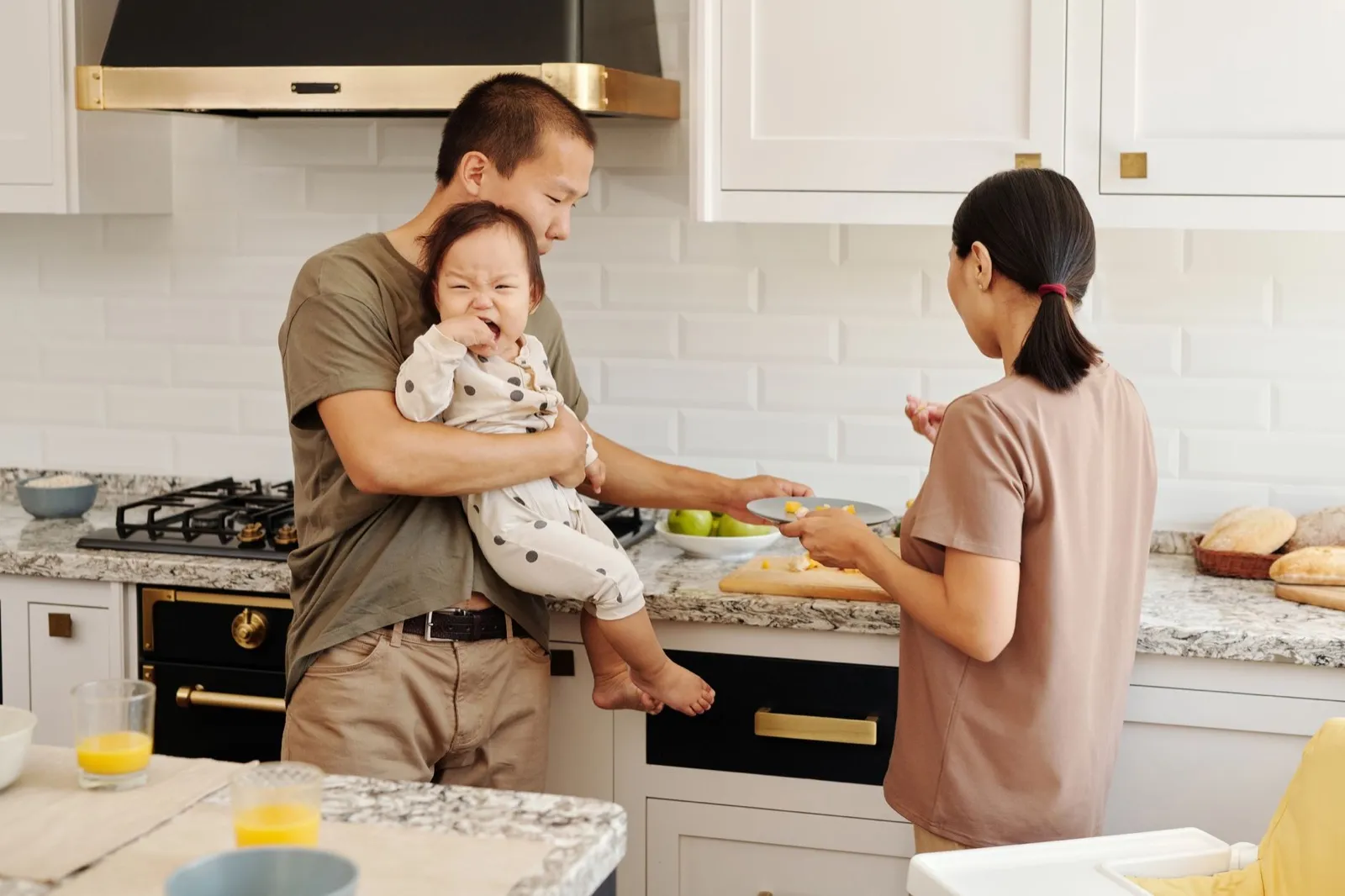
Image Credit: Pexels / Vanessa Loring
When your baby first starts solid foods at around 6 months, they only need small amounts. The NHS suggests beginning with just a few pieces or teaspoons of food rather than expecting your baby to eat a full meal. At this stage, getting used to eating matters more than how much actually disappears from the bowl.
That can be reassuring if your baby’s first meal consists of one mouthful, several suspicious looks and most of the food on the high-chair tray. Early weaning is a period of learning. Your baby is discovering new tastes and textures while practising how to move food around their mouth and swallow it.
Breast milk or first infant formula also remains an important source of energy and nutrients while this is happening.
How much food does a baby need when starting solids?
There is no single portion size that every baby should finish.
According to the NHS, babies who are beginning solids from around 6 months do not need three meals a day straight away. It recommends starting with small amounts, described as a few pieces or teaspoons of food.
How much your baby actually eats depends on their appetite.
This means one baby may enthusiastically eat several spoonfuls while another is finished after a taste or two. Both can be learning perfectly useful feeding skills.
Rather than measuring success by an empty bowl, look at the bigger picture. Your baby is becoming familiar with food while continuing to receive breast milk or first infant formula.
Why are portions so small at first?
Eating solid food is a completely new skill.
Your baby has to learn how to manage unfamiliar textures, move food around their mouth, chew and swallow. If they are feeding themselves, they are also practising reaching, gripping and bringing food to their mouth.
The NHS advises parents not to worry too much about how much babies eat at the beginning. Becoming accustomed to new tastes and textures is more important initially.
This is also why the first portion does not need to look like a miniature adult meal.
A small amount gives your baby an opportunity to explore food without creating pressure for either of you.
Should you measure your baby’s portions?
For most babies who are just starting solids, you do not need to weigh every serving or persuade them to finish a predetermined amount.
The NHS advises responsive feeding, allowing your baby’s appetite to guide how much they eat.
You can offer a small portion and watch what happens. If your baby remains interested, you can offer more. If they indicate that they have had enough, you can stop.
This approach recognises something very simple: appetite varies.
Your baby may eat more on one day and less on another. They may be fascinated by one food and barely touch another.
A portion is what you offer. It does not have to become an amount your baby is required to finish.
How can you tell when your baby has had enough?
Your baby cannot tell you they are full in words, but they can communicate through their behaviour.
The NHS gives examples of babies showing they have had enough by:
- firmly closing their mouth
- turning their head away
If you are spoon feeding, wait for your baby to open their mouth before offering the spoon.
Do not force your baby to eat if they are no longer interested. You can finish the meal and offer food again at another time.
The World Health Organization also recommends responsive feeding during complementary feeding. This includes responding to a child’s signs of hunger and fullness and encouraging them patiently without forcing them to eat.
Learning these cues can be more useful than trying to make your baby eat a particular number of spoonfuls.
What if your baby only eats one or two spoonfuls?
That can be perfectly normal at the beginning.
The NHS specifically advises parents not to worry about how much babies eat when solids are first introduced. At this point, your baby is still getting most of their energy and nutrients from breast milk or first infant formula.
Some early meals may involve very little swallowing.
Your baby might touch the food, smell it, lick it, hold it or push it around the tray. If they are being offered suitable finger foods, some of those pieces may never reach their mouth.
This does not mean the meal was pointless. Your baby is becoming familiar with the experience of eating.
Keep offering appropriate foods without turning each meal into a test of how much they can consume.
Does a 6-month-old need three meals a day?
Not when they first start solids.
The NHS states that babies beginning solid foods from around 6 months do not need three meals a day straight away.
Starting with a small amount gives your baby time to become accustomed to eating. The amount and variety of food can then increase gradually.
By around 7 to 9 months, NHS guidance says babies will gradually move towards three meals a day alongside their usual milk feeds.
That progression is gradual rather than something that needs to happen immediately after the first spoonful.
If your baby has only just started eating, there is no need to compare their routine with that of an older baby who has already had weeks or months of practice.
What happens to milk when your baby starts eating more?
Milk continues to matter throughout the transition to solid foods.
The NHS advises that breast milk or first infant formula should remain your baby’s main drink during the first year.
At the beginning of weaning, babies still receive most of their energy and nutrients from milk. As they gradually eat more solid food, their feeding pattern will change.
For breastfed babies, milk feeds can adapt according to how much food they are eating. Formula intake can also change as solid food becomes a larger part of the diet.
There is no need to rush this transition.
Starting solids is not about replacing milk with full meals overnight. It is a gradual process in which food becomes increasingly important as your baby’s diet develops.
Should you offer solids before or after milk?
For babies just beginning solids, the NHS suggests offering food before their usual milk feed.
The reason is practical. A baby who has just had a full milk feed may not be interested in experimenting with food.
At the same time, avoid waiting until your baby is extremely hungry. Learning to eat can be frustrating if they are already upset and expecting milk.
Choose a time that works for both of you, when your baby is alert and you are not rushed.
Their usual milk can follow the small solid-food offering.
As your baby becomes more established with meals, their feeding routine will naturally evolve.
How quickly should you increase the amount?
There is no need to increase portions according to a strict daily schedule.
Instead, gradually offer more food and greater variety as your baby becomes comfortable with eating.
The NHS recommends following your baby’s pace and continuing to offer different foods, including foods they have previously rejected.
Some babies accept new foods quickly. Others need repeated opportunities to become familiar with a taste or texture.
Your baby’s appetite will also fluctuate. There may be days when they eat noticeably more and others when they are not particularly interested.
Rather than continually increasing the amount on the plate, concentrate on offering suitable foods and responding to your baby’s appetite.
What should those small portions contain?
Quantity is only one part of feeding. As your baby becomes established with solids, variety matters too.
Suitable foods from around 6 months can include:
- vegetables and fruit
- potatoes and other starchy foods
- beans and lentils
- eggs
- fish without bones
- meat without bones
- pasteurised full-fat plain yoghurt
- pasteurised cheese
The NHS recommends introducing a variety of foods alongside breast milk or first infant formula.
There is no need to fit every food group into the first meal. Variety develops over time.
Avoid adding salt or sugar to your baby’s food or cooking water. Food should also be prepared in an age-appropriate texture and shape to reduce choking risk.
What if your baby wants more?
If your baby finishes what you have offered and still appears interested in eating, you can respond to their appetite rather than limiting them to an arbitrary number of spoonfuls.
The same principle works in the other direction. If your baby has had enough after a very small amount, you do not need to persuade them to keep eating.
Responsive feeding means giving your baby opportunities to communicate both hunger and fullness.
This can feel less precise than following a portion chart, particularly if you like clear numbers. But babies are individuals, and appetite is not identical from one child to another or even from one day to the next.
What if your baby seems hungry between meals?
For babies under 12 months, NHS guidance says snacks are not necessary.
If your baby seems hungry between meals, the NHS recommends offering an additional milk feed instead.
This is another reason not to put too much pressure on early solid-food portions. Breast milk or first infant formula remains a central part of your baby’s diet throughout the first year.
As your baby gets older and becomes more established with solid food, their meal pattern and milk intake will gradually change.
A simple approach to portions when starting solids
If you are feeling overwhelmed by portion charts and feeding schedules, keep the beginning simple.
Start with a few pieces or teaspoons of suitable food. Give your baby time to explore it. Offer more if they remain interested and stop if they show that they have had enough.
Continue their usual breast milk or first infant formula and gradually increase the amount and variety of solid food as their eating skills develop.
Some meals will go smoothly. Some will be barely touched. That variation is expected during early weaning.
The goal is not to make your baby finish a specific portion. It is to give them safe, regular opportunities to learn about food while responding to their individual appetite.
When to get professional advice
Speak to your health visitor, GP or another qualified healthcare professional if you are worried about how much your baby is eating, particularly if you have concerns about their growth, weight, development or overall feeding.
Seek advice if your baby consistently refuses solids after they are developmentally ready, appears to struggle with chewing or swallowing, or regularly coughs or chokes during meals.
If your baby was born prematurely or has a medical, developmental or feeding condition, ask a health professional for individual guidance about starting solids and appropriate amounts rather than relying on general feeding information.
You should also seek professional advice if you are worried about your baby’s milk intake as solid foods increase.
If your baby is choking and cannot breathe normally, treat it as an emergency and follow current NHS first aid guidance. Call 999 when emergency medical help is needed.
Related reading
- Baby Feeding Schedule at 6 Months: Milk and Solids
- What to Do If Your Baby Refuses Solid Food
- Starting Solids