Baby Feeding Schedule at 6 Months: Milk and Solids
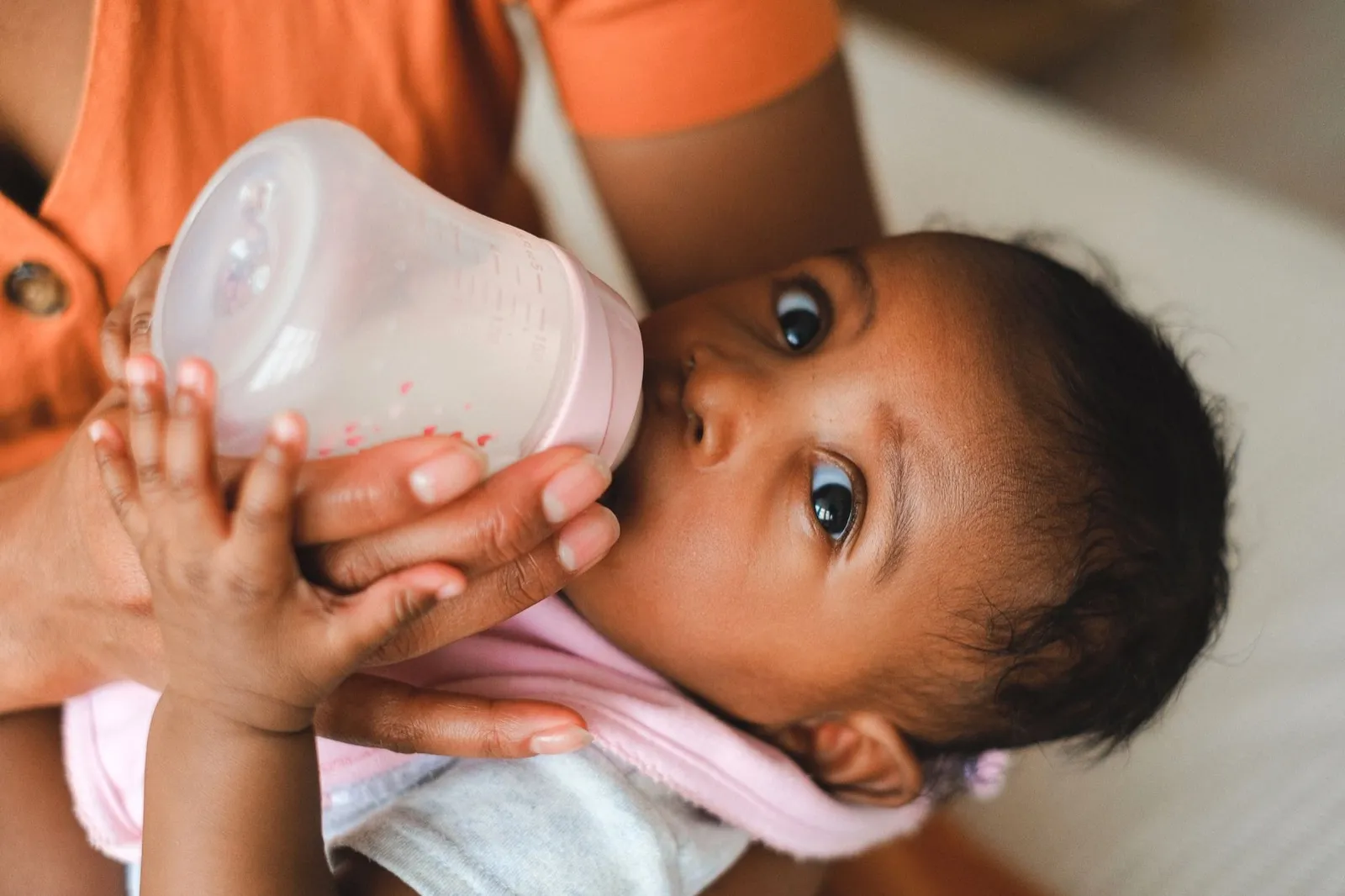
Image Credit: Pexels / Anna Shvets
At around 6 months, a baby’s feeding schedule is usually still centred on breast milk or first infant formula, with small amounts of solid food beginning to fit around those familiar milk feeds. Your baby does not need to move straight to three meals a day.
The NHS recommends starting with small amounts of food before a usual milk feed, at a time when your baby is not too tired or extremely hungry. Breast milk or first infant formula should remain their main drink during the first year.
So if you are looking for a precise timetable, it may be more helpful to think in terms of a flexible rhythm. Milk continues as usual, while solids are gradually introduced at times that work for your baby and your household.
What does a 6-month baby feeding schedule look like?
There is no single feeding schedule that every 6-month-old should follow.
Some babies are only just starting solids at this age. Others may have been exploring food for a short while and be ready for a little more variety. Breastfed babies may also feed at different times and frequencies from formula-fed babies.
The NHS advises that babies do not need three solid meals a day when they first begin eating. Instead, start by offering a few pieces or teaspoons of food.
Milk remains central. Babies at the beginning of weaning still get most of their energy and nutrients from breast milk or first infant formula.
This means a simple early pattern might be:
- usual milk feeds across the day
- one opportunity to explore solid food at a convenient time
- milk after the solid-food offering
- sips of water with the meal from an open or free-flow cup
This is an example of how the day can be structured, not a timetable your baby needs to follow exactly.
Should solids come before or after milk at 6 months?
When babies first start solids, the NHS recommends offering food before their usual milk feed.
A baby who has just had a full milk feed may have little interest in trying food. At the same time, the NHS advises not waiting until your baby is too hungry.
The aim is to find a comfortable middle ground.
Choose a point in the day when your baby is alert and reasonably content. Offer a small amount of suitable food, allow them time to explore it, then continue with their usual milk feed.
As solid foods become a more established part of your baby’s diet, their routine will gradually change.
A flexible example of feeding at 6 months
It can be useful to see what milk and solids might look like across a day, but a sample routine should never be treated as a prescription.
For a baby who has recently started solids, a day could include:
Morning: Breast milk or first infant formula as usual.
Later in the morning or around lunchtime: A small amount of solid food, offered before the baby’s usual milk feed, followed by breast milk or formula.
Afternoon: Usual milk feeds according to your baby’s normal pattern and appetite.
Evening and bedtime: Usual milk feeds.
Your baby’s day may look completely different. They may breastfeed more frequently, have formula at different times, or be more interested in solids earlier or later in the day.
The useful principle is that solids are being added gradually rather than immediately replacing your baby’s milk routine.
How many solid meals should a 6-month-old have?
A baby who has just started solids does not need three meals a day.
The NHS specifically recommends starting with small amounts because babies have small tummies and are still learning how to eat.
Early meals may consist of only a few pieces or teaspoons of food. Your baby may eat some, taste a little or spend most of the meal touching and exploring it.
As they become more confident, you can gradually increase the amount and variety you offer.
By around 7 to 9 months, NHS guidance says babies will gradually move towards three meals a day alongside their usual milk feeds. There is no need to force that progression at 6 months simply because another baby is already eating more frequently.
How much milk should a 6-month-old have?
Milk remains an important part of your baby’s diet at 6 months.
For breastfed babies, feeding continues responsively. The NHS advises that you can continue breastfeeding for as long as you and your baby want.
For formula-fed babies, individual intake can vary. Rather than reducing formula simply because solids have started, follow your baby’s appetite and the guidance provided for feeding first infant formula.
The NHS states that breast milk or first infant formula should remain the main drink throughout the first year.
As your baby becomes more established with solids, they may naturally begin to take less milk at some feeds. This transition happens gradually.
If you are concerned about how much milk your baby is taking, speak to your health visitor or GP for advice specific to your baby.
How much solid food should you offer?
At the beginning, the NHS recommends just a few pieces or teaspoons of food.
Try not to judge the meal by how much your baby finishes.
Your baby is learning to manage food in their mouth, experience different textures and swallow something very different from milk. That takes practice.
Offer a small amount and let your baby show you when they want more or have had enough.
The NHS advises stopping when a baby shows signs of fullness, which may include firmly closing their mouth or turning their head away. If spoon feeding, wait for your baby to open their mouth before offering the spoon.
Do not force your baby to finish a portion.
What foods can fit into a 6-month feeding schedule?
Once your baby is ready for solids, you can gradually offer a varied range of suitable foods.
The NHS suggests first foods such as soft-cooked or mashed vegetables and fruits. Options include broccoli, cauliflower, parsnip, potato, sweet potato, carrot, apple and pear.
As your baby’s diet develops, suitable foods can also include:
- potatoes, rice, pasta and other starchy foods
- beans and lentils
- eggs
- fish with bones removed
- meat with bones removed
- pasteurised full-fat plain yoghurt
- pasteurised cheese
There is no need to squeeze all of these into one day.
The purpose of an early feeding schedule is not to create a perfectly balanced miniature menu at every sitting. Variety can build over days and weeks as your baby becomes more comfortable with eating.
What about water at 6 months?
The NHS recommends introducing a cup from around 6 months and offering sips of water with meals.
An open cup or free-flow cup without a valve can help your baby learn how to sip.
Water at mealtimes does not replace your baby’s breast milk or first infant formula. Milk should still be their main drink during the first year.
Cow’s milk can be used in cooking or mixed with food from around 6 months, but NHS guidance says it should not be offered as a main drink until your baby is 12 months old.
Should you schedule breastfeeds around solids?
You do not need to turn breastfeeding into a rigid timetable because solids have started.
Continue responding to your baby’s feeding needs. The NHS notes that breastfed babies adapt their milk feeds as their food intake changes later in the weaning process.
At 6 months, particularly in the early stages of solids, breast milk is still providing a large proportion of your baby’s nutrition.
You can choose a convenient solid-food opportunity around the pattern you already have rather than reorganising the entire day.
For example, if your baby is usually alert and happy before a particular daytime breastfeed, that may be a practical time to offer a little food first.
If another time works better, use that instead.
What about formula feeds and solids?
First infant formula also remains your baby’s main milk drink during the first year if they are formula fed.
Starting solids does not mean bottles should suddenly be removed or replaced with meals.
In the early stage, offer a small amount of solid food before a usual milk feed as recommended by the NHS, without waiting until your baby becomes extremely hungry.
As your baby gets older and eats more food, their milk requirements and routine will change. NHS guidance for 7 to 9 months notes that babies gradually move towards three meals and may want less milk at some feeds as their solid-food intake increases.
That is a gradual development rather than a change you need to force at the beginning.
How do you know when to increase solid meals?
Follow your baby’s developing skills and appetite rather than a fixed date on a feeding chart.
You may notice that your baby becomes more comfortable swallowing food, manages a wider variety of textures and remains interested in eating.
Gradually increase the amount and variety offered as their confidence develops.
The NHS recommends moving from puréed or blended food towards mashed, lumpy and finger foods as soon as your baby can manage them.
Some babies take to these textures quickly. Others need more time.
A feeding schedule should be flexible enough to accommodate those differences.
What if your baby barely eats the solids?
This is common at the beginning.
The NHS advises parents not to worry about how much babies eat when they first start solids. Becoming familiar with new tastes and textures is more important initially.
Your baby’s meal may involve touching, squashing, licking and dropping far more food than they swallow.
Continue their milk feeds and keep offering suitable foods without pressuring them.
The NHS also recommends continuing to offer foods your baby has previously rejected. Babies may need repeated opportunities to become familiar with a new food or texture.
If your baby consistently struggles with eating or swallowing, or you have concerns about their growth or milk intake, speak to a health professional.
A simple way to organise milk and solids
If schedules make feeding feel more complicated, use three basic principles.
First, keep breast milk or first infant formula as your baby’s main drink.
Second, introduce small amounts of solid food at a time that suits you both, offering it before a usual milk feed while your baby is alert and not extremely hungry.
Third, let your baby’s appetite and developing skills guide the gradual increase in food.
You do not need to make your 6-month-old’s day look like breakfast, lunch and dinner immediately.
Early weaning is a transition. A flexible routine can give your baby plenty of opportunities to practise eating without putting unnecessary pressure on either of you.
When to get professional advice
Speak to your health visitor, GP or another qualified healthcare professional if you are concerned about your baby’s milk intake, solid-food intake, growth or feeding pattern.
Ask for advice if your baby was born prematurely, has a medical or developmental condition that may affect feeding, or appears to have difficulty chewing or swallowing.
If your baby regularly coughs or chokes during feeds or meals, seek professional advice.
You should also speak to a health professional if you are considering introducing solids before around 6 months or are unsure whether your baby is developmentally ready.
If your baby is choking and cannot breathe normally, follow current NHS first aid guidance and call 999 when emergency medical help is needed.
Related reading
- How Much Solid Food Should a Baby Eat When Starting Solids?
- When Can Babies Drink Water? Introducing Water With Solid Foods
- Starting Solids