How to Accessorise an Outfit Without Overdoing It
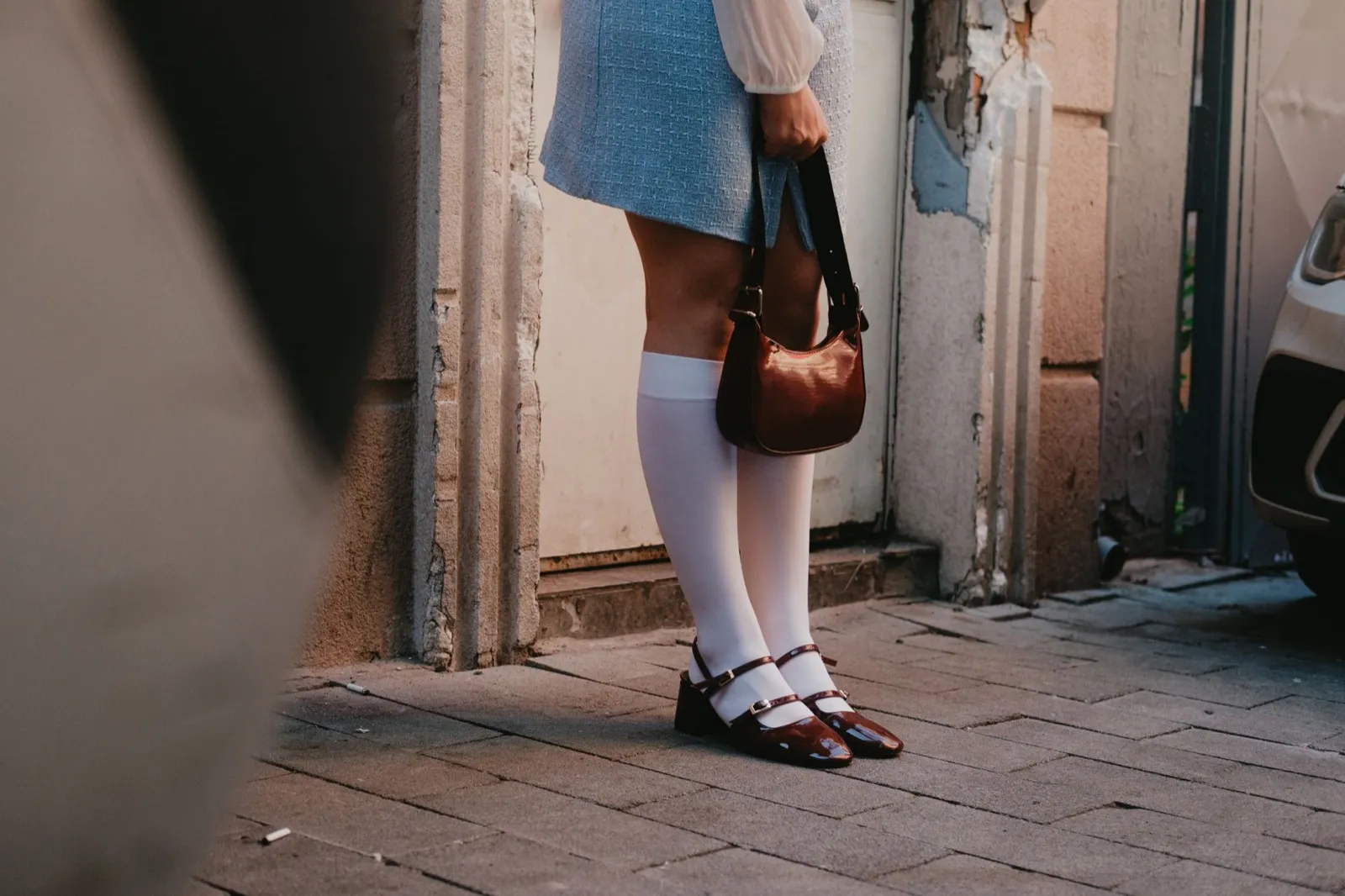
Image Credit: Pexels / Mert Coşkun
The easiest way to accessorise an outfit without overdoing it is to decide which details you want people to notice, then let the rest play a quieter role. You might choose statement earrings with a simple bag, or an interesting belt with understated jewellery. There is no correct number of accessories to wear.
The aim is not to remove personality from an outfit. It is to make each accessory feel intentional rather than adding pieces simply because you think something is missing.
Some people naturally enjoy layered jewellery, colourful bags and bold shoes together. Others prefer one small necklace and nothing else. Both can look considered. Balance depends on your personal style and the outfit itself.
Start with the clothes before adding accessories
It is easier to judge accessories once the main outfit is complete.
Put on your clothes and shoes first, then look at what is already happening. A plain knit with tailored trousers gives you plenty of room to introduce detail. A patterned dress, textured jacket or colourful pair of trousers may already provide much of the visual interest.
Ask yourself what you want the accessories to contribute.
Perhaps you want to:
- Add colour to a neutral outfit
- Make simple clothes feel more detailed
- Repeat a colour already in the outfit
- Introduce texture or shine
- Make an everyday outfit feel slightly smarter
- Give a dressier outfit a more relaxed feel
- Add something that simply feels like you
Once you know the purpose, choosing accessories becomes much easier.
Pick one starting point
If accessories often feel overwhelming, begin with one piece.
It might be your earrings, handbag, belt, scarf, necklace or shoes. Build the rest of the details around that choice rather than selecting everything separately.
For example, if you are wearing large sculptural earrings, you might decide they are the main jewellery detail. You can still wear rings or a bracelet, but they can be simpler.
If your handbag is bright red, perhaps the jewellery stays minimal while the bag provides the colour.
If you want to wear several necklaces, let the layered jewellery become the feature and choose a quieter neckline, bag or pair of earrings.
This is a useful starting point, not a rule. If your personal style is deliberately maximalist, several focal points may be exactly what you want.
Think about visual balance, not accessory counts
Advice about accessories sometimes relies on strict formulas, such as wearing a certain number of pieces or removing one item before leaving the house. Those ideas can be useful prompts, but they are not universal styling rules.
Three delicate necklaces can look quieter than one oversized pendant. A large tote may feel less visually dominant than a tiny bag in a vivid colour. Small hoop earrings, several rings and a watch may still create a very simple overall look.
Instead of counting pieces, look at their visual impact.
Consider:
- Size
- Colour
- Shine
- Texture
- Pattern
- Shape
- Contrast with your clothing
The stronger several of these elements become at the same time, the busier the outfit may feel.
If you like that effect, keep it. If you want something calmer, reduce one or two of the competing details.
Let statement accessories have some space
A statement accessory does not have to be expensive, oversized or fashionable. It is simply a piece that attracts attention within the outfit.
That might be:
- Large earrings
- A colourful handbag
- A patterned scarf
- A wide belt
- A chunky necklace
- Bright shoes
- An unusual pair of glasses
- A decorative hair accessory
If one piece is doing most of the talking, you might prefer to keep nearby accessories simpler.
Large earrings, for instance, can work beautifully without a necklace. A patterned scarf may need little more than small earrings. Bright shoes can be paired with a straightforward bag.
But there is no need to deliberately mute everything else if you enjoy more decoration. The point is to notice where the visual emphasis sits.
Use repetition to make accessories feel connected
Accessories do not need to match, but repeating a detail can make an outfit feel cohesive.
You might repeat:
- A colour
- A metal
- A texture
- A shape
- A general level of formality
For example, a burgundy bag can connect with a burgundy detail in a printed skirt. Silver-toned earrings might echo the hardware on a handbag. Brown loafers can relate to a tan belt without being the exact same shade.
Repetition can be subtle.
If you are wearing blue jeans, a cream jumper, black loafers and a brown bag, you do not necessarily need another brown piece. The bag can stand on its own.
Accessories should relate to the outfit, but they do not have to form a matching set.
Mix metals if you like the look
Gold-toned and silver-toned jewellery can be worn together.
If mixed metals feel slightly disconnected at first, choose one piece that already combines both tones. A watch, ring or necklace containing two metal colours can act as a bridge between the others.
Another option is repetition. You might wear silver earrings, a gold necklace and rings in both tones. Repeating each metal makes the combination look deliberate.
The same idea applies to bag hardware, belt buckles and shoe details.
You can also ignore the hardware completely. Tiny differences in metal colour do not need to dictate an entire outfit.
Consider the neckline when choosing necklaces
The relationship between a necklace and your neckline can affect how busy the upper part of an outfit feels.
A simple crew-neck top can provide a clean background for a pendant or layered necklaces. An open neckline may leave space for a shorter chain. A shirt can be worn with a necklace underneath the collar, over the fabric or without one at all.
If the neckline already includes bows, ruffles, embroidery, buttons or another decorative feature, you might decide earrings are enough.
Alternatively, you may enjoy adding jewellery to an already detailed neckline.
Try the complete combination in a mirror rather than deciding according to a formula. Sometimes two details that sound busy on paper work beautifully together once worn.
Balance jewellery around the face
Earrings and necklaces sit close together, so they can easily become the most noticeable accessories in an outfit.
If you want a quieter result, try combining one stronger piece with one subtler piece.
For example:
- Statement earrings + no necklace
- Hoop earrings + fine chain
- Small studs + layered necklaces
- Simple earrings + pendant necklace
- Bold necklace + minimal earrings
For a more decorative look, larger earrings and layered necklaces can absolutely be worn together.
Hair, glasses, makeup, necklines and collars also contribute to the overall effect, so consider the whole area rather than jewellery alone.
Use bags as part of the outfit
A handbag is practical, but it can also change the character of an outfit.
A structured bag can make casual separates feel more polished. A soft shoulder bag can make tailored clothing feel more relaxed. A colourful bag can provide contrast without requiring colourful clothes.
If the outfit already contains several noticeable elements, a simple bag in black, brown, navy, cream or another neutral you wear often can sit quietly alongside them.
If the clothes are simple, the bag can become the feature.
You do not need a large collection. A bag that works with your actual routine and wardrobe is more useful than one chosen simply to complete an imagined checklist.
Add belts when they contribute something
A belt can provide colour, texture or definition between different pieces of clothing.
With jeans or trousers, it can make a tucked top feel more finished. Over a dress, cardigan or blazer, it can become a more noticeable styling detail.
If you are already wearing statement jewellery and a colourful bag, you might choose a simple belt that blends with the clothing.
If the rest of the outfit is understated, an interesting buckle or contrasting belt can provide the detail instead.
And if a belt adds nothing useful to the outfit, leave it out.
Scarves can be subtle or expressive
Scarves offer plenty of styling possibilities because colour, print, fabric and size can all change their effect.
A small neck scarf can add a little pattern to a plain shirt or knit. A larger scarf can become a major part of an autumn or winter outfit. A silk-style scarf tied to a bag can add colour without sitting close to your face.
If you are wearing a patterned scarf, you can pick one colour from the pattern and repeat it elsewhere, perhaps in your bag or shoes.
Or let the scarf be the only colourful element.
Both approaches can work.
Do not forget practical accessories
Not every accessory needs to exist purely for decoration.
Glasses, sunglasses, watches, hats, hair accessories and bags often have a practical purpose as well as a visual one.
Rather than treating these as things you need to style around, include them in the outfit from the beginning.
If you wear glasses every day, for example, they are already part of your visual look. You may decide you want quieter earrings, or you may love wearing bold frames with equally noticeable jewellery.
Similarly, a large everyday tote does not have to be replaced with a smaller bag simply because you are dressing up. Your accessories should still work for your day.
A simple way to check your accessories
Once you are dressed, look at the complete outfit rather than examining each accessory separately.
Ask yourself:
- What do I notice first?
- Is that what I want to notice first?
- Are several accessories competing for attention?
- Does anything feel unnecessary?
- Would adding one detail make the outfit more interesting?
- Do I actually like how this feels?
If something seems too busy, remove one piece and compare.
If the outfit feels too plain for your taste, add something back.
The answer may change depending on your mood, destination and personal style. An accessory combination you love for dinner might feel like too much for a quiet weekend morning, while someone else may happily wear exactly the same combination anywhere.
Easy accessory combinations to try
If you want a few starting points, these combinations work with many different wardrobes.
Jeans + T-shirt + blazer: loafers or trainers, a belt, small hoops and a practical shoulder bag.
Simple midi dress: earrings, a small or medium bag and shoes that suit the occasion. Add a necklace or belt if you want another detail.
Wide-leg trousers + knit: pendant necklace, structured bag and simple shoes.
Shirt + skirt: earrings, watch, belt if the skirt has loops, and a bag in either a coordinating or contrasting colour.
Monochrome outfit: jewellery plus a textured or colourful bag to break up the single-colour look.
Patterned outfit: simple jewellery and a bag that picks up one shade from the pattern, or a contrasting accessory if you prefer something bolder.
These are suggestions rather than formulas. Swap, remove or add pieces until the combination feels natural to you.
Accessorising well is less about knowing when to stop and more about noticing what each piece contributes. If every accessory earns its place because you like it, need it or enjoy the effect it creates, the outfit is already doing its job.
Related reading
- Shoes & Accessories: How to Finish an Outfit
- How to Match a Handbag With Your Outfit
- How to Wear a Belt to Make an Outfit Look Better