How to Bathe a Baby: A Step-by-Step Guide for New Parents
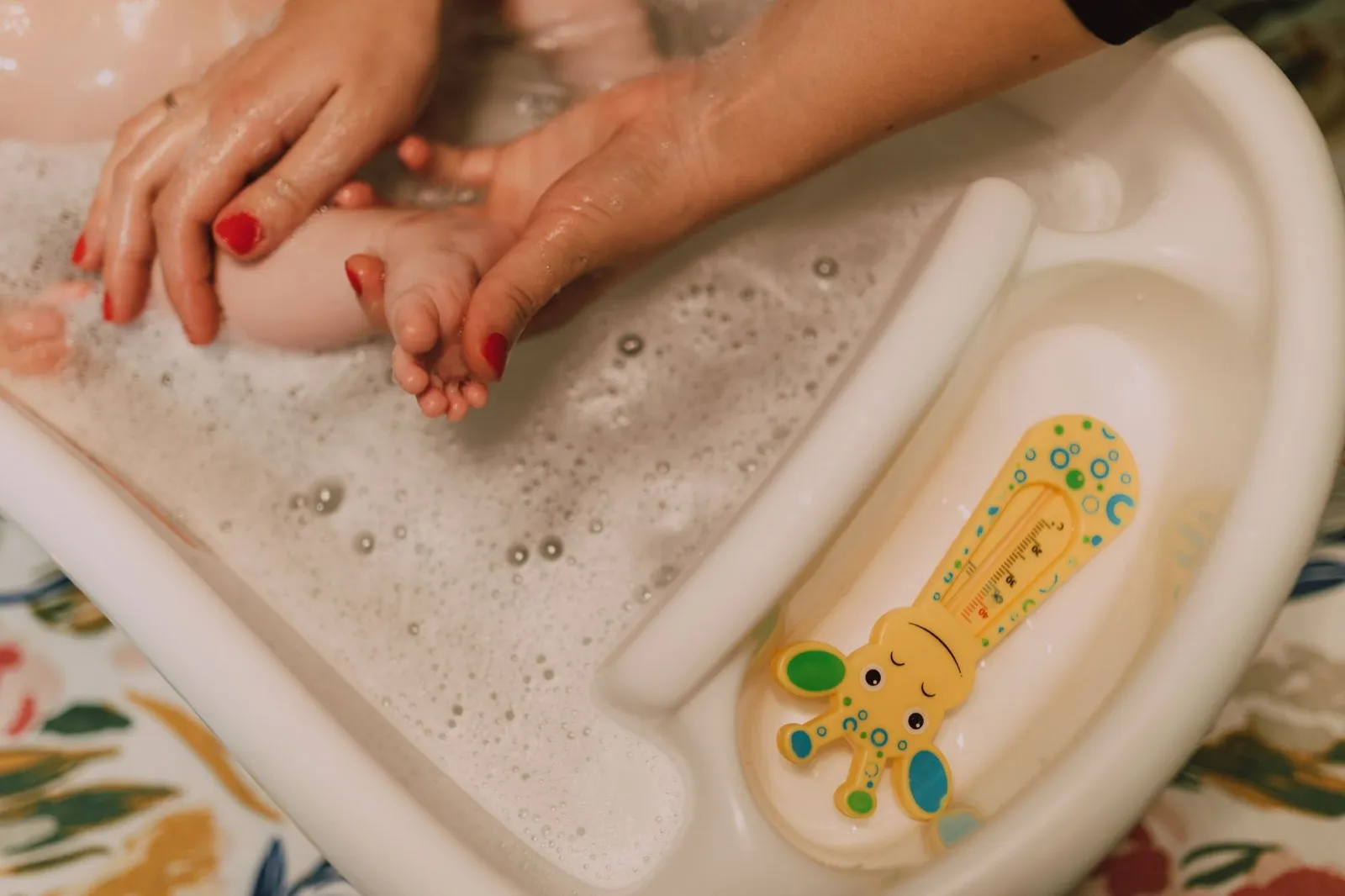
Image Credit: Pexels / RDNE Stock project
Bathing a tiny, wriggly baby can feel intimidating the first few times, especially when you are still getting used to holding them. The basic process is simpler than it looks: prepare everything before you begin, use warm rather than hot water, support your baby’s head and shoulders securely, wash them gently and never leave them alone in the bath.
You also do not need to bathe your baby every day. NHS guidance says two or three baths a week should be fine for a newborn, with simple washing of the face, neck, hands and bottom between baths.
The steps below follow NHS guidance and are designed to help you know what to expect before you start.
What you need before bathing your baby
Preparation matters because once your baby is in the bath, you need to stay with them continuously.
Gather everything first. The NHS suggests having:
- a baby bath, clean washing-up bowl or suitable sink
- two towels
- cotton wool
- a clean nappy
- clean clothes
Make sure the room is comfortably warm before undressing your baby.
For babies in their first month, NHS guidance says plain water is best for their skin, so you do not need to add cleansers to the bath.
Choose your timing too. It is best not to bathe your baby immediately after a feed or when they are hungry or tired. A time when they are awake and content can make the experience calmer.
Most importantly, put everything within reach. Never leave your baby alone in the bath, even for a second.
How to prepare the bath water safely
Fill the baby bath with cold water first, then add hot water. The NHS suggests a depth of around 8 to 10cm for a baby’s bath.
Mix the water thoroughly so there are no hot patches.
Before putting your baby in, check the water with your elbow. It should feel around body temperature, neither hot nor cold.
Do not rely on how the water looks. Always check it yourself before your baby goes into the bath.
Once the bath is ready, keep the area clear and make sure your towel, clean nappy and clothes are close enough to reach without moving away from your baby.
How to bathe a baby step by step
Once everything is prepared, you can concentrate fully on holding and washing your baby.
1. Start with your baby’s face
Hold your baby securely on your knee while they are still out of the bath.
Using clean cotton wool and water, gently clean their face.
For the eyes, the NHS recommends wiping from the nose outwards and using a fresh piece of cotton wool for each eye.
Clean around the outside of the ears rather than inside them. Cotton buds should not be used inside a baby’s ears.
2. Wash their hair
While continuing to support your baby securely, wash their hair with plain water over the bowl or bath.
Support their head carefully while you do this.
Once their hair is clean, dry it gently.
3. Remove the nappy
After washing and drying your baby’s hair, remove their nappy.
If there is any poo or other mess, clean it away before lowering your baby into the bath. This helps keep the bath water clean.
4. Lower your baby into the bath
This is often the part new parents feel most nervous about.
Hold your baby’s upper arm with one hand while using the same arm to support their head and shoulders. Lower them gently into the water.
Keep a secure hold throughout the bath. Babies become very slippery when wet.
Your baby’s head should remain clear of the water.
5. Wash your baby gently
With your free hand, gently swish water over your baby’s body.
There is no need for vigorous washing or scrubbing. Pay attention to skin folds, particularly around the neck, where milk, dribble and moisture can collect.
Keep talking to your baby if it feels natural. Your voice can provide something familiar while they experience the unfamiliar sensations of bath time.
The bath does not need to be long. Once your baby is clean, you can take them out.
6. Lift your baby out carefully
Keep your hold secure as you lift your baby from the water. Wet babies can be surprisingly slippery.
Move them directly onto a clean towel.
Wrap them up so they do not become cold.
7. Pat your baby dry
Pat rather than rub your baby’s skin dry.
Take a little extra care around the creases and folds of the skin, where moisture can remain.
Once your baby is dry, put on a clean nappy and dress them.
Empty the bath water when you have finished.
The most important baby bath safety rule
Never leave a baby alone in the bath, even for a few seconds.
The NHS also advises that an older child should not be left responsible for supervising a baby in the bath. An adult should remain with the baby throughout bath time.
This rule still applies if you use a bath seat. The NHS cites advice from the Royal Society for the Prevention of Accidents that baby bath seats should not be used because they can come away from the bath and do not make it safe to leave a baby unattended.
If the phone rings, someone comes to the door or you realise you have forgotten something, take your baby out of the bath and with you rather than leaving them in the water.
Preparing everything first makes these situations much less likely.
How often should you bathe your baby?
Newborn babies do not need a daily bath.
NHS guidance says bathing two or three times a week should be fine for a newborn. If you and your baby enjoy bathing, it can be done more often.
On non-bath days, you can wash the areas that tend to need more attention. This is often called topping and tailing.
It usually involves gently cleaning your baby’s face, neck, hands and bottom with warm water.
There is no need to create a strict bathing schedule. Some families find evenings convenient, while others prefer mornings or daytime baths. Choose a time that works for you and when your baby is awake and settled.
What if your baby cries during the bath?
Some babies love being in water. Others strongly object, particularly at first.
Crying does not necessarily mean you are doing something incorrectly. Your baby may simply dislike being undressed, feel startled by the water or be tired or hungry.
Check that the room is warm and the water feels comfortable. Keep the bath brief and make sure your movements are gentle and secure.
If your baby becomes very distressed, you can take them out, dry and dress them, and try again another time.
You can use topping and tailing between baths, so there is no need to persist with a full bath simply to complete a routine.
As you become more confident handling your baby and they become more familiar with the experience, bath time may feel easier for both of you.
What about the umbilical cord?
The NHS advises keeping a newborn’s umbilical cord clean and dry until it falls off.
You only need to clean around the cord if it becomes dirty with wee or poo. NHS guidance recommends using fresh cotton wool and warm water, then gently patting the area dry.
Do not pull the cord stump off yourself.
If you are uncertain about bathing while the cord is still attached, ask your midwife or health visitor to show you the approach they recommend for your baby.
Do you need baby shampoo, soap or bath products?
Not necessarily.
The NHS recommends plain water for a baby’s skin during the first month, so there is no need to buy a collection of bath products before your baby arrives.
After that, if you choose to use a cleanser, select one that is suitable for babies.
A simple routine can also make it easier to notice how your baby’s skin responds. If a product seems to irritate their skin, stop using it and ask a pharmacist, health visitor or GP for advice if the irritation persists.
When to get professional advice
Speak to your midwife, health visitor, GP or another qualified healthcare professional if you have concerns about bathing because your baby was born prematurely, has a medical condition, has difficulty maintaining their temperature or has specific skin-care needs.
You should also ask for advice if the umbilical cord is bleeding or has discharge. NHS guidance recommends telling your midwife, health visitor or GP if you notice either of these changes.
If your baby’s skin develops a persistent or worsening rash, looks infected, becomes very sore or you are unsure how to care for it, seek professional advice rather than repeatedly trying different bath products.
If your baby seems seriously unwell, unusually difficult to wake, has breathing difficulties or you think they need urgent medical attention, seek urgent medical help. Bathing should wait.
If the practical handling is what worries you, your midwife or health visitor can also show you how to support and wash your baby safely. Seeing the technique in person can make those first few baths feel much more manageable.
Related reading
- Baby Hygiene & Everyday Care
- When Should You Give a Newborn Their First Bath?
- How to Bathe a Newborn Before the Umbilical Cord Falls Off