How to Clean a Baby's Eyes, Ears and Nose Safely
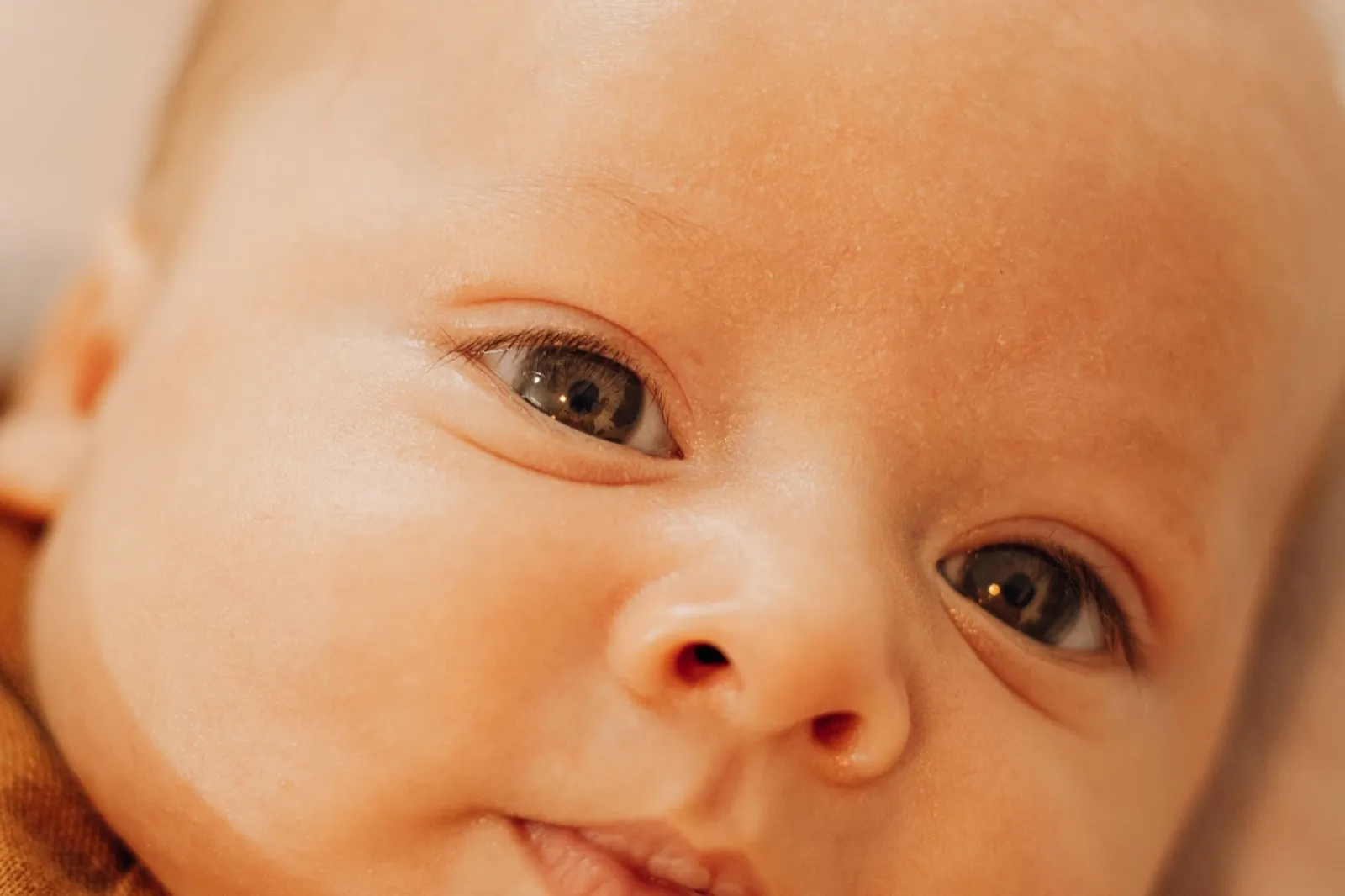
Image Credit: Pexels / juliane Monari
How to Clean a Baby’s Eyes, Ears and Nose Safely
Cleaning your baby’s tiny face can feel more delicate than it really needs to be. The safest approach is usually the simplest: clean only what you can see, use gentle movements, and never put cotton buds or other objects inside your baby’s ears or nose.
For everyday washing, NHS guidance recommends warm water and cotton wool. Clean each eye from the nose outwards with a fresh piece of cotton wool, wipe around the outside of the ears rather than inside them, and gently clean around the nose as part of washing your baby’s face.
You do not need to make every trace of earwax, dried mucus or eye discharge disappear. These areas have their own protective and clearing mechanisms, so everyday care is mainly about keeping the outside clean and comfortable.
What you need to clean your baby’s face
You do not need a complicated collection of baby toiletries.
For routine face cleaning, have:
- a bowl of warm water
- clean cotton wool
- a soft, clean towel
- clean clothes if needed
Wash your hands before you begin.
The NHS suggests choosing a time when your baby is awake and content and making sure the room is warm. Having everything within reach also means you can stay with your baby throughout the wash.
If your baby becomes upset, there is no need to force your way through a full clean. You can stop, comfort them and try again later unless there is a specific medical reason the area needs attention.
How to clean your baby’s eyes
Your baby’s eyes should be cleaned gently, without rubbing the eye itself.
The NHS advises dipping cotton wool in warm water, making sure it is not too wet, then wiping gently around the eye from the nose outwards.
Use a fresh piece of cotton wool for each eye. This reduces the chance of transferring stickiness or infection from one eye to the other.
A simple routine is:
- Wash your hands.
- Wet a clean piece of cotton wool with warm water.
- Gently wipe from the inner corner near the nose towards the outer corner.
- Throw the cotton wool away after that eye.
- Use a fresh piece for the other eye.
- Gently pat the surrounding skin dry if needed.
Do not try to clean underneath the eyelids or touch the surface of the eye.
What if your baby has sticky eyes?
Sticky eyes are common in newborn babies and can happen while their tear ducts are still developing. You may notice white or yellowish discharge collecting at the corner of an eye or making the eyelashes stick together.
NHS Healthier Together guidance recommends cleaning sticky eyes with damp cotton wool, wiping from the corner beside the nose outwards and using a clean piece for each wipe.
Sticky eyes are not necessarily the same as an eye infection. Redness, swelling and yellow or green discharge can be signs that your baby needs medical assessment.
If your newborn has a sticky, red eye, NHS guidance advises seeking urgent advice from a GP or NHS 111.
How to clean your baby’s ears
Baby ears do not need deep cleaning.
Use fresh damp cotton wool to gently wipe the visible outer ear and the skin behind it. Pay attention to folds where milk, moisture or dead skin can collect.
The NHS specifically advises not cleaning inside your baby’s ears and never using cotton buds inside them.
That means you should avoid inserting:
- cotton buds
- fingers
- tissues
- ear-cleaning tools
- any other object
into the ear canal.
Earwax is normal. You do not need to remove wax that is sitting deeper inside the ear.
If you notice something in the ear canal that concerns you, or you think your baby has excessive wax, discharge or an ear problem, ask a pharmacist, health visitor or GP for advice rather than trying to remove it yourself.
How to clean behind your baby’s ears
The area behind a baby’s ears can be easy to miss during everyday washing.
Milk, dribble and moisture can settle in the folds, particularly around the ears, neck and chin.
Use warm water and clean cotton wool or a soft cloth to gently wipe behind each ear. Afterwards, carefully pat the skin dry rather than rubbing it.
If the skin becomes persistently red, cracked, weepy or sore, speak to your health visitor, pharmacist or GP for advice.
How to clean your baby’s nose
For routine hygiene, clean around the outside of your baby’s nose with fresh damp cotton wool while washing their face.
You do not need to clean deep inside the nostrils.
Avoid putting cotton buds inside your baby’s nose. NHS maternity guidance also advises against using cotton buds inside a baby’s nose.
If there is a little dried mucus just around the entrance to a nostril, wiping the outside gently with damp cotton wool may help soften and remove what comes away easily. Do not scrape or probe inside the nostril.
A baby’s nose does not need to look perfectly clear to be clean.
What if your baby has a blocked nose?
A blocked nose is different from routine hygiene.
Babies can develop stuffy noses with colds. NHS guidance says saline nose drops can help loosen dried mucus and relieve a stuffy nose, and recommends asking a pharmacist, GP or health visitor about them.
Avoid using medicines, medicated drops or other products in your baby’s nose unless they are appropriate for your child and you have followed professional or product guidance.
If congestion is interfering with feeding, your baby seems unwell, or you are concerned about their breathing, seek medical advice.
Breathing difficulty should never be treated as an ordinary cleaning problem.
Do you need special baby cleansers?
Warm water is enough for routine cleaning around your baby’s eyes, ears and nose.
The NHS’s topping and tailing guidance uses warm water and cotton wool for cleaning a newborn’s face.
There is usually no need to use fragranced wipes, soaps or cleansers around these sensitive areas simply to make your baby feel clean.
If your baby has a skin condition or you have been advised to use a particular product, follow the advice given by your healthcare professional.
What should you avoid?
The easiest way to remember safe face cleaning is to stay on the outside.
Avoid:
- putting cotton buds inside the ears or nose
- inserting fingers or other objects into the ear canal or nostrils
- rubbing your baby’s eyes
- using the same piece of cotton wool on both eyes
- picking at dried mucus that does not come away gently
- using medicated eye, ear or nose products without appropriate advice
- trying to remove deep earwax yourself
Gentle cleaning is enough for normal everyday hygiene.
How often should you clean your baby’s eyes, ears and nose?
There is no need to repeatedly clean these areas throughout the day if they are already clean.
The NHS says newborn babies do not need a bath every day. Parents can instead wash the face, neck, hands and bottom, often called topping and tailing.
You can clean around your baby’s eyes, ears and nose as part of this routine and whenever there is visible dirt, milk or discharge that needs gently wiping away.
Some days your baby may need very little cleaning. That is completely fine.
When to get professional advice
Contact your GP, health visitor or another appropriate healthcare professional if you are concerned about persistent discharge, redness, swelling, soreness or other changes around your baby’s eyes, ears or nose.
For the eyes, seek medical advice if you notice yellow or green discharge together with redness or swelling. NHS guidance advises urgent GP or NHS 111 assessment if a newborn baby under one month has a sticky, red eye.
Ask for medical advice if your baby has ear discharge, appears to be in pain, or you are concerned that something is inside the ear.
A blocked nose is common with colds, but seek medical help if your baby is struggling to breathe, feeding much less than usual, seems unusually sleepy or difficult to wake, or appears seriously unwell.
If you are unsure whether something you are seeing is normal, your health visitor, midwife or GP can help. You do not need to try to clean or treat a problem yourself before asking for advice.
Related reading
- Newborn Baby Hygiene Kit: What You Actually Need
- How to Wash a Baby’s Hair and Care for Their Scalp
- How to Cut Your Baby’s Nails Safely