How to Declutter Your Home Without Getting Overwhelmed
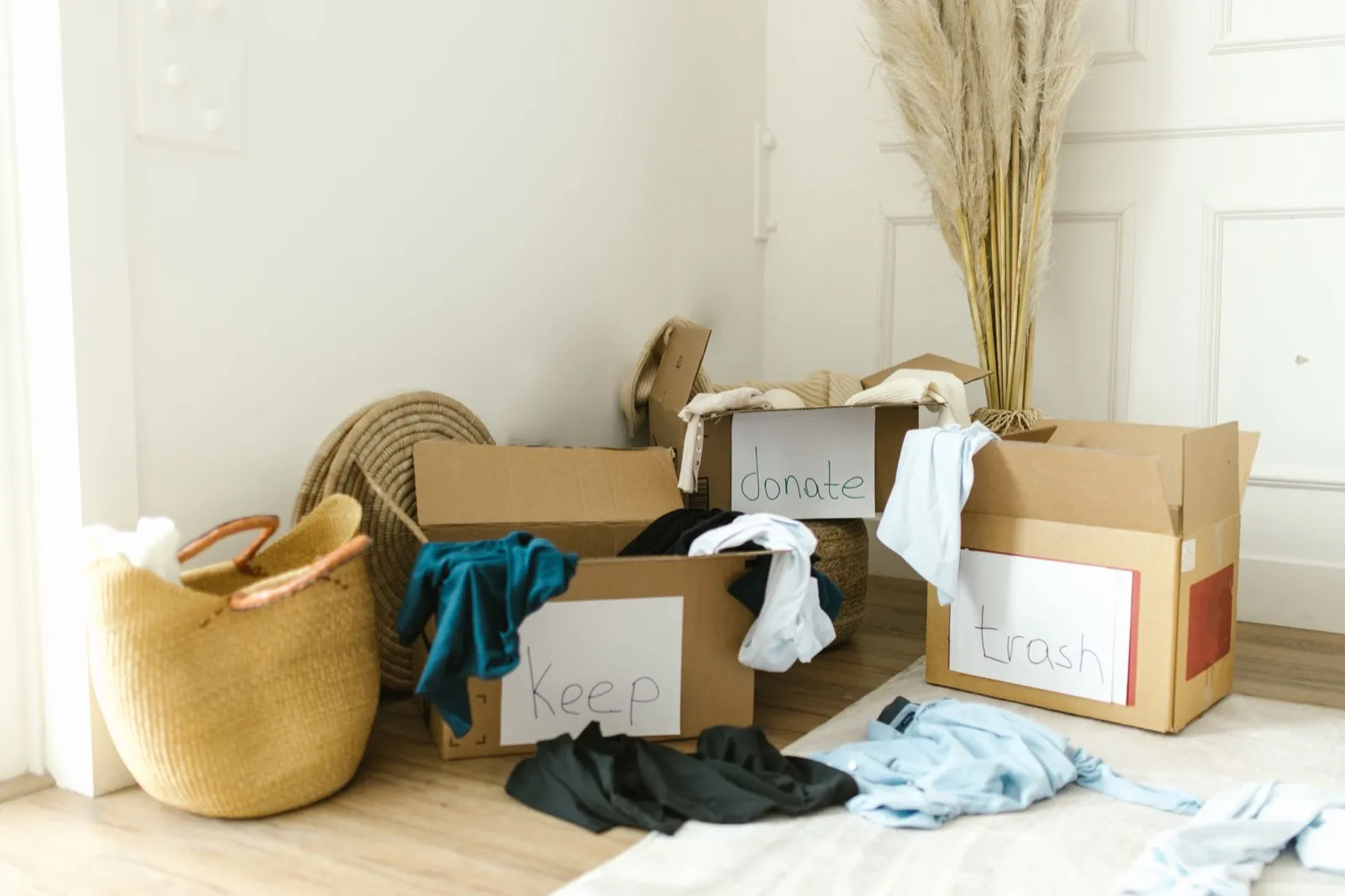
Image Credit: Pexels / RDNE Stock project
The least overwhelming way to declutter your home is to choose one small, clearly bounded area, decide only what is in front of you, and stop before you are worn out. You do not need to empty a room, buy storage or make fast decisions about sentimental things. A home can become easier to use one drawer, bag or surface at a time.
Clutter can carry practical decisions, memories, money worries and other people’s expectations. That is why a dramatic clear-out often feels harder than it looks. Start with the aim of making life a little easier: finding the kettle, opening a cupboard, sitting on the sofa or getting dressed without a search. Organisation is a support for living in your home, not a test of discipline or worth.
Begin with a small, visible win
Choose a space that has edges: one bedside table, one kitchen drawer, the floor beside the bed or one bag of papers. Avoid “the bedroom” or “the whole house”. A bounded task lets you see where to begin and where to stop.
Set out three containers labelled keep here, move elsewhere and leave home. A fourth “decide later” bag is useful when a decision would slow everything down. Put a timer on for ten or fifteen minutes, especially if you are tired, in pain or new to decluttering. When it rings, you can stop, even if the space is unfinished.
Clear obvious rubbish and recycling first. Then return items that already have a home. Do not reorganise every cupboard while you are doing this. The first pass is about reducing what is blocking the area, not creating a perfect system.
Decide with the life you have now
For each remaining item, ask a practical question: do I use this, need it, genuinely enjoy it, or have a specific place for it? “Could I use it one day?” is usually too broad to help. Try “when did I last use this, and what would I use instead if I needed it next month?”
Keep things because they support your present life, not because you feel you ought to keep them. It is fine to keep equipment for a real hobby, clothes that suit your body now, family records or a few meaningful objects. It is also fine to let go of duplicates, broken items you will not repair, expired products and objects that create more work than value.
If you share a home, deal only with your own things unless someone has agreed otherwise. Moving or discarding another person’s belongings can damage trust and create more stress than the clutter itself.
Use a low-pressure order
Start where decisions are simplest. Rubbish, recycling, empty packaging, obvious duplicates and things with clear owners are often easier than photographs, inherited belongings or paperwork. A gentle order might be:
- Clear a route, chair or surface you need today.
- Choose one small category such as mugs, toiletries or socks.
- Take one bag of donations or recycling out of the house.
- Return later for a second small area.
This order matters because a pile can look like proof that you have failed. It is not. It is simply a collection of decisions that have not been made yet. Small categories reduce the number of decisions competing for attention.
Give difficult items a pause, not a permanent home
Some things need more thought. Put undecided items in a labelled box with a review date, such as six weeks from now. Keep the box somewhere accessible but not in the main living space. When the date arrives, ask whether you looked for anything in it or missed it.
For sentimental objects, try choosing a small container rather than asking yourself to keep or lose every memory. Photograph an item before donating it if the image is what you want to remember. You can also keep one representative piece from a collection. The goal is not to erase your history; it is to choose how much physical space it needs.
If an item may be valuable, research it before donating or recycling it. Do not use decluttering urgency to make a decision you may regret. A “research” tray keeps that work separate from today’s small task.
Make leaving-home decisions easy
Put donations straight into a bag and give the bag a next step: charity-shop drop-off on Saturday, collection booking, or a friend who has said yes. A donation bag that stays by the door for months is not a failure, but it may need a smaller target or a different route.
Check local guidance before putting things in a household bin. Recycle Now has item-specific advice, and local councils set collection rules. Electrical items should not go into ordinary household waste; check local recycling services and recall information before passing them on. Clean, usable items can be donated only where the organisation accepts them. Broken or unsafe items need the appropriate recycling or disposal route.
Build a home for what remains
Decluttering and organising are related, but they are not the same job. Once a small area holds only things you intend to keep, give each group a simple home close to where it is used. Mugs near the kettle, medicines in a safe designated place, batteries in one labelled box and bags near the door are enough.
Choose containers after you know what remains. Buying storage before deciding can turn clutter into prettier clutter. Use boxes, drawers or baskets you already own first. Leave a little empty room in a drawer or shelf, so putting something away does not require a puzzle.
Plan for low-energy days
A reduced decluttering session still counts. On a difficult day, collect rubbish from one room, put dirty laundry in one basket, or clear a square of floor large enough to walk through safely. Sit down while sorting, use a grabber or ask someone to carry bags if that makes the task accessible.
You can also use body doubling: ask a friend to sit with you, in person or on a call, while you sort. They do not need to make decisions for you. Their presence can make starting less lonely. Stop if you feel panicky, physically unwell or unable to focus. The task will still be there later.
A simple one-hour approach
If you have an hour, use four short rounds rather than one intense push. Spend ten minutes choosing the area and gathering bags. Spend fifteen minutes on rubbish and items that belong elsewhere. Spend fifteen minutes making keep, donate and later decisions. Use the final twenty minutes to return items, remove one bag and write the next tiny task.
Before you finish, take a photo or simply notice what now works: the drawer closes, the floor is clearer, you can use the table. This is not about proving progress online. It helps you recognise that small changes are real changes.
Common obstacles and flexible alternatives
If you keep moving piles around, make one “outgoing” spot and one “decide later” spot. If you feel guilty about money already spent, remind yourself that keeping an unused item does not recover its cost. You can learn from a purchase without storing it indefinitely.
If family members bring more things in, agree on one small household rule, such as a basket for incoming post or one shelf for hobby supplies. If you cannot agree, protect the area you control rather than trying to manage everyone else’s possessions. If storage is genuinely limited, prioritise safety, hygiene and access before visual tidiness.
Frequently asked questions
What should I declutter first?
Start with rubbish, recycling, expired products, duplicates or one small surface you use every day. These tend to need fewer emotional decisions and quickly make a space more workable.
How long should decluttering take?
There is no useful deadline. Ten minutes is enough to begin. Choose a pace that leaves you able to eat, rest and continue your ordinary life.
What if I regret donating something?
Some uncertainty is normal. Use a holding box for uncertain items, research valuables, and keep essential replacements in mind. The aim is thoughtful decisions, not perfect certainty.
When to get professional advice
Seek support if acquiring or keeping possessions is causing serious distress, making rooms unusable, creating fire or hygiene risks, or affecting relationships and daily life. Hoarding disorder is a recognised mental-health condition and support can involve a GP, mental-health service and practical local help. If you are at immediate risk, call 999 or go to A&E.
Related reading
- How to Create a Cleaning Routine You Can Actually Keep Up With
- How to Get Your Life Together When Everything Feels a Bit Chaotic
- How to Create a Weekly Routine That Keeps You Organised