How to Look Expensive on a Budget
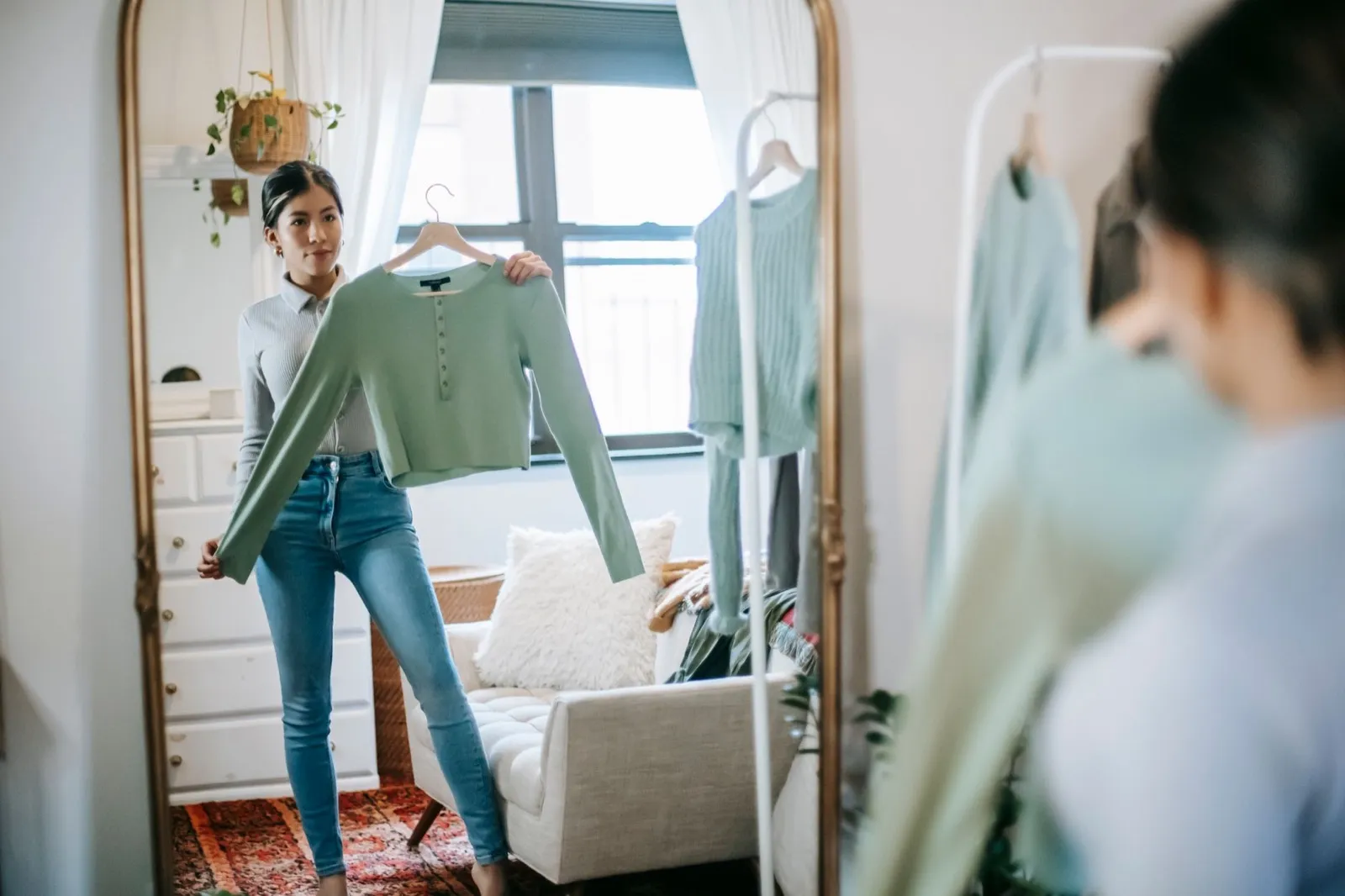
Image Credit: Pexels / Liza Summer
Looking expensive on a budget has surprisingly little to do with making people believe your clothes cost more than they did. In style terms, the phrase usually describes outfits that feel polished, considered and well put together.
You can create that effect at almost any budget. Start with clothes that fit comfortably, keep them in good condition, use colour and accessories thoughtfully, and pay attention to small styling details. You do not need designer labels, a wardrobe full of neutrals or a completely new collection of clothes.
The most useful approach is to work with what you already own and decide what makes an outfit feel polished to you.
Prioritise fit over the price tag
An expensive price does not guarantee that a garment will sit the way you want it to, and an affordable piece can look beautifully considered when the fit works for you.
Look at how the garment feels and moves.
Can you sit comfortably? Do the shoulders sit where you want them? Is the trouser length practical with the shoes you wear? Does a waistband stay where you prefer it? Does the fabric pull or twist anywhere?
These questions matter more than the number on the label.
Fit is also personal. You may love oversized tailoring, loose shirts and wide trousers, while someone else prefers more fitted silhouettes. A polished outfit does not have to mean close-fitting clothing.
If you already own something you like but the fit feels slightly off, a simple alteration may sometimes make it more useful. Shortening trousers, adjusting a hem or replacing a missing button can be worth considering before replacing the garment.
Keep clothes looking cared for
One of the simplest ways to make an outfit feel more polished costs very little.
Check clothes for:
- Creasing
- Loose threads
- Missing buttons
- Lint or pet hair
- Small marks
- Pilling
- Scuffed shoes
- Twisted collars or cuffs
This is not about keeping clothes pristine forever. Clothing naturally shows wear.
Instead, deal with the small things that are easy to fix. A lint roller, fabric brush, iron or steamer, depending on the garment’s care instructions, can make familiar pieces look neater.
Always follow the care label when washing, drying, ironing or treating a garment, as requirements vary by fabric and construction.
Try a simple colour story
Neutral colours are often associated with an expensive-looking wardrobe, but you do not need to dress entirely in beige, black or cream.
Colourful outfits can look just as polished.
The useful idea is cohesion rather than neutrality. Choose colours that feel intentional together.
You might wear:
- Navy with cream and tan
- Black with burgundy
- Chocolate brown with pale blue
- Grey with red
- Olive with cream
- Denim with camel
- Several shades of one colour
You can also build an outfit around bright pink, cobalt blue, orange or another colour you love.
If combining several colours feels difficult, begin with two main shades and add a third through a smaller detail such as a bag, scarf or jewellery.
Use tonal dressing for an easy polished look
Tonal dressing means combining different shades of the same colour family.
For example, you could wear chocolate trousers with a lighter brown knit and a tan bag. An all-grey outfit might combine charcoal trousers, a mid-grey jumper and a pale grey coat.
The pieces do not need to match exactly. In fact, slightly different tones can give the outfit more depth.
Black from head to toe is another simple option, but so is navy, cream, brown, green, burgundy or any colour you enjoy wearing.
Tonal dressing works particularly well on a budget because the effect comes from colour coordination rather than labels.
Pay attention to fabric texture
Texture can make a simple outfit more visually interesting.
Try combining different surfaces, such as denim with a smooth shirt, a soft knit with tailored trousers or a crisp cotton-style top with a textured skirt.
The fabric does not need to be luxurious or expensive. What matters visually is the contrast between the pieces.
You can also use texture through accessories. A woven bag, suede-effect shoe, patterned scarf or polished metal jewellery can add detail to a straightforward outfit.
If you are buying something new, check the fabric composition and care requirements so you know whether they suit your preferences and routine.
Create structure where you want it
Structured pieces are often associated with a polished look because they create clear lines within an outfit.
A blazer is the obvious example, but it is not the only option.
You could try:
- A straight-cut coat
- A crisp shirt
- Tailored trousers
- A structured handbag
- A denim jacket
- A cardigan with a defined shape
- A belt
- A shoe with a clean silhouette
You do not need to combine all of them.
One structured element can be enough to change the feel of relaxed clothing. Jeans, a T-shirt and trainers, for example, can look more polished with a blazer or structured bag.
Equally, if tailoring does not suit your style, you can create a considered outfit through colour, proportion and accessories instead.
Make simple outfits feel intentional
Some of the easiest expensive-looking outfits are also very simple.
Think:
Straight-leg jeans + white or blue shirt + loafers + simple earrings
Wide-leg trousers + fine knit + structured bag + trainers
Midi skirt + fitted or relaxed knit + boots + long coat
Simple dress + understated jewellery + comfortable shoes + handbag
Dark trousers + T-shirt + blazer + flats
None of these combinations requires a particular brand.
What makes them feel considered is that the pieces relate to each other. The colours work together, the proportions feel deliberate and the accessories support the outfit rather than competing with it.
Use these as starting points and change the silhouettes to suit your own wardrobe.
Choose accessories with purpose
Accessories can make an inexpensive outfit feel more finished, but more accessories do not automatically create a more polished result.
Choose a few details that contribute something.
You might add:
- Small or statement earrings
- A watch
- A belt
- A scarf
- A necklace
- Sunglasses
- A handbag
- A hair accessory
If you are wearing a bold bag, perhaps the jewellery stays simple. If you love layered necklaces, they can become the main detail.
There is no need for your bag, belt and shoes to match exactly. Repeating a colour or metal can create connection, but contrast can look equally intentional.
Keep hardware in mind, but do not obsess over it
Buckles, zips, buttons and bag hardware are small details, yet they can help an outfit feel connected.
If your bag has gold-toned hardware, you might choose gold-toned jewellery. Silver hardware can be repeated through earrings or a watch.
This is optional.
Mixed metals can look beautiful too. If you enjoy wearing both gold and silver tones, repeat each somewhere in the outfit or simply wear them together without worrying about perfect coordination.
The overall outfit matters far more than whether every small metal detail matches.
Let your shoes support the outfit
Shoes can quickly change the mood of familiar clothes.
A pair of trainers makes tailoring feel more casual. Loafers can make jeans and a T-shirt feel slightly smarter. Boots can give a dress a different character from sandals or ballet flats.
For a polished effect, the condition of the shoes often matters more than their price.
Clean them appropriately for their material, deal with obvious marks where possible and replace worn laces if needed.
Comfort matters as well. Shoes that look sophisticated but make walking miserable are unlikely to become useful wardrobe pieces.
Avoid buying something just because it looks expensive
Some budget fashion advice encourages buying affordable versions of luxury trends purely because they resemble more expensive pieces.
That approach can easily lead to clothes and accessories you do not actually want.
Instead, ask whether you like the item independently of what it resembles.
Would you wear the bag if it did not remind you of a designer style? Would you still like the jacket if it were not currently fashionable? Can you imagine wearing it with several things you already own?
If the answer is yes, it may be a useful purchase.
If not, leaving it behind costs nothing.
Shop second-hand selectively
Second-hand shopping can sometimes provide access to well-made or higher-priced clothing for less, although availability and condition vary.
Rather than searching only by brand, try searching for the item you actually need.
That might be:
- Wool trousers
- Leather loafers
- Navy blazer
- Cotton shirt
- Long winter coat
- Structured handbag
Check measurements, fabric details, condition and photographs carefully where available.
Second-hand shopping is an option, not an obligation. Your budget strategy should also account for time, accessibility, sizing and the type of shopping experience you prefer.
Be careful with the idea of “investment pieces”
Fashion advice often suggests spending more on certain wardrobe staples because they will supposedly last for years.
Sometimes that makes sense. Sometimes it does not.
A higher price alone does not guarantee durability, comfort or usefulness.
If you are considering spending more, focus on what matters for that specific item. Check the construction, fabric information, care requirements and how well it fits your lifestyle.
Most importantly, ask how often you realistically expect to wear it.
A moderately priced coat worn constantly may be more valuable to you than an expensive blazer that rarely leaves the wardrobe.
Build around a few reliable outfit formulas
Knowing a few combinations that consistently work can make a wardrobe feel more polished without making it larger.
For example:
Formula 1: trousers + knit + loafers + earrings
Formula 2: jeans + shirt + blazer + trainers
Formula 3: midi dress + boots + coat + handbag
Formula 4: skirt + simple top + cardigan + flats
Formula 5: monochrome base + contrasting bag or shoes
Your formulas should reflect your own life.
If you never wear blazers, leave them out. If dresses are your everyday uniform, build around dresses. If comfort means trainers with almost everything, make that part of the formula.
Repeating a successful combination is not boring. It is one of the easiest ways to get more from a limited wardrobe.
Know what is worth spending on for you
A budget does not have to be distributed equally across your wardrobe.
Perhaps comfortable shoes are worth a larger share because you walk frequently. Maybe you care most about coats because you live somewhere cold. You might prefer spending more on knitwear while buying occasion dresses second-hand.
There is no universal list of items everyone should invest in.
Spend according to frequency of use, personal priorities and what you can comfortably afford.
That is more useful than trying to recreate someone else’s version of an expensive wardrobe.
The polished outfit check
Before buying anything new, try looking at the outfit you already have on.
Ask:
- Does everything sit the way I want it to?
- Would steaming or adjusting one piece help?
- Do the colours feel connected?
- Is there enough visual interest for my taste?
- Would one accessory finish the outfit?
- Are my shoes practical for where I am going?
- Do I actually like the overall look?
Sometimes the answer is simply to roll a sleeve, swap the shoes or add earrings.
The expensive-looking effect people often search for is usually less about cost than attention to detail. Clothes that feel intentional, cared for and true to your style can look beautifully put together at any price point.