Starting Solids Checklist: How to Prepare for Your Baby’s First Meal
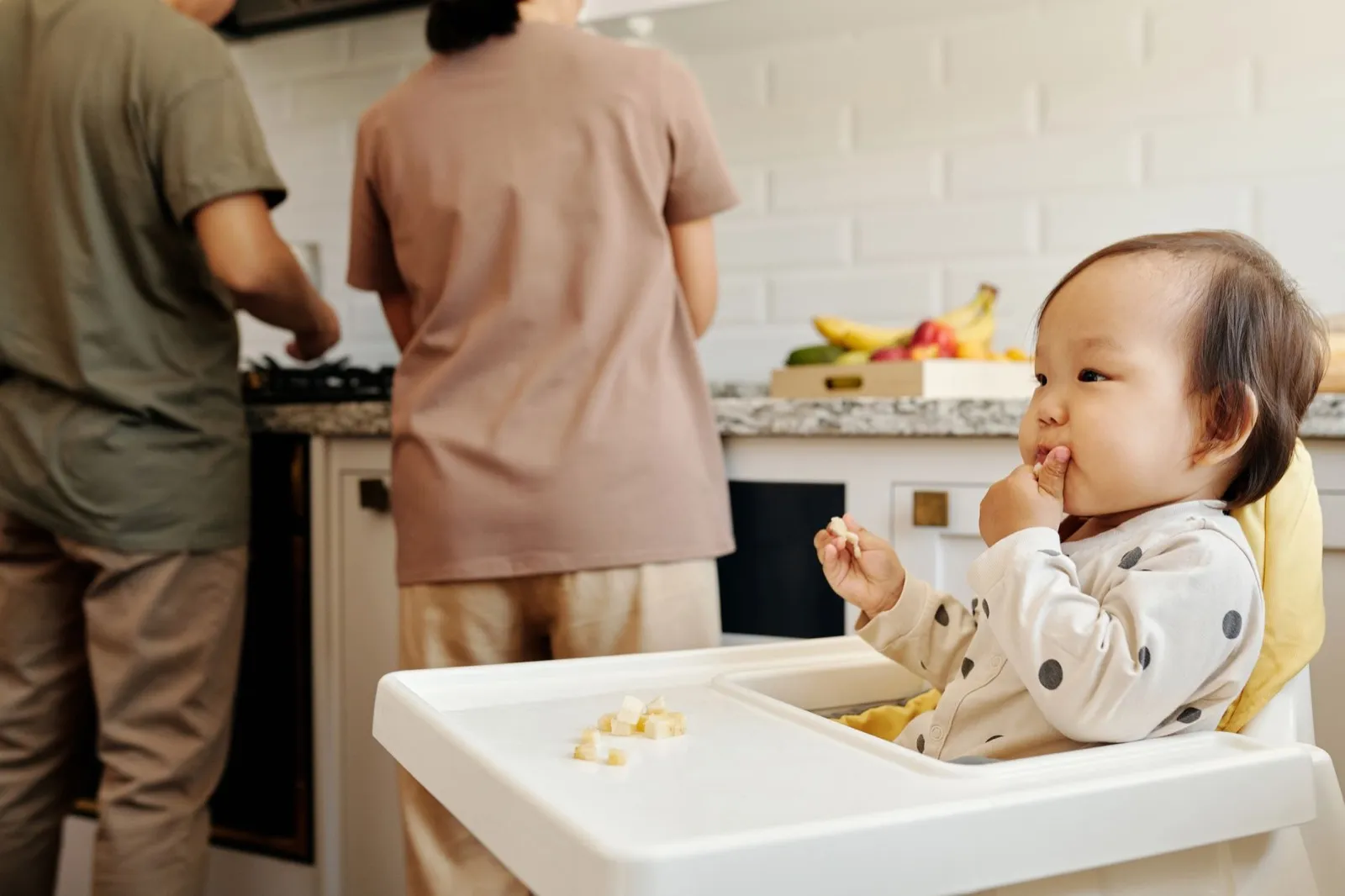
Image Credit: Pexels / Vanessa Loring
Preparing for your baby’s first meal can be surprisingly simple. Before starting solids, check that your baby is developmentally ready, choose one or two suitable first foods, set up a safe upright place to eat and have a cup, bib and spoon if you need one. You do not need an elaborate menu or a cupboard full of specialist feeding equipment.
The NHS recommends introducing solid foods from around 6 months, when three signs of readiness appear together. At first, the amount your baby eats matters less than giving them time to become familiar with food, tastes and textures.
Use this starting solids checklist to get the practical pieces in place without turning the first meal into a major event.
1. Check that your baby is ready for solids
Age is only part of the picture.
According to the NHS, three developmental signs should appear together from around 6 months before a baby starts solid foods.
Your baby should be able to:
- stay in a sitting position and hold their head steady
- coordinate their eyes, hands and mouth so they can look at food, pick it up and bring it to their mouth
- swallow food rather than automatically pushing it back out
Some common baby behaviours can be mistaken for readiness.
Chewing fists, waking more frequently during the night and wanting extra milk feeds do not necessarily mean your baby needs solid food.
Starting solids is also not a reliable way to encourage a baby to sleep through the night.
If your baby was born prematurely, ask your health visitor or GP when they recommend starting solids.
2. Choose a calm time for the first meal
You do not need to schedule your baby’s first meal for breakfast, lunch or dinner.
The NHS recommends choosing a time that suits you both, when you are not rushed and your baby is not too tired.
Offer food before their usual milk feed. A baby who has just finished a full feed may not be interested in trying food, but waiting until they are extremely hungry can make the experience difficult too.
Pick a part of the day when your baby is usually awake and content.
Your first attempt does not need to last long. Allow plenty of time, but follow your baby’s cues rather than trying to keep them at the table until a certain amount has been eaten.
3. Have a safe place for your baby to sit
Your baby needs to sit safely upright while eating.
The NHS recommends using a high chair with a securely fitted safety harness.
Never leave your baby unattended while they are eating.
Make sure the chair is stable and your baby is positioned securely before putting food in front of them.
A safe feeding position matters regardless of whether you are offering purées, mashed food, finger foods or a mixture.
You do not need an expensive high chair. A safe, stable and easy-to-clean option is enough.
4. Gather the basic feeding equipment
There is no need to buy every product marketed for weaning.
A simple first-meal setup might include:
- a safe high chair
- a bib
- a soft weaning spoon if you plan to spoon-feed
- a small bowl if needed
- an open cup or free-flow cup without a valve
- a clean high-chair tray or suitable surface for finger foods
The NHS also suggests a messy mat or newspaper beneath the high chair if you want to make cleaning easier.
Containers and ice cube trays can be useful if you plan to batch cook and freeze small portions, but they are optional.
Start with the basics. You can always buy additional equipment once you know what your baby actually uses.
5. Decide how you want to offer food
You do not have to choose one strict weaning method.
Some parents start with smooth or mashed foods offered on a spoon. Others prefer baby-led weaning, where the baby is offered suitable finger foods and feeds themselves.
Many families combine the two.
The NHS says there is no right or wrong choice between baby-led weaning and spoon feeding. The priority is offering a varied diet and suitable textures.
If you spoon-feed, wait for your baby to open their mouth before offering the spoon.
If you offer finger foods, prepare pieces that are large enough for your baby to grip and soft enough to break up easily in their mouth.
You can adjust your approach as you discover what works for your baby.
6. Choose a simple first food
Your baby’s first meal does not need several courses.
The NHS suggests beginning with small amounts and offers vegetables and fruits as possible first foods.
Examples include suitably prepared:
- broccoli
- cauliflower
- parsnip
- carrot
- potato
- sweet potato
- apple
- pear
Including vegetables that are not sweet, such as broccoli, cauliflower and spinach, can help your baby become familiar with a wider range of flavours.
Foods can be mashed or prepared as soft pieces depending on your baby’s skills and the feeding approach you are using.
One simple food is plenty for a first meal.
7. Prepare the food safely
Wash your hands before preparing food and keep preparation surfaces clean.
Wash fruit and vegetables, and peel them where appropriate.
Cook foods thoroughly where required and allow hot food to cool before giving it to your baby.
Remove bones from meat and fish and remove hard stones and pips from fruit.
The NHS advises avoiding hard foods such as whole nuts and raw carrot or apple for young babies because of choking risk.
Small round foods such as grapes and cherry tomatoes need to be cut into quarters.
Safe preparation matters more than making the meal look perfect.
8. Prepare an appropriate texture
Your baby does not necessarily need to begin with completely smooth purées.
The NHS explains that babies who start solids at around 6 months may be ready for mashed, lumpy and finger foods and may not need smooth blended foods at all.
Some babies prefer smoother textures initially. Others enjoy soft finger foods straight away.
If using finger foods, the NHS suggests pieces roughly the size of your own finger for beginners. They should be long enough for your baby to grip with some food sticking out of their fist.
Choose foods that break up easily in the mouth.
As your baby becomes more confident, move towards mashed, lumpy and finger foods as soon as they can manage them.
9. Do not add salt or sugar
Your baby’s first foods do not need seasoning with salt or sugar.
The NHS advises not adding salt to baby food or cooking water because babies should not eat salty foods.
Be careful with ingredients such as stock cubes and gravy, which can contain significant amounts of salt.
Added sugar is unnecessary too and can contribute to tooth decay.
Simple food may taste plain to an adult palate, but your baby is experiencing these flavours for the first time.
There is no need to make food sweeter or saltier to persuade them to eat.
10. Have water ready in a cup
From around 6 months, the NHS recommends offering sips of water with meals.
Use an open cup or a free-flow cup without a valve.
Do not worry if your baby barely drinks anything during the first few attempts. Learning to use a cup is another new skill.
Breast milk or first infant formula should remain your baby’s main drink throughout the first year.
Water with meals is an addition to their usual milk feeds, not a replacement for them.
11. Know what to expect from the first meal
Your baby may eat very little.
They may lick the food, touch it, squeeze it, drop it or look completely unimpressed.
That can all be part of a normal first experience with solids.
The NHS advises not worrying about how much babies eat at the beginning. They are learning how to move food around their mouth and swallow while still receiving most of their energy and nutrients from breast milk or first infant formula.
Start with just a few pieces or teaspoons of food.
Let your baby go at their own pace.
If they turn their head away or firmly close their mouth, stop and try again another time.
12. Learn the difference between gagging and choking
Gagging can happen when babies begin solid foods because they are learning how to manage food in their mouth.
It is different from choking.
The NHS notes that a gagging baby may have watery eyes, push their tongue forwards, retch or vomit as they bring food forwards in their mouth.
Choking happens when the airway becomes blocked and requires an appropriate first aid response.
Always stay with your baby while they eat.
Before the first meal, familiarise yourself with current NHS choking and baby first aid guidance. Knowing what to do can make you feel more prepared if something goes wrong.
13. Think ahead about allergenic foods
You do not need to introduce every common allergen at your baby’s first meal, but it is useful to understand the guidance before you begin.
The NHS says foods that can trigger allergic reactions can be introduced from around 6 months, one at a time and in small amounts.
These include foods such as:
- eggs
- peanuts and tree nuts in a suitable form
- cow’s milk
- gluten-containing foods
- seeds
- soya
- fish
- shellfish
Once introduced and tolerated, allergenic foods should become part of your baby’s usual diet.
Whole nuts are not suitable for babies because of choking risk. Nuts and peanuts need to be offered in an age-appropriate form, such as finely ground or as a suitable nut butter preparation.
If your baby has eczema, a diagnosed food allergy or a family history of food allergies, eczema, asthma or hay fever, speak to your GP or health visitor before introducing allergenic foods.
14. Keep normal milk feeds going
Starting solids does not mean milk suddenly becomes less important.
At the beginning of weaning, babies still get most of their energy and nutrients from breast milk or first infant formula.
The NHS advises offering a small amount of food before the usual milk feed when starting solids.
Breast milk or first infant formula should remain your baby’s main drink throughout their first year.
Do not deliberately cut milk feeds simply to make your baby hungry enough to eat more solids.
Food intake will build gradually as your baby develops their eating skills.
15. Expect mess
A first meal is rarely neat.
Your baby may put their hands into the bowl, wipe food across the tray or drop almost everything onto the floor.
The NHS encourages letting babies touch and hold food and feed themselves with their fingers when they show an interest.
This helps them explore food and practise self-feeding.
A bib and wipe-clean floor covering can make cleaning easier, but you do not need to prevent every spill.
Try to treat mess as part of learning rather than evidence that the meal has failed.
16. Keep the atmosphere relaxed
Your baby does not know that their first meal is a milestone.
They do not need balloons, a perfect menu or a successful first spoonful.
Keep distractions such as television, phones and tablets to a minimum, as recommended by the NHS.
Sit with your baby and give them time.
If they eat, lovely. If they do not, there will be another opportunity.
Some babies accept new tastes and textures quickly, while others need repeated exposure. The NHS notes that it can take 10 tries or more for a baby to become accustomed to a new food or texture.
There is no need to force the process.
Your starting solids checklist
Before the first meal, check that:
- your baby is around 6 months and showing the three readiness signs together
- you have chosen a calm time when your baby is alert
- your baby has a safe upright place to sit
- the high-chair harness is securely fitted
- your hands, equipment and preparation surfaces are clean
- the food is prepared in a suitable texture and shape
- hard pips, stones and bones have been removed
- the food has cooled to a safe temperature
- you have not added salt or sugar
- you have a bib and spoon if needed
- you have an open or free-flow cup for sips of water
- you plan to stay with your baby throughout the meal
- you know that eating only a tiny amount is normal at first
- you have familiarised yourself with current choking and first aid guidance
- normal breast milk or first infant formula feeds will continue
That is enough.
Your baby does not need a perfect first meal. They need a safe opportunity to begin learning about food at their own pace.
When to get professional advice
Speak to your health visitor, GP or another qualified healthcare professional if you are unsure whether your baby is ready to start solid foods.
Ask for individual advice if your baby was born prematurely or has a medical, developmental, feeding or swallowing condition.
Speak to your GP or health visitor before introducing common allergenic foods if your baby has eczema, a diagnosed food allergy or a relevant family history of allergic conditions.
Seek professional advice if your baby persistently struggles to swallow or manage food textures, or regularly coughs or chokes during meals.
If your baby is choking and cannot breathe normally, treat it as an emergency and call 999 while following current first aid guidance.
Related reading
- Baby Feeding Essentials: What You Actually Need to Start Solids
- How to Prepare Baby’s First Foods Safely
- How to Start Solids at 6 Months: A Simple Step-by-Step Guide