Toddler Clinginess: Why It Happens and How to Respond
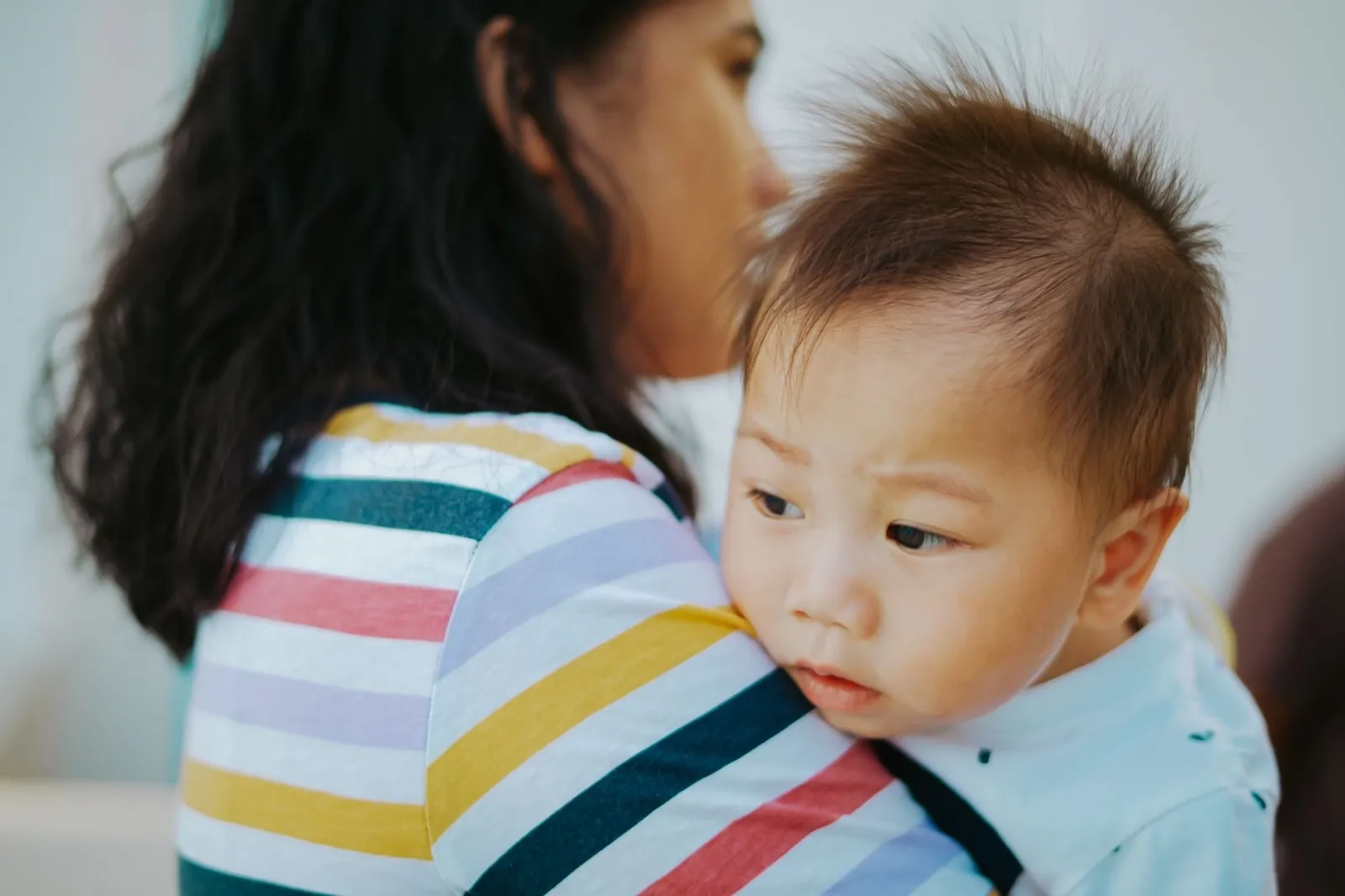
Image Credit: Pexels / Kenneth Surillo
If your toddler suddenly wants to be carried everywhere, follows you from room to room or becomes upset the moment you move away, it can feel intense. You may love the cuddles and still find the constant need for closeness exhausting.
Toddler clinginess is often connected with normal development, particularly separation anxiety. The NHS says babies and toddlers commonly become clingy or cry when a parent or carer leaves, and separation anxiety is especially common between 6 months and 3 years. Clinginess can also become more noticeable during periods of stress, anxiety or change.
The most helpful response is usually not to push your toddler away or assume they are being difficult. Instead, try to understand what may be making them seek extra reassurance, offer connection and keep everyday separations calm and predictable.
Why is my toddler suddenly so clingy?
A toddler can seem wonderfully independent one week and determined to stay attached to you the next.
That change can be confusing, but growing independence does not happen in a straight line. Toddlers are learning that they are separate people with their own wishes, while still relying heavily on familiar adults for security.
The NHS explains that separation anxiety develops as young children become aware that they are separate from the people who care for them and recognise how dependent they are on those people.
That can make being apart feel unsettling.
Your toddler may therefore want to explore the playground independently and then suddenly run back for a cuddle. They may happily play while you sit nearby but become distressed if you leave the room.
Both behaviours can exist at the same time.
Common reasons toddlers become clingy
There is not always one obvious reason for clinginess. Looking at what has been happening around your toddler can sometimes reveal a pattern.
Separation anxiety
Separation anxiety is one of the most common explanations for clinginess in young children.
You may notice that your toddler:
- cries when you leave the room
- follows you around the house
- resists being left with another caregiver
- becomes distressed at nursery drop-off
- wants to be held more often
- becomes wary around unfamiliar people
The NHS describes separation anxiety as a normal developmental stage that young children usually grow out of.
A change in routine
Changes that seem manageable to an adult can feel significant to a toddler.
Starting nursery, moving house, changing childcare arrangements or simply having an unfamiliar routine can make some children seek more reassurance.
NHS guidance on anxiety in children notes that children can find change difficult and may feel anxious during experiences such as starting nursery or moving to a new area.
If your toddler has recently become clingier, think about what has changed around them rather than looking only at the behaviour itself.
Big feelings they cannot explain yet
Toddlers experience strong emotions before they have the language and emotional skills to explain all of them.
They may not be able to say, “That new place made me nervous” or “I missed you today.”
Instead, they may cry, cling, demand to be carried or become upset when you try to move away.
NHS Best Start in Life guidance explains that toddlers are still learning how to manage their emotions and may need adult help to calm and understand those feelings.
Tiredness, hunger or overstimulation
Sometimes the explanation is much simpler.
The NHS notes that difficult behaviour in toddlers and young children can happen when they are tired, hungry, overexcited, frustrated or bored.
A toddler who usually plays independently may want much more physical closeness after a tiring day or during an overwhelming situation.
Before assuming something bigger is wrong, consider whether they simply need food, rest, quiet or a little connection.
Is clinginess a sign something is wrong?
Clinginess on its own does not necessarily mean there is a problem.
It can be part of normal separation anxiety, a response to change or simply a phase when your toddler needs more reassurance.
What matters is the wider picture.
Notice whether your child is still able to play, explore, communicate and enjoy ordinary activities. Consider whether the clinginess happens mainly in particular situations or seems to affect most of their day.
A sudden change may also be worth paying attention to, particularly if it comes alongside other signs that your child is unwell or distressed.
You know your child’s usual behaviour best. If something feels significantly different or you are worried about their wellbeing, asking your health visitor or GP for advice is reasonable.
How to respond to a clingy toddler
There is no need to choose between comforting your toddler and encouraging independence. You can do both.
Acknowledge the need for closeness
If your toddler reaches for you, try to respond to what they may be communicating rather than labelling them as needy or difficult.
You might say:
“You want me close.”
“You didn’t like it when I walked away.”
“You’re feeling a bit unsure. I’m here.”
NHS guidance encourages parents to help toddlers understand emotions by naming what they may be feeling.
You do not need to explain everything while your toddler is very upset. A few calm words and physical reassurance may be enough.
Give connection before expecting independence
Sometimes a toddler who is desperate for attention needs a little focused connection before they are ready to move away again.
That could mean sitting together for a story, having a cuddle or spending a few minutes playing without simultaneously checking your phone or completing another task.
This does not guarantee that your toddler will immediately become independent, and it does not need to become a complicated routine.
It simply gives them a chance to reconnect.
Keep everyday separations predictable
If clinginess is strongest when you leave, predictable goodbyes can help make separation easier to understand.
The NHS suggests practising short separations with someone your child knows well, explaining what is happening and making goodbyes positive.
Keep your message simple:
“I’m going to the shop. You’re staying with Dad. I’ll come back.”
At nursery, you might use the same short sequence each morning, such as a cuddle, a goodbye phrase and a wave.
Try not to stretch the goodbye into repeated departures and returns.
Avoid disappearing without saying goodbye
Sneaking out can feel easier if you know your toddler will cry when they see you leave.
A clear goodbye, however, makes the sequence more predictable. Your toddler learns that you tell them when you are leaving and that you return afterwards.
They may still be upset. The goal is not necessarily a tear-free goodbye.
It is to create a familiar pattern they can gradually understand.
Offer small opportunities for independence
Independence does not have to mean being physically far away from you.
Your toddler can practise doing things for themselves while knowing you are nearby.
They might:
- choose between two tops
- carry their cup to the table
- put a toy into a box
- climb onto a chair safely by themselves
- play beside you while you complete a simple task
Small moments of autonomy allow toddlers to practise confidence without demanding more separation than they can currently manage.
Keep routines familiar where possible
NHS guidance notes that routines can be reassuring for anxious children.
You do not need a rigid schedule. A predictable rhythm can simply help your toddler know what comes next.
If mornings are particularly clingy, for example, keeping breakfast, dressing and leaving the house in roughly the same order may make the transition feel more familiar.
Prepare your toddler for changes
If you know something different is coming, talk about it beforehand in simple language.
“Tomorrow Grandma is picking you up from nursery.”
“We’re going to a new house today.”
“You’re going to stay with Auntie while I go to my appointment.”
You can repeat the explanation later rather than expecting your toddler to understand and remember everything the first time.
What if your toddler only wants one parent?
Some toddlers go through phases of strongly preferring one parent or caregiver.
Being the preferred person can feel exhausting. Being rejected can feel surprisingly painful.
Try not to turn the preference into a competition.
Where practical, allow the other trusted caregiver to continue taking part in ordinary routines such as playing, getting dressed, reading stories or preparing meals.
Your toddler may protest at first. A preference does not mean the other caregiver has done something wrong or that the relationship cannot be warm and secure.
If your toddler is extremely distressed, you can acknowledge their wish while keeping a reasonable boundary.
“You wanted Mummy to help. Daddy is helping with your bath tonight. Mummy will see you afterwards.”
How to handle clinginess when you need space
There will be moments when you genuinely cannot hold, carry or entertain your toddler.
You may need to cook, shower, work, care for another child or simply have a few minutes without someone climbing onto you.
It is fine to set a gentle boundary.
You might say:
“I can’t carry you while I’m cooking. You can stand next to me.”
“I know you want a cuddle. I’ll finish washing my hands and then I’ll pick you up.”
“You want me to play. I need to finish this first, then we can read a book.”
Your toddler may still be unhappy with the answer.
A boundary does not have to remove the feeling. You can acknowledge their frustration while keeping the limit you need.
If you are becoming overwhelmed, make sure your toddler is somewhere safe and give yourself a moment to settle before responding.
Try not to compare your toddler with other children
It is easy to notice the toddler who runs happily into nursery while yours wraps both arms around your leg.
Temperament differs.
Some children warm up quickly to new people and places. Others need more time and reassurance.
What matters more than comparison is whether your own child is gradually developing confidence and whether their anxiety is manageable within everyday family life.
Clinginess is not a measure of your parenting.
Nor does encouraging independence require you to become emotionally distant.
Toddlers can need closeness while also learning, slowly, that they are safe to explore beyond it.
When to get professional advice
Clinginess is often part of normal toddler development, but professional advice may be useful if anxiety is very strong, getting worse or interfering with everyday life.
The NHS advises seeking help if a child’s anxiety affects their wellbeing or stops them from taking part in ordinary activities. Its separation anxiety guidance also recommends speaking to a health visitor if a child is very distressed, remains upset for a long time after a parent leaves or separation anxiety continues for more than a few weeks.
Speak to your health visitor or GP if you are worried about your toddler’s behaviour, emotional wellbeing or development, particularly if you have noticed a significant or persistent change.
You should also seek appropriate medical advice if clinginess appears alongside symptoms of illness or you are concerned that your child is physically unwell.
You do not need to work out the cause by yourself before asking for help. A professional can consider your child’s age, development, health and circumstances and advise you on what to do next.
Related reading
- Toddler Behaviour
- Toddler Behaviour: What Is Normal and What to Expect
- How to Manage Difficult Toddler Behaviour Calmly