Toddler Development: Milestones and Stages from 1 to 3 Years
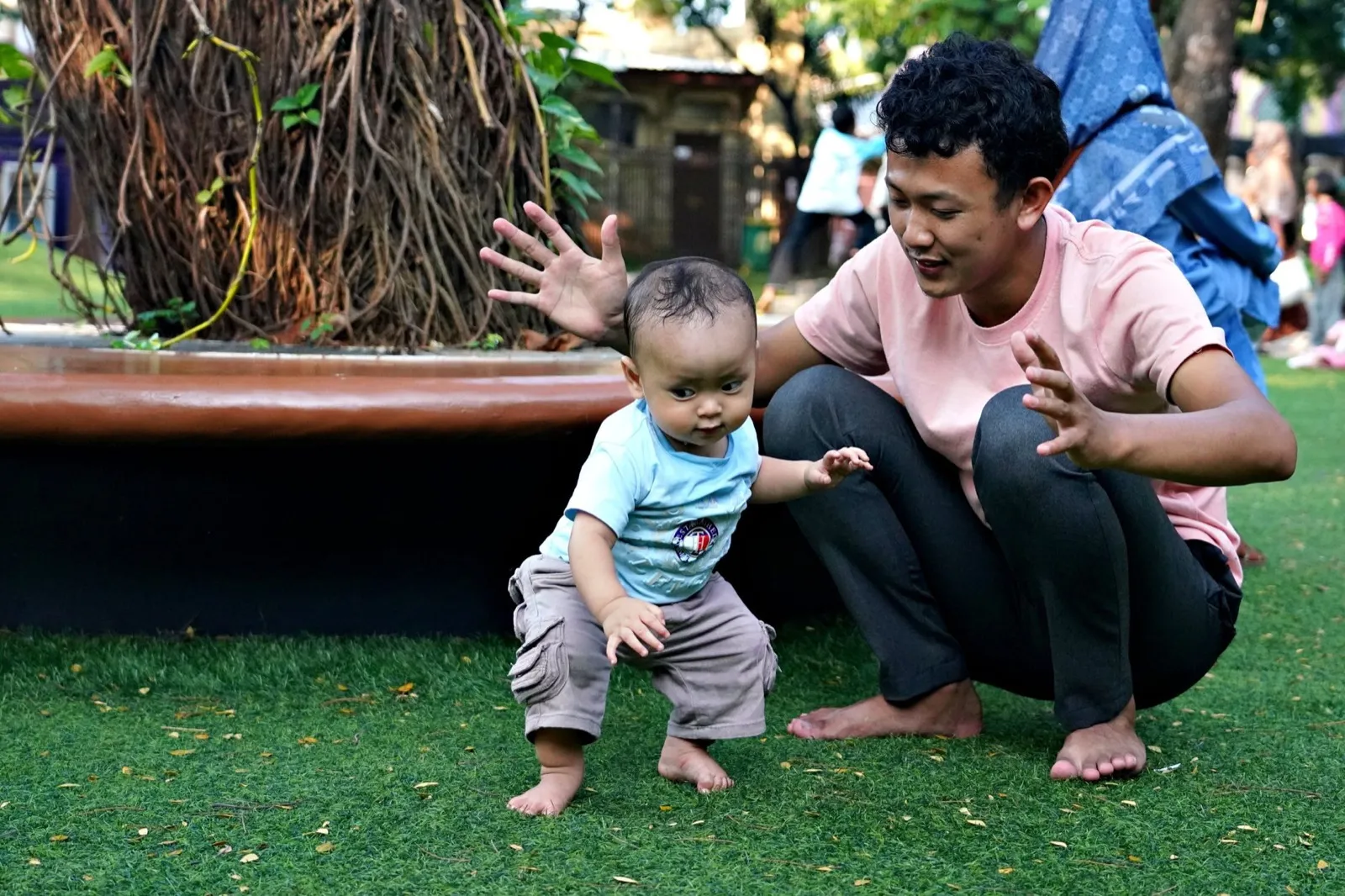
Image Credit: Pexels / hartono subagio
Between their first and third birthdays, toddlers can change enormously. Early steps may turn into running and climbing, a handful of words may become short conversations, and simple exploration gradually develops into imaginative play.
Development does not follow an identical timetable for every child. Milestones are useful as a guide to skills that tend to emerge as children grow, rather than a checklist your toddler needs to complete on a particular birthday.
From 1 to 3 years, you can expect progress across several connected areas, including movement, communication, thinking, play, independence and social and emotional development. Some skills may move quickly while others take more time.
What are toddler developmental milestones?
Developmental milestones are skills and behaviours that most children develop within a particular age range.
They can include physical abilities such as walking, running and using a spoon, as well as communication, problem-solving, play and social skills.
Milestones can help parents and health professionals notice how a child is progressing. They can also highlight areas where a child might benefit from extra support.
They are not a measure of intelligence or future ability.
Two healthy toddlers of the same age can have noticeably different strengths. One may be very confident physically while another is concentrating more on language or pretend play.
Toddler development from 1 to 2 years
The second year of life often brings increasing mobility, curiosity and communication.
A toddler who was only recently learning to stand may become much more confident moving around. At the same time, gestures, sounds and early words gradually become more purposeful.
The NHS encourages parents of children aged 1 to 2 to use ordinary routines such as meals, dressing, books, songs and trips outside as opportunities for conversation and learning.
Movement and physical development
Physical development during this stage can feel particularly noticeable because toddlers become increasingly able to explore without being carried.
Walking develops at different times. As balance and coordination improve, many toddlers begin moving more confidently, changing direction and experimenting with climbing.
Fine motor skills develop too.
Your child may become increasingly interested in picking up objects, turning pages, stacking, scribbling, using cups or spoons and investigating how everyday objects work.
These activities are not simply ways to keep a toddler busy. Reaching, grasping, carrying, stacking and manipulating objects all give them opportunities to practise coordination.
Language and communication
Understanding often develops before a toddler can clearly say everything they want to communicate.
During the 1 to 2 year stage, you may notice your toddler responding to familiar words, pointing to things that interest them and gradually using more recognisable words.
They may combine speech with gestures, facial expressions, pointing and sounds.
The NHS recommends talking naturally during ordinary activities. Naming foods, describing what you are doing, looking at picture books and singing songs all provide opportunities for children to hear language repeatedly.
You do not need formal lessons.
Talking about the banana you are cutting, the socks you are putting on or the dog you see outside can all become useful language practice.
Play and learning
Toddlers learn through exploration.
They may repeatedly fill and empty containers, push objects, stack blocks, open cupboards or want to perform the same activity again and again.
Repetition can look uneventful to an adult, but it gives a toddler a chance to test what happens and practise a developing skill.
Simple pretend play may also begin to appear. A toddler might pretend to feed a teddy, hold an object like a telephone or copy something they have seen an adult doing.
Following their interests is often more useful than trying to direct every activity.
Toddler development around 2 years
By around 2, many toddlers are becoming increasingly independent while still needing a great deal of help with everyday life.
This combination can produce some very strong opinions.
Your toddler may want to choose what to wear, carry something themselves or complete a task without help, even when they do not yet have all the skills required.
This growing independence is part of development rather than deliberate difficult behaviour.
Physical skills around age 2
NHS child development guidance describes a range of physical skills that may be seen around age 2.
These can include running and stopping, kicking a ball, jumping with both feet, negotiating steps with support, drinking from an open cup and using a spoon.
Fine motor control also continues developing.
Turning book pages, manipulating switches, drawing marks and moving toys around obstacles all require increasingly precise control.
There is considerable variation, so individual skills should be considered as part of your child’s broader development.
Talking and understanding around age 2
Language can develop rapidly during this period.
NHS guidance notes that children around 2 may begin putting simple sentences together. They can also become better at following straightforward instructions and naming familiar objects.
You may hear short combinations rather than grammatically complete sentences at first.
If your toddler says something brief, you can respond naturally with a slightly fuller version. If they say “cat sleeping”, for example, you might say, “Yes, the cat is sleeping.”
There is no need to repeatedly correct pronunciation or ask your toddler to perform words for you.
Conversation, play and shared attention provide plenty of opportunities to practise.
Pretend play becomes more noticeable
Around this stage, play can start becoming more imaginative.
Your toddler might put a doll to bed, make pretend food, drive a toy vehicle somewhere or copy household routines.
Pretend play brings together memory, language, imagination and social understanding.
You can join in without taking over. Letting your child decide what the teddy is doing or where the toy bus is going gives them room to develop their own ideas.
Toddler development from 2 to 3 years
Between 2 and 3, many toddlers become more conversational, physically capable and imaginative.
They are also learning how relationships work.
Sharing, waiting, coping with disappointment and understanding another person’s feelings are complicated skills. A 2-year-old is still very much learning them.
Language becomes more conversational
The NHS describes the 2 to 3 year stage as a period of chatting and building sentences.
Toddlers gradually add new words and learn how words fit together.
You can support this by responding to what your child is interested in rather than constantly testing what they know.
If they point out a bird, talk about the bird. If they are playing with a toy kitchen, describe what they are cooking. If they tell you something about their day, give them time to finish.
Everyday conversations matter.
Movement becomes more confident
As coordination develops, toddlers often become more confident running, climbing, kicking, throwing and navigating their surroundings.
The NHS suggests active play such as going to the park and practising throwing, catching and kicking a ball to develop coordination, balance and agility.
Your toddler may also want to walk more rather than use a pushchair for every outing.
They still need close supervision around roads, water, stairs and other hazards. Greater physical confidence does not mean they have developed an adult understanding of danger.
Thinking and problem-solving
Toddlers increasingly experiment with solutions.
You may see your child working out how pieces fit together, remembering where something belongs or finding another way to reach an object.
Simple puzzles, blocks, sorting activities, books and open-ended toys can give them space to investigate.
You do not need a large collection of educational products. Household routines and ordinary play provide many opportunities to think, compare, copy and solve small problems.
Emotions can feel very big
Emotional development between 1 and 3 is rarely neat.
Toddlers are beginning to recognise what they want but may not yet have the language, patience or emotional regulation to handle frustration calmly.
This is one reason strong reactions can happen over situations that seem minor to adults.
Staying calm, naming feelings in simple language and maintaining predictable boundaries can help toddlers gradually learn what emotions mean.
The goal is not to stop a toddler from ever becoming upset. Learning to cope with feelings takes time and repeated support.
Social development between 1 and 3
Young toddlers are interested in other people, but social play develops gradually.
They may watch other children, imitate them or play nearby before becoming more able to cooperate in shared games.
Interactions with familiar adults remain particularly important.
Talking, playing, reading and completing everyday tasks together allow toddlers to practise communication and social skills in a safe setting.
You may also notice increasing awareness of other people’s emotions as your child approaches 3.
Again, development varies. A quieter child is not automatically behind simply because another toddler is more socially outgoing.
Independence and everyday skills
The toddler years are full of requests to “do it myself”, even when the result is slower and messier.
Where it is safe and practical, small opportunities for independence can be useful.
Your toddler might help put toys away, carry their cup to the table, choose between two outfits or help with a simple household task.
These ordinary activities allow children to practise physical skills, language, decision-making and confidence at the same time.
You do not need to turn every routine into a teaching exercise. Letting your toddler participate is enough.
How to support toddler development at home
Supporting development does not require a complicated daily programme.
Much of toddlers’ learning happens through responsive interaction and ordinary life.
Useful opportunities include:
- Talking about what you are doing together
- Reading picture books and letting your child point things out
- Singing songs and action rhymes
- Providing time for active play
- Letting your toddler explore safe, everyday objects
- Joining pretend play while allowing your child to lead
- Offering simple choices
- Giving your child time to attempt age-appropriate tasks
- Responding to their attempts to communicate
- Talking about feelings in simple language
The NHS particularly encourages chatting, reading and playing together as ways to support early development.
A busy day does not have to contain a carefully planned developmental activity. Talking during breakfast or looking at a book before bed still counts as meaningful interaction.
Why comparing toddlers can be misleading
It is very easy to notice what another child can do, especially when children are close in age.
Development rarely moves at the same pace in every area.
A toddler who speaks later may be physically confident. Another may have a large vocabulary but be more cautious with climbing and movement.
NHS child development guidance describes milestones as a rough guide and recognises that children develop at their own pace.
What matters more than comparison with another toddler is your child’s overall pattern of development and whether they are continuing to gain skills.
If something concerns you, you do not need to wait until a particular birthday before asking for advice.
The 2 to 2-and-a-half year review
In England, children are offered a health and development review at around 2 to 2-and-a-half years.
According to the NHS, this review focuses on your child’s development and can help identify whether additional support may be useful.
If your child attends nursery or another early years setting, they may also have a progress review there.
You can raise questions about development with your health visitor or nursery before the formal review as well.
There is no need to save concerns for a scheduled appointment.
When to get professional advice
Speak to your health visitor, GP or nursery key worker if you are worried about any aspect of your toddler’s development.
This might include concerns about movement, communication, hearing, vision, play, behaviour or interaction with other people.
For speech and language concerns, the NHS advises speaking to a GP or health visitor. Depending on your child’s needs, they may recommend support from a speech and language therapy service. In some areas, parents can also contact speech and language services directly.
It is also worth seeking advice if your toddler loses a skill they previously had. Development can vary in pace, but loss of previously established abilities should be discussed with a healthcare professional rather than simply watched for several months.
Your child’s development is bigger than any single milestone. From 1 to 3, progress often arrives in bursts, pauses and surprising leaps. Paying attention to the overall picture, enjoying everyday interaction and asking for help when something concerns you is far more useful than trying to keep your toddler perfectly aligned with a milestone chart.
Related reading
- Toddler Speech and Language Development: What to Expect
- Toddler Social and Emotional Development: What to Expect