Toddler Social and Emotional Development: What to Expect
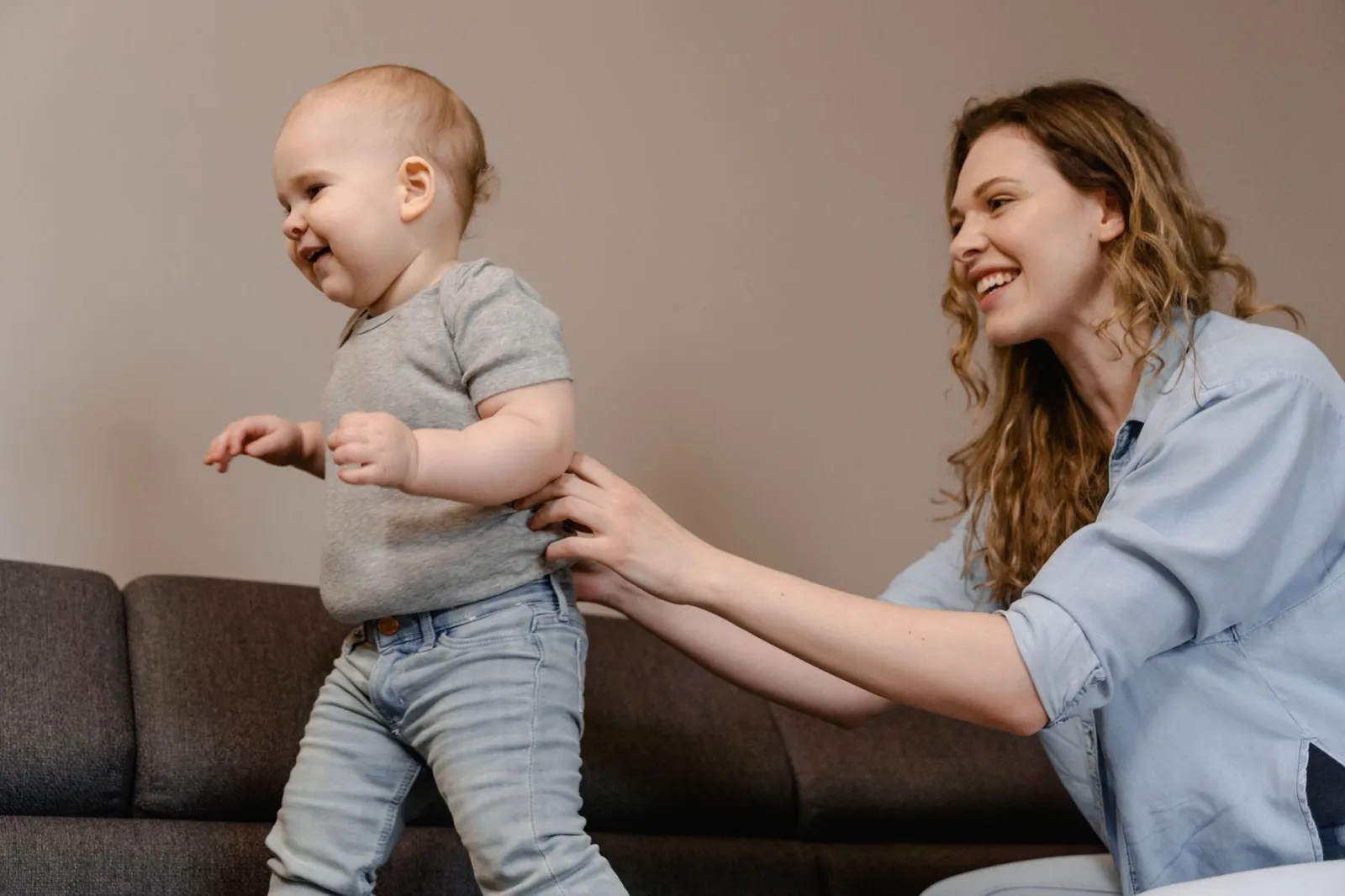
Image Credit: Pexels / MART PRODUCTION
The toddler years can feel full of contradictions. Your child may insist on doing everything alone, then desperately want you two minutes later. They might happily play beside another child before becoming furious because that child touched their toy.
Much of this is connected to toddler social and emotional development. Between roughly one and three years, children are learning to recognise feelings, communicate what they want, become more independent, form relationships and understand that other people have needs too.
These skills develop gradually. Toddlers are not expected to manage emotions like adults, and development does not follow exactly the same timetable for every child. What you are likely to see is a growing mixture of independence, attachment, curiosity, frustration, affection and increasingly social play.
What is social and emotional development?
Social development is about how children learn to interact with other people. It includes relationships with parents and carers, playing around other children, communicating needs, taking turns and gradually learning the social expectations of everyday life.
Emotional development includes recognising and expressing feelings, developing confidence, coping with frustration and gradually learning ways to regulate emotions.
The two are closely connected.
A toddler who wants another child’s toy, for example, is dealing with a social situation and an emotional response at the same time. They may understand exactly what they want but not yet have the language, patience or self-control to handle the situation calmly.
That is why apparently small events can produce surprisingly big reactions.
Why toddlers have such big feelings
Tantrums, crying, shouting and sudden frustration are familiar parts of toddler life for many families.
The NHS explains that toddlers can have big feelings while still struggling to express and manage them. As they become more active and independent, they often need adult help with those emotions.
This can be particularly noticeable from around 18 months, when frustration and tantrums may become more common.
A toddler may become overwhelmed because:
- They cannot communicate exactly what they want.
- They want to do something independently but cannot quite manage it.
- A limit has been set.
- They are tired, hungry, bored or overstimulated.
- Another child has something they want.
- A routine has changed.
- They have to stop an enjoyable activity.
- They are dealing with an unfamiliar situation.
A tantrum does not necessarily mean something is wrong with your toddler or with your parenting. It can be a sign that your child has reached the limit of what they can manage emotionally at that moment.
Independence becomes a big part of toddler life
The desire to be independent is one of the most noticeable changes during the toddler years.
You may start hearing a determined “no”, seeing your toddler insist on choosing something themselves or watching them become upset when you help with a task they wanted to do alone.
This independence is part of development.
Toddlers are beginning to understand themselves as separate people with their own preferences. They may want to choose their clothes, carry their own cup, decide which book to read or attempt tasks without assistance.
The difficult part is that their ambition can be much further ahead than their abilities.
A toddler may desperately want to fasten a coat but lack the fine motor skills to do it. The frustration that follows can be intense.
Where practical, small choices can give toddlers some control without asking them to manage decisions that are too difficult. Offering a choice between two suitable options can be easier than presenting an unlimited question.
There will still be times when you need to make the decision, particularly around safety. A toddler can be unhappy about a boundary while the boundary remains necessary.
How toddlers learn to understand emotions
Toddlers do not automatically know what an emotion means simply because they feel it.
They learn partly through their relationships with the adults around them.
The NHS recommends helping toddlers understand feelings by naming them. Simple phrases such as “you look sad” or “I can see you’re angry” give a child language for an experience they may not yet be able to describe themselves.
You can also name positive emotions:
- “You look excited.”
- “You’re proud of your tower.”
- “That made you laugh.”
- “You seem happy to see Grandma.”
Books, pretend play and ordinary conversations create opportunities to talk about feelings too.
You might notice that a character in a picture looks worried or that a teddy is sad because it lost its blanket. This gives children a simple way to explore emotions without needing a formal lesson.
What to do during a toddler meltdown
Trying to reason with a toddler in the middle of an intense emotional reaction is often difficult.
NHS Best Start in Life describes an approach based on regulating, relating and reasoning. The idea is to help the toddler calm first, reconnect with them, then talk about what happened once they are ready to take in information.
In everyday life, that might mean staying nearby, keeping your own voice calm and acknowledging the feeling.
Once your child is calmer, you can keep the explanation short.
For example, you can acknowledge that they were angry because another child had the toy while still explaining that hitting is not acceptable.
You do not have to solve every feeling. Sometimes your toddler needs you to stay present while the feeling passes.
If you become frustrated too, that does not make you a bad parent. Looking after a toddler can be exhausting, particularly when the same difficult situation happens repeatedly.
How toddler social development changes
Toddlers gradually become more interested in other children, but early social play may not look like the friendships of older children.
A toddler may watch another child closely, imitate what they are doing or play nearby without actually playing the same game.
They may also be fascinated by other children while finding sharing extremely difficult.
Social skills such as waiting, taking turns, cooperating and resolving disagreements take time to develop. Adults often need to guide these situations rather than expecting toddlers to work everything out independently.
Simple opportunities to be around other children can help them gain experience. This might happen at nursery, a toddler group, the playground, with siblings or during visits with family and friends.
There is no need to fill every week with organised social activities. Ordinary contact with familiar adults and children can provide plenty of opportunities for social learning.
Sharing and taking turns take practice
Sharing can become a major source of tension during toddler play.
From an adult perspective, handing over a toy for a few minutes may seem simple. To a toddler who is deeply attached to that toy in the moment, it may feel very different.
Instead of expecting instant generosity, you can help toddlers practise taking turns.
Use simple language such as:
“Sam is having a turn. Then it will be your turn.”
You can also model sharing during everyday life. Pass objects back and forth, take turns adding blocks to a tower or alternate rolling a ball.
Toddlers learn social behaviour through repeated experiences and by watching the people around them.
When does empathy develop?
You may begin noticing early signs that your toddler is becoming aware of other people’s emotions.
Perhaps they look concerned when another child cries, bring you a favourite toy when you seem upset or try to comfort a sibling.
These moments can be lovely, but empathy develops over time. A toddler can show concern for another person and still become furious five minutes later when asked to share.
You can encourage awareness of other people’s feelings without shaming your child.
If they knock another child over, for example, you can calmly point out what happened and help them notice the other child’s response.
The goal is not to make your toddler feel like a bad person. It is to help them gradually connect their actions with how other people feel.
Play supports social and emotional development
Play gives toddlers a natural way to explore relationships, communication and emotions.
NHS Best Start in Life says playtime supports emotional and physical development and helps build a connected relationship between toddlers and their carers.
You do not need special educational toys to support this.
Useful play can include:
- Pretending to feed a teddy.
- Building blocks together.
- Looking at picture books.
- Singing songs.
- Playing hide-and-seek.
- Taking turns rolling a ball.
- Pretending to cook.
- Drawing together.
- Dancing.
- Letting your toddler lead a simple pretend game.
Following your toddler’s interests can make play feel more natural. If they hand you a pretend cup of tea, joining their game can be more engaging than redirecting them towards an activity you planned.
Relationships with parents and carers still matter enormously
Growing independence does not mean your toddler needs you less emotionally.
They may move further away to explore while regularly returning for reassurance. They may confidently enter a familiar nursery one morning and cling to you the next.
Changes such as starting childcare, moving house, welcoming a new sibling or spending time away from a familiar caregiver can also affect behaviour.
Some toddlers respond by becoming more demanding. Others may seem quieter or return temporarily to behaviours you thought they had outgrown.
Predictable routines, affection and regular moments of connection can help toddlers feel secure while they adjust to change.
These moments do not have to be elaborate. Reading one book together, chatting during bath time or giving your toddler your attention while they show you something can all support connection.
How language affects emotions and behaviour
Language and emotional development are closely linked.
A toddler who cannot yet explain “I wanted the blue cup and I’m angry that you gave me the red one” has fewer tools for communicating frustration.
As language develops, children gain more ways to tell you what happened, ask for help and describe how they feel.
You can support this by talking naturally during everyday routines and giving words to emotions and experiences.
The NHS encourages parents to talk with toddlers about feelings and to keep conversations going as children develop language.
Gestures, facial expressions and behaviour also communicate a great deal. A child does not need perfect speech before you can respond to what they are trying to tell you.
Boundaries are part of emotional development too
Supporting feelings does not mean removing every limit.
Toddlers need adults to keep them safe and help them understand acceptable behaviour.
You can acknowledge the feeling while maintaining the boundary.
“You are angry because you want to stay at the park. It is time to go home.”
Or:
“You are upset that she has the toy. I won’t let you hit.”
This separates the emotion from the behaviour. Anger, disappointment and jealousy are feelings a child can experience. Hurting another person still requires a limit.
Consistency can help children understand what to expect. The NHS notes that inconsistent responses to behaviour can be confusing for children.
No family manages every situation perfectly. If you respond differently because you are exhausted one evening, you have not undone your child’s development. What matters is the broader pattern of care, guidance and connection.
Try not to compare toddlers too closely
It is very easy to notice that another toddler seems more confident, sociable, affectionate or emotionally settled.
Temperament matters.
Some children are naturally cautious in unfamiliar places. Others rush towards new people and experiences. Some have intense emotional reactions, while others appear more easy-going.
Development also happens alongside language, physical skills, sleep, family circumstances and individual personality.
Rather than judging your toddler against one child of the same age, look at their development over time.
If you have a genuine concern, however, you do not need to wait until your child fits a particular comparison. Professional advice can help you understand what you are seeing.
When to get professional advice
Speak to your health visitor, GP or another qualified professional if you are worried about your toddler’s social or emotional development, behaviour or communication.
It is particularly worth seeking advice if there has been a significant or persistent change in your child’s usual behaviour, if their behaviour is causing substantial distress to them or your family, or if you are worried about how they interact, communicate or respond to other people.
The NHS advises parents who are seriously concerned about a child’s behaviour to speak with a health visitor or GP. Health and development reviews are also opportunities to raise concerns and discuss whether additional support may be useful.
If your toddler attends nursery, their key worker may also be able to discuss what they have noticed in that setting. Seeing how a child behaves in different environments can sometimes provide useful context.
You do not need to diagnose the reason yourself before asking for help.
Toddler social and emotional development can be noisy, affectionate, frustrating and fascinating, sometimes within the same ten minutes. Your child is learning what feelings mean, how relationships work and how to be increasingly independent while still needing plenty of support. Those skills take time, repetition and a great deal of practice.
Related reading
- Toddler Development
- Toddler Speech and Language Development: What to Expect
- How to Support Your Toddler’s Development Through Everyday Play