When Can Babies Drink Water? Introducing Water With Solid Foods
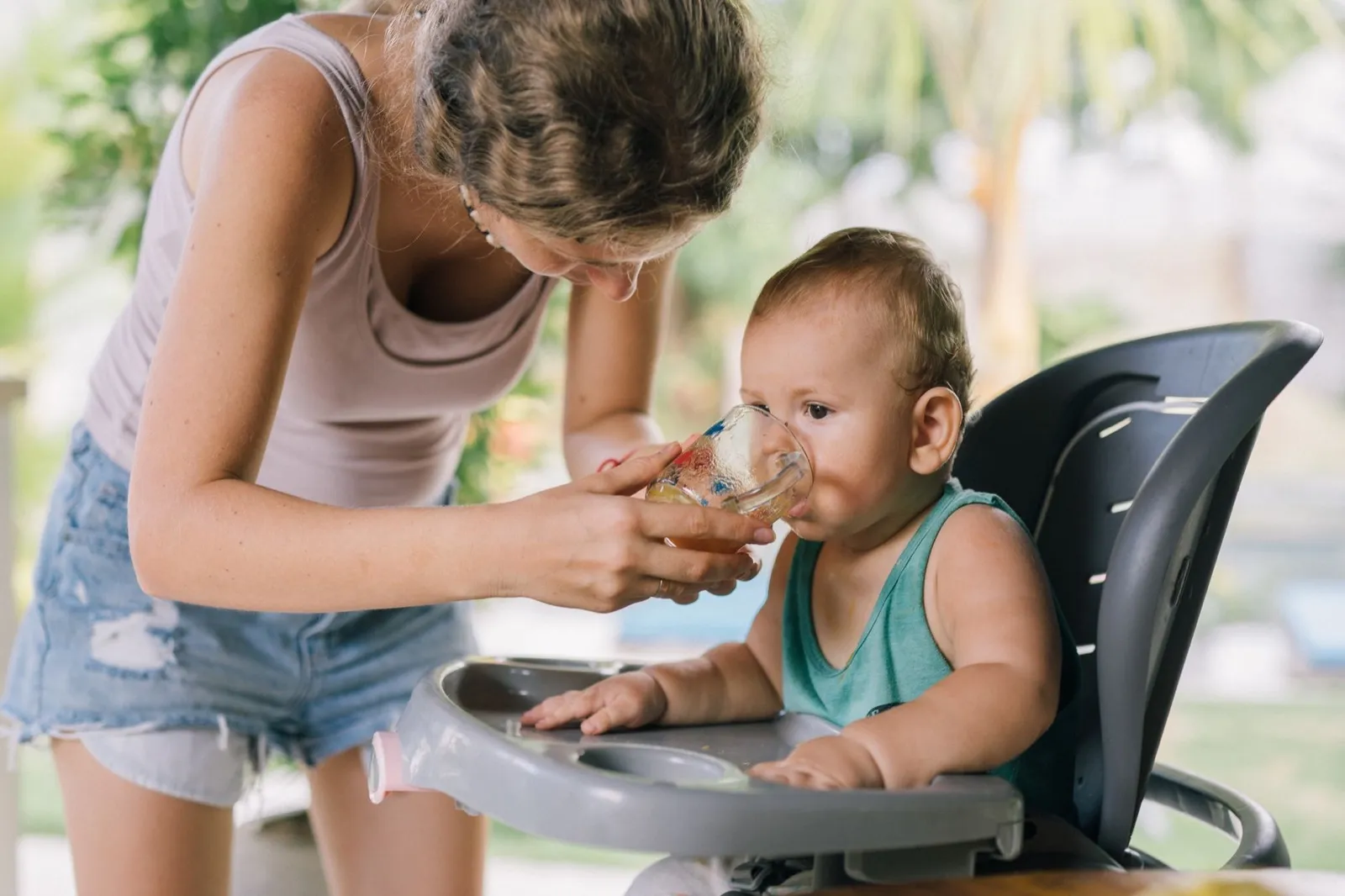
Image Credit: Pexels / Yan Krukau
Babies can usually start having sips of water from around 6 months, once they begin eating solid foods. The NHS recommends offering water with meals from an open cup or a free-flow cup without a valve.
At this stage, water is an addition rather than a replacement for milk. Breast milk or first infant formula should remain your baby’s main drink throughout their first year.
You do not need to persuade your baby to drink a full cup. Those first sips are partly about learning a new skill and becoming familiar with drinking water alongside food.
When can babies start drinking water?
NHS guidance recommends introducing a cup from around 6 months and offering sips of water with meals.
This usually fits naturally with starting solid foods, which the NHS also recommends from around 6 months when your baby is showing the developmental signs of readiness.
Before this stage, babies generally get the fluid they need from breast milk or first infant formula.
Fully breastfed babies do not need additional water until they start eating solid foods. During hot weather, they may want to breastfeed more frequently.
There are some exceptions for younger formula-fed babies during very hot weather, so if your baby is under 6 months and you think they may need additional water, follow current NHS guidance or ask your health visitor for advice.
Why introduce water with solid foods?
Offering a little water with meals helps your baby become familiar with drinking from a cup as they begin eating food.
It also establishes water as the normal drink to accompany meals.
At around 6 months, your baby is learning several new skills at once. They are discovering different tastes and textures, practising chewing and swallowing, picking up food and learning how to sip rather than suck.
Do not worry if very little water is actually swallowed at first.
Your baby may tip the cup, dribble water down their chin or take only a tiny sip. Learning how to use a cup takes practice.
How much water does a baby need when starting solids?
The NHS does not recommend replacing milk feeds with cups of water when babies first start solids. Instead, it advises offering sips of water with meals.
That distinction matters.
Breast milk or first infant formula remains your baby’s main drink throughout the first year. When babies first begin eating solids, they still get most of their energy and nutrients from milk.
So you do not need to focus on getting your baby to drink a particular glassful of water with each meal.
Offer some water and let your baby practise drinking it. Their solid-food intake and drinking skills will develop gradually.
If you are concerned about how much fluid your baby is taking, speak to your health visitor or GP rather than trying to meet an adult-style water target.
What type of cup should a baby use?
From around 6 months, the NHS recommends introducing an open cup or a free-flow cup without a valve.
These cups encourage babies to learn how to sip rather than continuing the sucking action used with a bottle.
A free-flow cup allows liquid to flow when your baby tips it, without requiring them to suck through a valve.
An open cup is also suitable, although the first attempts can be messy.
You can hold the cup and help guide it while your baby learns. Over time, they can become more independent.
There is no need to expect perfect cup drinking straight away.
How to introduce water for the first time
Keep the first introduction simple.
When your baby is sitting safely for a meal, put a small amount of water in an appropriate cup.
Bring the cup gently towards their mouth or allow them to hold it with your help.
Let your baby take a small sip if they want to.
They may cough slightly as they learn to coordinate a new way of drinking, or they may simply play with the cup. Do not force them to drink.
Offer water again at future meals.
Repeated opportunities will help your baby become more familiar with the cup and the sensation of sipping water.
Does water replace breast milk?
No.
Breast milk remains an important source of nutrition after solids begin.
The NHS recommends continuing breastfeeding alongside an increasingly varied diet. You can continue breastfeeding for as long as you and your baby want.
When your baby first begins eating solids, milk still provides most of their energy and nutrients.
As your baby gradually eats more food, their milk intake may naturally change. That process happens over time.
Offering water with meals does not mean you need to reduce breastfeeds deliberately.
Does water replace formula?
Water should not replace your baby’s first infant formula when solids begin.
First infant formula remains the suitable alternative to breast milk as a main milk drink throughout the first year.
At around 6 months, you can offer sips of water with meals while continuing your baby’s usual formula feeds.
As babies eat increasing amounts of solid food later in infancy, they may naturally want less milk at some feeds.
Do not dilute formula with extra water in an attempt to increase fluid intake. Formula should always be prepared according to the manufacturer’s instructions and NHS guidance.
If you have questions about how much formula your baby needs as their solid-food intake increases, speak to your health visitor.
Does water for babies need to be boiled?
According to the NHS, drinking water for babies over 6 months does not need to be boiled first.
You can offer normal drinking water in their cup with meals.
This is different from preparing infant formula. Water used to make up formula needs to be handled according to specific NHS formula preparation guidance.
Do not use the rules for drinking water as a substitute for instructions on safely preparing formula feeds.
If you are travelling somewhere where tap water safety is uncertain, follow local public health guidance about drinking water.
What about water before 6 months?
For most babies, additional water is not routinely needed before they start solids.
The NHS states that fully breastfed babies do not need water until they begin eating solid foods.
In hot weather, a breastfed baby may want to breastfeed more often.
The NHS also advises that formula-fed babies under 6 months may sometimes need small sips of cooled boiled water during hot weather alongside their usual milk feeds.
If your baby is under 6 months and you are worried about hydration, illness or hot weather, ask your health visitor, GP or another qualified healthcare professional for advice specific to your baby.
Do not replace milk feeds with water.
What should babies drink in hot weather?
During hot weather, your baby’s fluid needs may change.
For babies who have started solids from around 6 months, the NHS advises offering sips of water from a cup or beaker with meals. Additional water may also be needed outside mealtimes during hot weather.
Breastfed babies may want to feed more often.
Keep offering your baby’s usual breast milk or formula feeds because these remain important sources of fluid and nutrition.
Watch your baby rather than relying on a rigid drinking schedule.
If you are worried that your baby is becoming dehydrated or is not feeding normally, seek professional advice.
Should babies drink juice?
Water is the better everyday drink to introduce with meals.
NHS Best Start in Life guidance recommends avoiding fruit juice and smoothies before 12 months because they are high in sugar.
Sugary drinks can contribute to tooth decay, and older babies may fill up on drinks rather than eating more nutritious food.
Your baby does not need juice to learn how to use a cup.
Offering plain water from the beginning keeps things simple and helps your baby become familiar with water as a normal mealtime drink.
What about squash and fizzy drinks?
Squash, fizzy drinks and flavoured milk are not suitable everyday drinks for babies.
The NHS advises against sugary drinks because they can contribute to tooth decay. Diet and reduced-sugar drinks are not recommended for babies and young children either.
So there is no need to make water more exciting by adding flavouring.
Plain water is enough.
Breast milk or first infant formula continues to provide your baby’s main milk drink, while water can accompany solid-food meals.
Can babies have cow’s milk to drink at 6 months?
Cow’s milk can be used in cooking or mixed with food from around 6 months, but it should not be given as your baby’s main drink until they are 12 months old.
Before their first birthday, breast milk or first infant formula should remain the main milk drink.
This means you might use pasteurised cow’s milk when preparing porridge or another suitable meal, while offering water separately in a cup.
From 12 months, whole cow’s milk can be introduced as a main drink.
Can babies have plant-based drinks?
Plant-based drinks should not automatically replace breast milk or first infant formula during your baby’s first year.
The NHS specifically advises that rice drinks should not be given to children under 5 as a substitute for breast milk, infant formula or cow’s milk because they may contain too much arsenic.
If your baby cannot have cow’s milk or you are considering a dairy-free diet, ask your health visitor, GP or dietitian about appropriate alternatives.
This is especially important if your baby has a suspected or diagnosed cow’s milk protein allergy.
What if your baby refuses water?
A baby who has only ever had milk may not immediately understand why you are offering a cup of water.
That does not mean you have done anything wrong.
Continue offering small sips with meals without forcing them.
Let your baby practise holding the cup if they are interested. Expect spills and dribbles.
Avoid adding juice or sweeteners simply to persuade them to drink water.
Breast milk or first infant formula remains their main drink during the first year, so early cup practice can develop gradually alongside their solid-food skills.
If your baby is refusing both water and their normal milk feeds, or you are concerned about hydration, seek professional advice.
Water and baby’s first teeth
Using an open cup or free-flow cup without a valve is recommended by the NHS and is better for your baby’s teeth.
Water also has an advantage over sugary drinks because it does not expose developing teeth to added sugars.
Once your baby’s teeth begin to appear, dental care becomes another part of the daily routine.
Avoid putting sugary drinks into bottles or trainer cups.
At bedtime or during the night, NHS dental guidance recommends sticking to breast milk, formula or water rather than sugary drinks.
A simple water routine when starting solids
Introducing water does not need its own complicated schedule.
A practical routine can be:
- Continue your baby’s usual breast milk or first infant formula feeds.
- From around 6 months, once solids have started, offer a little water with meals.
- Use an open cup or a free-flow cup without a valve.
- Help your baby practise sipping without forcing them to drink.
- Keep water as the normal drink offered alongside food.
- Continue milk as your baby’s main drink throughout the first year.
Some meals may involve one sip. Others may involve more water on the bib than in your baby.
That is part of learning.
When to get professional advice
Speak to your health visitor, GP or another qualified healthcare professional if you are concerned about how much your baby is drinking, their milk intake or whether they are getting enough fluids.
Ask for advice if your baby is under 6 months and you think they need additional water, particularly during illness or hot weather.
Seek medical advice if your baby is feeding much less than usual or you are concerned about possible dehydration.
If your baby was born prematurely or has a medical condition that affects feeding, fluid requirements or kidney function, follow individual advice from the healthcare professionals involved in their care.
Related reading
- Baby Feeding Schedule at 6 Months: Milk and Solids
- Starting Solids
- Baby Feeding Essentials: What You Actually Need to Start Solids