When Can Babies Start Eating Solid Foods?
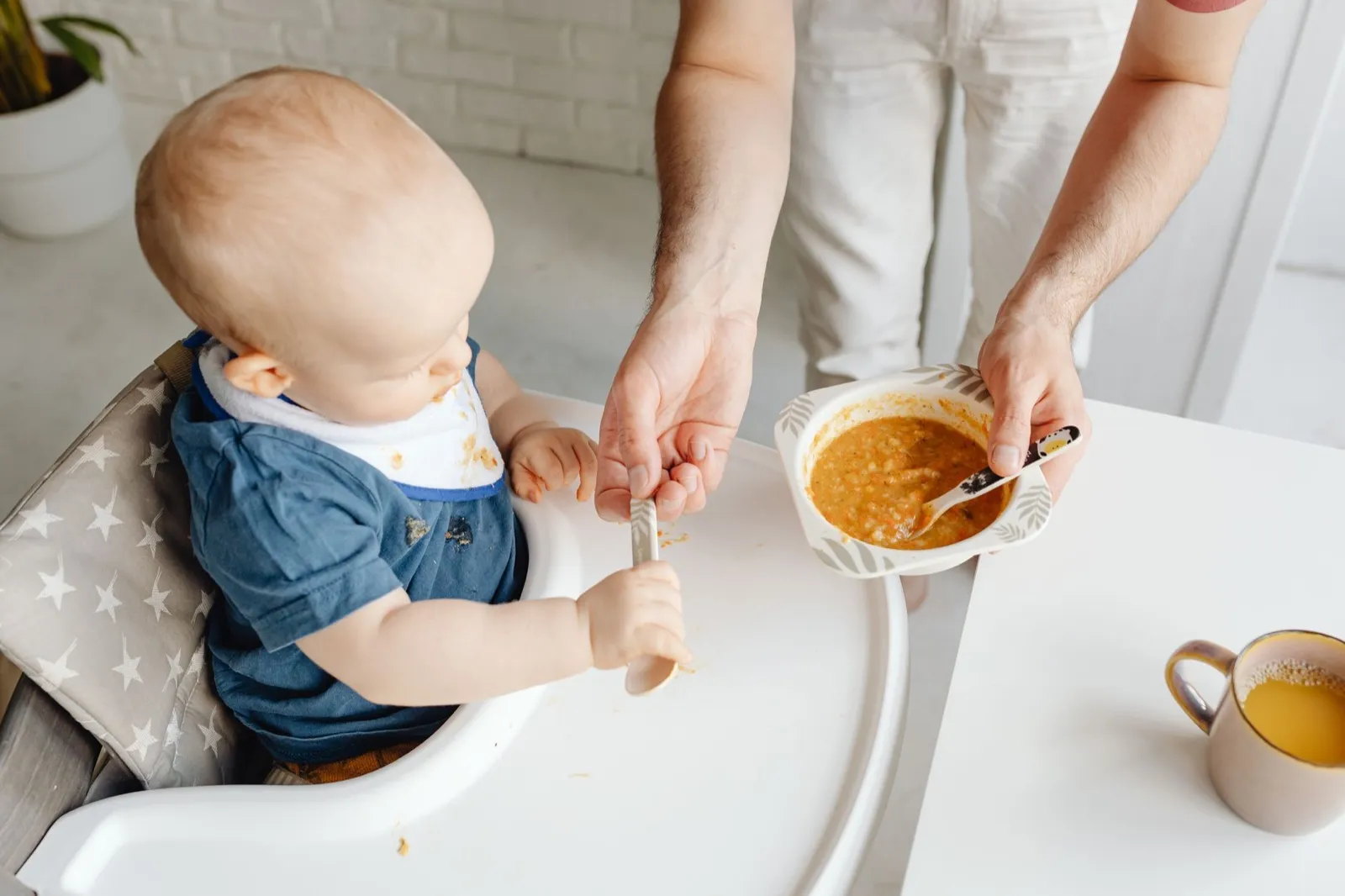
Image Credit: Pexels / https://kaboompics.com/
Most babies can start eating solid foods from around 6 months old, alongside their usual breast milk or first infant formula. Rather than choosing a date alone, look for the developmental signs that your baby is ready. NHS guidance says three signs should appear together: your baby can stay sitting with their head steady, coordinate their eyes, hands and mouth to bring food to their mouth, and swallow food rather than pushing it back out.
Starting solids, also called weaning or complementary feeding, is not about replacing milk overnight. At first, your baby is learning about tastes, textures and the physical skill of eating. Breast milk or first infant formula remains their main source of nutrition as they begin.
There is no need to rush because another baby of the same age has started. If you are unsure about your baby’s readiness, or your baby was born prematurely, ask your health visitor or GP for individual advice.
Why does the NHS recommend around 6 months?
The NHS recommends introducing solid foods from around 6 months because babies need time to develop the skills required to manage food safely.
By this stage, many babies are better able to sit upright, control their head, coordinate their hands and mouth, move food around their mouth and swallow it.
Breast milk or first infant formula provides the energy and nutrients babies need until around 6 months, with specific vitamin supplementation recommended in some circumstances.
Waiting until around 6 months also means many babies can begin exploring a wider range of textures rather than relying entirely on smooth purées.
The exact experience will still vary from baby to baby. Some take to food quickly, while others need more time to become comfortable with eating.
What are the signs your baby is ready for solid foods?
According to the NHS, there are three clear signs of readiness. They should appear together from around 6 months.
Your baby should be able to:
- stay in a sitting position and hold their head steady
- coordinate their eyes, hands and mouth so they can see food, pick it up and bring it to their mouth
- swallow food rather than pushing it back out
These signs are more useful than simply watching the calendar.
They show that your baby is developing the physical abilities needed to begin managing solid food.
If one of these skills is not there yet, there is usually no need to rush.
What is not a reliable sign of readiness?
Some very normal baby behaviours can easily look like signs that it is time to start food.
The NHS says chewing fists, wanting extra milk feeds and waking more frequently during the night are not reliable signs that a baby is ready for solids.
Babies explore with their mouths, go through periods of frequent feeding and change their sleep patterns for many reasons.
Starting solid foods is also not a reliable way to make a baby sleep through the night.
If your baby seems hungrier than usual but is not showing all three developmental signs of readiness, continue responding to their milk-feeding cues and speak to your health visitor if you are concerned.
Can babies start solids before 6 months?
The general NHS recommendation is to wait until around 6 months.
Even if a commercial baby food is labelled as suitable from 4 months, NHS guidance advises waiting until around 6 months unless a health visitor or GP has specifically advised you otherwise.
If you are considering starting earlier because you are worried about feeding, growth or another health issue, ask a healthcare professional first.
Some babies have individual circumstances that need tailored advice.
This is particularly relevant for babies born prematurely. The NHS recommends asking your health visitor or GP when to begin solids if your baby was premature.
What should your baby’s first foods be?
Starting solids does not require an elaborate menu.
The NHS suggests beginning with small amounts of simple foods and offering a range of flavours.
Soft or cooked vegetables can be useful first foods. Options include broccoli, cauliflower, spinach, parsnip, potato, sweet potato and carrot.
Fruit such as cooked apple or pear can also be offered.
Including vegetables that are less sweet can help your baby become familiar with a broader range of flavours from the beginning.
Foods can be mashed, offered as appropriately prepared soft finger foods or given in another texture your baby can safely manage.
Some babies prefer smooth food initially. Others are comfortable with mashed, lumpy or finger foods.
How much solid food does a baby need at first?
Very little.
At the beginning, learning to eat is more important than eating a large quantity.
The NHS says babies only need a small amount of solid food once a day when they first start weaning.
Choose a time when you are not rushed and your baby is not overly tired.
You can offer food before their usual milk feed so they have some appetite, but avoid waiting until they are extremely hungry and frustrated.
Allow plenty of time.
If your baby eats only a tiny amount, that is not automatically a problem. They are learning a completely new skill.
Does milk still matter after starting solids?
Yes.
Breast milk or first infant formula remains your baby’s main source of nutrition when solids are first introduced.
Continue offering your baby’s usual milk feeds according to their needs.
As they gradually eat more solid food over the following months, their feeding pattern will change naturally.
There is no need to suddenly replace milk feeds with meals as soon as your baby tastes their first spoonful of food.
The transition is gradual.
The NHS recommends continuing breast milk or first infant formula as your baby’s main drink throughout the first year.
Purées, mashed food or finger foods?
There is no requirement for every baby to begin with perfectly smooth purées.
From around 6 months, babies who are developmentally ready may be able to manage mashed, lumpy and appropriately prepared finger foods.
The NHS recommends moving from puréed or blended foods towards mashed, lumpy and finger foods as soon as your baby can manage them.
Some babies need a little longer with smoother textures, and that is fine.
The aim is to gradually give your baby experience with different tastes and textures while keeping food appropriate for their abilities.
What is baby-led weaning?
Baby-led weaning usually describes an approach where babies feed themselves appropriately prepared finger foods rather than being mainly spoon-fed purées.
Other families prefer spoon-feeding, and many use a mixture of both.
You do not need to choose a parenting label before you begin.
What matters is that your baby is developmentally ready, food is prepared safely, they are sitting upright and they are allowed to eat at their own pace.
Your baby can explore food with their hands even if you also offer mashed food on a spoon.
How should your baby sit while eating?
Your baby should sit safely in an upright position so they can swallow properly.
A suitable high chair with a securely fitted safety harness can help provide a stable eating position.
Always stay with your baby while they are eating.
Avoid feeding solids while your baby is lying back or moving around with food in their mouth.
A calm, supervised mealtime makes it easier for you to watch how your baby manages different foods and textures.
Gagging and choking are different
Gagging can happen when babies are learning to manage solid foods.
It is different from choking.
A gagging baby may make noises, retch, push their tongue forward or have watery eyes. Choking happens when the airway is blocked and requires immediate action.
Food should always be prepared with choking risk in mind.
Avoid hard foods such as whole nuts and raw pieces of hard apple or carrot. Small round foods such as grapes and cherry tomatoes should be prepared safely rather than offered whole.
Always stay with your baby while they eat.
It is also sensible for parents and caregivers to learn what to do if a baby or child chokes.
How do you prepare finger foods safely?
Finger foods should be soft enough for your baby to manage.
The size, shape and texture of food matter.
Remove stones, hard pips and bones. Cook harder vegetables until soft enough to manage safely.
Avoid whole nuts and other hard, small foods that can obstruct a baby’s airway.
The NHS advises cutting small round foods such as grapes and cherry tomatoes into quarters.
Your baby’s ability to pick food up does not necessarily mean every food they can hold is safe to eat.
Keep adapting food preparation as their eating skills develop.
When can babies drink water?
From around 6 months, you can offer sips of water with meals.
The NHS recommends introducing an open cup or a free-flow cup without a valve from around this age.
Milk still remains important.
Breast milk or first infant formula should continue as your baby’s main drink during the first year.
Cows’ milk can be used in cooking from around 6 months but should not replace breast milk or first infant formula as a main drink before 12 months.
When can you introduce allergenic foods?
Foods that can cause allergic reactions can generally be introduced from around 6 months as part of your baby’s diet.
The NHS recommends introducing these foods one at a time and in small amounts so you can identify a reaction.
They include foods such as:
- eggs
- peanuts and nuts in a safely prepared form
- cows’ milk in food
- foods containing gluten
- sesame and other seeds in a safely prepared form
- soya
- fish
- shellfish
Whole nuts should not be given because of the choking risk. Nuts and peanuts can be offered in an age-appropriate form such as finely ground nuts or smooth nut butter incorporated safely into food.
Once an allergenic food has been introduced and tolerated, NHS guidance recommends continuing to include it as part of your baby’s usual diet.
If your baby has a diagnosed allergy or eczema, or there is a family history of food allergies, eczema, asthma or hay fever, speak to your GP or health visitor before introducing allergenic foods.
What does an allergic reaction look like?
Food allergy symptoms can include a red, itchy rash, swelling of the lips or face, red and itchy eyes, coughing, wheezing, vomiting or tummy symptoms.
Reactions can vary in severity.
If you suspect your baby has reacted to a food, stop giving that food and seek medical advice.
A severe allergic reaction can affect breathing or cause swelling of the throat or tongue. This is a medical emergency and requires immediate help.
Do not deliberately continue giving a food that appears to have caused a reaction simply to check whether it happens again.
Which foods should babies avoid?
Some foods and drinks are unsuitable for babies or present a choking risk.
The NHS advises avoiding whole nuts, hard or sticky sweets, popcorn and other foods that can easily block the airway.
There is no need to add salt or sugar to your baby’s food.
Avoid salty processed foods where possible.
Cows’ milk should not be used as your baby’s main drink before 12 months, although it can be used in cooking from around 6 months.
Rice drinks should not be given to young children because they can contain too much arsenic.
Food safety guidance changes as children grow, so check current NHS advice when introducing unfamiliar foods.
What if your baby refuses their first foods?
Refusing food at the beginning is common.
Your baby has spent their whole life drinking milk. A spoon, a piece of broccoli or mashed food is a completely different sensory experience.
They may touch food, squash it, lick it and drop it without swallowing very much.
That is still part of learning.
Keep mealtimes relaxed and let your baby go at their own pace.
The NHS notes that babies may need repeated opportunities to become familiar with a new food or texture.
Avoid forcing food into your baby’s mouth or trying to make them finish a portion.
Watch for signs that they have had enough and try again another time.
Do babies need three meals as soon as they start solids?
No.
A baby beginning solids does not immediately need breakfast, lunch and dinner.
The NHS recommends starting with a small amount once a day.
Over time, the amount, variety and frequency of food gradually increase as your baby becomes more experienced and their nutritional needs change.
There is no prize for reaching three meals faster than another family.
Follow your baby’s development and current NHS feeding guidance rather than comparing their plate with another baby’s.
When to get professional advice
Speak to your health visitor or GP if you are unsure whether your baby is developmentally ready for solids, particularly if they were born prematurely or have a medical or developmental condition that could affect feeding.
Ask for professional advice if your baby has difficulty swallowing, repeatedly coughs or chokes during eating, seems unable to manage appropriate textures, is refusing both milk and food, or you are worried about their growth or nutrition.
If your baby has eczema, a diagnosed food allergy or a strong family history of allergic conditions, discuss introducing allergenic foods with your GP or health visitor.
Seek urgent medical help if your baby is choking and cannot breathe effectively, becomes unresponsive, or develops signs of a severe allergic reaction such as breathing difficulty or swelling of the throat or tongue.
Starting solids should be gradual. If something about feeding does not feel right, asking for help is more useful than pushing your baby to meet a particular timetable.
Related reading
- How to Start Weaning Your Baby: A Beginner’s Guide
- Baby’s First Foods: What Foods Can You Introduce First?
- Baby-Led Weaning: What Parents Need to Know