1-Year-Old Development: Milestones to Look Out For
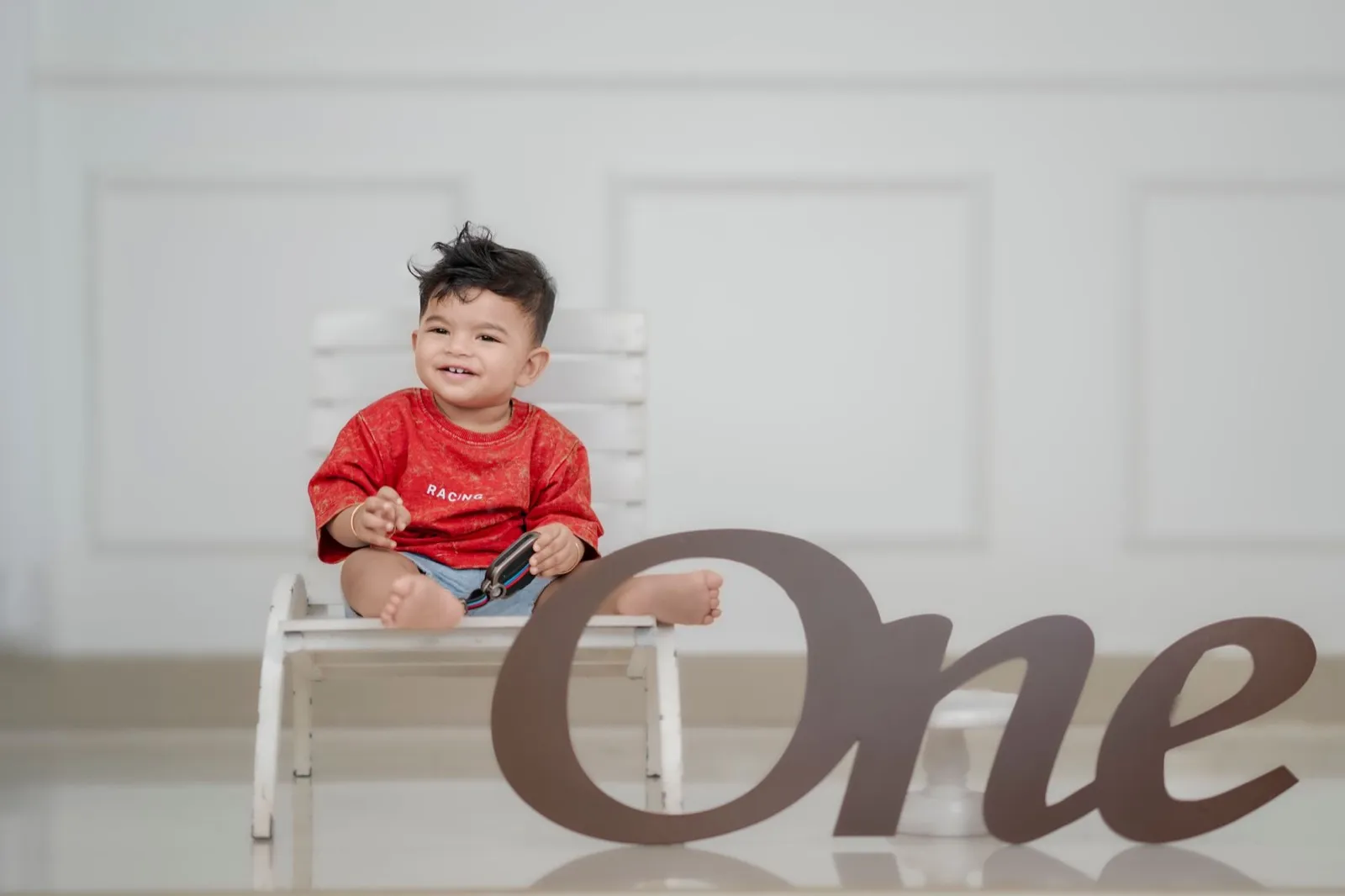
Image Credit: Pexels / heaven wedding company
Reaching the first birthday can feel like a big developmental turning point. Around 1 year old, many children are becoming more mobile, communicating more deliberately and showing a growing interest in exploring everything around them.
Typical 12-month milestones can include sitting independently, pulling to stand, moving around furniture, using gestures, responding to familiar language and becoming increasingly engaged in play. Some children will already be taking independent steps or saying recognisable words, while others will reach those skills later.
Milestones are best treated as a rough guide rather than a deadline. Children develop at different rates, and looking at your child’s overall progress is more useful than comparing them with another 1-year-old.
What development looks like around 1 year old
Development at this age covers much more than walking and talking. Your child’s physical skills, communication, social interaction, thinking and play are all developing together.
At around 12 months, NHS children’s health guidance notes that many babies can sit well and get themselves into a sitting position, pull themselves up to stand and move around furniture while holding on. Some crawl or bottom shuffle, although children do not all use the same method of getting around.
Communication is developing too. Your child may increasingly understand familiar words, use sounds and gestures intentionally, point towards things that interest them and try to copy sounds or words they hear.
These changes do not necessarily arrive in a predictable order. A child may concentrate on movement for a while and then appear to make a sudden leap in communication.
Physical milestones around 12 months
One of the most noticeable areas of 1-year-old development is movement.
Around this stage, many children become much more capable of changing position and travelling towards whatever has caught their attention.
According to NHS children’s health guidance, physical milestones around 12 months can include:
- Sitting independently and moving into a sitting position
- Pulling up from sitting to standing
- Lowering back down again
- Moving along furniture while holding on, often called cruising
- Crawling, bottom shuffling or using another way to move around
Independent walking is not a requirement for a first birthday.
Some children walk before 12 months, while others need more time to develop the balance, strength and confidence involved. The NHS also notes that not every baby crawls before walking.
What matters is the broader pattern of physical development rather than whether your child performs one particular skill on a particular date.
Fine motor skills and using their hands
Small movements are developing alongside bigger physical skills.
A 1-year-old may become increasingly precise at reaching, grasping, transferring and manipulating objects. You may notice them turning objects around, putting things into containers, taking them back out or attempting to stack and arrange toys.
Everyday play gives them plenty of opportunities to practise these skills.
Safe objects that can be picked up, moved, pushed, pulled and explored encourage coordination without requiring complicated toys. The NHS recommends play involving reaching, pushing and pulling as a simple way to support coordination.
At this age, close supervision remains important because exploring objects with the mouth is still common and small items can present a choking risk.
Communication milestones at 1 year old
A child’s communication at 12 months is much broader than the number of words they can say.
They have spent their first year listening to voices, watching faces and learning that sounds, gestures and expressions carry meaning.
Around their first birthday, you may notice more intentional communication. Your child might:
- Turn towards familiar voices or sounds
- Respond to their name
- Point, reach or gesture towards something they want
- Wave or use other familiar gestures
- Babble using different combinations of sounds
- Try to copy sounds
- Understand some familiar words or phrases
- Use one or more recognisable words
There is plenty of variation in early speech.
NHS Best Start in Life guidance explains that children learn to talk at different ages. At about 12 months, a health visitor will also discuss your baby’s development and can advise if extra support might be helpful.
How to encourage language without turning it into a lesson
You do not need flashcards or formal language sessions to help a 1-year-old communicate.
Ordinary conversation is useful.
The NHS recommends naming and pointing to things you can both see, looking at books together, singing and talking during daily routines.
You might say, “There’s the dog,” as your child looks outside, or name the spoon, banana and cup during lunch.
If your child points towards something, follow their attention and talk about it. This connects language to something they are already interested in.
Books can be relaxed too. You do not have to finish the story or read every sentence. Looking at pictures, pointing to familiar objects and responding to your child’s interest all provide opportunities for interaction.
Social and emotional development at 1 year old
By 12 months, babies have developed strong preferences for familiar people and may show their feelings very clearly.
Your child may seek you out for reassurance, become excited during familiar games or react when you leave the room.
They are also learning through imitation.
You might notice them copying a clap, facial expression, sound or simple action. Repetitive social games such as peek-a-boo can be particularly appealing because your child begins to anticipate what happens next.
Social development does not mean your 1-year-old needs to interact confidently with everyone.
Some children are naturally more cautious in unfamiliar situations or around unfamiliar people. Temperament differs, just as developmental pace does.
Responding warmly to your child’s attempts to communicate and giving them opportunities to interact with you through play helps build their confidence.
Play and learning milestones
At 1, play is learning.
A child does not need to sit down for a planned educational activity to develop new skills. They learn by repeating actions, experimenting with objects and watching what happens.
You may see your child:
- Drop an object repeatedly and watch where it goes
- Put toys into a container and remove them
- Bang objects together
- Look for something that has been partially hidden
- Copy actions they see you perform
- Explore books by touching and turning pages
- Enjoy familiar songs and games
- Push, pull or carry toys
- Investigate how everyday objects work
What looks repetitive to an adult can be genuinely useful exploration for a young child.
NHS Best Start in Life guidance emphasises everyday interaction, including chatting, reading and playing together, as an important part of early learning and development.
How to support your 1-year-old’s development
There can be pressure to provide constant enrichment, but development does not require a packed schedule.
Simple, responsive interaction is valuable.
Try giving your child safe space to move and explore on the floor. Put a few suitable toys within reach rather than overwhelming them with choices. Talk about what they are looking at. Sing familiar songs. Share books. Play simple games and let them repeat an activity if they are enjoying it.
As mobility increases, your home may also need another safety check. A child who can suddenly pull themselves up or move across a room can reach things that were previously inaccessible.
Following your child’s lead can make play easier too. If they are fascinated by putting a wooden spoon into a container, you do not necessarily need to redirect them towards the toy you expected them to use.
Their curiosity is doing useful work.
What if my 1-year-old is not walking?
Not walking independently at 12 months does not automatically indicate a developmental problem.
Around this age, some children are pulling to stand or cruising while holding furniture. Others may already be walking independently.
The NHS notes that babies develop movement skills differently and that not all babies crawl.
If your child is not showing signs of moving by around 12 months, NHS guidance recommends asking your health visitor for advice.
If you have concerns about how your child uses their arms or legs, their balance, muscle tone or any other aspect of movement, you can ask for professional advice rather than waiting to see what happens.
What if my 1-year-old is not talking?
Children begin using spoken words at different times, so the absence of a large vocabulary at 12 months is not unusual.
Communication at this stage also includes listening, babbling, gestures, eye contact, pointing and understanding.
NHS Best Start in Life guidance states that children learn to talk at different ages. If you are worried, you can speak to your health visitor or nursery key worker, or contact your local speech and language therapy service for advice.
It can be useful to think about the whole communication picture rather than counting words alone.
Your baby’s 12-month development review
At around 12 months, your health visitor will talk to you about your baby’s development.
This is an opportunity to discuss what your child is doing and raise anything that has been worrying you.
You do not have to wait for the review if you have concerns before then.
Writing down the particular things you have noticed can make it easier to explain your concern. For example, you might note how your child moves, communicates, responds to sounds or interacts during play.
Specific observations are often more useful than simply saying that they seem “behind”.
Avoid comparing your child with other 1-year-olds
First birthdays have a habit of bringing comparisons.
One child at a birthday group may be walking across the room while another is still happily crawling. Someone may be saying several words while another communicates mostly through gestures and sounds.
That difference can feel enormous when children are only 12 months old.
NHS children’s health guidance specifically describes milestones as a rough guide because each child is unique and develops at their own pace.
Rather than treating another child as the benchmark, pay attention to your own child’s progress over time.
When to get professional advice
Speak to your health visitor, GP or another appropriate healthcare professional if you are worried about your 1-year-old’s development.
NHS guidance specifically recommends asking your health visitor for advice if your baby is not showing any signs of moving by 12 months. You can also seek advice if you are worried about your child’s communication or speech development.
It is sensible to raise concerns about hearing, vision, movement, communication, interaction or any other aspect of development rather than trying to diagnose the cause yourself.
You should also seek professional advice if your child loses skills they had previously developed.
Your health visitor can look at your child’s development as a whole and advise whether further assessment or support is appropriate. Asking a question does not mean something is necessarily wrong. It simply gives you the chance to discuss what you are seeing with someone qualified to assess it.
Related reading
- Toddler Development: Milestones and Stages from 1 to 3 Years
- Toddler Speech and Language Development: What to Expect
- Toddler Social and Emotional Development: What to Expect