18-Month-Old Development: Milestones and What to Expect
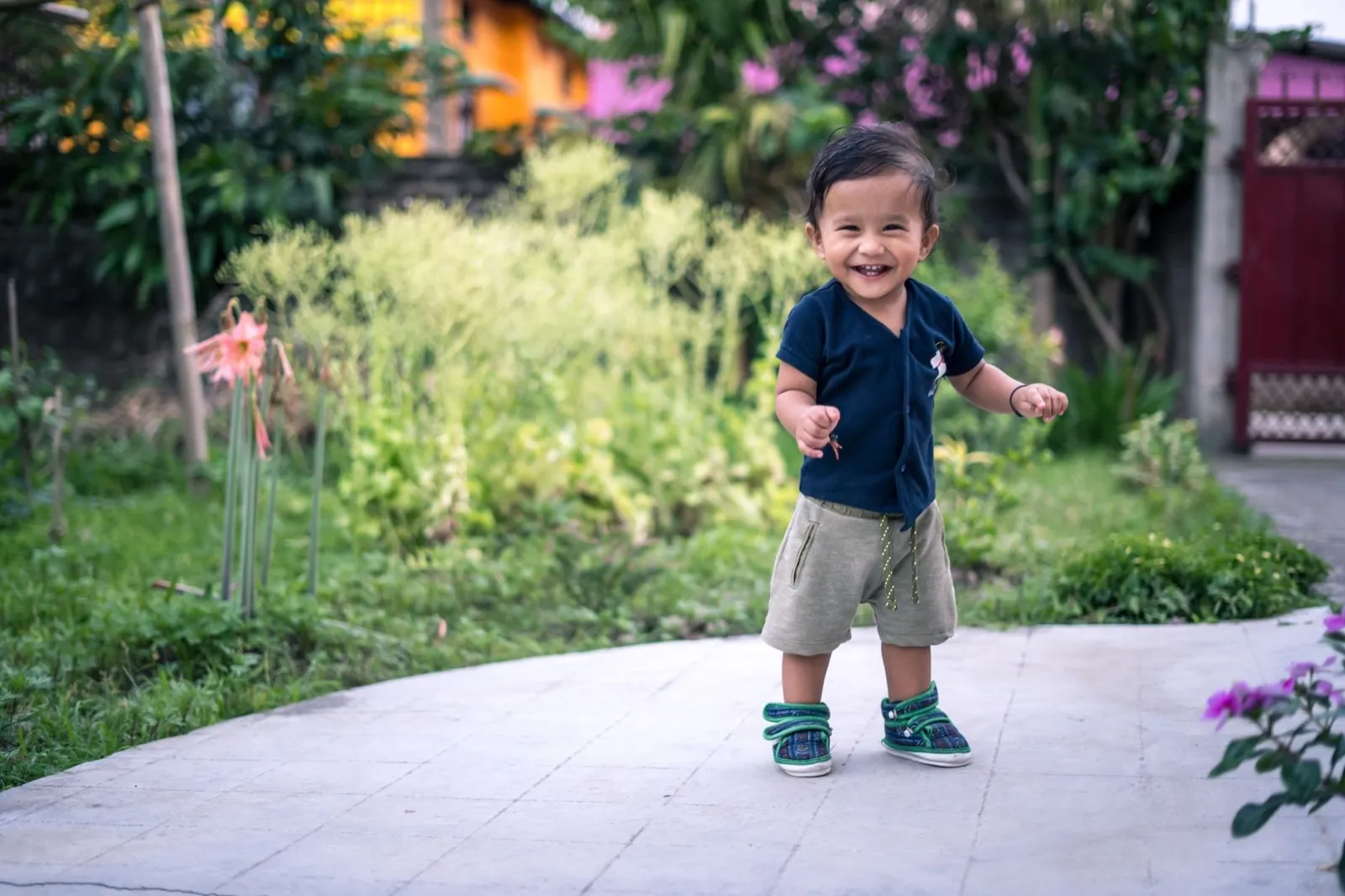
Image Credit: Pexels / Pragyan Bezbaruah
At 18 months, your toddler may seem to be changing almost daily. Walking can become steadier, a few words may start appearing more often, and ordinary household objects can suddenly become far more interesting than the toys you carefully chose.
Typical 18-month milestones can include walking independently, saying several single words, following simple instructions, scribbling, copying familiar actions and becoming more confident with simple play. These are useful reference points, not a test your child needs to pass on a particular day.
Children develop at different rates. Looking at the overall pattern of your toddler’s progress is usually more helpful than comparing them with another child of the same age.
What development looks like at 18 months
Development at this stage happens across several areas at once. Your toddler is building physical skills, communication, thinking, independence and social understanding.
NHS children’s health guidance describes milestones as a rough guide because every child develops at their own pace.
Around 18 months, many toddlers are becoming increasingly mobile and purposeful. They may walk towards something they want, bring you an object, copy something they have watched you do or use gestures and words to get your attention.
Their growing independence can be exciting, but it can also bring frustration. An 18-month-old may know exactly what they want without yet having the language or emotional regulation to explain it calmly.
Physical milestones at 18 months
Movement is often one of the most visible areas of development around this age.
NHS children’s health guidance says that around 18 months many children may:
- Walk confidently
- Walk on stairs while holding an adult’s hand, rail or wall
- Bend or squat to pick something up
- Stack blocks
- Put objects into a container one at a time
- Make marks or scribble with a crayon
There is still variation within this stage.
A child who has only recently started walking may look less steady than a toddler who has been practising for several months. That difference alone does not tell you whether one child is developing better than another.
As your toddler becomes more mobile, their environment changes from their perspective too. Things that were previously out of reach may suddenly become accessible, so it is worth regularly reassessing your home for hazards.
Fine motor skills and coordination
Development is also happening in your toddler’s hands and fingers.
You may notice more deliberate attempts to stack, place, turn, carry and manipulate objects. Scribbling often becomes interesting around this stage, even if the result is simply a collection of enthusiastic marks.
Simple activities can give toddlers plenty of practice.
Blocks, containers, chunky puzzles, crayons, picture books and toys that can be pushed or moved all encourage different types of coordination.
You do not need to create a formal activity session. An 18-month-old can spend a surprising amount of time moving safe objects from one container to another.
Language and communication at 18 months
Language development can feel particularly important to parents around this age.
NHS children’s health guidance says that around 18 months children may say several single words, recognise and point to parts of the body, get an adult’s attention and follow simple commands.
NHS Lothian speech and language guidance similarly notes that at 18 months toddlers may say some words, point to things they see, look towards people or objects as they are named, copy familiar sounds and join in with songs.
Your toddler’s spoken vocabulary is only one part of communication.
Pay attention to how they communicate more broadly. They may point, gesture, bring things to you, make sounds, look towards something you name or use expressions to show what they want.
Understanding language can also be ahead of spoken language at this stage.
How to encourage your toddler to talk
Talking with your toddler during ordinary routines is one of the simplest ways to give them opportunities to hear and practise language.
The NHS suggests repeating useful words and talking about familiar things. For example, you might mention shoes several times while getting ready rather than asking your toddler to repeat the word on demand.
You can also:
- Name objects your toddler is interested in
- Read picture books together
- Sing familiar songs and rhymes
- Give simple choices using words
- Repeat words naturally during everyday routines
- Respond to gestures and attempts at words
- Leave a little time for your toddler to respond
If your child attempts a word but does not pronounce it clearly, the NHS recommends saying the word correctly in your response rather than criticising the attempt.
Communication should feel like interaction, not a test.
Play and learning at 18 months
Play at 18 months can look wonderfully simple.
A toddler may repeatedly stack blocks, push a toy vehicle, scribble, put objects into containers or copy an everyday action they have seen you perform.
NHS guidance suggests activities including simple puzzles, matching and sorting, pretend play, picture books, balls, stacking toys, sand and water play, painting and drawing.
You do not need all of them.
Toddlers can learn a great deal through playing and spending time with you. Everyday objects and routines often provide plenty to investigate.
If your child becomes absorbed in a simple activity, allowing them time to explore it can be more useful than quickly moving them to something more obviously educational.
Copying and early pretend play
Imitation becomes increasingly noticeable during toddlerhood.
Your child might copy you brushing your hair, wiping a surface or pretending to use an everyday object.
These small moments show that they are watching, remembering and experimenting with what they see around them.
Simple pretend play may also begin to appear. A toddler might feed a toy, pretend to talk on a phone or push a toy car in a purposeful way.
You can join their game without controlling it. If your toddler offers you a pretend cup, accepting it and responding to the game is enough.
Social and emotional development
An 18-month-old can have very strong feelings with relatively few tools for managing them.
The NHS notes that toddlers may show more frustration and have more tantrums from around 18 months. This is linked to normal development as toddlers become more active and independent but still need help expressing and managing emotions.
Your child may desperately want to do something themselves and become upset when it is difficult, unsafe or simply impossible.
That does not mean you have handled the situation badly.
Calmly naming a feeling can begin to give your toddler language for what is happening. Simple phrases such as “You’re cross because we have to leave” can acknowledge the emotion while you still maintain the boundary.
Emotional regulation develops gradually with support and repetition.
Growing independence at 18 months
Your toddler may increasingly want to participate in everyday routines.
They might try to help with dressing, carry an object to the table, copy cleaning or insist on attempting something themselves.
These small acts of independence give them opportunities to practise physical, cognitive and communication skills.
Where it is safe and manageable, giving them a little time to try can be useful.
That does not mean every routine needs to happen at toddler speed. Some mornings you will simply need to put the shoes on yourself and leave the house.
Development happens across hundreds of ordinary moments, not because every task becomes a lesson.
Supporting development without buying lots of toys
There is no need to fill your home with specialist developmental products.
NHS children’s health guidance specifically notes that toddlers do not need lots of toys or devices to encourage development. Playing and spending time with you supports many early skills.
At 18 months, useful activities can be very ordinary:
- Looking through a picture book
- Kicking or rolling a ball
- Scribbling with suitable crayons
- Singing songs with actions
- Stacking blocks or containers
- Helping with a simple household routine
- Playing with water under close supervision
- Pretending to feed a teddy
- Going for a walk and talking about what you see
Following your toddler’s interests can make these interactions easier. If they are fascinated by buses, puddles or spoons, those interests provide plenty to talk and play about.
Should an 18-month-old be walking?
Many children are walking independently around 18 months.
NHS children’s health guidance lists confident independent walking among the physical milestones commonly expected around this stage. It advises contacting the health visiting team if a child is not standing independently or is not attempting to walk without support.
That does not mean every toddler’s walking will look identical. Confidence, balance and experience can differ considerably.
If you are worried about your child’s movement, speak to your health visitor rather than relying on comparisons with other toddlers.
How many words should an 18-month-old say?
There is variation in how spoken language develops.
NHS children’s health guidance says that around 18 months children may say several single words. NHS Lothian guidance describes children at this age as probably trying to say a few words, which may initially be understood mainly by family members.
Instead of focusing only on a particular number, consider communication more broadly.
Does your toddler try to get your attention? Do they point or gesture? Do they respond to familiar language? Are they attempting sounds or words?
If you are concerned about speech or communication, ask your health visitor or contact your local speech and language therapy service for advice.
What if my toddler seems behind other children?
Comparing toddlers can quickly become stressful.
At 18 months, a few months of difference in when a skill appeared can make two children look dramatically different.
Milestone guidance is designed to help identify typical patterns and possible concerns, not rank children against each other.
Look at what your toddler has been learning over time.
If there is a particular area that concerns you, make a note of what you are seeing. Specific observations can be useful when you speak to your health visitor, GP or another professional.
You do not need to wait until you are certain something is wrong before asking a question.
When to get professional advice
Speak to your health visitor, GP or another qualified professional if you have concerns about your toddler’s development, including their movement, communication, hearing, vision, play or interaction.
NHS children’s health guidance recommends contacting the health visiting team at around 18 months if a child is not standing independently or is not attempting to walk without support.
If your child is not talking or you are worried about their speech and communication, seek advice from your health visitor or local speech and language therapy service.
You should also seek professional advice if your child loses skills they previously had.
Milestones are useful reference points, but your toddler is more than a checklist. At 18 months, development can come in uneven bursts. Providing safe opportunities to move, talk, play and spend time with you gives them room to practise new skills while you keep an eye on their overall progress.
Related reading
- Toddler Development: Milestones and Stages from 1 to 3 Years
- Toddler Speech and Language Development: What to Expect
- Toddler Social and Emotional Development: What to Expect
Sources
- NHS Bedfordshire and Luton Children’s Health: 18 month developmental milestones
- NHS: Help your baby learn to talk
- NHS: First words and little sentences, 1 to 2 years
- NHS: Help your toddler with their emotions
- NHS: Baby and toddler play ideas
- NHS Lothian: Typical communication development from 18 months to 3 years