2.5-Year-Old Development: Milestones and What to Expect
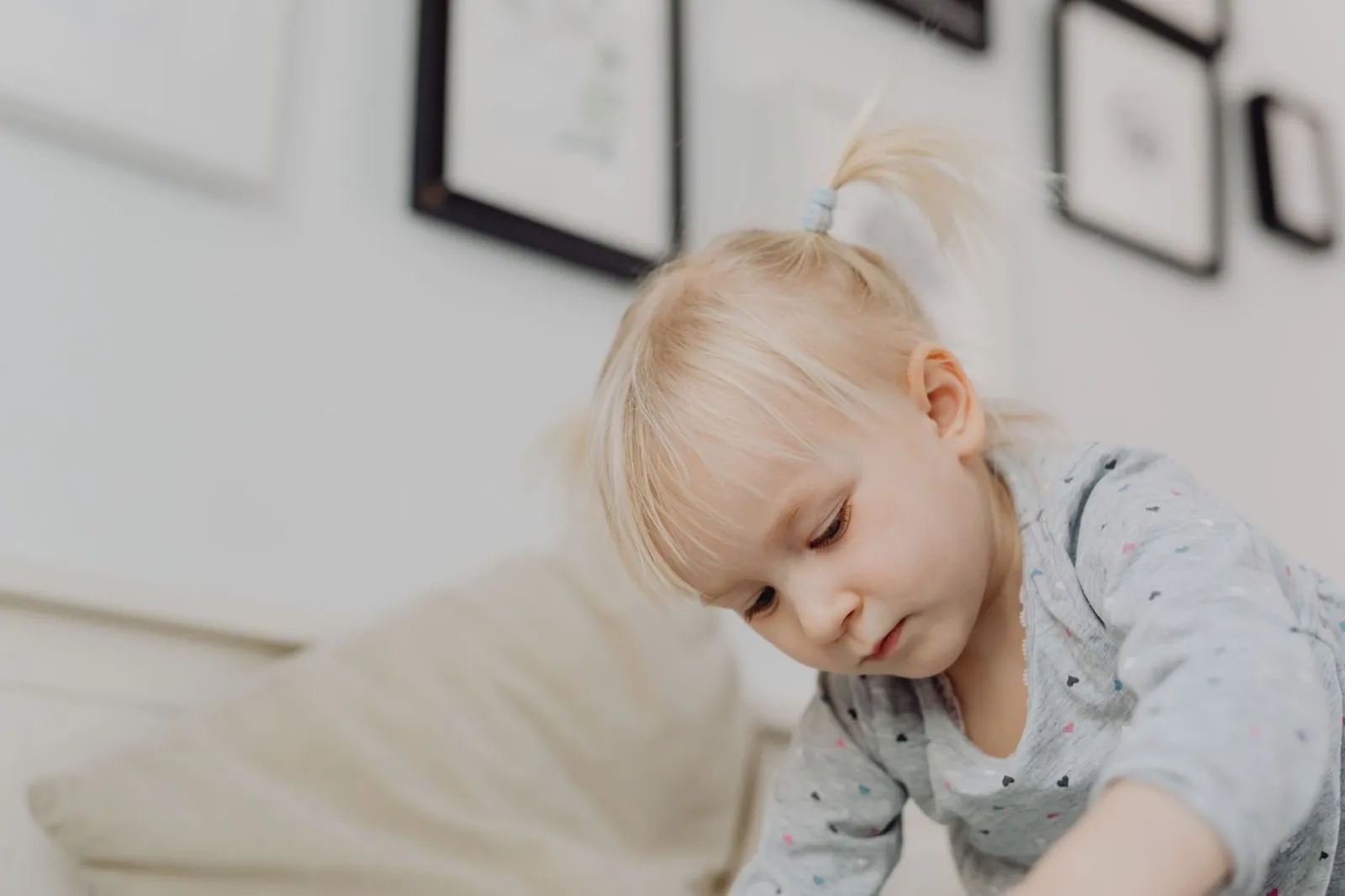
Image Credit: Pexels / https://kaboompics.com/
At two and a half, your toddler may seem to learn something new almost every week. Conversations can become more detailed, pretend games more elaborate and physical confidence much stronger. At the same time, big emotions and a determined desire to do things independently can still be a very normal part of family life.
Around 30 months, many children are developing longer sentences, following increasingly detailed instructions, playing alongside and sometimes with other children, and solving simple problems. Their movement and hand skills are developing too.
These milestones are useful guides, not a checklist your child has to complete on a particular day. Development varies between children, and it is more helpful to look at your child’s overall progress than to compare them with another toddler.
What development can look like at 2.5 years
Two and a half sits in the middle of a period of rapid development. Your child is no longer a newly walking toddler, but they are still learning many of the skills they will use more confidently during the preschool years.
The NHS groups this age within its 2 to 3 years guidance. It also says children are offered a health and development review at around 2 to 2-and-a-half years, giving parents an opportunity to discuss development and any concerns with a health visitor.
At this stage, development is happening across several areas at once:
- Speech and communication
- Physical movement
- Fine motor skills
- Thinking and problem-solving
- Play and imagination
- Social interaction
- Emotional regulation
- Independence
A child can be progressing quickly in one area while taking more time in another. That unevenness is common in early childhood.
Speech and language at 2.5 years
Between two and three, language can change considerably.
NHS guidance explains that children in this age range are learning to build sentences. Everyday conversation, pretend play, songs, books and talking about what your child is doing can all support their communication.
At around two and a half, you may notice your child:
- Combining words into increasingly useful sentences
- Asking for things using words
- Naming familiar people and objects
- Talking about what they are doing
- Trying to describe something that happened
- Understanding more everyday instructions
- Learning new words through conversation
- Joining in with familiar songs or rhymes
Pronunciation does not need to sound like an adult’s yet. NHS speech and language guidance notes that speech sounds continue developing throughout the early years, so some words may still be difficult for unfamiliar listeners to understand.
Rather than repeatedly correcting pronunciation, model the word naturally in your reply.
If your child says something like “tat go”, for example, you might respond, “Yes, the cat has gone outside.”
How to encourage language without making it a lesson
You do not need special flashcards or formal teaching sessions.
The NHS recommends using ordinary routines as opportunities for conversation. Mealtimes, getting dressed, walking to nursery and tidying toys can all provide useful language practice.
Try:
- Expanding what your toddler says with a few extra words
- Talking about what they are interested in
- Looking at picture books together
- Giving them time to answer
- Offering simple choices
- Singing songs and rhymes
- Talking about feelings
- Narrating familiar routines
- Using pretend play to introduce new words
Following your child’s interests often makes conversation easier.
If they are fascinated by buses, dinosaurs or pouring water between cups, that interest gives you plenty to talk about without turning play into a test.
Thinking and problem-solving milestones
Two-and-a-half-year-olds are becoming more capable problem-solvers.
The US Centers for Disease Control and Prevention, which publishes a specific 30-month developmental checklist, lists skills such as following two-step instructions, showing knowledge of at least one colour and using simple problem-solving to reach something.
You may see this developing in everyday situations.
Your toddler might work out that a stool helps them reach something, remember where a favourite toy is stored or complete a familiar routine with less prompting.
They may also become more persistent.
That persistence can be wonderful when they are working on a puzzle and less convenient when they are determined to open a cupboard you would rather remained closed.
Give your toddler safe opportunities to solve small problems themselves. If they become frustrated, offer enough help to keep them going rather than automatically completing the task for them.
Physical development at 2.5 years
Movement often becomes more controlled during this period.
Your toddler may be increasingly confident running, climbing, kicking a ball and navigating playground equipment. NHS guidance encourages active play, including walking, running and playing with balls, to support coordination, balance and agility.
They may want to walk more often rather than being carried or sitting in a pushchair.
Physical confidence does not necessarily mean good judgement. A toddler who can climb onto something may have little understanding of why climbing down is difficult or dangerous.
Continue to supervise closely around stairs, roads, water, climbing equipment and other hazards.
Everyday active play can be simple. A trip to the park, kicking a ball, dancing to music or walking part of a familiar route all give your child opportunities to practise movement.
Fine motor skills and everyday tasks
Your child’s hands are becoming more precise too.
At this stage, you may notice increasing interest in:
- Drawing and scribbling
- Turning book pages
- Building with blocks
- Simple puzzles
- Feeding themselves
- Opening containers
- Moving small objects
- Helping with dressing
- Using pretend cooking equipment
- Making simple models
The NHS suggests creative play from around 30 months, including making things from safe household materials such as cardboard boxes and cartons.
Toddlers often learn through repetition, so do not be surprised if the same puzzle, drawing activity or building game appears every day.
Play and imagination at 2.5 years
Pretend play can become much richer between two and three.
A teddy may need breakfast, a cardboard box may become a bus and a toy animal may suddenly have a detailed bedtime routine.
The NHS recommends pretend play as one way to support communication and imagination. Following your child’s lead and talking about what they are doing can add language without taking control of their game.
You could provide simple props such as:
- Dolls or soft toys
- Toy food
- Cups and spoons
- Blocks
- Toy vehicles
- Dressing-up items
- Cardboard boxes
- Paper and crayons
There is no need to direct every game. Sometimes your role can simply be to join in when invited.
Social development around 30 months
Social play is developing, but expecting perfect sharing and cooperation from a two-and-a-half-year-old is unrealistic.
The CDC’s 30-month milestone guidance includes playing next to other children and sometimes playing with them.
Your toddler may watch another child, copy their game or briefly join them before returning to their own activity. They may also become more interested in showing adults what they can do.
Sharing and taking turns still require practice.
Instead of expecting your toddler to automatically understand these rules, model simple phrases such as “your turn” and “my turn”. Short games that involve rolling a ball backwards and forwards can introduce turn-taking without much pressure.
Emotions at 2.5 years
Your toddler’s vocabulary may be growing quickly, but their ability to regulate strong emotions is still developing.
The NHS explains that toddlers can experience intense feelings and need adult support to learn how to manage them. Tantrums can happen when a child feels angry, frustrated, sad or overwhelmed and cannot yet express or regulate those feelings effectively.
This means a child who can hold a surprisingly detailed conversation at breakfast can still become completely overwhelmed because their banana broke in half at lunch.
During a difficult moment, try to keep your response simple.
You can name the feeling, maintain any necessary boundary and help your toddler settle before trying to explain too much.
For example: “You’re angry because you wanted to keep playing. I know. We need to leave now.”
Being calm does not mean giving your toddler everything they want. It means helping them through the feeling while keeping reasonable boundaries.
Independence and the desire to do everything themselves
Two-and-a-half-year-olds often want more control over everyday life.
You may hear “me do it” frequently.
Your child might insist on:
- Choosing clothes
- Putting on shoes
- Washing their hands
- Carrying their belongings
- Helping prepare food
- Pouring a drink
- Opening doors
- Tidying toys
- Choosing a book
Allowing some independence can be useful, but you do not have to make every routine completely child-led.
Limited choices can work well. “Would you like the blue top or the green top?” is often easier to manage than opening the wardrobe and asking your toddler to decide everything.
There will also be moments when you need to help because you are short on time. That does not undo their independence.
Simple ways to support 2.5-year-old development
Development does not require a packed timetable of classes and activities.
Many useful learning opportunities already happen during normal family life.
You can support your toddler by:
- Reading together regularly
- Talking during everyday routines
- Giving them time for active outdoor play
- Encouraging pretend play
- Letting them help with manageable household tasks
- Offering drawing and simple craft materials
- Singing and listening to music together
- Practising turn-taking through games
- Giving them opportunities to solve small problems
- Naming emotions when they appear
The NHS emphasises everyday interaction, play and conversation as valuable ways to support early development.
A few focused minutes together can be meaningful. You do not need to spend every waking hour creating educational activities.
The 2 to 2-and-a-half year review
In England, children are offered a health and development review at around two to two and a half years old.
According to the NHS, the review focuses on your child’s development. If additional support may be useful, your health visitor can help you understand your child’s needs and access appropriate services.
If your child attends nursery, they may also have a progress review with their key worker.
Use these opportunities to raise questions rather than worrying that your concern is too small.
It can help to write down anything you have noticed beforehand, particularly if your concern relates to communication, movement, behaviour, hearing, play or interaction.
What if my 2.5-year-old seems behind?
Developmental milestone lists can be useful, but they can also make parents anxious.
Try to look for patterns rather than counting isolated skills.
Ask yourself whether your toddler is continuing to learn, communicate and engage with the world around them. Think about the progress they have made over several months rather than how they compare with a friend’s child of exactly the same age.
If you remain concerned, you do not need to wait for the next scheduled review.
The NHS advises parents who are worried about speech and language to speak to their health visitor or nursery key worker, or contact their local speech and language therapy service for advice.
Professional advice is also appropriate for concerns about other areas of development.
When to get professional advice
Speak to your health visitor, GP, nursery key worker or another appropriate qualified professional if you are worried about your child’s development.
This might include concerns about:
- Speech or understanding
- Hearing or vision
- Movement or coordination
- Social interaction
- Play
- Behaviour or emotional development
- A lack of developmental progress
Seek professional advice if your child loses a skill they could previously do.
If speech or language is your main concern, NHS guidance says your health visitor or nursery can offer advice and may help connect you with speech and language therapy services.
Your child’s 2 to 2-and-a-half year review is also an opportunity to discuss development, but you do not have to wait for it if something is worrying you.
Two and a half can be a lively, changeable age. Your toddler may sound wonderfully grown-up one moment and need your full help with a huge feeling the next. Both can belong to the same stage of development.
Related reading
- Toddler Development: Milestones and Stages from 1 to 3 Years
- Toddler Speech and Language Development: What to Expect
- Toddler Social and Emotional Development: What to Expect