2-Year-Old Development: Milestones and What to Expect
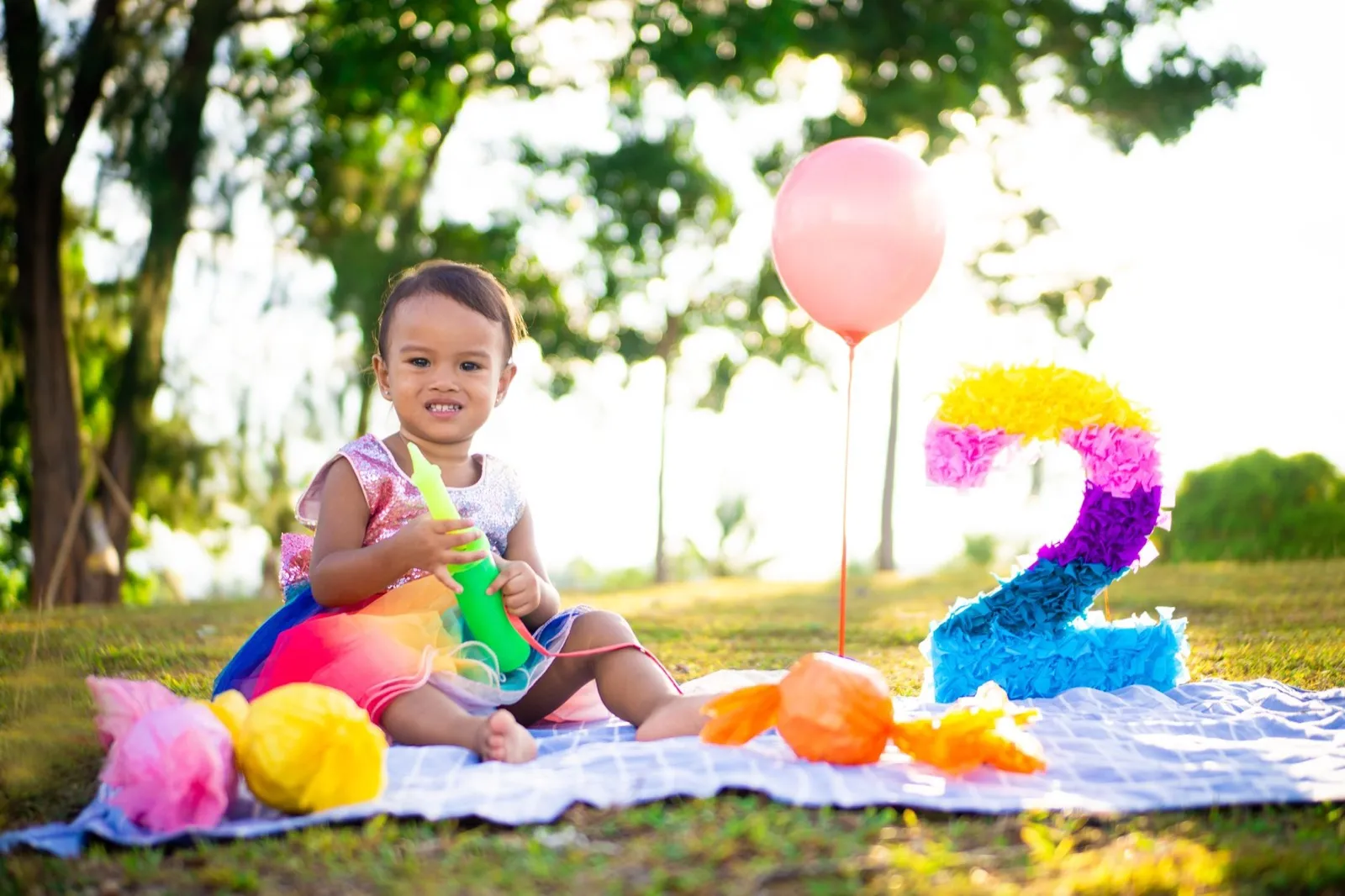
Image Credit: Pexels / Kerk ikyl Baraquil
Turning two can bring a noticeable shift in what your toddler can do and how determined they are to do it themselves. You may see more running, climbing, pretend play, new words and very strong opinions about seemingly small things.
Typical 2-year-old milestones can include running and stopping, kicking a ball, using short combinations of words, following simple directions and beginning more imaginative play. These milestones are a rough guide rather than a deadline. Children develop at different rates, and one toddler may be ahead in one area while taking longer in another.
The most useful approach is to look at your child’s development as a whole and notice how their skills are progressing over time.
What development looks like at 2 years old
By their second birthday, toddlers are learning across several areas at once. Physical skills become more confident, language often expands, play becomes more imaginative and independence can become a major theme of everyday life.
NHS children’s health guidance explains that developmental milestones should be treated as a rough guide because every child is unique and develops at their own pace.
Around two, many toddlers can move around much more independently than they could a year earlier. They may also understand far more than they can express, although spoken language is developing quickly too.
At the same time, emotional regulation is still immature. Your toddler may have increasingly complex ideas about what they want while having limited ability to explain or cope with disappointment.
That combination can make two an exciting and sometimes exhausting age.
Physical milestones at 2 years
Movement often becomes faster and more coordinated around this stage.
According to NHS children’s health guidance, a 2-year-old may be able to:
- Kick a ball
- Run and stop without regularly bumping into things or falling
- Jump with both feet leaving the floor together
- Walk up or down a few steps, sometimes using a wall or handrail
- Steer wheeled toys around objects
- Drink from an open cup
- Hold a spoon the right way up
- Turn pages in a book
- Manipulate smaller objects with increasing control
Your toddler may be enthusiastic about practising these skills repeatedly.
A walk can involve running, stopping, crouching to inspect something and attempting to climb every available step. This is useful physical practice, but their confidence can sometimes develop faster than their awareness of danger.
Close supervision remains important, particularly around roads, stairs, water and climbing hazards.
Fine motor skills and growing independence
Two-year-olds are also becoming more capable with their hands.
You may notice your child turning switches, opening simple containers, scribbling, building with blocks or attempting to feed themselves with a spoon.
These skills support increasing independence.
Your toddler may want to help dress themselves, carry their own cup or participate in household routines. The result will not always be tidy or efficient, but these attempts give them opportunities to practise coordination and problem-solving.
You do not need to turn every task into an activity. Simply allowing your toddler to try manageable parts of everyday routines can provide plenty of practice.
Language milestones at 2 years
Language development is often one of the biggest changes around the second birthday.
NHS guidance says children around two may begin putting simple sentences together. NHS children’s health guidance also lists using combinations of two to three words, naming familiar objects and following simple directions among communication skills seen around this stage.
You may hear your toddler begin combining words to express an idea rather than relying on a single word or gesture.
Their pronunciation may still be unclear, and people who know them well may understand more of what they say than unfamiliar adults.
Communication is about more than the number of words they use. Notice how your toddler interacts with you, responds to language, uses gestures, follows simple instructions and tries to share their interests.
How to support your 2-year-old’s speech
You do not need formal lessons to support language development.
The NHS recommends using everyday routines, play and conversation to help toddlers hear and practise language.
If your child says a short phrase, you can naturally expand it. For example, if they say “teddy sleep”, you might respond with “Yes, teddy is sleeping.”
Other simple ideas include:
- Looking at picture books together
- Talking about what your child is doing
- Singing songs and rhymes
- Naming objects they notice
- Offering simple choices
- Giving them time to answer questions
- Using pretend play to introduce new words
- Talking during cooking, dressing or shopping
Try not to turn conversation into repeated testing. Talking with your toddler about things that already interest them is often easier and more enjoyable for both of you.
Play and learning at 2 years
Play becomes increasingly imaginative during the third year of life.
NHS guidance lists pretend play among common developmental skills at two. Your toddler might pretend to feed a teddy, put a doll to bed, copy cooking or create a simple story around a toy.
Pretend play gives children opportunities to practise language, memory and social understanding.
They may also enjoy:
- Simple puzzles
- Building blocks
- Drawing and scribbling
- Sorting objects
- Water or sand play
- Balls
- Puppets
- Picture books
- Music and action songs
- Copying everyday activities
You do not need a large collection of toys. NHS children’s health guidance notes that toddlers do not need lots of toys or devices to encourage development.
Cardboard boxes, household routines, books and simple creative materials can offer plenty to explore.
Social development at 2 years
At two, your child is becoming increasingly interested in other people, but social skills are still developing.
They may watch other children closely, imitate what someone else is doing or want to play near them. Sharing, waiting and negotiating are complicated skills, so expecting consistently cooperative play at this age can lead to frustration for everyone.
Your toddler is still learning that other people have their own wants and feelings.
You can model simple social language during everyday situations, such as “my turn”, “your turn” or “shall we give the ball back?”
These small interactions build familiarity with social routines without expecting your toddler to manage them perfectly.
Big emotions and the ‘terrible twos’
The phrase “terrible twos” can make normal toddler behaviour sound deliberately difficult.
In reality, two-year-olds are developing independence while still needing considerable help managing emotions.
NHS guidance explains that toddlers may experience tantrums because they have strong feelings but are still learning how to express and regulate them.
Your toddler might become intensely upset because you cut their toast differently, stopped them doing something unsafe or simply misunderstood what they wanted.
During those moments, lengthy explanations are unlikely to be useful.
Staying nearby, keeping everyone safe and calmly naming the emotion can help. Once your toddler is calmer, you can return to the boundary or explanation.
You do not need to prevent every tantrum. Frustration is part of toddler life, and learning to handle it happens gradually.
Independence and everyday routines
“I do it” can become an unofficial motto at two.
Your toddler may want to choose their clothes, climb into their seat, wash their hands or help with household jobs.
Offering limited choices can give them some control without making routines unmanageable. For example, choosing between two suitable tops is easier than asking what they want to wear from an entire wardrobe.
Predictable routines can also make transitions easier because your child gradually learns what happens next.
There will still be mornings when there is no time for a toddler to spend ten minutes attempting one sock. Supporting independence does not mean you can never step in and help.
How to encourage development at home
Supporting a 2-year-old’s development can fit naturally into ordinary family life.
You might:
- Walk to the park and practise running or kicking a ball
- Let your toddler help stir or pour during suitable kitchen tasks
- Talk about what you see while travelling
- Read the same favourite book repeatedly
- Sing action songs
- Draw together
- Give them simple household jobs
- Play with dolls, animals or toy vehicles
- Let them investigate safe natural materials outside
Following your child’s interests can make interaction easier.
If they want to talk about diggers every day for three weeks, you can use that interest to introduce words about size, movement, colour and sound.
You do not need to constantly entertain your toddler. Time for independent, safe play matters too.
What if my 2-year-old is not talking much?
Speech and language development varies, but concerns are worth discussing rather than simply waiting indefinitely.
NHS guidance says that children around two start putting simple sentences together. If you are worried about your child’s speech or language development, the NHS recommends speaking to your GP or health visitor. They can arrange referral to speech and language therapy if appropriate, and in some areas parents can contact the service directly.
Try to look at communication broadly as well as spoken words.
Consider whether your toddler understands familiar instructions, points or gestures, tries to communicate their needs and interacts with you during play.
If something about their communication concerns you, asking for professional advice is reasonable even if other people tell you to wait.
What if my toddler seems behind?
It can be difficult not to compare children, particularly if you regularly spend time with toddlers of a similar age.
Milestones are intended to identify general patterns of development, not to create a competition.
A child may be physically confident but slower to develop spoken language. Another may talk frequently while being more cautious with climbing or jumping.
What matters is your individual child’s pattern and progress.
If you have noticed that a skill is not developing, your toddler has lost a skill they previously had, or something simply feels concerning, speak to a health professional.
You do not need to diagnose the problem yourself before asking for help.
When to get professional advice
Speak to your health visitor, GP or another qualified professional if you are worried about any aspect of your 2-year-old’s development, including movement, speech, understanding, hearing, vision, play or interaction.
NHS children’s health guidance recommends contacting the health visiting team if a 2-year-old is not walking independently or cannot manage stairs while holding on. It also lists concerns around communication and understanding that should be discussed with the health visiting team.
If you are worried about your child’s speech or language development, NHS guidance advises speaking to your GP or health visitor. They can refer your child to speech and language therapy if needed.
Seek professional advice if your toddler loses skills they previously had.
Development at two can feel fast and uneven. Your child does not need to achieve every milestone at exactly the same moment as another toddler. Giving them safe opportunities to move, talk, play, explore and connect with you supports development while professional guidance is available whenever something concerns you.
Related reading
- Toddler Development: Milestones and Stages from 1 to 3 Years
- Toddler Speech and Language Development: What to Expect
- Toddler Social and Emotional Development: What to Expect