Baby Feeding Portions: How Much Food Does a Baby Need?
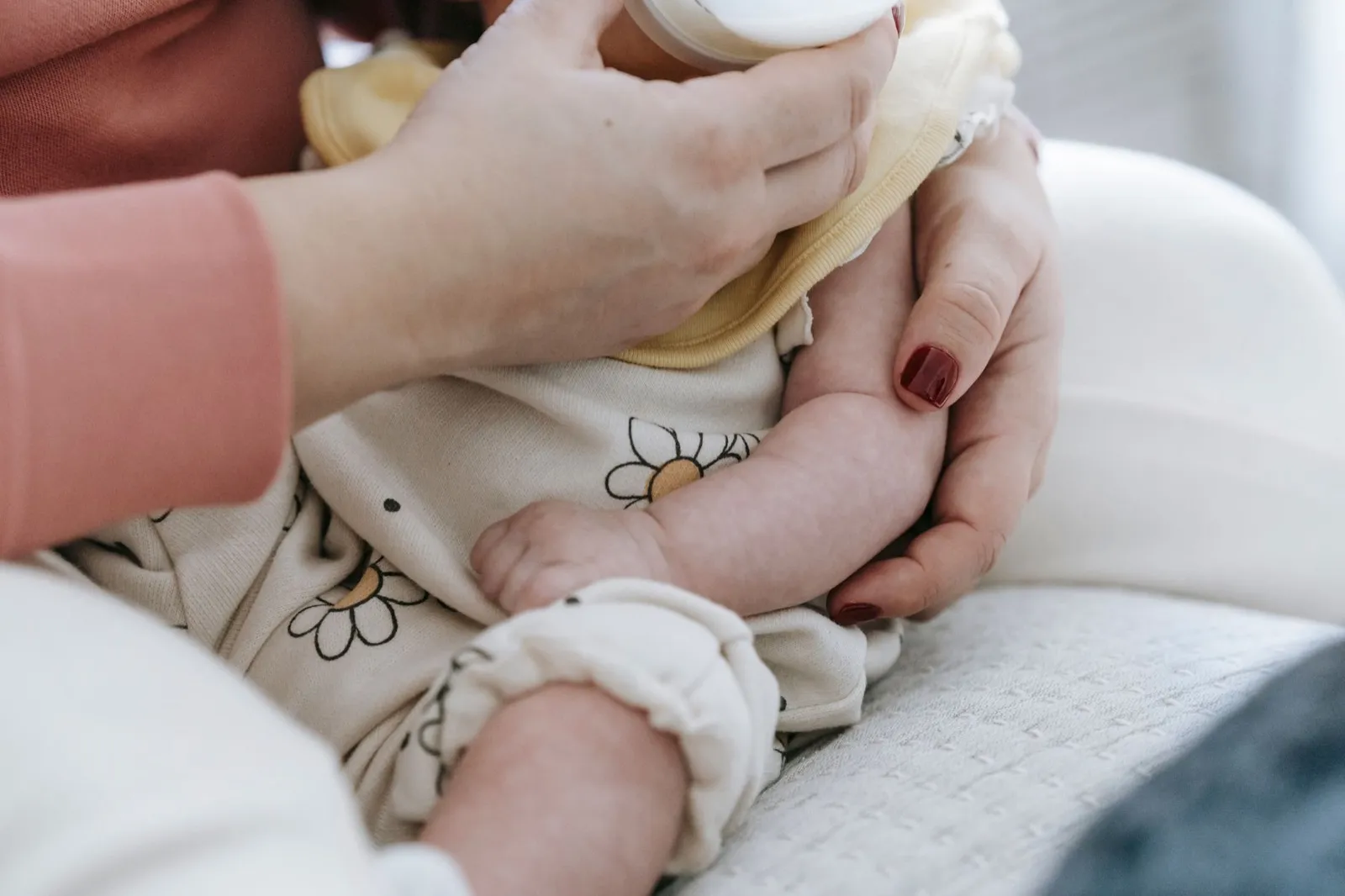
Image Credit: Pexels / Sarah Chai
If you have started solids and find yourself wondering whether three spoonfuls is enough, you are in very good company. Baby feeding portions can be surprisingly small, and there is no single portion size that every baby needs to finish at each meal.
NHS guidance focuses on gradually increasing the amount and variety of food offered as babies become more confident with solids, while following their appetite. When solids are first introduced from around 6 months, babies only need a small amount of food once a day. Breast milk or first infant formula still provides most of their energy and nutrients at this stage.
As weaning progresses, meals become more established. By 7 to 9 months, babies gradually move towards three meals a day, and by 10 to 12 months they should usually be having breakfast, lunch and tea alongside milk feeds.
The useful thing to remember is that these are patterns, not targets for how many spoonfuls your baby must eat.
Why there is no perfect baby portion size
Babies do not all have identical appetites.
How much your baby wants at a meal can vary depending on their stage of weaning, how much milk they have had, their appetite that day and how familiar they are with the food.
NHS guidance acknowledges that babies may eat more on some days, less on others and sometimes reject foods altogether.
That means measuring your baby’s success by an empty bowl can create unnecessary worry.
Your role is to offer suitable food. Your baby can help decide how much of it they want to eat.
How much food does a baby need when starting solids?
When you first introduce solid foods from around 6 months, start small.
The NHS recommends beginning with a small amount of food once a day.
At this point, your baby is learning a completely new skill. They are getting used to tastes, textures, spoons, finger foods and the physical process of moving food around their mouth.
Some babies immediately seem fascinated by food. Others may taste a little and lose interest.
Both responses can happen.
There is no need to serve a full bowl or expect your baby to replace a milk feed straight away.
Milk is still important
One reason early solid food portions are small is that breast milk or first infant formula remains very important during the first year.
When solids are first introduced, your baby will still receive most of their energy and nutrients from milk.
As they gradually eat more food, they may naturally want less milk.
If you breastfeed, your baby’s feeding pattern can adapt according to how much solid food they eat.
If your baby has formula, follow current NHS guidance and your baby’s individual needs rather than reducing bottles simply because solids have started.
Feeding portions at around 6 months
At the beginning of weaning, think in terms of tastes and small servings rather than complete meals.
You might offer a little soft vegetable, mashed food or a few appropriately prepared finger-food pieces.
There is no need to offer several courses.
If your baby wants more, you can offer more.
If they lose interest after a small amount, that can be enough for that meal.
Keep their usual breast milk or first infant formula alongside these early experiences with food.
Feeding portions from 7 to 9 months
According to the NHS, babies from 7 to 9 months gradually move towards eating three meals a day.
The amount and variety of food offered should gradually increase so your baby receives the energy and nutrients they need.
Meals should include foods from different groups over the course of the day, including:
- vegetables and fruit
- potatoes, bread, rice, pasta and other starchy foods
- beans, pulses, eggs, fish, meat and other protein foods
- suitable pasteurised full-fat dairy foods
You still do not need to make your baby finish a set quantity.
Offer an appropriate amount, allow them to eat at their own pace and provide more if they are clearly still interested.
Feeding portions from 10 to 12 months
By 10 to 12 months, NHS guidance says babies should usually be having three meals a day: breakfast, lunch and tea, alongside their milk feeds.
Lunch and tea may include a main course and something such as fruit or unsweetened yoghurt afterwards.
Your baby’s food can also become more varied in texture. At this stage, many babies can manage mashed, lumpy and chopped foods as well as a wider range of finger foods.
Again, three meals a day does not mean three adult-sized plates.
Baby portions remain much smaller than adult portions, and appetite still varies.
Should you measure baby food portions?
Usually, you do not need to weigh every meal.
Exact measurements can sometimes be useful if a healthcare professional has asked you to monitor your baby’s intake for a specific reason.
For most families, however, responsive feeding is more practical than trying to make every meal match an exact number of grams or spoonfuls.
Start with a modest amount.
If your baby finishes it and remains interested, offer more.
If they stop, respect that signal.
This approach also helps reduce the frustration of preparing a large portion only to watch most of it end up on the floor.
How can you tell if your baby wants more?
Rather than relying only on the amount left in the bowl, watch your baby.
A baby who is still interested in eating may continue reaching for food, opening their mouth for the spoon or actively engaging with the meal.
If that happens, you can offer more.
Avoid trying to persuade your baby to eat beyond their appetite simply because you think the portion looks too small.
Babies are learning to recognise their own hunger and fullness alongside learning how to eat.
How can you tell when your baby has had enough?
Your baby may show that they have finished by:
- turning their head away
- closing their mouth
- stopping reaching for food
- losing interest in the meal
- becoming more interested in playing than eating
These signals will not look exactly the same in every baby.
If your baby has clearly lost interest, you do not need to chase them with another spoonful or distract them into finishing the bowl.
You can calmly end the meal and offer food again at the next appropriate opportunity.
What if your baby eats very different amounts each day?
That can happen.
NHS guidance notes that babies may eat more on some days, less on others and sometimes reject everything offered.
Try to look at your baby’s eating over time rather than judging their diet by one difficult lunch.
A baby who happily ate something yesterday may refuse it today.
Likewise, a small breakfast does not necessarily mean something is wrong.
Continue offering a varied diet without turning individual meals into a test.
What should be included in a baby’s meals?
Portion size is only one part of feeding.
Variety matters too.
As your baby’s diet expands, offer foods from different groups rather than concentrating only on how much they eat.
Vegetables and fruit provide a range of flavours and nutrients.
Starchy foods such as potato, bread, pasta, rice and oats provide energy.
Protein foods such as beans, lentils, eggs, meat, fish and tofu can provide protein and nutrients including iron and zinc.
Suitable full-fat pasteurised dairy foods can also be included from around 6 months.
Your baby does not need every food group represented perfectly at every meal. Aim for variety across their overall diet.
Do babies need snacks?
Babies under 12 months do not generally need snacks between meals, according to NHS guidance.
If your baby seems hungry between meals, the NHS recommends offering an extra milk feed instead.
Once your child is over 12 months, their eating pattern changes and healthy snacks may become part of their day.
This is another reason not to compare the eating routine of a 7-month-old with that of an older toddler.
Their nutritional needs and feeding patterns are different.
What about finger-food portions?
Finger foods can be offered from the beginning of weaning when prepared safely and appropriately.
You do not need to cover the entire high-chair tray.
A few pieces can be easier for your baby to explore and less overwhelming.
Offer more if they finish and remain hungry.
At the beginning, finger foods should be shaped so your baby can grasp them easily and prepared in a texture they can safely manage.
Always supervise your baby while they eat and keep them sitting upright.
What about purées and spoon-fed portions?
If you use purées, mashed foods or other spoon-fed meals, the same principle applies.
Begin with a small serving and offer more if your baby wants it.
Do not use the size of the jar, pouch or bowl as a guide to how much your baby must eat.
If using a food pouch, NHS guidance recommends squeezing the contents onto a spoon rather than allowing your baby to suck directly from the pouch.
As your baby becomes more confident, move towards mashed, lumpy and finger foods as soon as they can manage them.
Should you encourage your baby to finish their bowl?
There is no need to insist that your baby finishes a portion.
The amount you serve is not a prescription.
If your baby has had enough, stop.
Trying to get one more spoonful into a baby who is clearly finished can make mealtimes stressful for everyone.
You can save suitable leftovers safely where appropriate or simply serve a smaller amount next time and offer seconds if needed.
A calm meal where your baby eats a little can still be a successful meal.
What if your baby seems to eat more than expected?
Some babies have bigger appetites than others, and appetite can change from day to day.
Rather than automatically limiting food because your baby’s portion looks large to you, pay attention to their hunger and fullness cues and offer a varied selection of suitable foods.
If you are concerned that your baby seems persistently unusually hungry, is drinking or eating in a way that worries you, or you have concerns about growth, discuss it with your health visitor or GP.
They can consider your baby’s individual growth and feeding history rather than relying on a generic portion chart.
What if your baby barely eats solids?
Early in weaning, eating very small amounts can be normal because milk is still doing much of the nutritional work.
As the months progress, however, babies should gradually increase the amount and variety of solid foods they eat.
Keep offering appropriate meals without forcing them.
If your baby consistently struggles to eat, cannot manage suitable textures, frequently coughs or chokes, refuses both milk and solids, or you are concerned about growth, ask a health professional for advice.
Do not compare plates
Seeing another baby eating a surprisingly large meal can make your own baby’s three bites of toast look worrying.
Try not to compare.
Photos and videos rarely show the full picture of a child’s feeding day, and babies vary considerably in appetite and feeding skills.
One baby’s normal portion will not automatically be right for another baby.
Your baby’s growth, development, milk intake, overall diet and feeding behaviour give more useful context than the size of somebody else’s plate.
A practical way to serve portions
You can keep portioning simple:
- Start with a small amount of suitable food.
- Let your baby eat at their own pace.
- Watch their hunger and fullness cues.
- Offer more if they remain interested.
- Stop when they have had enough.
- Keep offering a varied diet over time.
This avoids turning every meal into a calculation while still giving your baby enough opportunity to eat.
If a healthcare professional has given you individual feeding guidance, follow that advice instead.
When to get professional advice
Speak to your health visitor or GP if you are worried about how much your baby is eating or drinking, particularly if the concern continues rather than being limited to an occasional small meal.
Ask for advice if your baby consistently refuses food, refuses milk as well as solids, has difficulty swallowing, repeatedly coughs or chokes during meals, struggles to progress through appropriate textures, or you are concerned about their growth.
You should also seek advice if feeding has suddenly changed and your baby seems unwell.
If your baby appears seriously unwell, has difficulty breathing, becomes unresponsive or is choking and cannot breathe effectively, call 999.
Related reading
- When Can Babies Start Eating Solid Foods?
- How to Start Weaning Your Baby: A Beginner’s Guide
- Baby’s First Foods: What Foods Can You Introduce First?