Baby Oral Hygiene: How to Clean Your Baby's Gums and First Teeth
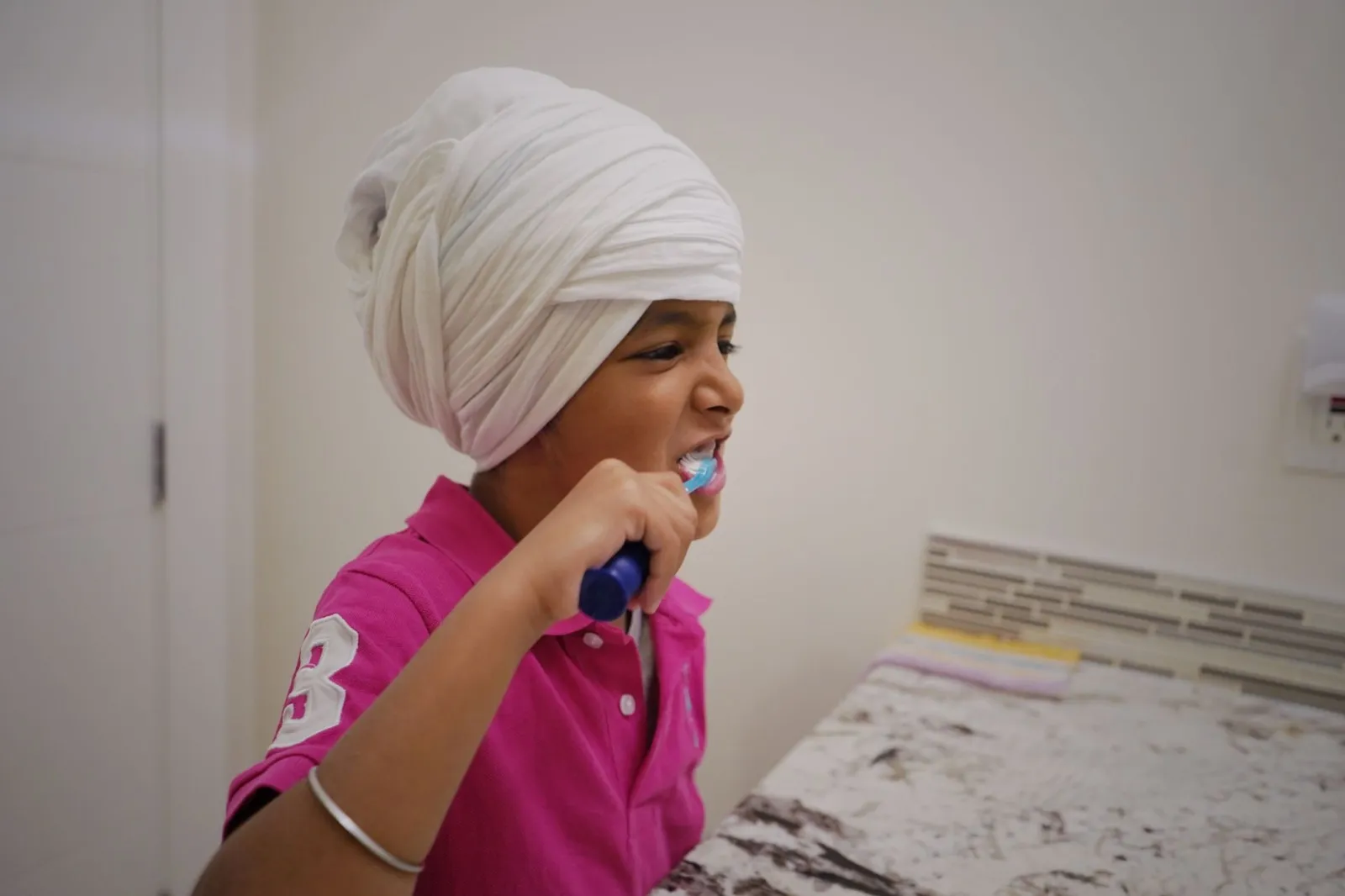
Image Credit: Pexels / World Sikh Organization of Canada
Baby Oral Hygiene: How to Clean Your Baby’s Gums and First Teeth
Baby oral hygiene can feel like one more tiny job to remember, especially before there are many teeth to actually brush. The reassuring part is that the routine can stay very simple.
Before teeth appear, you can keep an eye on your baby’s mouth and gently care for their gums as needed. Once the first milk tooth starts to come through, NHS guidance recommends beginning regular brushing straight away with a small, soft baby toothbrush and a tiny smear of fluoride toothpaste.
Starting early is less about achieving a perfect brushing session and more about protecting those first teeth and making toothbrushing a familiar part of everyday care.
Do you need to clean a baby’s gums before teeth appear?
Before your baby’s first tooth arrives, there is no need to brush their gums with toothpaste.
If you want to gently clean your baby’s mouth, you can use a clean, soft damp cloth to wipe around the gums. Keep the pressure light and avoid scrubbing delicate tissue.
You may also notice that your baby wants to chew or has sore-looking gums as teething begins. The NHS suggests that gently rubbing a teething baby’s gums with a clean finger may help soothe them.
There is no need to use toothpaste, mouthwash or adult dental products on a baby’s toothless gums.
If you notice persistent white patches, bleeding, swelling, sores or anything else in your baby’s mouth that concerns you, speak to a health visitor, GP, pharmacist or dentist rather than trying to remove or treat it yourself.
When should you start brushing a baby’s teeth?
Start brushing as soon as your baby’s first milk tooth begins to come through.
There is no need to wait until several teeth have appeared. Even one tiny tooth needs cleaning.
The NHS recommends brushing a baby’s teeth twice a day, including last thing at night and on one other occasion that works with your routine.
At first, you might only manage a brief brush. Some babies happily open their mouths while others turn away, grab the toothbrush or protest loudly.
That does not mean you are doing anything wrong. NHS advice acknowledges that brushing can be difficult at first. Building the habit gradually is useful, even if early brushing sessions are not perfect.
What toothbrush should you use for a baby?
Choose an age-appropriate baby toothbrush with a small head and soft bristles.
A small brush makes it easier to reach around your baby’s little mouth without using unnecessary pressure.
You do not need an elaborate dental kit. For the first teeth, the essentials are simply:
- a small, soft baby toothbrush
- fluoride toothpaste suitable for your baby’s age
- a comfortable position where you can support your baby’s head
Replace the toothbrush if the bristles become damaged. NHS guidance also recommends replacing children’s toothbrushes around every three months.
Keep your baby’s toothbrush clean and allow it to dry between uses.
What toothpaste should you use for a baby?
Fluoride toothpaste helps protect teeth from tooth decay.
For babies and toddlers up to age three, NHS guidance recommends using only a tiny smear of toothpaste containing at least 1,000 parts per million, or ppm, fluoride.
You can check the fluoride concentration on the toothpaste packaging.
A smear is a very small amount. There is no need to cover the toothbrush head with toothpaste.
Keep the toothpaste somewhere your baby cannot reach, and do not let them eat or lick toothpaste directly from the tube.
After brushing, encourage your child to spit out toothpaste as they become able to do so. NHS guidance says not to rinse with water afterwards because rinsing washes fluoride away from the teeth.
If a dentist gives you different advice for your child, follow their individual recommendation.
How to brush your baby’s first teeth
You do not need a complicated technique.
Sit somewhere comfortable and position your baby so their head is supported and you can see inside their mouth. The NHS suggests sitting your baby on your knee with their head resting against your chest.
Then:
- Put a tiny smear of fluoride toothpaste on the baby toothbrush.
- Gently move the brush over each tooth using small circular movements.
- Clean all accessible surfaces of each tooth.
- Gently brush around the gum line without pressing hard.
- Once your baby is able, encourage them to spit out excess toothpaste rather than swallowing it.
- Do not rinse the mouth with water after brushing.
Take your time, but do not worry if the first few attempts are short.
If your baby becomes upset, staying calm and trying again at the next brushing time is more useful than turning toothbrushing into a battle.
How often should you brush a baby’s teeth?
Once the first tooth appears, brush twice a day.
The NHS recommends brushing last thing at night before bed and once more at another time during the day.
The bedtime brush is particularly useful because it leaves fluoride toothpaste on the teeth overnight.
Consistency matters more than finding a special time for the second brushing session. Morning may suit one family, while another time may fit better around naps, feeds and childcare.
You will need to do the brushing for your baby. As children grow, they can become more involved, but young children still need adult help to clean their teeth properly.
What if your baby hates having their teeth brushed?
Many babies do not immediately enjoy toothbrushing.
They may clamp their mouth shut, turn their head away, bite the brush or try to hold it themselves. That can make a two-minute routine feel much longer.
Try keeping the atmosphere relaxed. You could:
- let your baby see you brushing your own teeth
- use a song or simple game during brushing
- let them hold a second toothbrush while you use another
- choose a time when they are not extremely tired or distressed
- keep trying gently if a brushing session does not go well
Getting some brushing done is better than abandoning the routine because it is not perfect.
If toothbrushing remains very difficult, your health visitor or dental team can suggest techniques suited to your child.
Do baby teeth really need careful cleaning?
Yes. Milk teeth may eventually fall out, but they still need protection from tooth decay.
Baby teeth help children eat and speak, and they maintain space for the adult teeth developing underneath.
Tooth decay can also cause pain and infection.
Regular brushing with fluoride toothpaste is one of the main ways to protect a baby’s teeth. Diet matters too because frequent exposure to sugary foods and drinks increases the risk of tooth decay.
You do not need to make every meal or snack perfect. The useful habit is to keep sugary foods and drinks limited and maintain regular brushing.
Feeding, drinks and your baby’s teeth
As your baby moves towards eating a wider range of foods, oral hygiene becomes connected with what they eat and drink.
The NHS explains that sugar contributes to tooth decay, and both the amount and frequency of sugary foods and drinks matter.
Avoid adding sugar unnecessarily to your baby’s food. As your child gets older and begins having drinks other than milk, water is a tooth-friendly choice.
Do not dip dummies or feeding spoons into sugar, honey or sweet substances to encourage your baby to accept them.
Your baby’s individual feeding needs may differ, particularly if there are medical, growth or feeding concerns. Follow advice from your health visitor, GP, dietitian or paediatric team where relevant.
When should your baby first visit the dentist?
You can begin introducing your baby to dental visits early.
The NHS suggests taking your child along when you attend your own dental appointments so the environment becomes familiar. NHS guidance also recommends taking children to the dentist once their first teeth appear.
A dentist can check that the teeth and mouth are developing normally and give advice about brushing, fluoride and preventing decay.
NHS dental treatment is free for children in the UK, although availability of NHS dental practices accepting new patients varies by area.
You do not need to wait until you suspect a problem before arranging dental care.
What changes should you look out for?
As you brush your baby’s teeth, you naturally get regular opportunities to notice their gums and new teeth.
Contact a dentist if you notice changes such as:
- a visible hole in a tooth
- persistent discolouration or unusual marks on a tooth
- a damaged or broken tooth
- ongoing gum swelling or bleeding
- signs that your baby is experiencing significant mouth or tooth pain
Do not try to diagnose tooth decay from appearance alone. A dentist can examine your baby’s mouth properly and tell you whether treatment or monitoring is needed.
When to get professional advice
Speak to a dentist if you are worried about your baby’s teeth, gums or mouth, particularly if you notice possible decay, damage, persistent swelling, bleeding or signs of pain.
You can also ask your health visitor or dental team for help if you are struggling to brush your baby’s teeth or are unsure which toothpaste or toothbrush to use.
If your baby develops significant facial or mouth swelling, has difficulty breathing or swallowing, experiences a serious mouth injury, or appears acutely unwell, seek urgent medical help.
For routine care, the most useful habits are simple: start brushing when the first tooth appears, use a tiny smear of fluoride toothpaste, brush twice each day and introduce regular dental care early.
Related reading
- Newborn Baby Hygiene Kit: What You Actually Need
- How to Clean a Baby’s Eyes, Ears and Nose Safely
- How to Wash a Baby’s Hair and Care for Their Scalp