Developmental Red Flags in Toddlers: What Parents Should Know
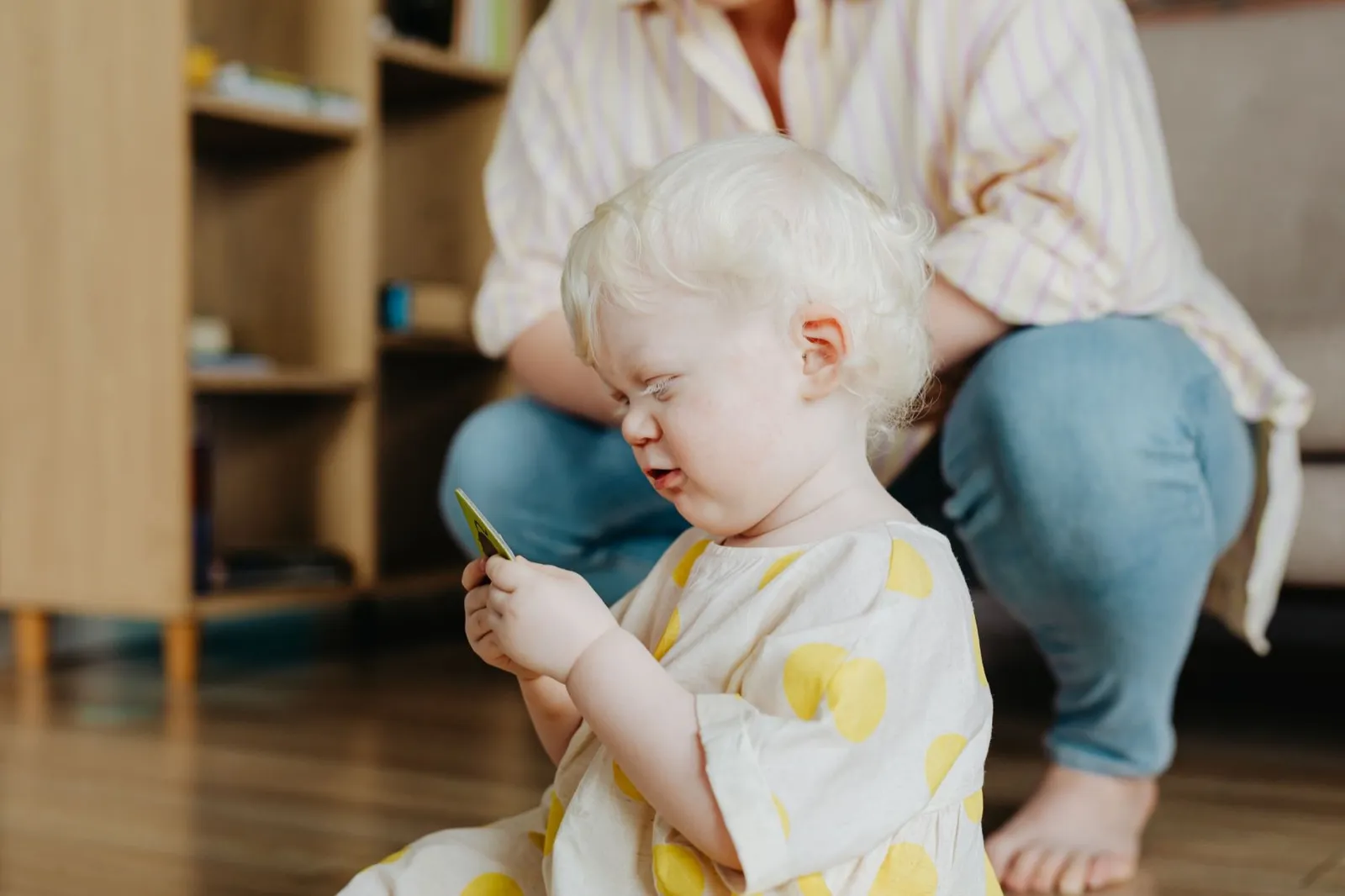
Image Credit: Pexels / https://kaboompics.com/
Noticing that your toddler seems to be developing differently from other children can bring up a lot of questions. Development varies considerably between children, so one later milestone does not automatically mean something is wrong. At the same time, certain patterns are worth discussing with a health professional rather than simply waiting and hoping they disappear.
Developmental red flags are signs that may suggest a child would benefit from closer assessment. They can involve speech and communication, movement, learning, play, social interaction or a loss of abilities the child previously had.
A red flag is not a diagnosis. It is a reason to ask for advice.
If something about your toddler’s development concerns you, you can speak to your health visitor or GP even if your child is not due for a routine developmental review.
What are developmental red flags?
Children gain skills across several connected areas of development.
These include:
- Speech, language and communication
- Gross motor skills, such as walking and running
- Fine motor skills involving the hands and fingers
- Learning and problem-solving
- Play
- Social interaction
- Emotional and behavioural development
- Everyday practical abilities
There is a range of ages at which children develop individual skills. This is why professionals look at a child’s overall developmental pattern rather than judging them on one isolated achievement.
A developmental red flag is usually something that raises enough concern to justify discussing the child’s development with a qualified professional.
This might be a skill that has not emerged as expected, a persistent difficulty in one area, several concerns occurring together, or a loss of previously acquired skills.
Loss of previously acquired skills is an important red flag
One of the clearest reasons to seek advice is if your toddler loses abilities they previously had.
For example, you may notice that your child has stopped using words or communication skills they previously used, no longer manages a physical skill they could previously perform, or shows another clear loss of ability.
NHS-linked Healthier Together guidance advises parents to seek advice urgently if they think their child has lost skills they once had. The CDC also advises parents to act early if a child has lost skills or if they have other developmental concerns.
Regression can have different causes, and noticing it does not tell you why it is happening. That needs professional assessment.
If you think your toddler has genuinely lost a skill, contact a health professional rather than waiting for the next routine review.
Speech and language red flags
Speech develops at different rates, and comparing vocabulary between toddlers can be particularly misleading.
Some children start talking earlier than others. Communication also involves much more than the number of words a child says.
You may want professional advice if you are concerned about how your toddler:
- Understands spoken language
- Communicates wants or needs
- Develops spoken words or sentences
- Responds during interaction
- Uses communication skills they previously had
The NHS advises parents who are worried about their child’s talking to speak to their health visitor, nursery key worker or local speech and language therapy service.
A speech or language concern does not tell you the cause. Hearing, communication development and other factors may need to be considered, which is why professional advice is more useful than trying to diagnose the problem from a milestone list.
Movement and physical development red flags
Toddlers develop physical confidence at different speeds. One may be running everywhere while another is much more cautious.
However, concerns about the way a child moves are worth discussing.
This could include persistent difficulties with movement, balance or coordination, noticeable differences in how they use one side of their body, or physical skills that seem to be developing very differently from what you would expect.
NHS guidance on developmental coordination difficulties notes that delays in physical milestones can sometimes be an early sign of a developmental problem, although children vary widely in their rate of development.
A toddler being less physically confident than a friend does not diagnose anything. If you are concerned about the way your child moves, a health visitor or GP can help decide whether further assessment is appropriate.
Social interaction and play
Toddlers have very different personalities.
Some rush towards other children. Others prefer to observe. Some are highly expressive, while others are naturally quieter.
Temperament alone should not be treated as a developmental red flag.
Instead, professionals consider broader patterns of interaction and development.
You might seek advice if you have persistent concerns about how your toddler interacts, communicates, plays or responds to people around them, particularly if several areas of development concern you at the same time.
Try to describe what you are actually seeing rather than attempting to attach a diagnosis to it.
For example, “She used to bring me toys to show me but has stopped doing that” gives a professional more useful information than an online label.
Thinking, learning and problem-solving
Toddler learning happens constantly during ordinary life.
Children experiment with objects, remember routines, imitate adults, solve simple problems and gradually develop more complicated play.
It can be difficult for a parent to judge cognitive development from the outside because many skills overlap with language, movement and social development.
If you are worried that your toddler does not seem to be learning, playing or responding to their environment as expected, mention the specific things you have noticed to your health visitor or GP.
A developmental assessment can consider these observations alongside other areas of your child’s development.
Behaviour is not automatically a developmental red flag
Toddler behaviour can be intense.
Tantrums, frustration, strong preferences, difficulty sharing and wanting more independence are familiar parts of toddlerhood. NHS Best Start in Life guidance explains that toddlers can have big feelings and may struggle to express them.
That does not mean every difficult behaviour should be dismissed as a phase.
A sudden or persistent change in behaviour may deserve attention, especially if it appears alongside developmental concerns, loss of skills, illness or a significant change in how your child usually interacts.
The useful question is not simply, “Is this normal toddler behaviour?”
Consider the wider pattern. Is your child continuing to develop? Is this behaviour new? Are there communication difficulties? Have you noticed changes in play, movement or interaction?
If the answer leaves you concerned, ask for advice.
One missed milestone does not give you a diagnosis
Milestone information can be helpful, but it has limits.
Children do not develop every skill on the same day or in the same order. Some abilities also emerge gradually rather than appearing overnight.
The CDC describes its milestone checklists as tools for developmental monitoring. They are not substitutes for validated developmental screening tools.
This distinction matters.
A checklist can prompt you to notice something. It cannot examine your toddler, understand their developmental history, assess hearing or vision, observe their interaction or decide why a particular skill is delayed.
If a milestone worries you, use that concern to start a conversation with a professional rather than trying to reach a diagnosis yourself.
What happens at a toddler development review?
In England, children are offered a health and development review at around 2 to 2 and a half years.
According to the NHS, this review covers areas including:
- Movement
- Speech
- Social skills and behaviour
- Hearing and vision
- General development
- Growth and healthy eating
- Keeping active
- Sleep and behaviour
- Safety
Parents are usually sent an Ages and Stages Questionnaire, known as the ASQ-3, before the review. It helps parents and the health visiting team discuss the child’s development.
If your toddler attends nursery, playgroup or a childminder, people involved in their care may contribute to the review.
This appointment is a useful opportunity to discuss concerns, but you do not need to wait for it.
The NHS specifically advises that parents can contact a health visitor or GP at other times if they have concerns.
What to do if you are worried
You do not need to arrive at an appointment with a theory about what is causing your toddler’s development.
Specific observations are much more useful.
Before speaking to a professional, you might make a few notes about:
- What you have noticed
- When you first noticed it
- Whether the situation is changing
- Which skills your toddler currently uses
- Whether any skills have disappeared
- How your child communicates
- How they play
- How they move
- What nursery or other carers have noticed
- Any concerns about hearing or vision
If you have a short video that clearly demonstrates a movement or behaviour you are concerned about, you can ask the professional whether seeing it would be useful.
Try not to repeatedly test your toddler at home. Everyday observations often provide a clearer picture than asking a child to perform a skill when they are tired, distracted or simply uninterested.
What if other people tell you to wait?
Parents often hear phrases such as “children all develop differently” or “they’ll catch up”.
It is true that development varies.
That does not mean you should ignore a concern that persists.
Seeking advice does not commit your child to a diagnosis or treatment. A professional may reassure you that development appears appropriate, suggest monitoring a particular area, arrange screening or recommend further assessment.
If you still feel concerned after receiving advice, it is reasonable to explain why and ask what the next step should be.
You spend a great deal of time observing your child. Your observations are useful information.
Can nursery help identify developmental concerns?
If your toddler attends nursery or another early years setting, staff may see them in situations that are different from home.
They may observe how your child communicates in a group, responds to routines, plays alongside other children and manages physical or practical tasks.
The NHS notes that children attending nursery will also have a progress review with their key worker, and nursery staff can help parents access support.
If you have concerns, ask your child’s key person what they have noticed.
Their observations can be helpful when you speak to your health visitor or GP, but nursery staff do not replace medical or developmental assessment where one is needed.
When to get professional advice
Contact your health visitor, GP or another appropriate qualified professional if you are worried about your toddler’s development.
Seek advice if you notice:
- Loss of skills your toddler previously had
- Persistent concerns about speech, language or understanding
- Concerns about movement or physical development
- Persistent concerns about social interaction or play
- Difficulties that appear across several areas of development
- A developmental pattern that feels significantly different from what you would expect
- Concerns raised by nursery or another professional
- Any other change in your child’s development that worries you
Loss of previously acquired skills deserves prompt professional attention.
If your toddler is acutely unwell, has suddenly become weak or unresponsive, is having difficulty breathing, has a seizure or has another urgent medical problem, seek urgent medical help rather than treating it as a developmental issue.
You do not need to decide whether your concern is serious enough before mentioning it. Health visitors and GPs are there to help assess what you have noticed and decide whether your toddler needs monitoring, further assessment or additional support.
Developmental red flags are not predictions about your child’s future. They are signals that it may be useful to look more closely. Asking for advice early can give you clearer information and, where needed, help your child access appropriate support.
Related reading
- Toddler Development
- Toddler Development: Milestones and Stages from 1 to 3 Years
- Toddler Speech and Language Development: What to Expect