How to Find Good-Quality Clothes Without Paying Designer Prices
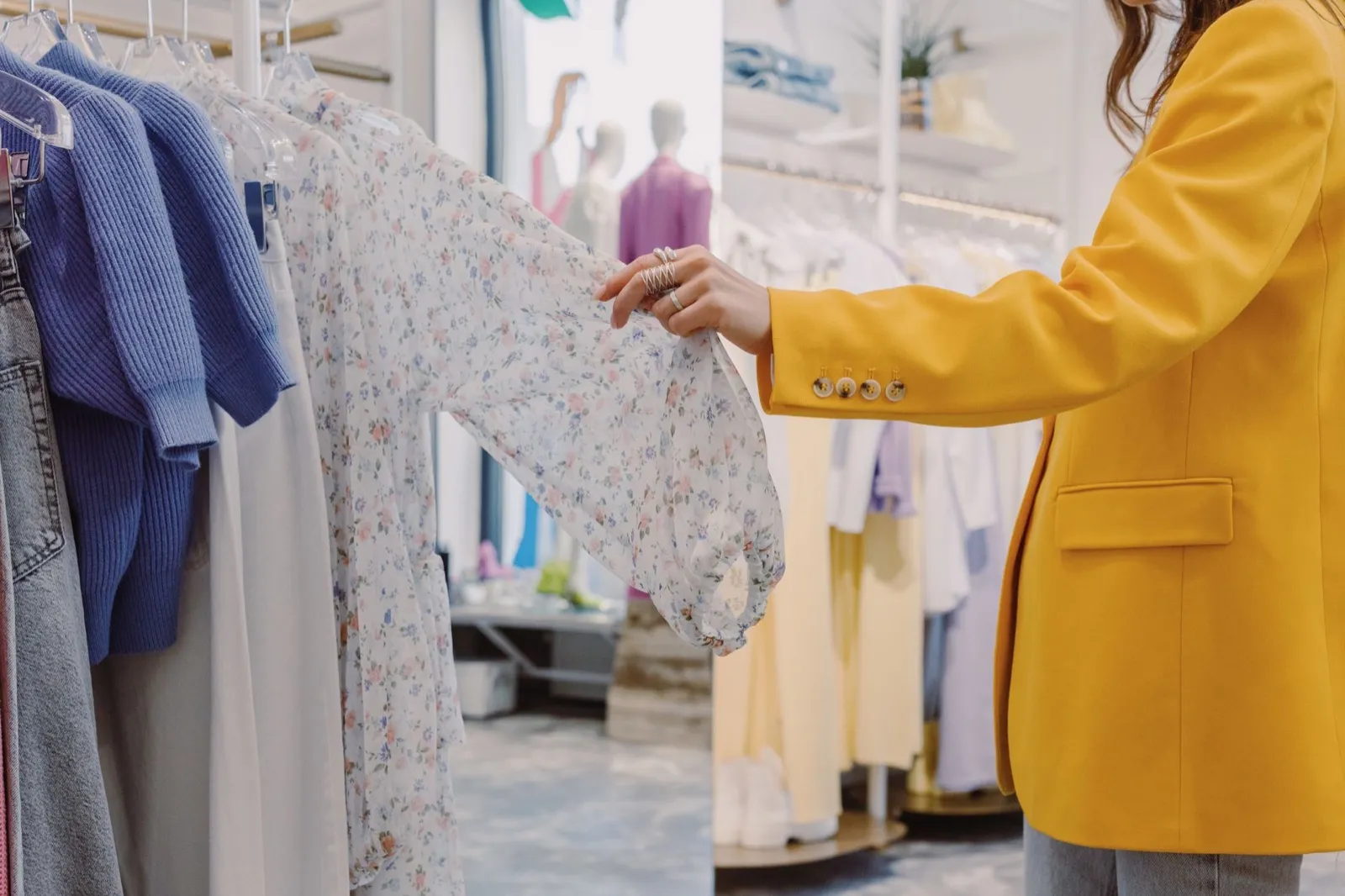
Image Credit: Pexels / Ron Lach
Finding good-quality clothes does not necessarily mean shopping from expensive labels. Price can tell you something about a garment, but it is not a reliable quality test on its own. A more useful approach is to look closely at the fabric, stitching, construction, fit and care requirements before deciding whether something is worth your money.
You do not need specialist knowledge to do this. A few simple checks can help you compare a £30 shirt with a £100 one, judge second-hand finds more confidently and avoid paying extra simply because a garment has a recognisable name on the label.
Start with the fabric, not the brand name
The fibre-content label is a useful place to begin because it tells you what the garment is made from.
Natural fibres include cotton, linen, wool and silk. Common manufactured fibres include polyester, nylon, acrylic, viscose and elastane. Blended fabrics combine two or more fibres.
None of these categories automatically means good or bad quality.
A well-made polyester garment can be more useful to you than a poorly constructed cotton one. Elastane can add stretch to fitted clothes. Synthetic fibres can also be chosen for properties such as durability, stretch or quicker drying.
Rather than searching for one supposedly perfect fibre, think about whether the fabric makes sense for the garment.
For example, you might prefer breathable cotton or linen for a loose summer shirt, while a small amount of elastane could be useful in close-fitting trousers.
Then use your hands. Does the fabric feel pleasant against your skin? Does it feel substantial enough for its purpose? Does it recover after being gently stretched or scrunched?
If you dislike how a fabric feels in the shop, you are unlikely to enjoy wearing it regularly at home.
Look closely at the seams
Turn the garment inside out if you can.
The inside often tells you more about construction than the styled exterior.
Look at the seams. They should generally appear secure, with stitching that runs consistently along the fabric rather than wandering dramatically towards and away from the edge.
Check for loose threads, skipped stitches, puckering or areas where the seam already appears strained.
Gently pull the fabric apart at a seam. You are not trying to damage it. You simply want to see whether the stitching holds neatly or opens enough to reveal obvious gaps.
One imperfect thread does not automatically make a garment poor quality. It may be something you can trim or repair easily. Several construction problems across a new garment are more reason to reconsider.
Check hems and edges
Look at the bottom hem, sleeves, neckline and any visible edges.
Are they sitting neatly?
Does the hem appear reasonably even?
Is the fabric twisting or pulling around the stitching?
Some garments intentionally use raw or decorative edges, so the goal is not to look for one particular construction method. You are checking whether the finish appears deliberate and secure.
Pay particular attention to areas that receive regular movement, such as cuffs, armholes and trouser hems.
If those areas already look fragile before the garment has been worn, think about how they may cope with repeated use and washing.
Test buttons, zips and fastenings
Small details can have a big effect on how long a garment remains pleasant to wear.
If there are buttons, check that they are attached securely. Look at the buttonholes too. They should be finished well enough that the fabric is not immediately unravelling around them.
Open and close zips.
They should move without repeatedly catching the surrounding fabric.
Try poppers, hooks, buckles and other fastenings rather than assuming they work because the item is new.
A loose button is usually an easy repair. A badly positioned zip or unreliable fastening can be much more annoying.
The question is not whether every detail looks luxurious. It is whether the parts you will use repeatedly feel functional and reasonably secure.
Look at pattern matching, but keep it in perspective
On striped, checked or other patterned garments, you may notice whether the pattern lines up across prominent seams.
Careful pattern matching can be a sign that more attention has been given to cutting and construction, particularly in highly visible areas.
It is not a universal quality rule, though.
Matching every seam can require additional fabric, and some designs are intentionally cut in different directions. An unmatched pattern does not automatically mean the garment will wear badly.
Treat it as one clue among many rather than a pass-or-fail test.
Pay attention to how the garment hangs
Quality is not only about what you can see on a label.
Try the garment on and move in it.
Walk, sit, bend your arms and notice what the fabric does. Does the garment return to its intended position reasonably well, or are you constantly pulling and adjusting it?
Look at how seams and closures sit while you move.
A garment does not need to follow any particular silhouette to be well made. Oversized clothing can be beautifully constructed, just as fitted clothing can be.
What matters is whether the piece behaves in a way that works for you.
A beautifully constructed jacket that feels restrictive every time you reach forward is unlikely to become a useful part of your wardrobe.
Check whether the garment is lined
A lining can be useful in some garments, including certain coats, jackets, skirts and dresses. It may help a piece slide over other clothing, provide additional coverage or protect the outer fabric from some direct wear.
But lining is not automatically evidence of superior quality.
Many good garments are intentionally unlined, particularly lightweight pieces or designs where a lining is unnecessary.
If a garment is lined, inspect the lining itself.
Check that it sits smoothly, does not pull noticeably at the seams and allows enough movement for the outer garment to hang as intended.
Read the care label before buying
A garment can be beautifully made and still be completely impractical for your life.
Check the care instructions before paying.
If an item requires a type of care you know you will not realistically give it, that matters.
Perhaps you prefer clothes that can go into your normal washing routine. Maybe you are happy to hand wash a favourite knit. Someone else may be comfortable paying for professional cleaning occasionally.
There is no correct choice.
The useful question is whether the maintenance required matches the amount of time, effort and money you want to spend caring for the garment.
Do not assume thicker means better
Heavy fabric can feel impressive in your hand, but weight and quality are not the same thing.
Some excellent fabrics are deliberately light.
A summer blouse, fine knit or lightweight dress should not need to feel heavy to be worthwhile.
Instead, judge the fabric in relation to what it is supposed to do.
Look for consistency. Hold it up and examine the surface. Does the fabric appear even, unless texture is clearly part of the design? Are there visible pulls, snags or damaged areas?
For knitted garments, look at whether the knit appears consistent and whether it immediately stretches out of shape when handled gently.
Look beyond the main shopping areas
Finding affordable quality can sometimes require looking beyond the newest arrivals.
Sale sections can be useful if you approach them with the same standards you would use at full price. A large discount does not turn a poorly made or unsuitable garment into a useful purchase.
Outlet shopping can also offer possibilities, although products and ranges vary, so assess the individual garment rather than relying on the outlet label.
Second-hand shops and resale platforms can be particularly useful because you may find garments from many different price points within the same budget.
With used clothing, inspect condition as well as original quality. Check high-wear areas such as cuffs, collars, underarms, knees and the inside edges of bags or coats.
A well-made second-hand garment in good condition may suit your needs better than a brand-new alternative at the same price.
Compare garments side by side
If you have time, comparison is one of the easiest ways to develop an eye for quality.
Take two similar shirts and examine them together.
Compare the fabric, seams, buttons, hems and overall construction. Try both on.
You may notice that the more expensive one feels better made. You may also discover that the cheaper one is just as suitable for what you need.
This is why price alone is such a limited shortcut.
Comparing garments helps you work out which details actually matter to you.
Perhaps you care a great deal about soft fabric but are happy with simple finishing. Maybe sturdy zips matter because you wear a jacket constantly. You might prefer machine-washable pieces even if a more delicate alternative feels slightly more luxurious.
Quality is partly about construction and partly about fitness for purpose.
Know where you personally need durability
Not every item in your wardrobe has to meet exactly the same standard.
For clothes you wear heavily, durability may deserve more attention.
That could include:
- Everyday shoes
- Work trousers
- Jeans
- Coats
- Frequently worn knitwear
- Bags used most days
For an occasional piece, your priorities may be different.
This can help you decide where a limited clothing budget is most useful. You might prefer to spend a little more on the shoes you wear four days a week and less on an occasional party top.
That is not a universal formula. Your own routine should decide where durability matters most.
Avoid paying for quality you do not need
It is possible to go too far in the other direction and turn every clothing purchase into a search for the ultimate version.
You do not always need the most luxurious fabric, the most elaborate construction or the most expensive option you can afford.
You need something that works for its intended purpose, feels comfortable, suits your style and fits your budget.
If an affordable cotton T-shirt fits beautifully and survives your normal washing routine, it may already be doing everything you need from it.
Quality shopping is not about proving that every item will last forever.
It is about looking past marketing and asking whether the actual garment deserves its price.
Use a quick quality checklist in the changing room
If you want a simple routine, check five things before buying:
- Fabric: Does it feel suitable and comfortable for the garment?
- Stitching: Do the seams look secure and reasonably consistent?
- Details: Do the buttons, zips and fastenings work properly?
- Fit: Can you move comfortably in the garment?
- Care: Are you realistically willing to follow the care instructions?
Then ask one final question: Would I still think this was good quality if I could not see the brand label?
That can be surprisingly clarifying.
Designer prices and good construction sometimes overlap, but they are not the same thing. A higher price can reflect many factors beyond the physical quality of a garment.
Learning to inspect the clothes themselves gives you a much more useful way to shop.
Take your time, compare pieces and prioritise the details that matter for how you actually dress. The best value is not necessarily the cheapest garment or the most expensive one. It is the piece that does its job well enough to earn a regular place in your wardrobe.
Related reading
- Affordable Fashion: How to Look Stylish on a Budget
- Where to Spend and Where to Save on Your Wardrobe
- How to Make Your Clothes Last Longer