How to Layer Necklaces Without Them Looking Messy
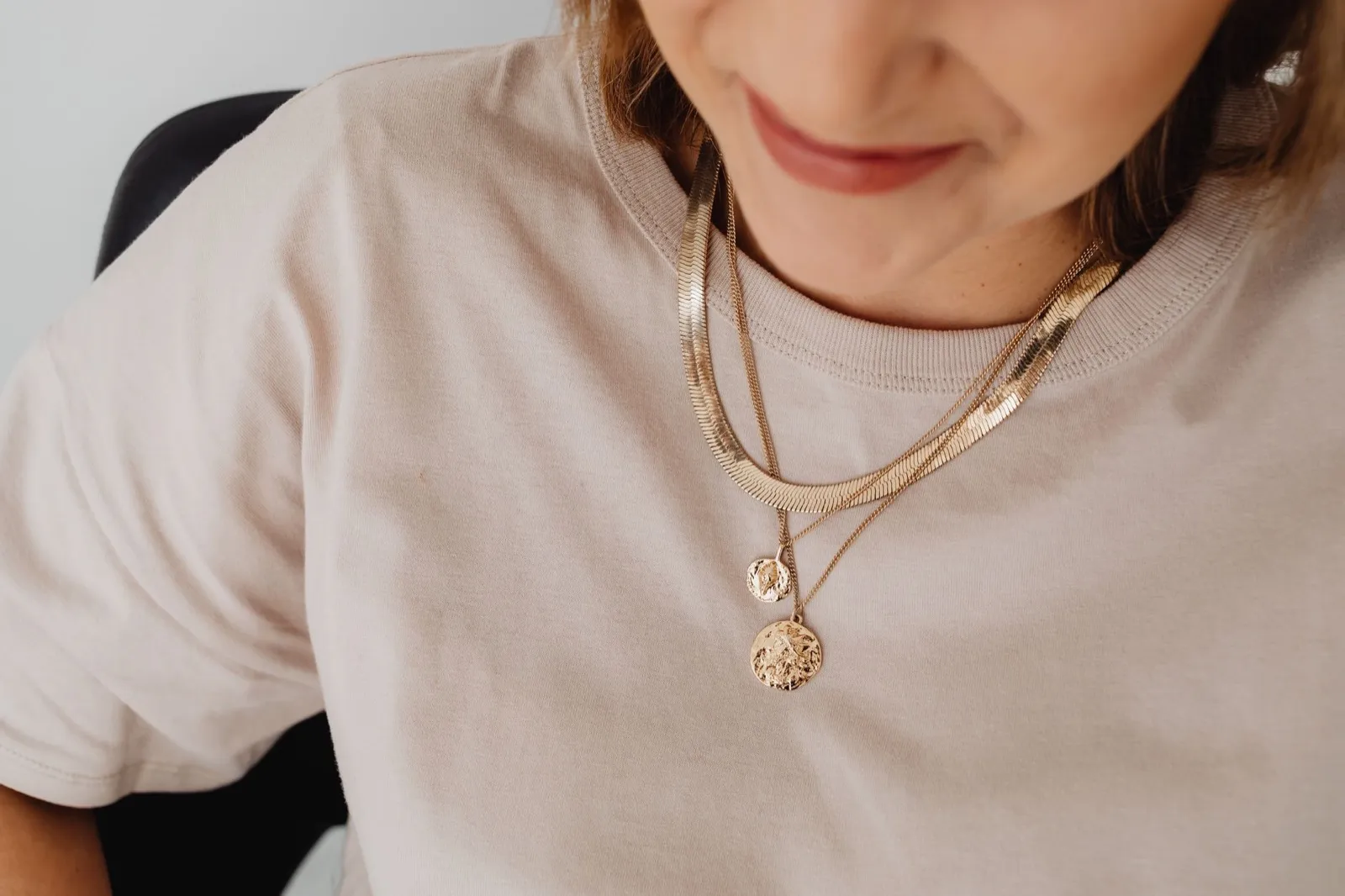
Image Credit: Pexels / https://kaboompics.com/
The simplest way to layer necklaces without the combination feeling messy is to give each necklace its own space. Vary the lengths, choose one piece to lead the look, and keep enough separation between pendants and chains for each one to be visible.
There is no correct number of necklaces to wear together. Two can feel beautifully simple, while three or four can create a more detailed look. The aim is not perfect symmetry. It is to make the layers feel intentional rather than accidental.
Start with two necklaces
If necklace layering often feels too busy, start with two pieces rather than building a large stack immediately.
Choose one shorter necklace and one longer necklace. The difference in length creates visible separation and allows both pieces to have their own place.
A few easy combinations include:
- A short fine chain with a longer pendant
- A simple chain with a slightly longer beaded necklace
- A delicate necklace with a chunkier chain below it
- A short pendant with a longer, simpler chain
- Two fine necklaces at clearly different lengths
Once two necklaces feel balanced, you can decide whether the outfit needs anything else.
Sometimes it will. Often it will not.
Vary the necklace lengths
Length is one of the most useful things to consider when layering necklaces.
If several necklaces sit at almost exactly the same point, they can overlap visually and physically. Pendants may cover one another and chains can become harder to distinguish.
Instead, try creating small steps between the layers.
You might wear a shorter chain close to the base of the neck, a medium-length necklace underneath and a longer pendant as the final layer.
The exact measurements are less important than the visible spacing. Necklace lengths also sit differently depending on the chain, pendant, neckline and individual wearer, so trying the combination on is usually more helpful than relying on fixed rules.
If two necklaces you love sit too close together, an extender may allow you to adjust one of them rather than replacing either piece.
Choose one necklace to lead the look
A layered necklace combination often feels easier to put together when one piece has a clear role as the main feature.
That could be:
- A pendant
- A chunky chain
- A colourful necklace
- A piece with an unusual shape
- A necklace with sentimental meaning
- A necklace that works particularly well with your neckline
The other necklaces can then support it.
For example, if you are wearing a noticeable pendant, you might add a simple shorter chain rather than another large pendant directly beside it.
If your main piece is a chunky chain, a finer necklace can create contrast without competing for attention.
This does not mean only one necklace is allowed to be interesting. It simply gives you a starting point when several pieces together feel too busy.
Mix chain weights carefully
Using necklaces of different weights can give a layered combination more definition.
A fine chain beside another fine chain creates a delicate look. Adding a slightly heavier chain introduces more contrast.
For example:
Fine chain + medium chain: simple and easy to wear.
Fine chain + chunky chain: stronger contrast and a more noticeable layered effect.
Several fine chains: subtle, especially if the lengths are clearly separated.
Several chunky chains: bolder and more visually dense.
If a stack looks cluttered, removing one similarly sized chain can sometimes make more difference than changing the whole combination.
Think about pendant placement
Pendants naturally attract attention, so their position matters in a necklace stack.
If you are wearing several pendants, try to place them at noticeably different heights. This gives each pendant some breathing room.
You might combine:
- A tiny pendant on the shortest chain
- A plain chain in the middle
- A larger pendant at the longest point
Alternatively, wear only one pendant and keep the other necklaces simple.
If two pendants repeatedly overlap, changing the length of one necklace may solve the problem. If not, those particular necklaces may simply work better in separate combinations.
There is nothing wrong with that. Not every piece needs to layer successfully with every other piece you own.
Can you mix gold and silver necklaces?
Yes. Gold and silver necklaces can be worn together if you like the combination.
You do not need to keep every piece of jewellery in the same metal colour.
If mixed metals initially feel disconnected, repeating each tone can help the combination feel more deliberate. For example, you might wear one silver necklace and two gold necklaces, then repeat silver elsewhere with a ring or earrings.
Another easy option is to include a necklace that already combines different metal tones. It can visually connect the other pieces.
None of this is necessary, though. A single silver necklace among gold pieces can work simply because you enjoy the contrast.
Match the necklace layers to your neckline
Your neckline creates the background for the jewellery, so it can affect how clearly each layer is seen.
With a lower or open neckline, necklaces may sit directly against the skin, making separate lengths particularly visible.
A crew-neck T-shirt or high-neck knit gives you a different background. A longer necklace or pendant can sit over the fabric, while shorter layers remain above the neckline.
A shirt gives you several options. You can wear shorter necklaces inside an open collar, place a pendant within the V created by the shirt, or wear a longer necklace over a fully buttoned style.
For a busy or decorative neckline, you might prefer fewer necklaces. With a very simple top or dress, a layered stack can become a larger part of the outfit.
These are styling options rather than rules. The useful question is whether the necklace shapes are visible against the neckline you are wearing.
Keep the rest of the jewellery as simple or detailed as you like
Layered necklaces do not mean the rest of your jewellery has to disappear.
You can wear necklace layers with earrings, rings, bracelets and a watch. The overall effect depends on how much detail you personally enjoy.
If the necklaces already feel like enough, simple studs or small hoops may be all you want to add.
If you prefer more jewellery, larger earrings or multiple rings can sit comfortably alongside a layered necklace look.
Rather than following a rule about removing accessories, look at the complete outfit. If it feels too busy for your taste, take one thing off. If it feels unfinished, add something.
How to layer necklaces with a simple outfit
A simple outfit is an easy place to experiment with necklace layering because the jewellery has plenty of visual space.
Try a white T-shirt with two chains at different lengths, or add a longer pendant as a third layer.
A plain knit can work with a slightly chunkier chain and a pendant. A simple black dress gives you room to experiment with metal, colour or beads.
For an everyday combination, try:
- Plain T-shirt + short chain + pendant necklace
- Fine knit + two delicate chains + small pendant
- Shirt + short necklace + medium pendant
- Simple dress + chain + longer pendant
- Vest top + several fine necklaces at staggered lengths
You can use jewellery you already own and change the combinations until one feels right.
How to layer necklaces with a patterned outfit
A patterned outfit already contains visual detail, but that does not mean necklaces are off limits.
If you want the print to remain the main feature, try two simple chains or one chain with a small pendant.
If you enjoy a more detailed look, layered jewellery can sit alongside pattern very well. Keeping the necklaces within a similar metal tone is one way to create some visual continuity, although mixed metals can work too.
It can also help to look at the scale of the print. A small, delicate pattern may pair naturally with fine jewellery, while a larger graphic print can hold its own beside chunkier pieces.
The best guide is the complete outfit rather than the necklace stack in isolation.
How to stop layered necklaces tangling
Layered necklaces can tangle, especially if the chains are similar in length and weight or move around during the day.
A few practical adjustments may help:
- Choose noticeably different necklace lengths
- Combine chains of different weights or textures
- Avoid placing several pendants at exactly the same height
- Use necklace extenders to create more separation
- Put necklaces on individually and check that each chain sits freely
- Store necklaces separately when you are not wearing them
Necklace layering clasps and connectors also exist specifically to hold multiple chains together. If you consider buying one, check that its fittings work with the clasps and chain weights of the necklaces you already own.
Even with careful styling, some necklaces will naturally twist together as you move. If two particular chains constantly tangle, separating them may be the easiest solution.
A simple three-necklace formula
If you want an easy starting point for three layers, try giving each necklace a different role.
Layer one: a short, simple chain.
Layer two: a slightly longer necklace with a small detail or pendant.
Layer three: the longest necklace, perhaps with a more noticeable pendant.
The difference between each piece does not need to be dramatic. You simply want enough variation for the necklaces to remain individually visible.
You can reverse the idea too. Put the most noticeable piece at the top and keep the longer necklaces simple.
How to know when the layers are working
Step back and look at the whole outfit rather than focusing closely on the jewellery.
Can you see the individual necklaces? Do the pendants have enough room? Does one chain keep disappearing behind another? Is there a piece that seems unnecessary?
If the combination feels messy, you do not necessarily need to start again.
Try one small change first. Remove one necklace, lengthen a chain, move the largest pendant lower or replace one detailed piece with a simpler one.
The most useful necklace stack is one you will actually enjoy wearing. It might be two delicate chains one day and four mixed necklaces the next. Layering works best as a flexible styling idea, not a formula you have to perfect.
Related reading
- Shoes & Accessories: How to Finish an Outfit
- How to Accessorise an Outfit Without Overdoing It
- How to Choose Earrings That Suit Your Face Shape