How to Tell If Clothes Are Good Quality Before You Buy Them
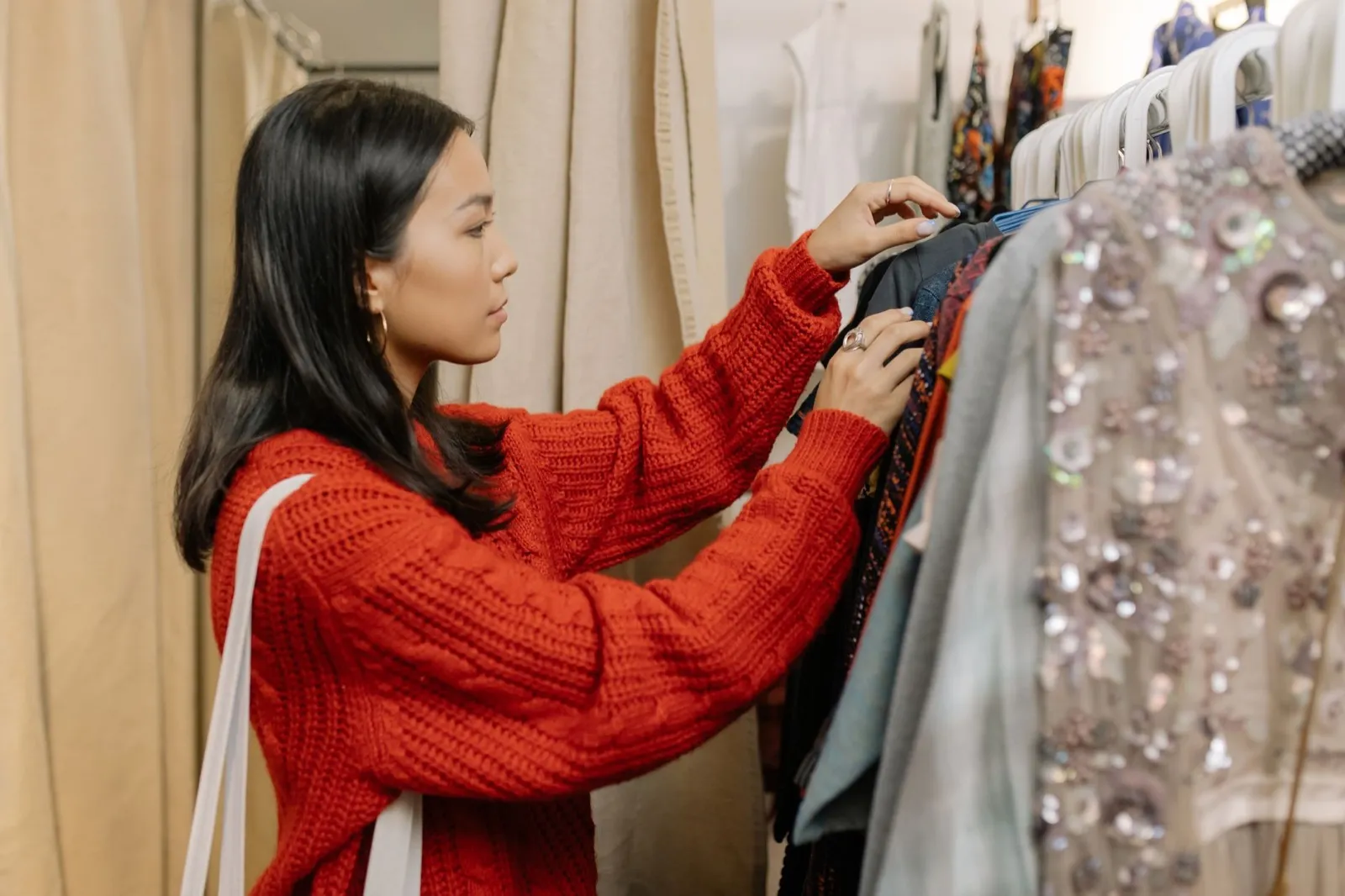
Image Credit: Pexels / cottonbro studio
You can learn quite a lot about the quality of a garment before you ever wear it. Start with the fabric, then look closely at the seams, hems, stitching, buttons, zips and other details. Finally, try the piece on and see how it behaves when you actually move.
No single test can guarantee that something will last for years. Price, brand name and fibre content are not reliable shortcuts on their own either. The most useful approach is to look at the whole garment and ask whether its materials and construction seem appropriate for what you expect it to do.
Here is what to check before you buy.
Start by looking at the fabric
The fabric is one of the first things you will notice, but avoid judging quality simply by whether a garment uses natural or synthetic fibres.
Cotton, wool, linen and silk are natural fibres. Polyester, nylon and acrylic are examples of synthetic fibres, while viscose is a manufactured cellulosic fibre. Many clothes use blends.
Different fibres have different properties, and a particular fibre name does not automatically tell you how well a finished garment has been made.
Instead, look at the fabric itself.
Hold it in your hands. Does it feel pleasant enough for the way you intend to wear it? Does the material feel consistent across the garment? Can you see obvious pulls, snags, damaged areas or irregularities that do not appear to be intentional?
If the fabric has stretch, gently test how it recovers. If you lightly stretch a small section, does it return towards its original shape?
Think about purpose too. A light summer shirt does not need to feel thick and heavy to be good quality. Likewise, a winter coat may need very different properties from a blouse.
Quality is better judged in context than by weight alone.
Read the fibre-content label
The fibre-content label gives you useful information about what you are considering buying.
Rather than treating one fibre as automatically superior to another, use the label to understand whether the composition makes sense for your preferences.
For example, you might like a small amount of elastane in fitted trousers because you prefer some stretch. You may prefer linen for warm-weather clothing despite its tendency to crease. Another person might deliberately choose synthetic fibres for a particular garment because they value properties such as stretch or quicker drying.
The important thing is to know what you are buying.
If two similar garments are priced very differently, comparing their fibre composition alongside their construction can also help you understand what you are paying for.
Turn the garment inside out
One of the simplest ways to inspect clothing quality is to look inside.
The exterior has been designed to look appealing on the rail. Inside, you can see much more of the actual construction.
Look at the seams.
Stitching should generally appear secure and reasonably consistent. Check for skipped stitches, loose threads, puckering or areas where the seam appears to be pulling apart.
You can gently separate the fabric on either side of a seam to see how it responds. You should not need to tug hard. You are simply checking whether the seam feels secure or immediately opens into obvious gaps.
A loose thread by itself is not necessarily a reason to reject a garment. Several untidy or strained seams are more useful evidence that the construction may not be as careful as you would like.
Check the hems and finished edges
Look at the hem around the bottom of the garment and at sleeves, necklines and other finished edges.
Does the stitching run reasonably evenly?
Does the fabric sit smoothly, or is it twisting and puckering around the stitches?
Are any edges already beginning to unravel?
Not every garment will use the same finishing technique. Some designs deliberately use raw edges, exposed seams or decorative stitching. Those details should still look intentional rather than unfinished by accident.
Pay particular attention to areas that are likely to receive frequent wear, such as cuffs and trouser hems.
Inspect buttons and buttonholes
Buttons are easy to check in the changing room.
Give each one a gentle touch. Does it feel securely attached, or is it already hanging from loose thread?
Then inspect the buttonholes.
The stitching around them should generally be secure enough that the surrounding fabric is not visibly unravelling before the garment has even been worn.
Fasten every button if possible. This also gives you a chance to see whether the two sides of the garment meet comfortably and whether the fabric pulls noticeably around the closures.
A loose button is often a straightforward repair, so you may decide it is not a problem. The point is simply to notice these details before paying.
Test every zip and fastening
Do not assume a zip works because the garment is new.
Open and close it several times.
It should move without repeatedly catching the fabric beside it. Look at how neatly it has been inserted and whether the surrounding material sits as intended once the zip is closed.
Try other fastenings too, including hooks, poppers, buckles and clasps.
If something feels awkward in the shop, consider whether you will be happy dealing with it every time you wear the piece.
Look at pockets properly
If the garment has pockets, put your hands in them.
Are they functional for the way you would use them? Do they sit comfortably when empty? Does the pocket bag appear securely attached inside?
A tiny pocket is not necessarily a quality issue. It may simply be part of the design. But checking it before buying prevents you from discovering later that a feature you expected to use is mainly decorative.
Also check that pocket openings are finished neatly and that there are no obvious gaps around the stitching.
Check patterned fabrics at the seams
If you are looking at stripes, checks or another repeating pattern, notice what happens where pieces of fabric meet.
Careful pattern matching across prominent seams can indicate attention during cutting and construction.
It should not be treated as a universal rule, however. Some designs deliberately change the direction of a pattern, and matching every section can require more fabric.
Think of pattern alignment as another clue rather than proof of quality.
See whether the garment is lined
Coats, jackets, skirts, dresses and some trousers may have a lining.
A lining can help certain garments move over the layers underneath them, provide coverage or protect parts of the outer fabric from direct contact.
But an unlined garment is not automatically lower quality. Many pieces are intentionally made without one.
If there is a lining, inspect it rather than simply noting that it exists.
Does it sit smoothly inside the garment? Are its seams secure? Does it allow you to move comfortably without pulling against the outer fabric?
A badly fitted lining can make an otherwise attractive garment frustrating to wear.
Try the garment on and move
Something can look beautifully constructed on a hanger and still not work well once you put it on.
Move around in the changing room.
Sit down if there is somewhere appropriate to do so. Raise your arms. Bend your elbows. Walk. If you are trying trousers or a skirt, notice what happens as you take a few steps.
The aim is not to judge whether the garment makes your body look a particular way.
You are checking the garment.
Do the seams stay where they are intended to sit? Does the fabric twist unexpectedly? Are buttons pulling open? Does a zip buckle? Are you constantly adjusting the piece?
Good construction should work with the intended design of the garment, but comfort and usefulness still depend on your individual preferences.
Check the care label before paying
The care label is easy to ignore until the first wash.
Read it before buying instead.
A garment may require hand washing, a gentle cycle, lower temperatures or professional cleaning. The right choice depends on what you are realistically willing to do.
If you want clothes that can go through your normal washing routine, an item requiring specialist care may not be useful enough to justify the purchase.
Someone else may be perfectly happy to give a favourite garment more careful treatment.
Neither approach is better. What matters is knowing the maintenance involved before the garment enters your wardrobe.
Do not use price as your quality test
An expensive garment can be well made, but a high price does not guarantee good construction.
Similarly, an affordable garment is not automatically poorly made.
Price can reflect many things beyond the physical details you can inspect in a changing room. That is why it helps to judge the garment itself rather than assuming the price tag has already done the assessment for you.
If you are choosing between two similar pieces, compare them side by side.
Look at the seams. Feel the fabrics. Try the fastenings. Check the care labels. Put both on.
The differences often become much easier to see.
Be especially careful with sale purchases
A reduced price can make imperfections easier to overlook.
Try mentally removing the discount sticker.
Would you still want the garment if you were judging it only by how it feels, fits your needs and has been constructed?
Check sale items for damage too. Clothes may have spent a long time on the shop floor or been tried on repeatedly.
Look for make-up marks, stretched areas, missing buttons, broken fastenings, snags and damaged seams.
Some problems may be easily fixable, and you may be perfectly happy to repair them. It is simply better to know what you are buying.
A quick clothing quality checklist
Before taking a garment to the till, give yourself a minute to check:
- Does the fabric feel suitable for its purpose?
- Is the material free from obvious unintended damage?
- Do the seams look secure?
- Are the hems and edges finished consistently?
- Do all buttons, zips and fastenings work?
- Are pockets securely constructed?
- Does the garment move comfortably when you wear it?
- Are you happy with the care requirements?
- Does the quality seem reasonable for the price?
You do not need every garment to score perfectly in every category.
Perhaps you are happy to sew on a loose button because everything else about a second-hand jacket is exactly what you wanted. Maybe you decide against a beautifully made jumper because you know its care requirements will not work for you.
The aim is not to become suspicious of every stitch. It is to notice enough detail to choose clothes more deliberately.
A good-quality garment should make sense as a whole. Look beyond the label, take a minute to inspect the construction and think about how the piece will fit into your actual life. Those small checks can tell you far more than the price tag alone.
Related reading
- Affordable Fashion: How to Look Stylish on a Budget
- Where to Spend and Where to Save on Your Wardrobe
- How to Make Your Clothes Last Longer