How to Support Your Toddler's Development Through Everyday Play
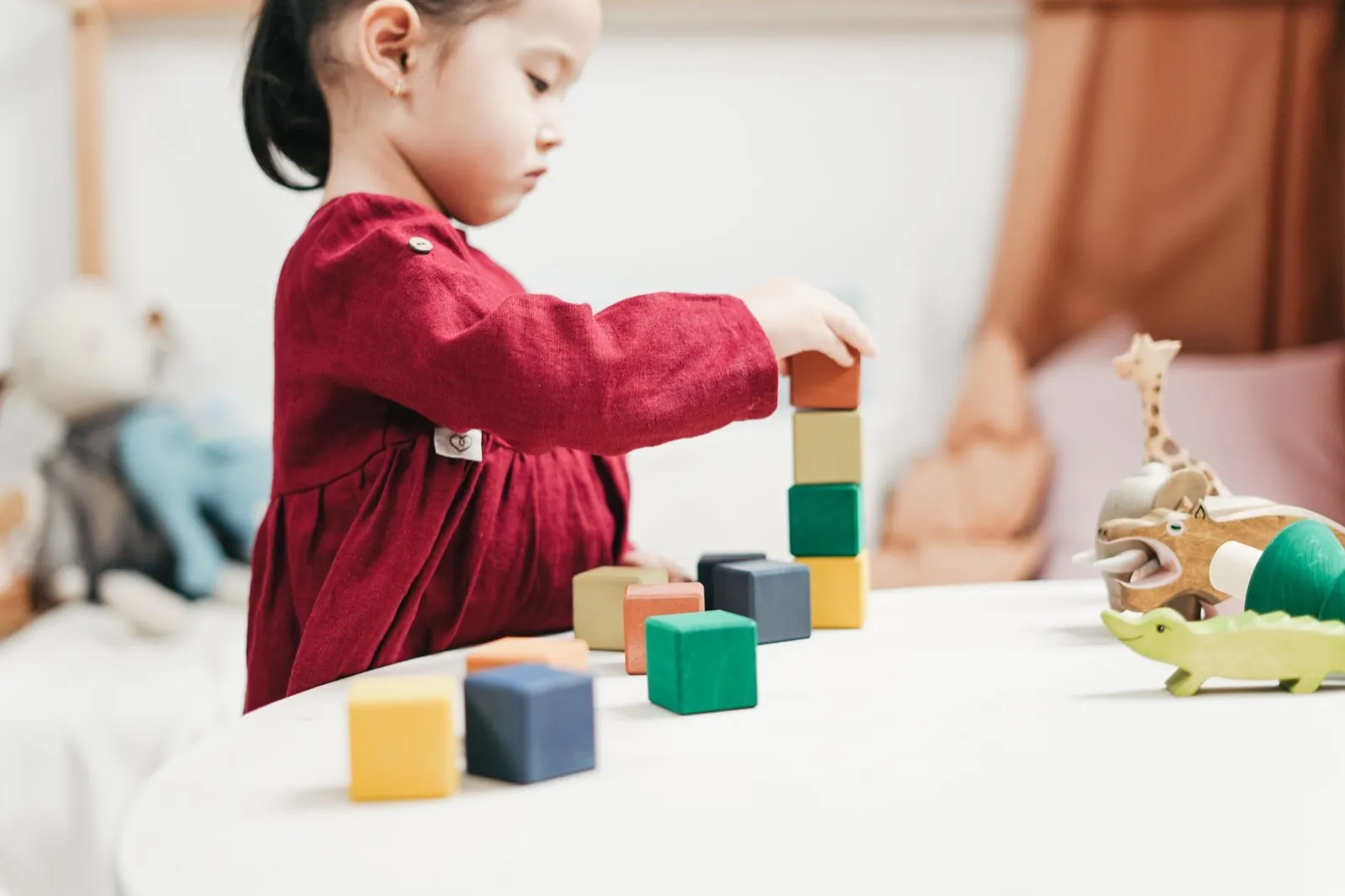
Image Credit: Pexels / cottonbro studio
How to Support Your Toddler’s Development Through Everyday Play
Supporting your toddler’s development does not require a cupboard full of educational toys or a carefully planned activity schedule. Much of a young child’s learning happens through ordinary play, conversation, movement and time spent exploring with the people around them.
The NHS recommends simple activities such as reading, singing, pretend play, talking during everyday routines and giving toddlers opportunities to move. These moments can support language, physical skills, confidence, relationships and learning.
That means play can fit into the day you already have. Building a tower while dinner cooks, naming things on a walk, pouring water at bath time or pretending a cardboard box is a bus can all give your toddler opportunities to practise new skills.
Why everyday play matters for toddler development
For a toddler, play is not separate from learning.
Playing gives children opportunities to explore what objects do, experiment with movement, communicate, solve small problems and interact with other people. NHS Best Start in Life guidance describes playtime as important for toddlers’ emotional and physical development as well as a way to strengthen their relationship with a parent or carer.
Different kinds of play naturally involve different areas of development.
A toddler stacking blocks may be using their hands carefully, judging space and discovering what makes a tower fall. During pretend play, they may practise words, imitate familiar routines and explore social situations. Running after a ball involves movement, balance and coordination.
You do not need to turn these moments into lessons. Giving your toddler time, attention and a safe opportunity to explore is valuable in itself.
Follow your toddler’s interests
One of the simplest ways to make play engaging is to notice what your toddler is already interested in.
NHS Best Start in Life encourages parents to follow their toddler’s lead during play. Rather than constantly directing the activity, watch what they choose and join them.
If your toddler is repeatedly filling a container with toy animals, you might sit beside them and describe what is happening.
“The cow is going in.”
“Now the box is full.”
If they are fascinated by buses on a walk, talk about the buses. If they keep returning to a particular book, read it again. Repetition can be part of how young children explore and learn.
Following their lead also takes pressure away from you. You do not have to keep inventing something new to hold their attention.
Talk while you play
Conversation can be woven into almost any activity.
The NHS recommends chatting with toddlers during everyday routines such as cooking, eating and playing. Naming what your child is interested in gives them opportunities to hear words connected with something they are already noticing.
You can describe:
- What your toddler is doing
- Objects they are holding
- Colours, shapes and textures
- Sounds you can hear
- Actions such as pouring, pushing, jumping or stirring
- Simple feelings such as happy, sad or angry
Try leaving small pauses rather than filling every quiet moment. This gives your toddler space to respond with a word, sound, gesture, expression or action.
Communication is a two-way interaction, even before a child can express everything they want to say.
Read the same books without worrying about repetition
Books are an easy way to combine language, attention and connection.
Your toddler does not need a huge library. Repeatedly choosing the same favourite book is perfectly workable.
You can read the words, point at pictures, name familiar objects or talk about what a character is doing. If your toddler wants to turn the pages quickly rather than listen to the whole story, that is still an opportunity to enjoy the book together.
The NHS includes looking at books, singing songs and nursery rhymes among simple ways parents can support language and communication.
Keep it relaxed. Reading together does not need to look like a formal story session to be worthwhile.
Use songs and nursery rhymes
Singing is another activity that needs almost no preparation.
Songs and rhymes expose toddlers to repeated words and sounds, and action songs can combine language with movement. NHS guidance recommends singing songs and rhymes as a way to introduce young children to words and sounds while encouraging activity too.
You can sing during:
- Getting dressed
- Bath time
- Car journeys
- Nappy changes
- Tidying up
- Walks
- Quiet time before bed
Your singing ability does not matter. Your toddler is interacting with a familiar person, not judging a performance.
Turn household routines into playful learning
Toddlers are often interested in the ordinary things adults do.
Instead of feeling that play must happen after the chores are finished, you can sometimes bring your toddler into safe parts of everyday routines.
Depending on the task and your child’s abilities, this might mean:
- Matching socks
- Putting clothes into a laundry basket
- Carrying an unbreakable item to the table
- Stirring something with supervision
- Putting toys into a box
- Wiping a safe surface with a cloth
- Sorting objects into containers
NHS guidance for children aged 2 to 3 includes helping around the home among activities that can encourage creativity and language.
Keep expectations realistic. A toddler “helping” may make a task slower, and they may lose interest quickly. The purpose is not to get the job done perfectly.
Make room for pretend play
Pretend play can begin very simply.
A toddler might feed a teddy, hold a toy to their ear like a phone or pretend to make you a cup of tea. As imagination develops, these games may become more elaborate.
You can join without taking control.
If your toddler hands you a pretend drink, accept it. If they put a teddy to bed, you might ask whether teddy needs a blanket. If a cardboard box becomes a car, sit beside it and make a driving sound.
NHS Best Start in Life specifically encourages parents to join a toddler’s game when invited.
Pretend play gives children room to imitate familiar experiences and experiment with communication and ideas.
Encourage movement through play
Toddlers generally want to move, and active play gives them opportunities to practise physical skills.
The NHS suggests activities such as walking, dancing, hide-and-seek, playing in the park and using a ball. Throwing, catching and kicking can help children practise coordination, balance and agility.
At home, movement can be simple:
- Dance to music
- Crawl under a table
- Walk around cushions placed safely on the floor
- Roll a ball backwards and forwards
- March around the room
- Copy simple movements
- Play a gentle chasing game in a safe space
Outdoors, walking itself can become play. Stop to look at leaves, jump over a crack in the pavement or find different coloured doors.
Choose activities that suit your toddler’s current abilities and environment, and supervise appropriately.
Let toddlers explore textures and materials safely
Sensory play gives toddlers opportunities to explore through touch, sight, sound and other senses.
It does not need to involve elaborate sensory trays.
Water, sand, dough, leaves, fabric, safe kitchen utensils and other everyday materials can all become interesting to a toddler.
For example, during supervised water play, your child might experiment with filling, pouring and squeezing using plastic cups, spoons or a sponge.
Water play needs particularly close supervision. NHS guidance states that babies and young children should never be left alone in the bath or while playing with water because drowning can happen in very shallow water.
Also check that any objects used in play are suitable for your child and do not present choking or other hazards. Follow age warnings on toys and keep button batteries securely away from children.
Support thinking with simple problems
Toddlers do not need worksheets to practise problem-solving.
Ordinary play creates plenty of small puzzles.
You might let your toddler work out:
- Which lid fits a container
- How to stack blocks without them falling
- Where a hidden toy has gone
- How to fit a shape into a sorter
- Which objects will fit inside a box
- How to get a ball from beneath a chair
Give them a little time before stepping in.
If they become frustrated, you can offer a small clue or demonstrate part of the task. The aim is not to make the activity difficult enough to test them. It is simply to give them opportunities to experiment.
Use play to explore emotions
Toddlers are developing emotionally as well as physically and cognitively.
They may experience very strong feelings before they have the language or self-control to express them calmly.
Everyday play and conversation can help you introduce simple emotion words. You might say that a toy character looks sad, that teddy seems excited or that your toddler looks frustrated because a tower fell down.
NHS Best Start in Life recommends naming emotions such as happy, sad and angry and helping toddlers connect words with what they are feeling.
Pretend play can also give children a gentle way to act out familiar situations, such as putting a doll to bed or taking a toy animal to the doctor.
There is no need to turn every emotional moment into a teaching exercise. Sometimes a tired or upset toddler simply needs comfort and calm.
You do not need to entertain your toddler constantly
It is easy to see activity ideas online and feel as though every spare hour should be filled with purposeful play.
That is not necessary.
Toddlers can explore independently for short periods when they are in a safe environment and appropriately supervised. You can be nearby without directing every moment.
Some days you may have the energy for painting, the park and a long story. Other days, play might be stacking plastic containers on the kitchen floor while you make lunch.
Both can offer opportunities to explore.
A simple routine that includes conversation, affection, movement, books and opportunities to play is more realistic for most families than trying to create a constant programme of activities.
Expensive educational toys are not essential
The NHS notes that play does not need to be difficult or expensive and suggests using things already available around the home.
A cardboard box can become a hiding place, vehicle or container. Plastic bowls can be stacked. A wooden spoon can become a drumstick. Socks can be sorted. Cushions can become part of a supervised indoor movement game.
If you do use toys, choose items appropriate for your child’s age and check them regularly for damage, sharp edges, loose parts and other hazards.
Be especially careful with small objects and button batteries.
The quality of your interaction matters more than having an endless supply of new toys.
Keep play manageable on busy days
If you are tired, working, caring for other children or simply trying to get through a demanding day, play can happen in small pockets.
Try attaching it to things you already do.
At breakfast, name foods and colours.
While getting dressed, sing a song.
On the way outside, count a few steps.
During a walk, point out a dog, bus or tree your toddler notices.
At bath time, talk about floating and sinking while supervising closely.
Before bed, look through a familiar book.
These moments do not need to be long or perfect. They are simply opportunities for your toddler to interact, practise and explore as part of ordinary family life.
When to get professional advice
Play can support development, but it is not a treatment for developmental difficulties and should not replace professional assessment.
Children develop at different rates. Still, if you are concerned about your toddler’s speech, movement, hearing, vision, play, social interaction, behaviour or general development, speak to your health visitor or GP.
You should also seek professional advice if your toddler loses skills they previously had or if you have an ongoing concern that does not feel explained by normal variation in development.
In England, children are offered health and development reviews, including a review at around 2 to 2 and a half years. You do not need to wait for a scheduled review if something is worrying you.
If nursery or another caregiver has noticed something about your toddler’s development, their observations can also be useful to share with your health visitor or GP.
Supporting development through play is not about pushing your toddler towards the next milestone. It is about giving them safe, ordinary opportunities to move, communicate, experiment, imagine and spend connected time with you.
Related reading
- Toddler Development
- Toddler Cognitive Development: How Thinking and Learning Develop
- Toddler Social and Emotional Development: What to Expect
Sources
- NHS Best Start in Life: Playtime and bonding with your toddler
- NHS: Baby and toddler play ideas
- NHS Best Start in Life: First words, 1 to 2 years
- NHS Best Start in Life: Chatting and building sentences, 2 to 3 years
- NHS Best Start in Life: Help your toddler manage emotions
- UNICEF Parenting: 5 fun ideas for learning through play